Field notes
South Africa Food Guide for Indians: Vegetarian, Halal & Indian Restaurants
This south africa food guide for indians covers three diet categories that matter most to Indian travelers: vegetarian, halal, and Indian restaurant food. South Africa's default cuisine is meat-heavy, built around braai culture and game dishes. Planning ahead by city and diet type saves real frustration on the ground.
Why is finding Indian-friendly food in South Africa harder than in Southeast Asia?
South Africa's food culture centers on braai, which is a wood-fire meat tradition. Vegetarian labeling is inconsistent, dedicated plant-based restaurants are concentrated in a few city pockets, and most rural or game-reserve dining has limited meat-free options. Indian travelers need city-level planning before they arrive.
Braai culture shapes restaurant menus across South Africa, from roadside spots to lodge dining. Unlike Thailand or Bali, where vegetarian food is a default offering at most eateries, South Africa treats meat-free meals as a special request in many settings outside major cities.
South Africa uses a green dot V-label for vegetarian products, but enforcement of this labeling law is inconsistent across restaurant menus and packaged food. Indian travelers who rely on visual labeling alone can run into problems, particularly at buffet-style lodge meals where dishes are not always individually marked.
The practical answer is to identify your city base first, then research restaurants within that city by diet type. The three cities that matter most for Indian travelers are Durban, Cape Town, and Johannesburg.
Which cities in South Africa have the best food options for Indian travelers?
Durban has the highest concentration of Indian food in South Africa, followed by Johannesburg's Fordsburg area and Cape Town's Gardens suburb. These three cities cover the full range of vegetarian, halal, and Indian restaurant options that Indian travelers typically need during a South Africa trip.
Durban — Indian food capital of South Africa
Durban is home to over 1.2 million people of Indian origin, descended from indentured laborers who arrived in South Africa from 1860 onward. This history produced a local Indian food culture that is genuinely deep-rooted, not imported for tourists.
The Grey Street area in central Durban has the highest density of Indian restaurants, halal eateries, and spice shops in the country. Vegetarian thali meals, biryani, and South Indian-style curries are all available within a short walking distance of each other.
Johannesburg's Fordsburg neighborhood
Fordsburg is Johannesburg's primary Indian food district, commonly called Little India. The neighborhood has Indian restaurants, halal butchers, mithai shops, and grocery stores stocking Indian pantry staples. It is the most practical base for Indian food access in Johannesburg.
Cape Town's vegetarian and halal restaurant clusters
Cape Town's De Waterkant and Gardens suburb have the highest density of plant-based and vegetarian restaurants in South Africa. The city also has a significant Muslim population, which means halal-certified restaurants are easier to find here than in most other South African cities outside Durban.
Related: For a full city-by-city breakdown of what to do and where to stay, see our South Africa travel guide for Indians.
How do Indian Muslim travelers find halal-certified restaurants in South Africa?
Two bodies certify halal food businesses in South Africa: SANHA and the Muslim Judicial Council. SANHA operates nationally, while the MJC primarily covers the Western Cape. Durban and Cape Town have the highest number of certified restaurants. Look for the SANHA or MJC logo displayed at the entrance or on the menu.
How to read halal certification marks in South Africa
SANHA, the South African National Halal Authority, issues a certificate number alongside its logo. A restaurant displaying this mark has been audited for halal compliance across ingredients, preparation, and storage. The MJC mark is specific to Cape Town and the Western Cape region.
Not every restaurant that calls itself halal carries a formal certification. Indian Muslim travelers should look for the physical certificate displayed on the premises, not just a verbal claim from staff. This is especially important at smaller restaurants outside the main Indian food districts.
Halal restaurant apps and directories used in South Africa
The HalalSquare app and the SANHA website both maintain searchable directories of certified restaurants by city. These are the most reliable tools for finding verified halal options in South Africa. Zomato South Africa listings sometimes include halal tags, but these are user-submitted and not always verified against official certification.
Related: Getting Around South Africa: Transport Guide for Indian Tourists
What vegetarian and Jain food options are realistically available across South Africa?
Vegetarian restaurants exist in Cape Town, Durban, and Johannesburg, but Jain food — which excludes root vegetables — requires advance communication with restaurants. Outside major cities, vegetarian options shrink significantly. Travelers on game-reserve itineraries should confirm meal options with their lodge before arrival.
Dedicated vegetarian restaurants vs. restaurants with vegetarian menus
Cape Town has the strongest base of dedicated vegetarian and vegan restaurants in South Africa. Johannesburg and Durban have fewer fully vegetarian establishments, but most Indian restaurants in these cities offer extensive meat-free menus. The distinction matters because cross-contamination risk is lower at a fully vegetarian kitchen.
South African Indian restaurants in Durban typically separate their vegetarian and non-vegetarian cooking, reflecting the community's own dietary practices. This makes Durban Indian restaurants a more reliable choice for strict vegetarians than generic South African restaurants with a vegetarian section on the menu.
What Jain travelers should do before arriving
Jain food availability in South Africa is limited and requires advance planning. Most restaurants do not stock Jain-compliant ingredients as standard. Jain travelers should contact their hotel or restaurant at least 48 hours ahead and carry dry snacks from India as backup for days when suitable food is unavailable.
Related: South Africa Trip Cost from India: Budget to Luxury Complete Breakdown
How does the food experience for Indian travelers compare across Durban, Cape Town, and Johannesburg?
Durban is the strongest city for Indian food and halal options. Cape Town leads on vegetarian restaurant variety. Johannesburg's Fordsburg gives the best access to North Indian restaurant food and halal-certified dining. Gqeberha (Port Elizabeth) has limited options across all three categories compared to the other three cities.
| City | Indian Restaurant Density | Halal-Certified Options | Vegetarian Restaurant Count | Indian Grocery Store Access |
|---|---|---|---|---|
| Durban | High — Grey Street area has 50+ Indian eateries | High — SANHA and MJC both active | Moderate — within Indian restaurants | High — Grey Street spice and grocery shops |
| Cape Town | Moderate — scattered across city | High — MJC covers most certified spots | High — Gardens suburb and De Waterkant | Moderate — supermarkets plus a few specialty stores |
| Johannesburg | High — Fordsburg concentration | High — SANHA-certified options in Fordsburg | Moderate — growing plant-based scene | High — Fordsburg Indian grocery stores |
| Gqeberha (Port Elizabeth) | Low — limited Indian restaurants | Low — few certified options | Low — standard restaurant vegetarian sections only | Low — supermarkets only |
What makes Durban's Indian food scene different from the rest of South Africa
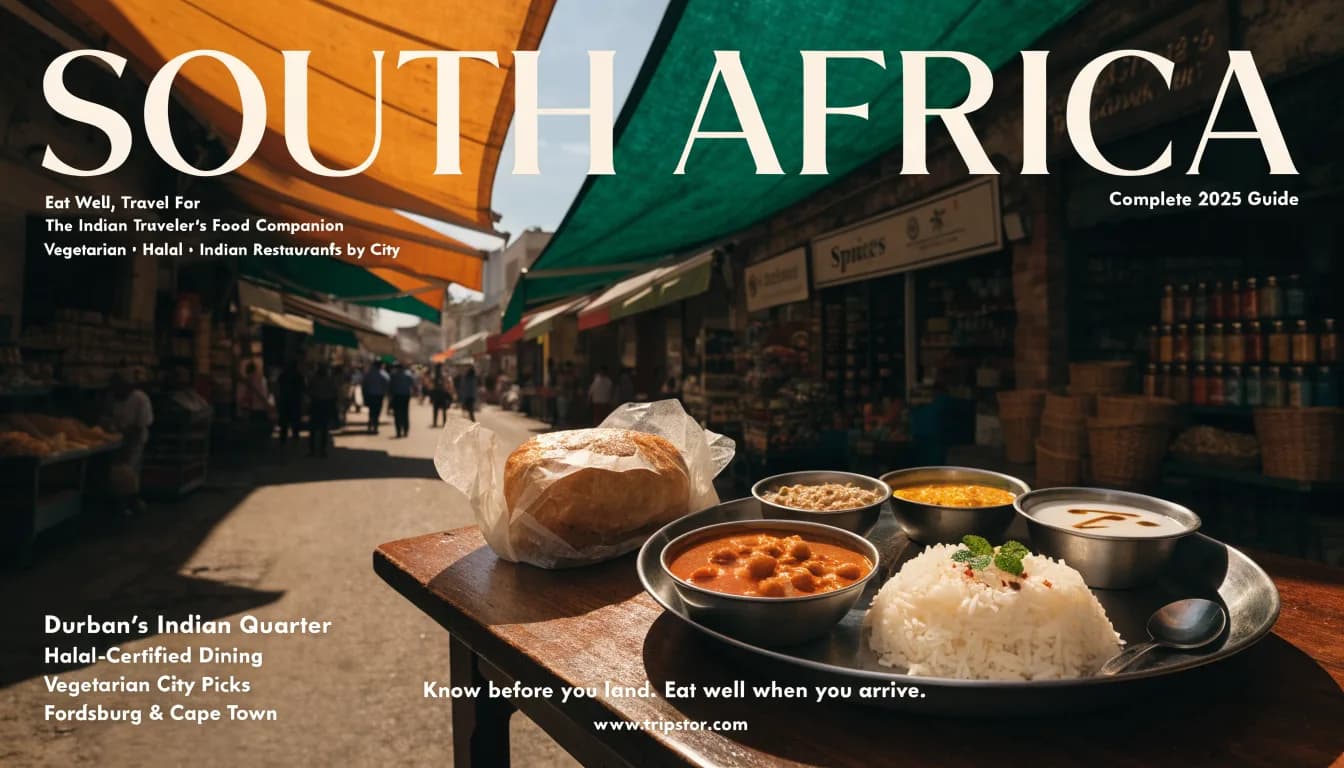
Bunny chow is a dish that originated in Durban's Indian community. It consists of a hollowed-out bread loaf filled with curry, originally made by Tamil and Telugu workers. Vegetarian versions use bean or lentil curry as the filling. It is available at most Durban Indian eateries and costs between R30 and R80 per serving.
Durban's South African Indian cuisine uses masalas closely related to South Indian cooking. Travelers from Tamil Nadu or Andhra Pradesh will find the spice profiles familiar. North Indian restaurant food, such as butter chicken or dal makhani, is less common in Durban than in Johannesburg.
Cape Town restaurant areas Indian vegetarians should know
The Gardens suburb on the lower slopes of Table Mountain has the highest concentration of plant-based restaurants in Cape Town. Kloof Street and Bree Street also have multiple restaurants with strong vegetarian menus. These areas are within 15 minutes of the city center by taxi or rideshare.
Johannesburg's Fordsburg as a base for Indian food access
Fordsburg sits about 3 km west of Johannesburg's city center. The neighborhood has Indian sweet shops, biryani restaurants, halal butchers, and grocery stores on a single stretch of Main Road. It is the most practical area for Indian travelers who want familiar food without searching across the city.
Related: Australia 7-Day Itinerary for Indians: Day-by-Day Travel Plan
Can Indian travelers self-cater or buy Indian groceries in South Africa?
South African supermarket chains Woolworths, Pick n Pay, and Checkers all stock Indian pantry staples including basmati rice, lentils, and masala blends. Specialty Indian grocery stores in Durban's Grey Street area and Johannesburg's Fordsburg carry a wider range of Indian brands at lower prices than supermarkets.
| Supermarket Chain | Indian Products Stocked | Estimated Price Range (INR equivalent) | Cities with Reliable Stock |
|---|---|---|---|
| Woolworths South Africa | Basmati rice, curry powder blends, lentils | INR 180–400 per item | Cape Town, Johannesburg, Durban |
| Pick n Pay | Basmati rice, Indian spice brands, canned lentils | INR 120–300 per item | All major cities |
| Checkers | Lentils, masala blends, frozen Indian meals | INR 100–280 per item | All major cities |
| Specialty stores (Grey Street / Fordsburg) | Full Indian brand range, fresh spices, pickles, papads | INR 60–200 per item | Durban, Johannesburg only |
South Africa has an estimated 1.3 million people of Indian origin, making it home to one of the largest Indian diaspora communities outside Asia. This figure has directly shaped the halal and vegetarian food infrastructure in Durban and Johannesburg. (Source: South African History Archive / Statistics South Africa)
Related: Travel Insurance for Indians: Complete Buying Guide
What do Indian travelers most often get wrong about eating in South Africa?
The three most common mistakes are: assuming all curry dishes are vegetarian, not verifying halal certification before ordering, and not researching food options before leaving major cities. Game reserves and small towns have very limited Indian-friendly food, and this catches many travelers off guard mid-trip.
Is South African curry always vegetarian?
South African curry is not always vegetarian. Many traditional Durban curries use mutton, chicken, or seafood as the base. Even dishes labeled simply as