
Altitude, access and season at a glance
Bhutan is a landlocked Himalayan country between India and China, where tourism centres on cultural sites, mountain landscapes and nature. Most first trips stay in the mid-altitude western valleys, fly in through Paro, and run five to seven nights.
The terrain runs from subtropical plains and forests in the south to subalpine forests and snowy mountains in the north. Thimphu, Paro and Punakha are the principal destinations in current tourism reporting. Altitude is low in the southern plains, mid in the western valleys where most itineraries sit, and high on passes and in the north, where frost and snow are common above 3,000 metres.
The currency is the ngultrum, which is pegged one-to-one with the Indian rupee. That makes budgeting simple for Indian travellers, although card acceptance and ATM access thin out quickly once you leave the main towns.
| Planning point | What to know |
|---|---|
| Region and character | South Asia; cultural sites, Himalayan landscapes and slower-paced travel |
| Best seasons | March to May and September to November |
| Ideal trip length | 5 to 7 nights for a first trip; 8 to 10 nights to include Bumthang |
| Main gateway | Paro International Airport; Gelephu International Airport is also listed as an airport |
| Altitude | Mid in the western valleys; high on passes and in the north |
| Starting price | From ₹51,500 per person, land only, twin sharing |
Valleys, viewpoints and places worth the climb
The most rewarding places sit in three clusters: Paro for the cliffside monastery, Thimphu with the Dochula route for city sights and a mountain pass, and Punakha with Phobjikha for river-valley dzongs and crane country.
Paro Valley
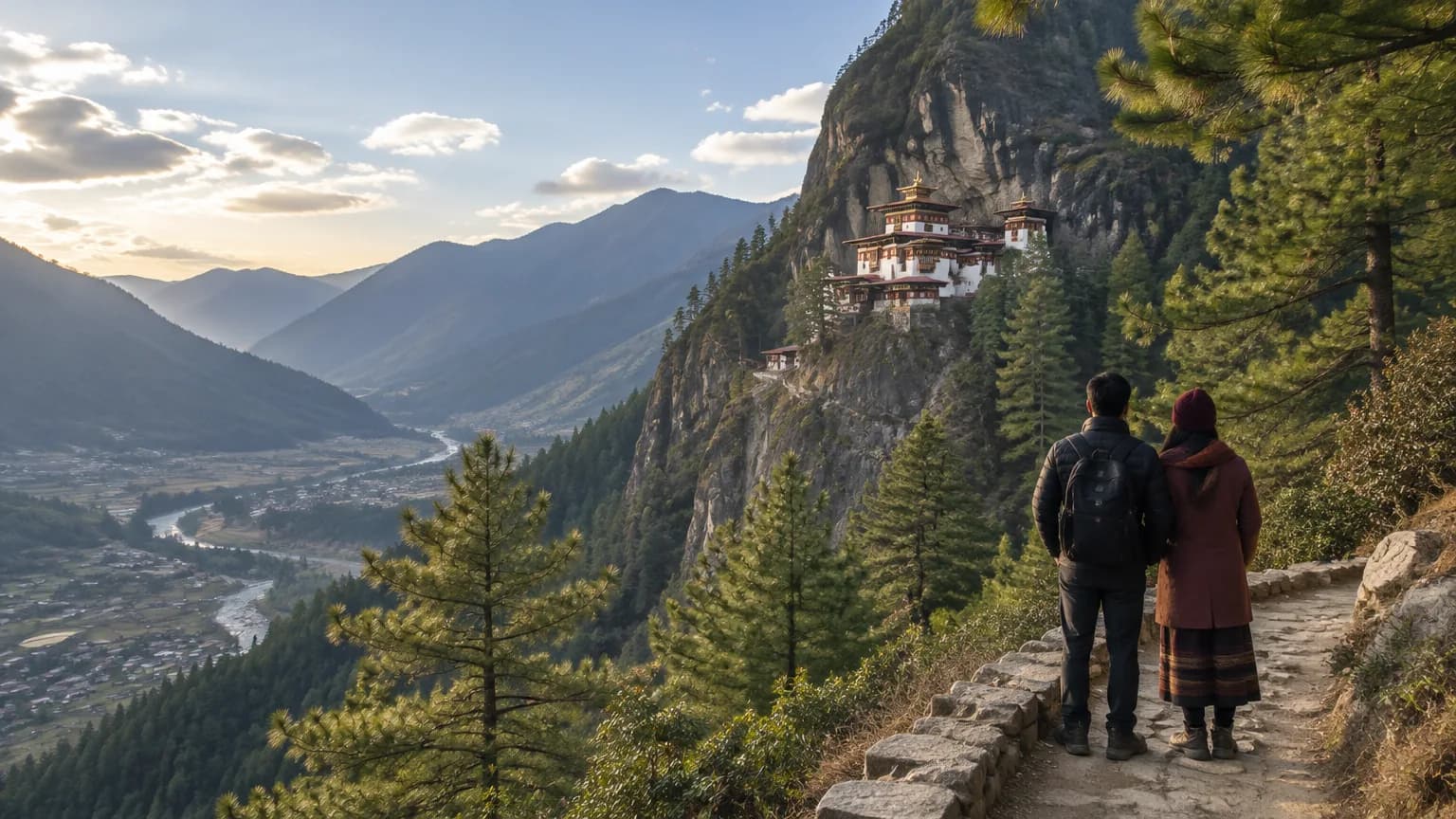
- Tiger's Nest Monastery (Taktsang): A cliffside monastery reached by a mountain hike through pine forest, with panoramic views at the top. Allow four to five hours for the visit. The climb is long and includes stone stairs, so it is worth saving for a day when you have already rested.
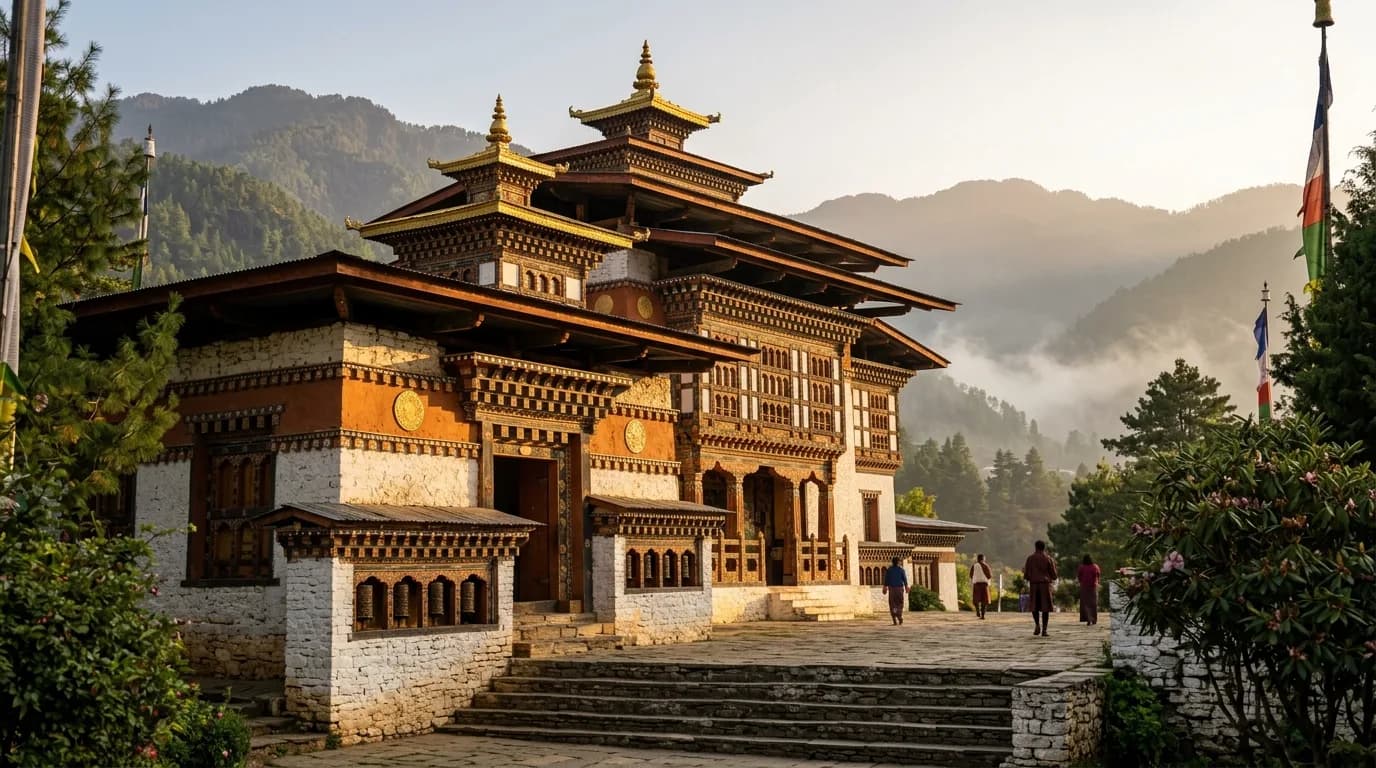
- Rinpung Dzong: A fortress-monastery in Paro and one of the valley's named cultural attractions.
- National Museum at Ta Dzong: Presents Bhutanese culture in a format that does not overwhelm families or senior travellers.
Thimphu and the Dochula route
- Buddha Dordenma: A large statue in Thimphu, easy to combine with other capital stops.
- Takin Preserve: A wildlife park offering wildlife observation and bird watching, and a popular stop with children.
- Weekend Market: The capital's market, useful for seeing local produce and everyday life.
- Dochula Pass: A viewpoint on the Thimphu to Punakha road, worth a stop on the drive between the two valleys.
Punakha and Phobjikha
- Punakha Dzong: A fortress-monastery and one of the key cultural attractions of the Punakha area.
- Chimi Lhakhang: A temple in the Punakha area, often paired with the dzong on the same day.
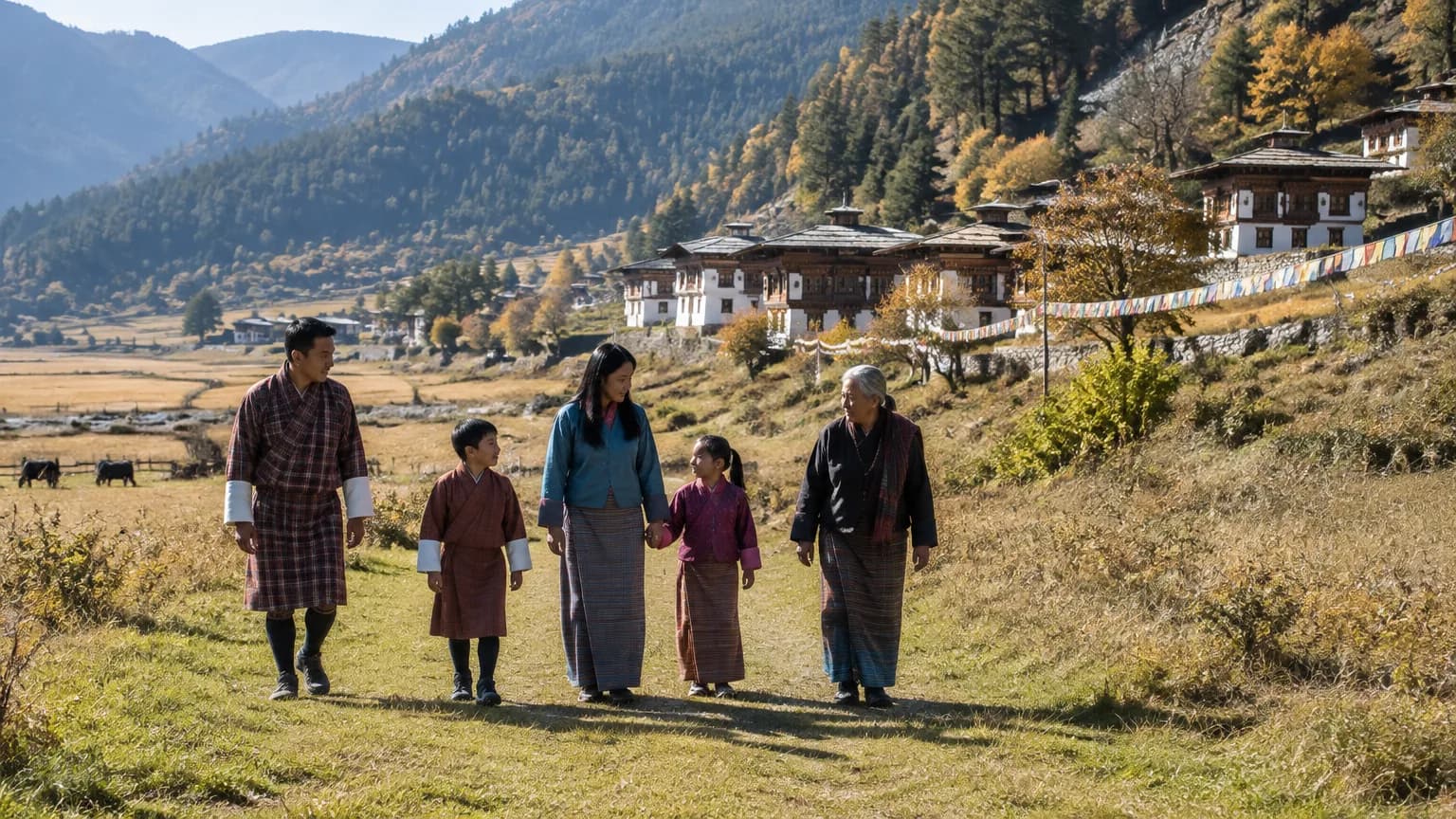
- Phobjikha Valley: A valley in Wangdue Phodrang with easy walks among black-necked cranes, traditional farmhouses and open landscape. Allow half a day to a full day.
Snow, monsoon and clear-sky months
October and November have the clearest skies and the highest crowds and prices, while January and February are cold, clear and quiet. June to August is the monsoon, with heavy rain and road disruption.
Spring, from March to May, is moderate on rain, crowds and prices. It can be cloudier and wetter than autumn, but flowers and wildlife are at their best. Autumn, from September to November, follows the rains and generally brings milder weather and clearer skies. September still sees moderate rain, while October and November are the driest and busiest months.
Winter, from December to February, is crisp, clear and sunny, with frost and snowfall common above 3,000 metres. Snow in January and February may block mountain passes between the western and central valleys, which matters if Bumthang is on your route. Heavy monsoon rainfall between June and September can cause landslides, flash floods and road closures.
| Traveller type | Best window | Why |
|---|---|---|
| Clear mountain views | October to November | Rain is low and skies are at their clearest, though crowds and prices are high |
| Flowers and wildlife | March to May | Spring is vivid, with moderate rain and medium crowds |
| Snow and low prices | January to February | Cold and sunny with low crowds; passes between western and central valleys may close |
| Festival timing | February to April, September to November | Tshechu dates in Punakha, Paro and Thimphu fall in these windows |
| Fewest crowds | June to August | Low prices, but heavy rain and possible road closures |
If festivals matter, the 2026 dates reported for Punakha Drubchen and Tshechu are 24 to 28 February, Paro Tshechu 29 March to 2 April, and Thimphu Tshechu 21 to 23 September. Festival dates change every year, so confirm at booking before fixing flights.
Roads, rail and altitude: reaching Bhutan
Indian travellers usually fly into Paro International Airport from Delhi, Mumbai or Kolkata, as of August 2026. There is no rail link into the country, so the last stretch is always by air, or by road for those who enter overland.
Once inside, Paro, Thimphu and Punakha are connected by paved mountain roads. Private SUVs with drivers are the standard way to move between towns, and tour operators arrange the vehicle and driver for visitors. Domestic buses, domestic flights, mountain bikes, motorbikes and helicopter services are also listed as transport options.
Mountain roads have steep drops, and changeable weather can delay flights. A buffer day before any onward or international connection protects you from a missed flight caused by a closed road or a grounded plane. Rain-affected months from June to September and snow-affected months in January and February are when this matters most.
Altitude in plain words
Altitude sickness is a risk above approximately 3,000 metres. Travellers arriving from sea level are advised to take it easy for the first couple of days and stay hydrated, which reduces mild discomfort such as headache or breathlessness. Paro and Thimphu sit at mid altitude, while passes such as Dochula and higher walking routes climb well above the valley floors. Medical services are limited, especially in rural areas, so describe any heart, lung or blood pressure condition to your planner before booking.
Entry rules for Indian passport holders can change. Check the current requirements on the official government source before you book, and confirm the details at booking.