Altitude, access and season at a glance
Austria is a landlocked Central European country where the Alps cover much of the land. Vienna International Airport is the main gateway, with Salzburg and Innsbruck as smaller airports. Altitude here splits into low city bases, mid-level lake areas and high Alpine passes, and that split shapes every plan.
- Region: Central Europe, with Vienna and the east, Salzburg and the lakes, Tyrol in the west, and Styria in the south.
- Character: historic cities at low altitude, lake villages at mid altitude, high passes that open only part of the year.
- Best seasons: May to September for clear weather and open roads; December to February for snow.
- Ideal trip length: 6 to 9 nights for two or three bases without rushing; package examples run from 5 to 9 nights.
- Gateway: Vienna for most Indian travellers, connecting onward by rail.
Tripstor's Austria packages start from ₹1,10,500 per person, land only, twin sharing. Confirm at booking what a given itinerary includes.
Valleys, viewpoints and places worth the climb
The places below are real and well established, grouped by area. Each rewards some effort, whether that is a cable car, a short walk or a drive on a mountain road. Check opening details and ticketing at booking.
Vienna and the east
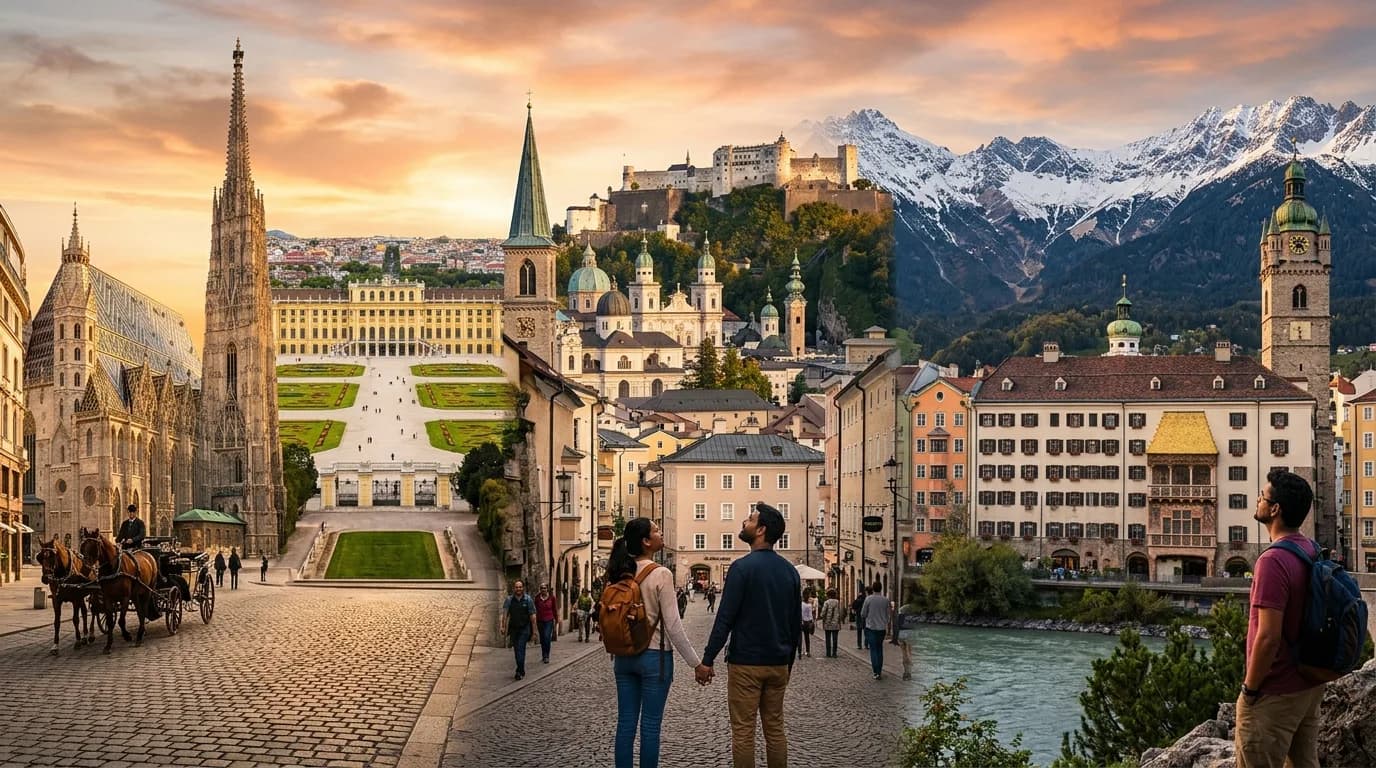
- Schönbrunn Palace: the Habsburg summer residence in Vienna, with grounds that suit a slow, elder-friendly walk.
- Kunsthistorisches Museum and Belvedere: two major Vienna museums, each comfortable as a half-day visit.
- Vienna State Opera: a neo-Renaissance opera house where standing tickets are available for a lower-cost evening.
- Melk Abbey: an abbey on the culture route, often paired with a Grüner Veltliner tasting in the Wachau.
Salzburg and the lakes
- Hohensalzburg Fortress: a preserved fort above Salzburg that gives the best view over the old town.
- Mirabell Palace and Mozart's Birthplace: both in the compact centre, easy to cover on foot in a 2 to 3-night stay.
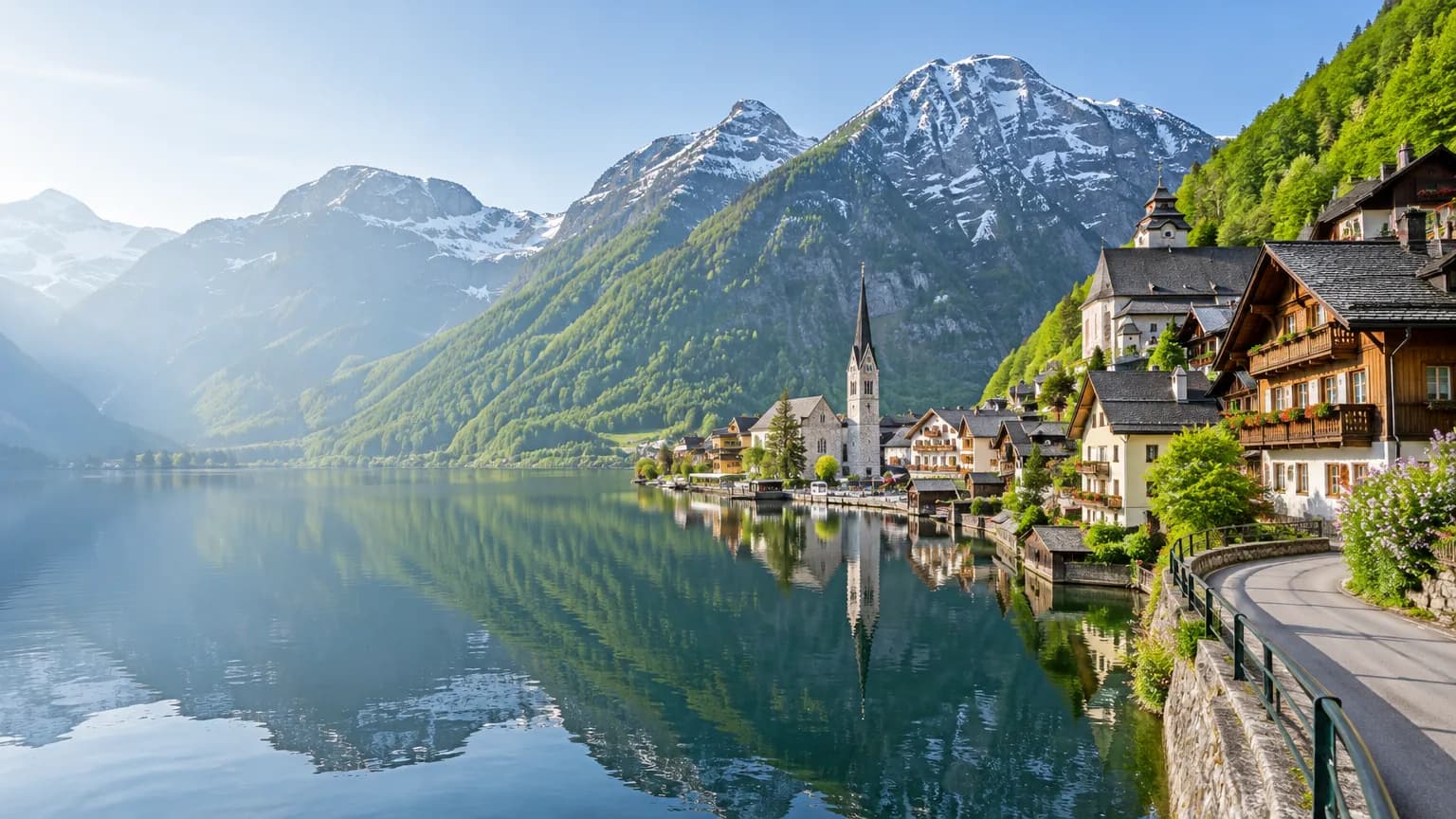
- Hallstatt and the Salzkammergut: a lake village and its surrounding area, where visitor-management measures apply in busy periods.
Tyrol and the west
- Innsbruck and the Nordkette: cable cars link the city with the mountain area, so you reach high ground without a long drive.
- Grossglockner High Alpine Road: a famous mountain drive, generally open from May to November.
Snow, rain and clear-sky months
Austria has no monsoon, but it has real wet spells, heavy snow and thunderstorms. Winter (December to February) is cold with reliable mountain snow, summer (June to August) is the clearest and busiest window, and spring and autumn sit between them with road and weather caveats.
- Winter, December to February: roughly -1 to 5 C. Peak ski conditions and high prices; avalanche risk and icy mountain roads can cause closures.
- Spring, March to May: roughly 4 to 21 C. Crowds are medium, and Alpine trails and resorts reopen progressively, so some high routes stay shut into May.
- Summer, June to August: roughly 18 to 27 C in the valleys. Peak tourism, long days, and possible afternoon thunderstorms in Alpine valleys in July and August.
- Autumn, September to November: mild in September, colder after. Fog and high-pass closures become more common, and November has the lowest crowds and prices.
For snow, aim for January or February. For clear views and hiking, June or September balances weather and crowds. Autumn suits city-focused travellers who do not need the high roads.
Dates move with snowfall and weather, so check current road status before any drive.
Roads, rail and altitude: reaching Austria
Vienna International Airport is the usual gateway for Indian travellers, who typically connect with at least one stop; confirm routing and duration at booking. Salzburg and Innsbruck airports are alternatives if your trip starts in the west.
The last stretch into town is short at all three airports:
- Vienna: the City Airport Train reaches Wien Mitte in 16 minutes, and the S7 regional line takes 25 minutes.
- Salzburg: bus 2 reaches Salzburg Hauptbahnhof in 20 minutes.
- Innsbruck: bus F reaches Innsbruck Hauptbahnhof in 15 minutes.
Between cities, intercity rail connects Vienna, Salzburg, Innsbruck and Graz. If you drive in the mountains, weather can close a pass at short notice, so keep a buffer day before any flight home.
Acclimatisation is rarely an issue in cities and lake towns, which sit at low to mid altitude. If you ride a cable car or drive a high pass, go up gradually, drink water and keep the first day light. Check current entry rules for Indian passport holders on the official government source before you book.
Base towns and where to stay
Vienna and Salzburg are the easiest bases for a first visit, with the lakes or Innsbruck added as a third stop. Pick a base by what you want to walk to, and book earlier for peak months, when prices rise.
- Vienna, Ringstrasse and neighbouring districts: central, walkable to major sights, upscale pricing; suits couples and families.
- Salzburg city centre: compact historic centre, suited to a 2 to 3-night break; upscale.
- Salzburg Neustadt: right-bank area a few minutes' walk from the main sights, more reasonably priced; suits budget travellers and couples.
- Hallstatt and the Salzkammergut: scenic lake stays, with prices rising in season; suits couples and families.
- Obertraun and Bad Goisern: alternative bases about 10 and 15 minutes by car from Hallstatt; mid-range and good for budget-minded families.
- Innsbruck: a mid-range mountain-city base that fits multi-city routes.
Stay types range from guesthouses and family-run lodges at the budget and mid tiers to full-service resorts and city hotels at the upper tier. Ask at booking what breakfast, transfers and city taxes are included. A per-night mobility tax of €0.50 for guests aged 15 and over was reported for 2026, rising to €1.10 from May 2027; confirm current levies at booking.
Pacing the route
A comfortable outline for 7 to 9 nights is Vienna for about 3 nights, Salzburg for 2 to 3, and the Salzkammergut or Innsbruck for the rest. City culture comes first and mountains follow, with a slower day after each long transfer.
- Stop one, Vienna: palaces, museums and a coffee-house afternoon; good for recovering from the flight.
- Stop two, Salzburg: the old town and fortress; a short rail hop from Vienna.
- Stop three, lakes or Tyrol: Hallstatt and the Salzkammergut for lake scenery, or Innsbruck for cable cars and Alpine views.
Weather changes the plan. In winter, swap a mountain drive for a train or cable car. In summer, start hikes early to beat afternoon storms. In autumn, allow extra time on foggy roads. One flexible day in the middle of the trip absorbs most closures without losing a highlight.
Who Austria suits, and who may prefer another hill trip
Austria suits travellers who want cities and mountains without long, rough road days, because most routes run on rail and good roads. It is less suited to anyone who wants a quiet destination with no peak-period crowd controls, since heavily visited Alpine spots such as Hallstatt manage visitor numbers in busy periods.
- Families with elders or children: Vienna and Salzburg are easy on foot and by tram or rail; national parks offer ranger tours, family trails and some barrier-free access. Keep high-altitude excursions short.
- Couples: a city stay plus a lake village or Alpine base works well, including Wachau wine tasting and lakeside meals.
- Adventure seekers: alpine hiking, skiing in the Tyrolean Alps, mountain biking and snowshoeing, mainly in Tyrol and the national parks.
- First-timers: a Vienna, Salzburg and Hallstatt route is the classic starting point.
Honest limits: winter cold is real, mountain roads close, and medical access is slower in remote valleys than in cities. If cold and snow are not what you want, travel in the warm months or keep the trip city-led.
Ways to travel to Austria
Tripstor offers several trip styles for Austria, each aimed at a different kind of traveller. Pick the style first, then fit the season to it.
- Best of: main cities plus one scenic region; suits first-timers.
- Cultural & Heritage and: museums, music, old towns and abbeys; suits history-minded travellers.
- Adventure and Trekking & Camping: hiking, mountain routes and national park trails; suits active groups.
- Family: shorter transfers and easier walks, paced for children and elders.
- Honeymoon and Luxury: city stays with lake or Alpine bases and scenic drives; suits couples.
- Summer: built around June to August, when passes and trails are open.
- Wellness & Relaxation: a slower pace in quiet valleys and lake areas.
- Extended / Grand Tour: 9 nights or more across several regions without rushing.
Cold, health and gear tips
The most useful preparation for this trip is layers, sensible timing on mountain roads and a few health basics. These five tips cover what Indian travellers most often under-pack for.
- Layers over one heavy coat: valley and mountain temperatures differ sharply. A base layer, fleece and waterproof shell cover most of May to October; add insulated gloves, a hat and grippy waterproof boots for winter.
- Altitude basics: sickness is uncommon in the main towns but possible on cable cars and high drives. Ascend gradually, drink water and keep the first day at height light.
- Medicines: carry prescriptions in original packaging with a copy of the prescription, plus basic cold and stomach remedies.
- Road-travel timing: drive in daylight, especially in autumn and winter, check pass status the same morning and keep a buffer before any flight. In emergencies, 112 is the general number and 140 is mountain rescue.
- Signal, cash and entry rules: mobile signal is strong in towns but patchy in remote valleys, so download offline maps. Cards are widely accepted, but carry a little cash for small villages. Austria uses 230 V with Type C and Type F plugs. Check current entry rules for Indian passport holders on the official government source.
When your dates are settled, the Austria package page is a good place to see what a full trip includes.