
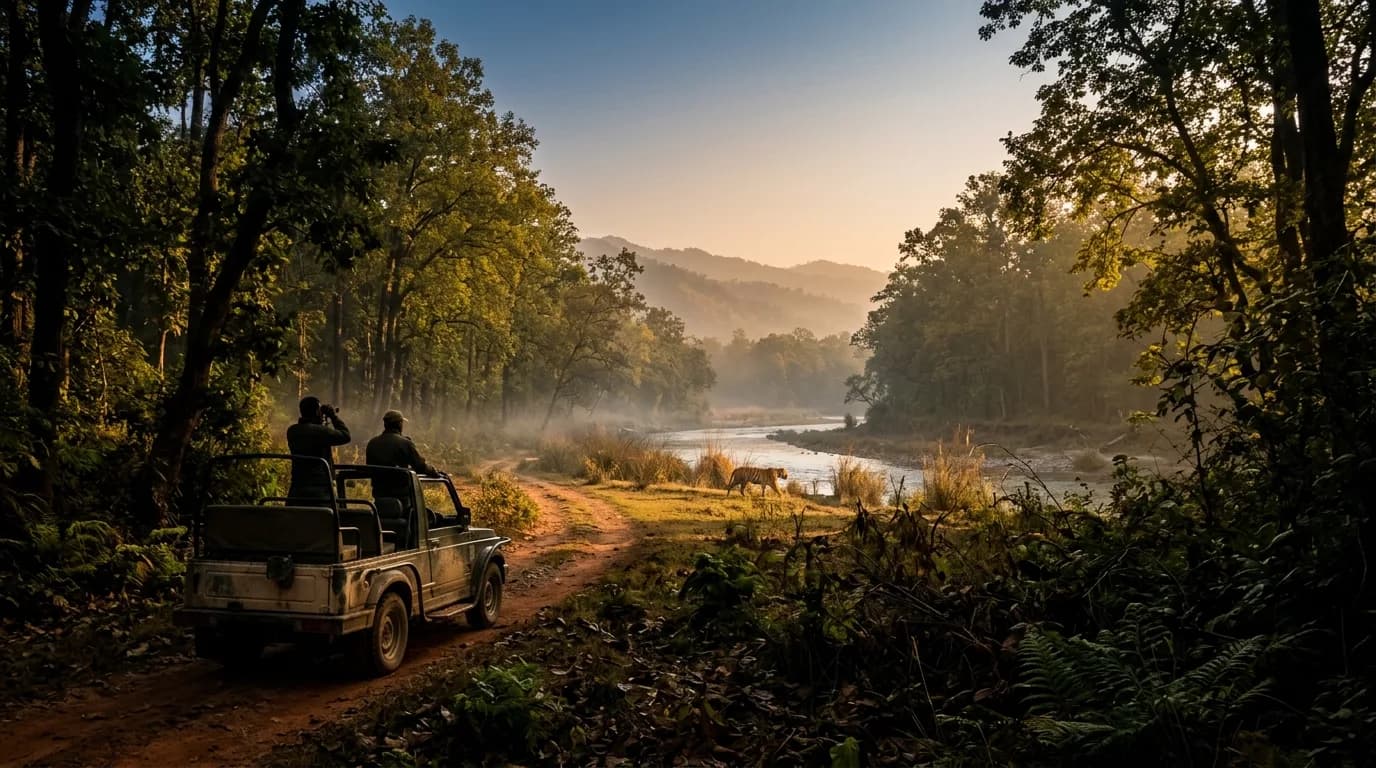
Curated starting points
Find a Jim Corbett journey that feels like yours.
Begin with a thoughtfully paced itinerary, then change the stays, experiences, route, and budget with a Tripstor specialist.
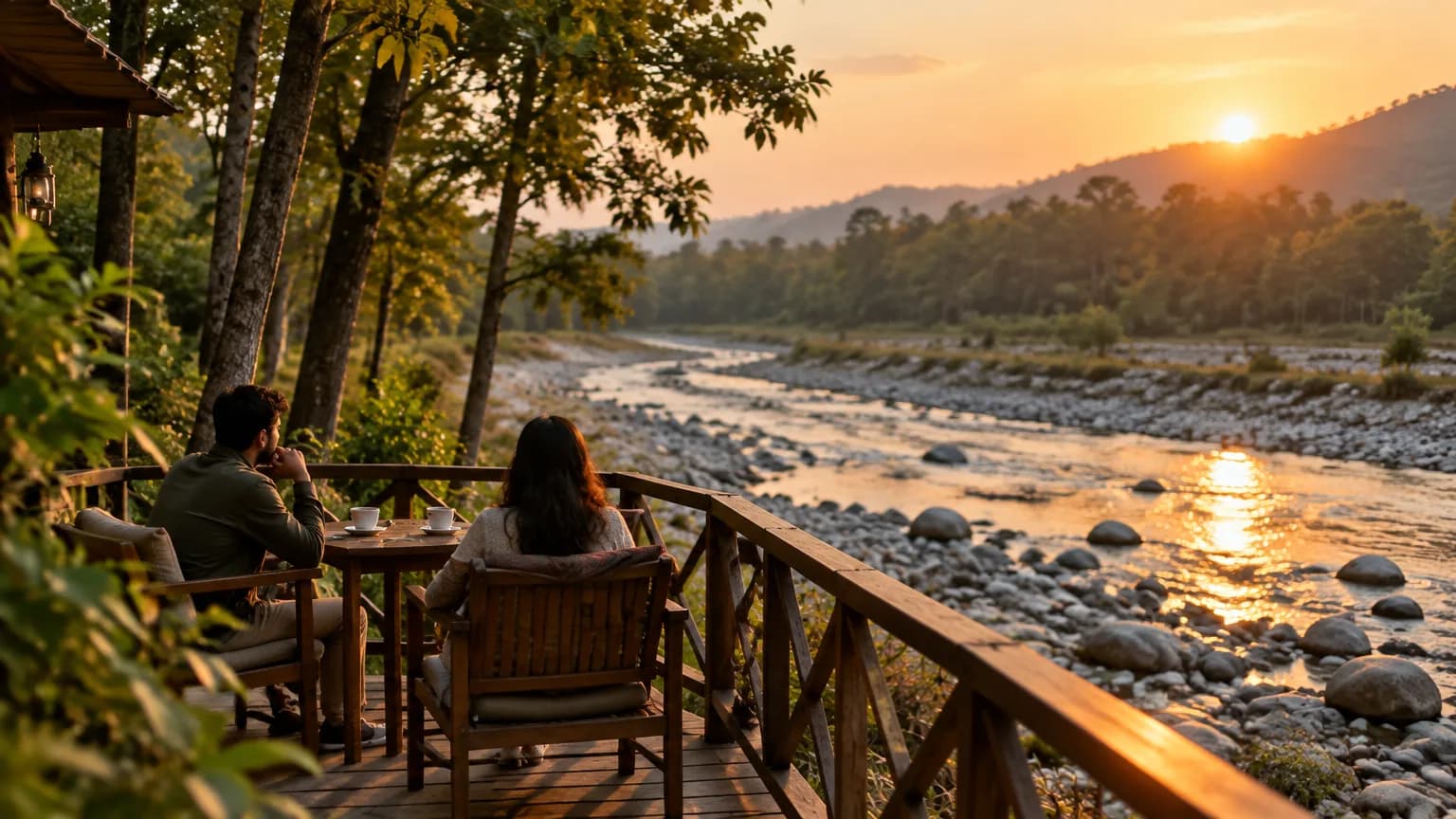
Jim Corbett · Flexible itinerary
Jim Corbett Kosi Riverside Lodges Honeymoon 4N 5D
Starting from
₹20,500/ person
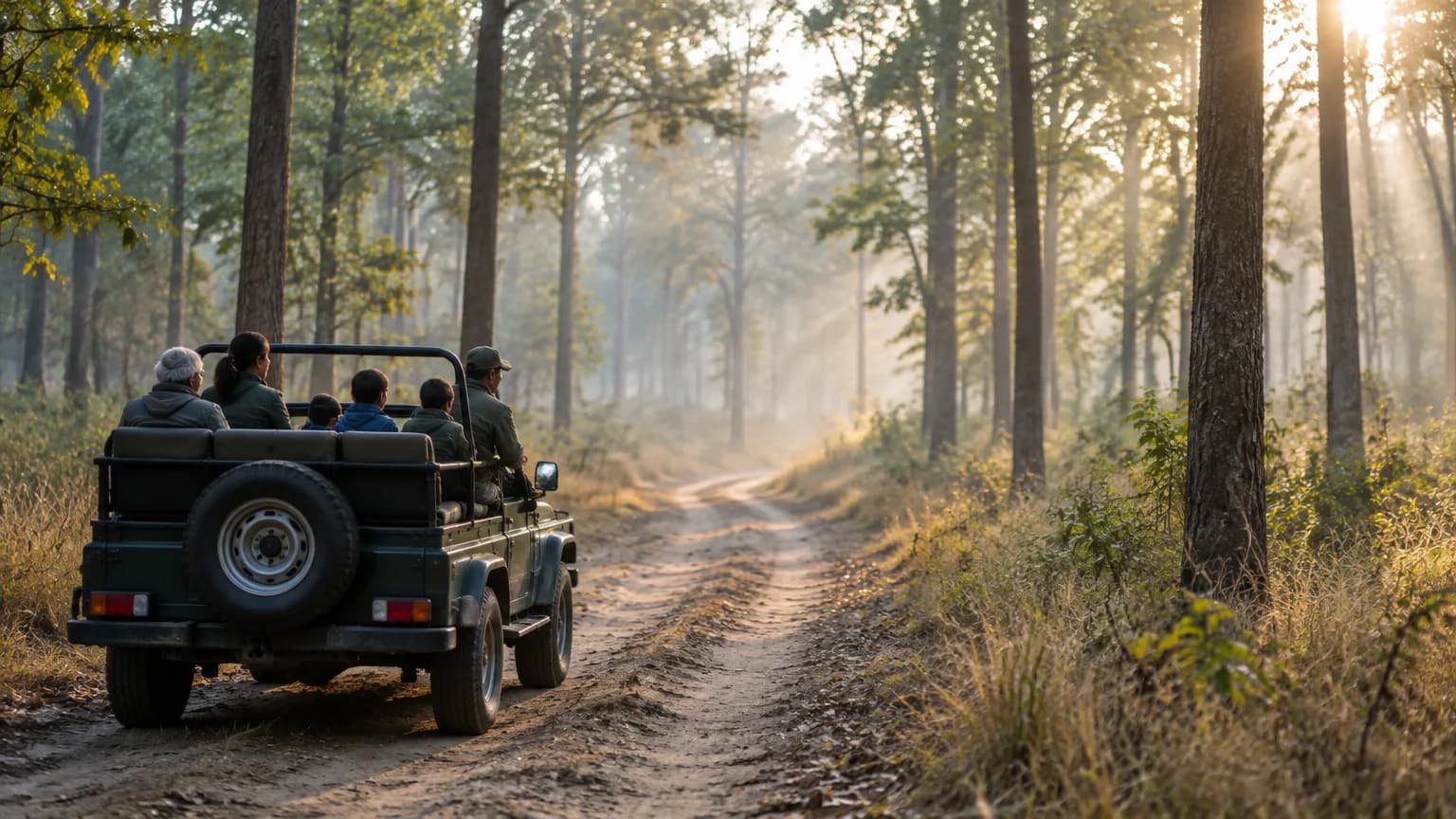
Jim Corbett · Flexible itinerary
Jim Corbett Dhikala Safari Family Holiday 5N 6D
Starting from
₹22,000/ person
Destination guide
Know Jim Corbett before you go.
Practical context, local highlights, and honest planning advice — written for travellers from India.
Field notes
A considered guide to Jim Corbett
Parks, Zones and Season at a Glance
Corbett Tiger Reserve spreads across the Pauri Garhwal, Nainital and Almora districts of Uttarakhand, with Ramnagar as the principal wn. The reserve is divided into named tourism zones, each reached through a designated forest gate: Bijrani, Dhangari, Jhirna, Durgadevi and Vatanbasa are the main access points.
The best season for a Jim Corbett safari runs from mid-November to mid-June. Winter months bring the highest tiger-sighting rates and the most visitor demand. Summer concentrates wildlife around water bodies as the landscape dries out. The monsoon closes most core zones from mid-June onward.
A focused trip needs 2–3 nights, which gives you two or three safari slots across different time-of-day windows. If you want to combine Corbett with a hill stop or a heritage town, five to eight nights works better as part of a broader Uttarakhand route.
What You Can Realistically See in Jim Corbett National Park
Jim Corbett National Park is best known for Bengal tigers, and the Dhikala, Bijrani and Jhirna zones report the most sightings. Elephants, spotted deer, sambar, wild boar and langurs are regularly seen across most zones. Birdlife is rich along the Ramganga riverbanks, with species like the crested serpent eagle and several kingfisher varieties common.
Leopards and sloth bears live in the reserve but are far less frequently spotted. No safari operator can promise a tiger sighting — that is simply the nature of a wild forest. What you can control is the zone you book, the season you travel in, and the number of drives you take. More drives across different zones improve your odds, but every safari is its own outcome.
How Sightings Change with the Season
Winter, from December to February, is the strongest window for wildlife in Jim Corbett. Grass is shorter, undergrowth thinner, and animals move through open areas more visibly. Morning temperatures can drop to 2°C, so carry warm layers even if the afternoon feels mild.
Spring through March and April stays dry with core zones open. As summer arrives in May and June, water scarcity draws wildlife to the remaining pools and streams, which can make for concentrated sightings despite temperatures touching 42°C. Early morning drives are essential in summer.
The monsoon changes access significantly. All zones are closed for overnight halts from 15 June to 14 November. Bijrani closes for day visits from 30 June to 14 October. Dhikala, Lohachaur and Sonanadi close for day visits from 16 June to 14 November. Jhirna and Dhela remain open for day safaris year-round, subject to road and weather conditions. Post-monsoon, from October onward, safari access reopens in stages as rainfall decreases.
Safari Types, Timings and Booking Basics
Two main safari formats run in Corbett Tiger Reserve: jeep safaris and canter safaris. Jeep safaris operate across most tourism zones and carry up to six passengers, giving you flexibility to stop and wait at sighting points. Canter safaris use larger vehicles in the Dhikala zone, seating more people at a lower per-person cost.
Morning drives start around 6:00 AM and afternoon drives from approximately 2:30 PM, though timings shift by season — confirm at booking. Dhikala canter slots are listed as 6:00 AM–11:30 AM and 12:00 PM–5:30 PM. The morning slot is generally preferred for wildlife activity.
Book your zone and slot as early as possible. Jeep safari reservations open progressively and can be made up to 45 days in advance through the official Corbett Tiger Reserve booking website. Your safari permit is zone-specific: if you book Dhikala, you may only drive within that zone. A rule introduced in 2026 restricts safari vehicles older than 15 years, so verify the vehicle age with your operator before confirming. The jeep safari e-permit for Indian nationals is listed at ₹3,350 per vehicle as of September 2026; full-day jeep costs are listed at ₹7,000–₹7,900 per jeep as of October 2026. A canter safari seat is listed at ₹2,500 per person as of September 2025. Confirm current rates at booking, as these figures change seasonally.
Where to Stay Near the Parks
Most visitors base themselves in Ramnagar or along the Dhikuli resort belt on the Kosi River. Ramnagar has budget guesthouses and basic lodges close to the railway station and the main park gates, making it the practical choice for cost-conscious travellers. Dhikuli, roughly 10–15 minutes from the gates, has mid-range resorts and riverside properties that suit couples and families.
For wildlife-focused trips, staying near the gate you have booked saves meaningful time on early starts. The Dhangarhi and Dhikala access area suits those heading to Dhikala. The Bijrani access area, north of Ramnagar around the Amdanda gate, works for Bijrani safaris. The Dhela and Jhirna access area covers the southern approach to those two zones. The Durgadevi access area sits on the Ranikhet road for the northeastern zones.
Distance to the gate directly affects your morning. A lodge 30 minutes from the gate means leaving by 5:15 AM for a 6:00 AM safari. Staying closer buys you extra sleep and less stress. Tented camps and forest rest houses inside the reserve offer a deeper forest experience but book out months ahead and are closed during the monsoon night-halt period.
wns and Getting There
Ramnagar is the main gateway for Corbett Tiger Reserve, with the railway station about 12 km from the park. The station is connected to Delhi via Moradabad and Kashipur, with a journey time of roughly 5.75 hours on the Delhi–Ramnagar train route.
The nearest operational airports are Delhi and Dehradun. Pantnagar Airport is identified by Uttarakhand Tourism as the closest domestic airport to the reserve. Most travellers from major Indian cities fly or take the train to Delhi and then drive or take the overnight train onward to Ramnagar. By road, the Delhi–Ramnagar route runs through Hapur, Moradabad and Kashipur.
The last transfer from Ramnagar to your lodge is typically 15–30 minutes. The Dhikala access gate is about 18 km from Ramnagar, with the Dhikala lodge a further drive inside the forest. Factor in that distance when planning early-morning safari starts — a gate 30 minutes away means a pre-dawn departure from your room.
Combining Zones into a Corbett Route
Corbett works well as a standalone 2–3 night trip, but it also connects naturally with nearby hill stops for a longer Uttarakhand itinerary. A practical outline: two nights in Corbett for safaris, then two nights in Nainital or Bhimtal for lake views and cooler air. Nainital is about two hours from Ramnagar by road.
Kaladhungi, roughly 30 minutes from Ramnagar, is worth a half-day stop for the Jim Corbett Museum, which occupies the naturalist's former home. If you want to cover both Dhikala and Bijrani zones within Corbett, plan three nights so you can take separate morning and afternoon drives in each. Adding a hill stop brings the total to five or six nights. Keep driving distances realistic — Corbett to Nainital is manageable in one transfer, but trying to add too many stops in a short trip dilutes the safari experience.
Ways to Travel: Package Styles for Jim Corbett
Tripstor offers Jim Corbett holiday packages across several travel styles, each built around a different kind of trip. Packages start from ₹8,500 per person (land only, twin sharing). Here is a brief guide to who each style suits.
- Wildlife and Safari: Built around multiple jeep or canter drives in prime zones. Suits serious wildlife watchers and photographers who want to maximise time in the forest.
- Adventure: Adds activities like river rafting on the Kosi River alongside safari drives. Good for active travellers and groups who want more than just the vehicle.
- Family: Slower pace with canter safaris and child-friendly activities including summer camps. Designed for parents travelling with children of varying ages.
- Honeymoon: Private jeep safaris and quieter riverside stays. Suits couples who want a mix of wildlife and time to themselves.
- Budget: Uses Ramnagar guesthouses and canter safaris to keep costs down. Best for students and solo travellers watching their spend.
- Wellness and Relaxation: Combines safaris with yoga and meditation sessions available in the Corbett area. Suits travellers who want a restorative break alongside the forest experience.
- Trekking and Camping: Includes nature walks and camping near the buffer zones. For those who want to spend time outdoors beyond the safari vehicle.
- Short Getaway: A 2-night trip with one or two safaris. Fits a long weekend for travellers from Delhi and nearby cities.
- Best of: Covers multiple zones and adds a hill stop such as Nainital. Suits first-time visitors who want a fuller picture of the region.
Safari Etiquette and What to Carry
Responsible behaviour in the forest improves the experience for wildlife, other visitors and yourself. These five tips apply on every drive.
- Wear muted colours. Olive, khaki, grey and brown blend into the forest. Bright white, red or neon clothing is visible to animals and distracting to other guests.
- Never use flash photography. Flash stresses wildlife and is banned on most safaris. Use a zoom lens — 200mm or longer is useful — and rely on natural light. Binoculars are worth carrying for distant sightings.
- Keep voices low. Silence in the vehicle lets you hear alarm calls from deer and langurs, which often signal a predator nearby before anyone sees it.
- Protect against sun and dust. Open jeeps expose you to both. A wide-brimmed hat, sunglasses, sunscreen and a scarf or buff are practical on any drive. Use a dust-proof bag or case for camera equipment.
- Check age rules before booking. Some zones and safari formats have minimum age requirements, and forest rest houses may not permit very young children. Confirm at booking so there are no surprises at the gate.
Carry a refillable water bottle, any personal medication and a light jacket for morning drives even in the warmer months. Once the plan feels right, compare the current Jim Corbett packages and pick the one that fits.
Jim Corbett Safari Zone Quick Reference
| Zone | Safari Type | Open for Day Visits | Night Halts Allowed |
|---|---|---|---|
| Dhikala | Jeep, Canter | 15 Nov – 15 Jun | 15 Nov – 14 Jun |
| Bijrani | Jeep | 15 Oct – 29 Jun | 15 Nov – 14 Jun |
| Jhirna | Jeep | Year-round (weather permitting) | 15 Nov – 14 Jun |
| Dhela | Jeep | Year-round (weather permitting) | 15 Nov – 14 Jun |
| Durgadevi | Jeep | Seasonal — confirm at booking | 15 Nov – 14 Jun |
| Sitabani (buffer) | Jeep | Seasonal — confirm at booking | Not applicable |
Personalise your trip
Shape Jim Corbett around the way you travel.
Choose a travel style as your starting point. We'll refine the pace, stays, experiences, and budget until the journey feels entirely yours.
Not sure which fits? Use our trip builder — it takes under two minutes.
Got questions?
The questions travellers ask about Jim Corbett.
Straight answers on visas, pricing, best time to visit, and how our packages work for Indian travellers.
7 answered below
Social proof
What Tripstor travellers say
Feedback from Indian holidaymakers who travelled with Tripstor.
4.8
from 432+ reviews
CoupleNorway is expensive but the experience is worth planning for. We did the Flam Railway and the Sognefjord on Day 5. Tripstor gave us a realistic budget breakdown before we booked, which I appreciated. No surprises on the ground.
FriendsThree friends and I did a 9-night Australia package with stops in Melbourne and Sydney. We spent an afternoon at the Melbourne Cricket Ground and caught a local match. Tripstor sorted our group visa applications together which saved a lot of back and forth. Good experience overall.
FamilyBooked a family package for 7 nights covering Port Blair, Havelock, and Neil. The Cellular Jail light and sound show on Day 1 set a good tone for the trip. Kids were engaged throughout and the itinerary was not too rushed.