
Sacred Sites, Season and Basics at a Glance
Varanasi sits on the western bank of the Ganga in Uttar Pradesh, roughly 320 km southeast of Lucknow. The main circuit runs through the riverfront ghats and old city lanes, with Sarnath as a separate Buddhist heritage area about 10 km out.
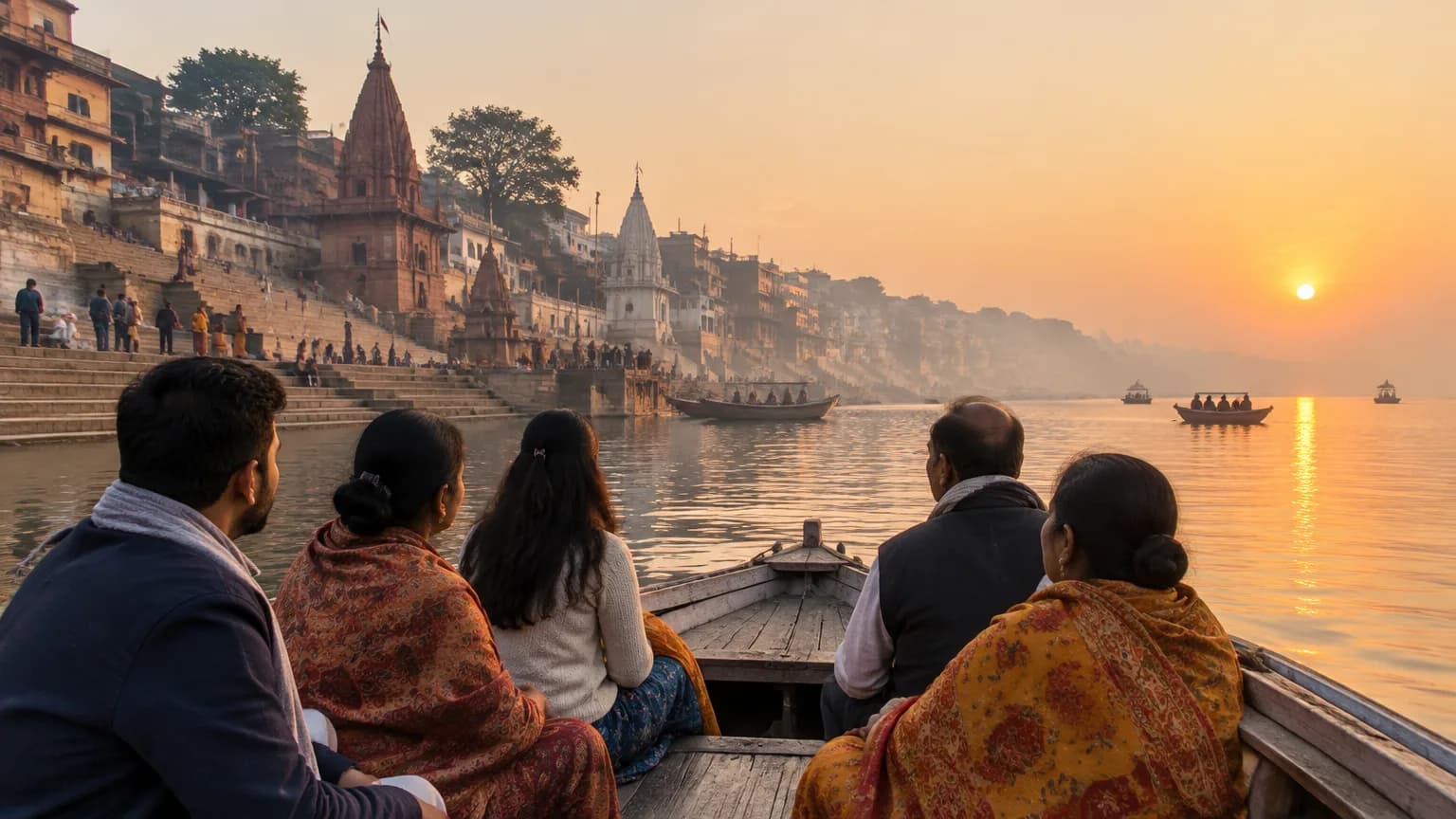
Four to six nights covers the ghats, temples and Sarnath without rushing. October to March is the most pleasant period for walking and boat rides, with cool mornings and possible fog in December and January. Varanasi Junction is the principal railhead, alongside Banaras, Pt. Deen Dayal Upadhyaya and Kashi stations. The airport sits about 25 km from the city centre. The trip works year-round, but April to June brings sharp heat and July to September brings heavy rain and slippery ghats.
The Main Sites and Why They Matter
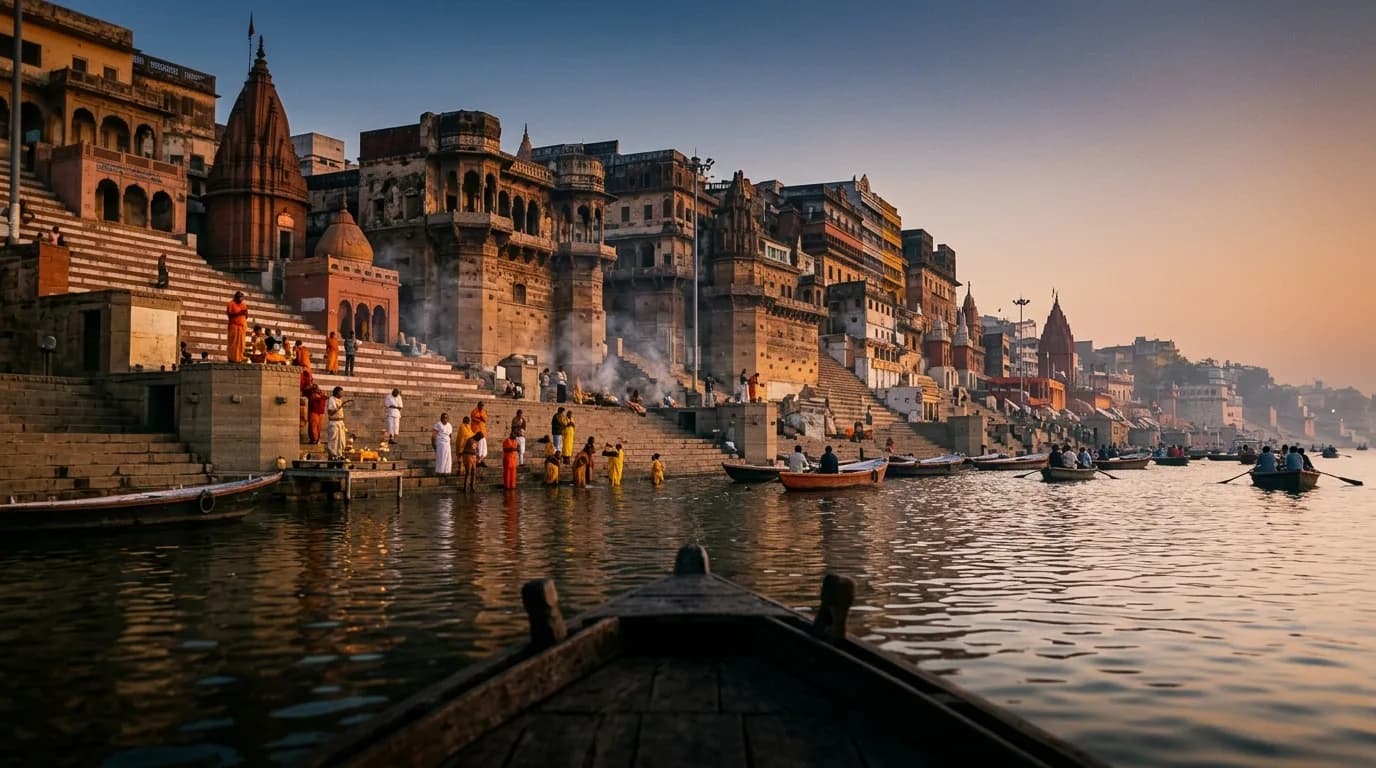
The riverfront ghats carry the city's ritual life, and most of what you will remember about this destination happens between Assi Ghat and Panchganga Ghat. Each site has a distinct character, so the order you visit them in shapes the whole experience.
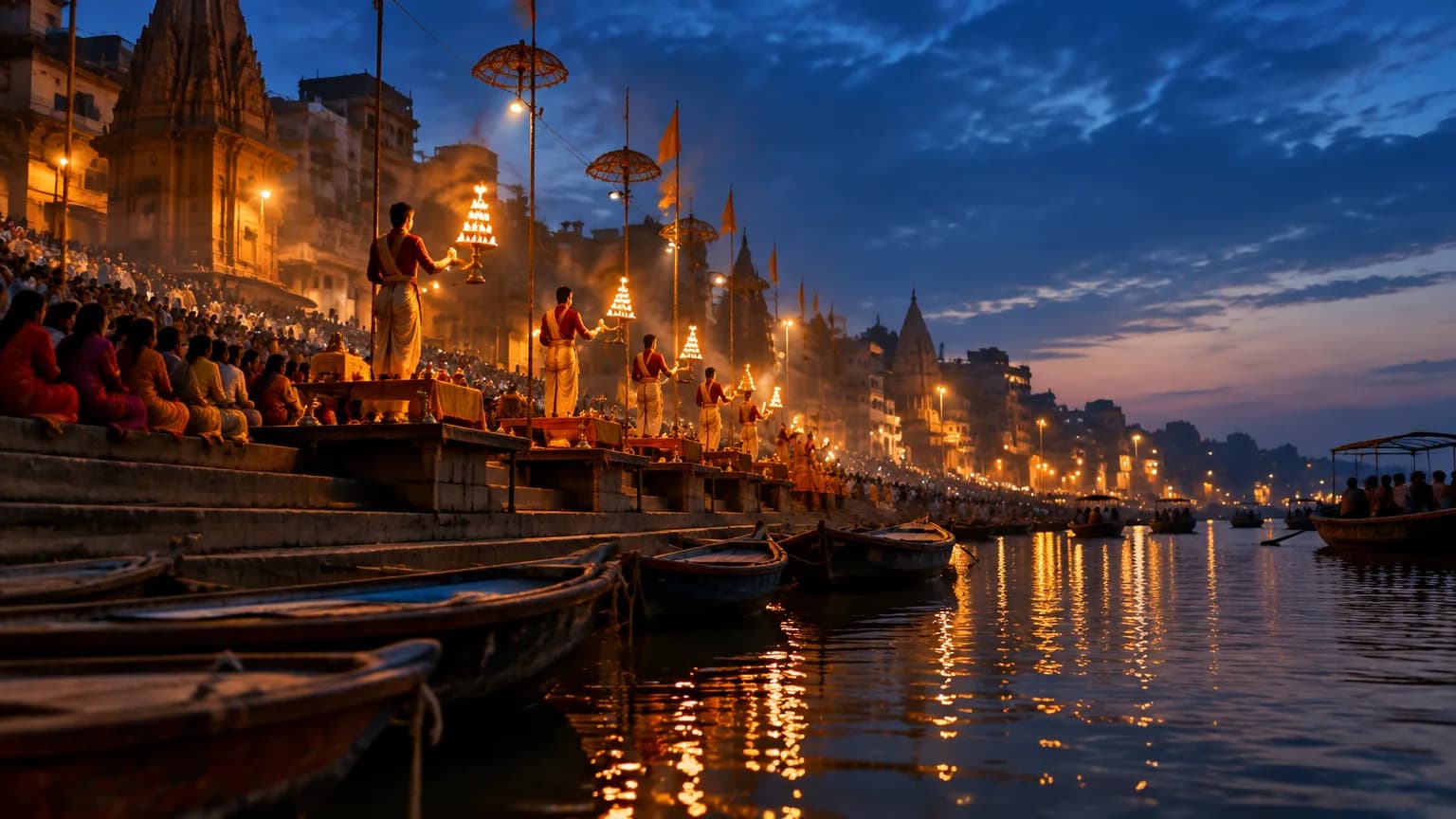
- Dashashwamedh Ghat is the busiest ceremonial ghat on the riverfront, known for the evening Ganga Aarti. It sits close to Kashi Vishwanath Temple, so the two can be combined in one visit. Arriving early gives a clearer view before the crowd builds.
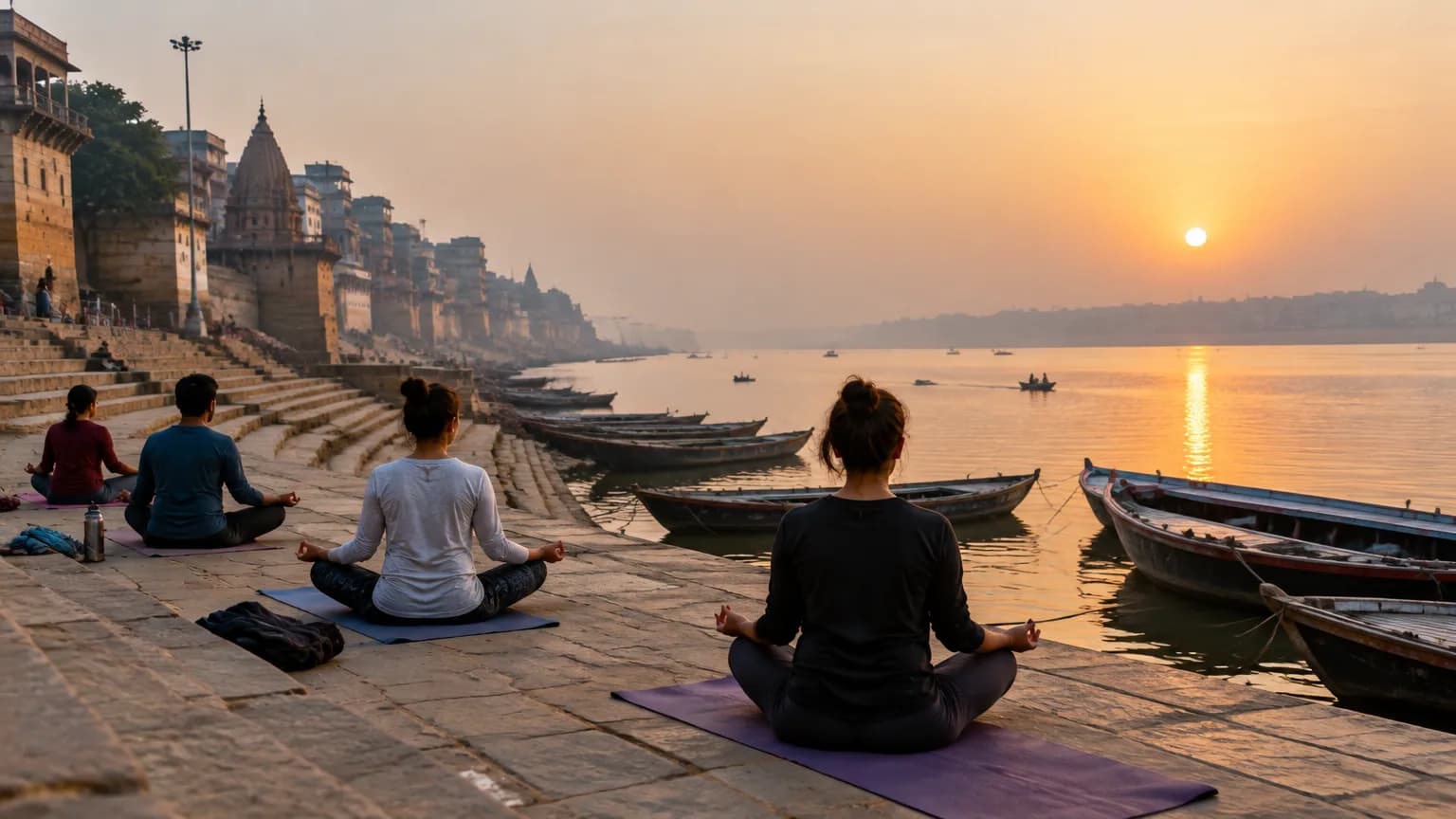
- Assi Ghat anchors southern Varanasi and hosts Subah-e-Banaras, a sunrise programme of yoga, music and devotional activities. Early risers find it calm and unhurried, which makes it a good starting point for the day.
- Kashi Vishwanath Temple in the old city is dedicated to Lord Shiva and is one of Hinduism's twelve Jyotirlingas. Darshan here is the core reason many families make the trip, and the lanes around it are part of the experience.
- Manikarnika Ghat on the riverfront is associated with Hindu cremation rites. Visitors observe from a respectful distance and do not photograph the cremation area. The ghat is active around the clock and carries a weight that most visitors feel immediately.
- Sarnath holds the Dhamek Stupa, Mulagandha Kuti Vihara, monastery ruins, landscaped gardens and an archaeological museum. It gives the trip a Buddhist chapter and the flat ground suits slower walkers and elders well.
- Sarnath Archaeological Museum houses the Ashoka Lion Capital and other artefacts from the site. A short indoor visit works well in the afternoon, especially when the heat outside is high.
- Bharat Kala Bhavan Museum at Banaras Hindu University displays rare paintings, sculptures and textiles. It rewards travellers who want more than the riverfront.
- Banaras Hindu University is noted for its Indo-Gothic architecture and its place in Indian academic heritage. A drive through the campus pairs naturally with the museum visit.
Darshan, Queues and Entry Practicalities
Queues at the main temples build through the morning and peak on weekends, festival days and Mondays, so an early start gives the calmest darshan. Plan Kashi Vishwanath for first light and keep the afternoon for Sarnath or a ghat walk.
Dress modesty is required at all religious sites. Full-length clothing that covers shoulders and knees is expected, and leather items are not permitted inside temple premises. Footwear comes off before entering temples, so slip-on shoes are easier on older knees. A small bag for phones, wallets and shoes helps, and a light shawl doubles as a head cover where required.
Rules change seasonally and during festivals. Confirm the current entry process, mobile phone restrictions and any special darshan arrangement with your local contact or the temple office before joining the queue. Photography is generally fine on the ghats and in Sarnath gardens, but not during rituals, inside sanctums or near cremation areas.
Festivals and the Best Season to Visit
October to March is the comfortable window for Varanasi: dry days, cool mornings and easy evenings on the river. November is the most crowded month because Dev Deepawali lights the ghats with earthen lamps and the riverfront may close to vehicles during the event.
The festival calendar shapes the trip considerably. Maha Shivratri in February or March brings night-long worship of Shiva and draws large numbers of pilgrims. Holi in March fills the lanes with colour, and boat services may be reduced on Holi day itself. Ganga Dussehra in May or June marks the descent of the Ganga. The daily Ganga Aarti at Dashashwamedh Ghat is the one event you can plan around every evening, with timing shifting by season.
| Period | Conditions | Crowds and prices |
|---|---|---|
| November to February | Cool, dry, possible morning fog in Dec–Jan | High to very high; prices peak |
| March | Warming, mostly dry; Holi brings lane celebrations | High; prices peak |
| April to June | Very hot; peak around 38–45°C in May–June | Low; prices lower |
| July to September | Heavy rain; slippery ghats; boat services weather-dependent | Low; prices low |
| October | Rain easing; warm days | Medium; prices medium |
Book accommodation and transport early if your dates fall in November, around Dev Deepawali or on a long weekend. For festival weeks, build in buffer time for road closures near the riverfront and confirm boat plans the previous evening.