Curated starting points
Find a Spiti Valley journey that feels like yours.
Begin with a thoughtfully paced itinerary, then change the stays, experiences, route, and budget with a Tripstor specialist.
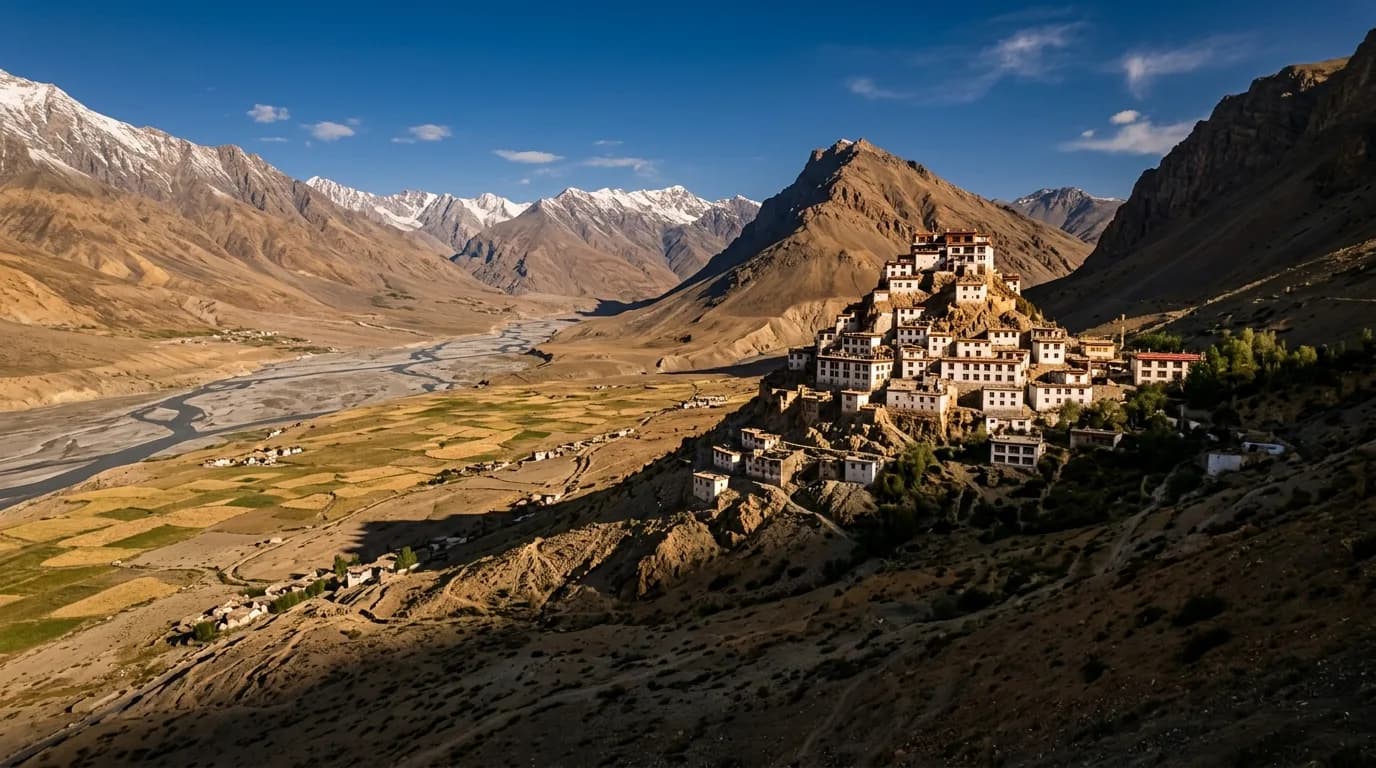
Spiti Valley tour packages suit travellers who want high-altitude cold-desert roads, ancient monasteries and remote Himalayan villages in one trip. The valley sits in northern Himachal Pradesh, best visited between April and October, with June to September the most accessible period. A 7–10 day trip gives a comfortable pace, and packages start from Rs.15,500 per person, land only, twin sharing.
Curated starting points
Begin with a thoughtfully paced itinerary, then change the stays, experiences, route, and budget with a Tripstor specialist.
Starting from
₹33,500/ person
Destination guide
Practical context, local highlights, and honest planning advice — written for travellers from India.
Field notes
A considered guide to Spiti Valley
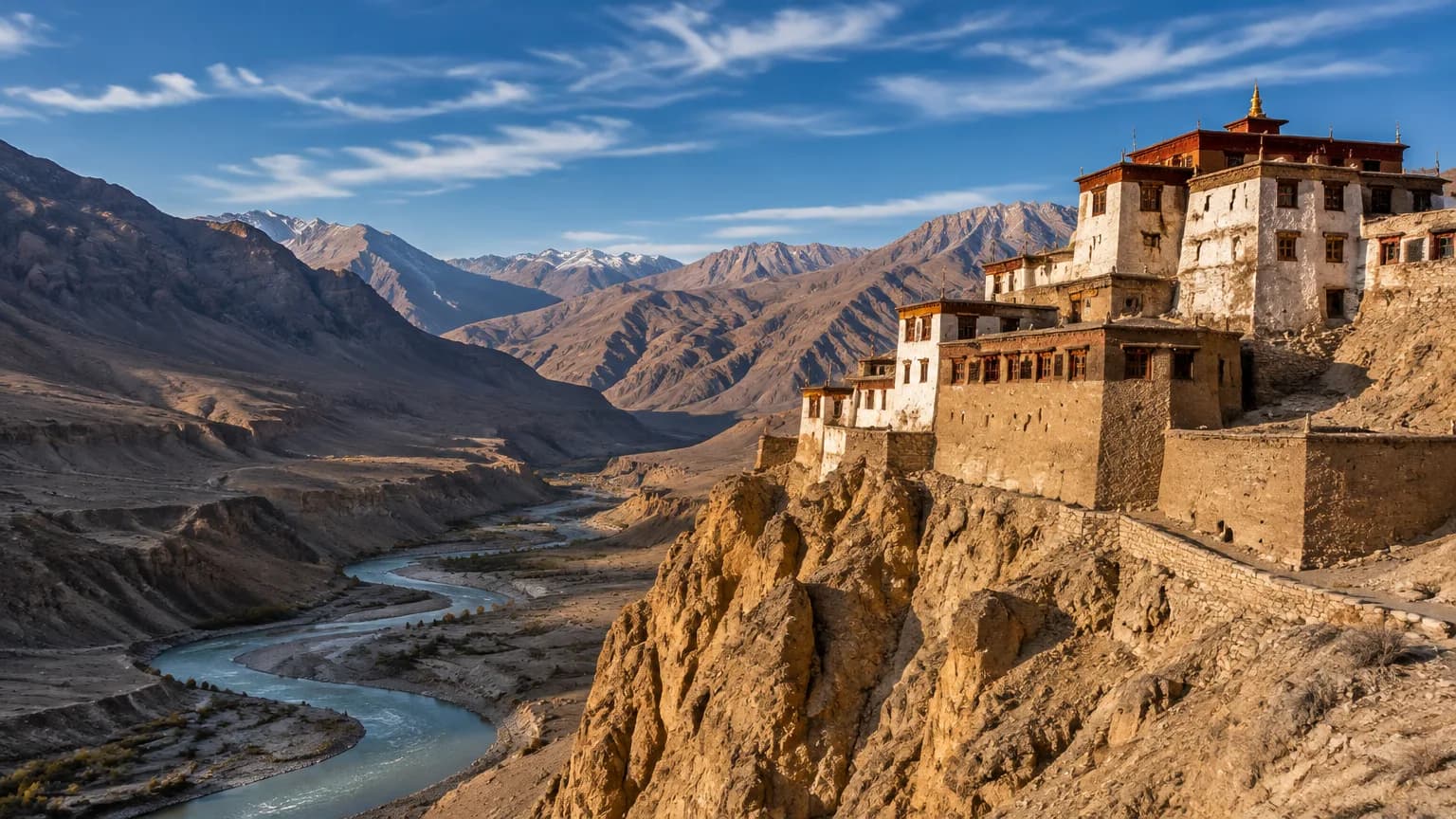
Spiti is a high cold desert in northern Himachal Pradesh, where most villages sit between 3,600 and 4,500 metres and Kaza, the main hub, is at roughly 12,500 feet. That elevation shapes everything: which roads are open, how fast you can move and how your body responds on arrival.
The visiting window runs from April to October. June to September is the most accessible period for a full circuit, because the Manali–Spiti route generally opens from mid-June. A 7–10 day trip works well for a road journey from Delhi. There is no airport or railway station in the valley, so every route ends in a long drive. Bhuntar Airport (KUU) is the nearest airport, and Chandigarh and Kalka are the nearest railheads.
Spiti rewards travellers who plan stops by area rather than by distance. The valley divides into a few clear pockets, each with its own character.
Spiti Valley weather by season changes the trip completely. Winter is extreme and most passes close, monsoon is mostly dry inside the valley but rough on approach roads, and autumn gives the clearest light of the year. The table below covers what each period actually means for a traveller.
| Season | Temperatures | Road and Pass Conditions | Best For |
|---|---|---|---|
| Winter (November–April) | -20 to -5 °C in the coldest months | Many passes closed; Manali route shut; Kinnaur access can be cut by heavy snow | Very few visitors; winter scenery; low prices — confirm access before booking |
| Summer (May–June) | Cold mornings, 10–25 °C daytime | Access improves from May; Manali route generally open from mid-June | Full circuit road trips; families; first-timers |
| Monsoon (July–September) | 10–22 °C; little rain inside the valley | Approach roads can face landslides, water crossings and disruption, especially from Manali | Green valley landscapes; fewer crowds than peak June |
| Autumn (October) | 0–10 °C; clear skies; cooler nights | Routes still open early in the month; closing as winter develops | Clear views; photography; quieter stays |
For Spiti Valley snow as a visual experience, the cold months deliver it in full — but most passes are shut and services are limited. For open roads and clear skies together, September and early October are the steadiest window. The Manali–Spiti route is generally open from mid-June to mid-October, which is the practical window for a full Shimla-to-Manali loop.
Spiti has no airport or railway station. Every route ends in a long road transfer, and weather can extend that transfer by a day or more. Plan around this from the start.
From Delhi, the usual approach is a train to Kalka or Chandigarh, then road. The Shimla side generally takes two days with a night halt en route. The Manali route is stated as 12–14 hours of nonstop driving from Delhi to Kaza, but that only applies when Kunzum Pass is open. Total transit from Delhi is around 24 hours by the faster route.
Travellers from Mumbai, Bengaluru, Hyderabad, Kolkata, Ahmedabad and Kochi generally fly to Chandigarh or Delhi and continue by road. Air-and-road transit from Mumbai is stated as 26–32 hours; rail-and-road is stated as 42–48 hours. From Chennai and Pune, flying to Chandigarh or Bhuntar Airport and continuing by road are both viable options. Bhuntar requires a road transfer into the valley, and so do Chandigarh and Kalka.
The last stretch is the part weather controls most. The Kaza–Manali road is roughly 225 kilometres via Atal Tunnel and Kunzum Pass when the route is open. Landslides, water crossings and snow can delay any approach, so keep one buffer day on each end of the trip. On acclimatisation: gain height slowly, drink water consistently, avoid alcohol for the first two days, and treat the first day at Kaza as a rest day rather than a sightseeing day.
Kaza is the practical base for most trips, with the widest range of accommodation and the easiest access to nearby monasteries and villages. Every other base is smaller, quieter and mostly homestay-led.
Stay types run from basic homestays and guesthouses to small lodges and simple resorts in and around Kaza. Rooms at this altitude are functional rather than plush. Check heating and hot-water arrangements before booking, and confirm what is available in the shoulder months.
A sensible Spiti Valley route uses two or three bases and builds in rest days for acclimatisation. The outline below is organised around altitude gain and road logic, not mileage targets.
Weather changes this plan more than anything else. If the Manali side is shut, you exit the same way you came in, which adds a day or two. The same outline works in reverse from Manali when the pass is open. Build flexibility into the last two days of any Spiti trip.
This destination suits travellers who are comfortable with long road days, basic stays and high altitude. Couples, solo travellers, photographers and anyone drawn to Buddhist monasteries, fossils and cold-desert landscapes will find it rewarding.
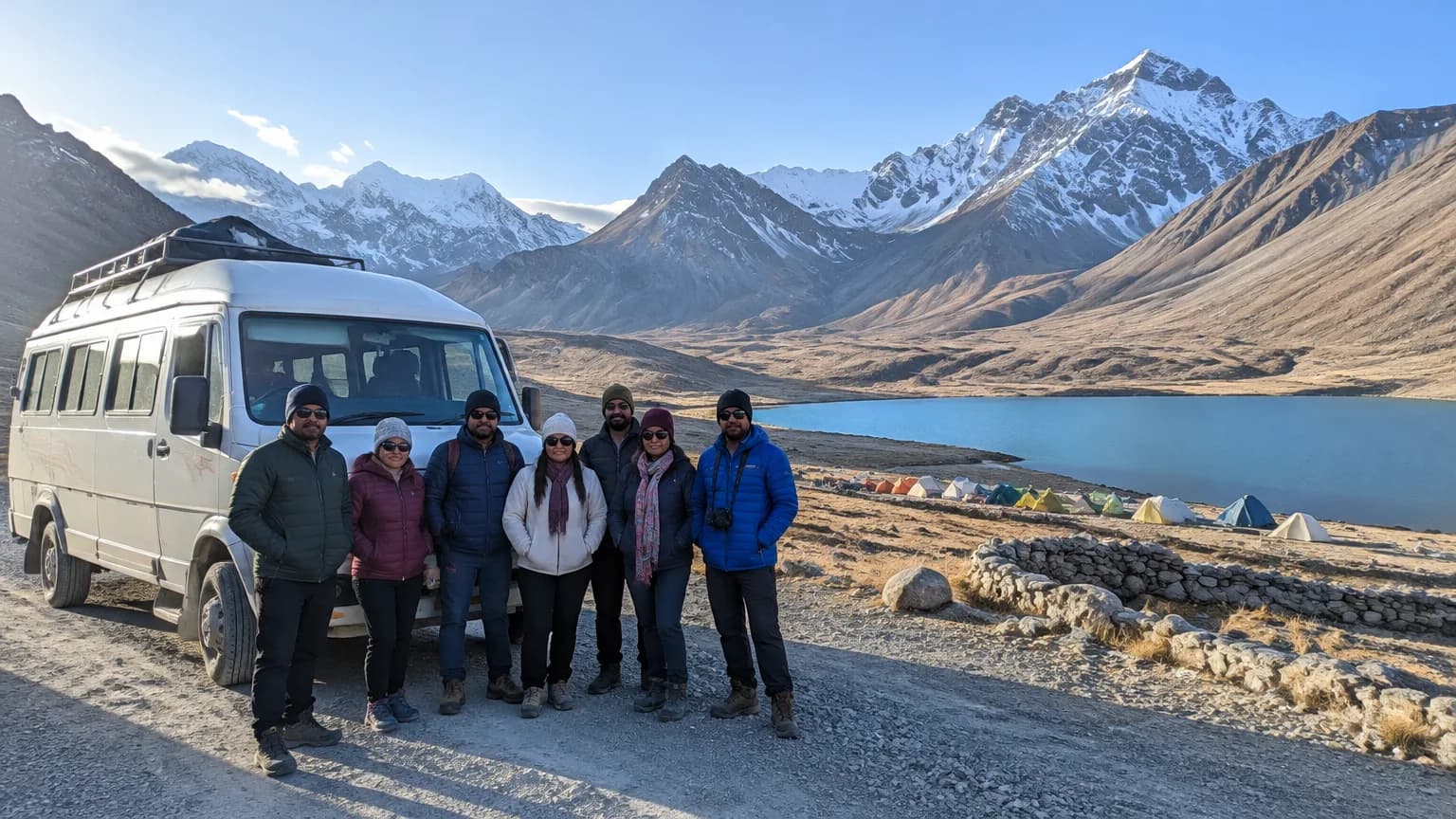
Adventure seekers have trekking trails, camping, off-roading and river rafting on the Spiti River. Groups benefit from shared jeeps and cabs, which keep costs down and make the driving more manageable.
Families with elders or young children need to think carefully. Kaza sits at about 3,800 metres, altitude sickness is a real risk at that height, and medical facilities are far from the valley. Mobile coverage disappears across large sections of the route, which matters in an emergency. First-timers can manage the trip, but only with a relaxed pace, a buffer day and no rush to cover every stop.
If you want a short, low-altitude hill break with easy road access, the Shimla–Manali belt in Himachal Pradesh is a gentler option. Spiti rewards patience and penalises anyone who tries to rush it.
Trip styles range from fixed group departures to solo and offbeat routes. The right one depends on your comfort with rough roads, altitude and basic accommodation.
The Spiti Valley package page lists the trips available now, if you would like to see them side by side.
Pack for cold and for rain on the approach roads, even in summer. These five points matter more than anything else on a Spiti trip.
Sun protection is easy to underestimate at this altitude. Carry sunscreen with a high SPF, good sunglasses and a hat. Refill water at every opportunity and avoid heavy meals on the first day at altitude.
Personalise your trip
Choose a travel style as your starting point. We'll refine the pace, stays, experiences, and budget until the journey feels entirely yours.
Not sure which fits? Use our trip builder — it takes under two minutes.
Got questions?
Straight answers on visas, pricing, best time to visit, and how our packages work for Indian travellers.
7 answered below
Social proof
Feedback from Indian holidaymakers who travelled with Tripstor.
4.8
from 432+ reviews
CoupleNorway is expensive but the experience is worth planning for. We did the Flam Railway and the Sognefjord on Day 5. Tripstor gave us a realistic budget breakdown before we booked, which I appreciated. No surprises on the ground.
FamilyBooked a family package for 7 nights covering Port Blair, Havelock, and Neil. The Cellular Jail light and sound show on Day 1 set a good tone for the trip. Kids were engaged throughout and the itinerary was not too rushed.
HoneymoonHoneymooned in Kashmir for 7 nights in May. Gulmarg had light snow still and we got a gondola ride on Day 4. The tulip garden in Srinagar was in full bloom. Tripstor arranged a candlelit dinner on the houseboat which was a nice touch.