
Sacred sites, season and basics at a glance
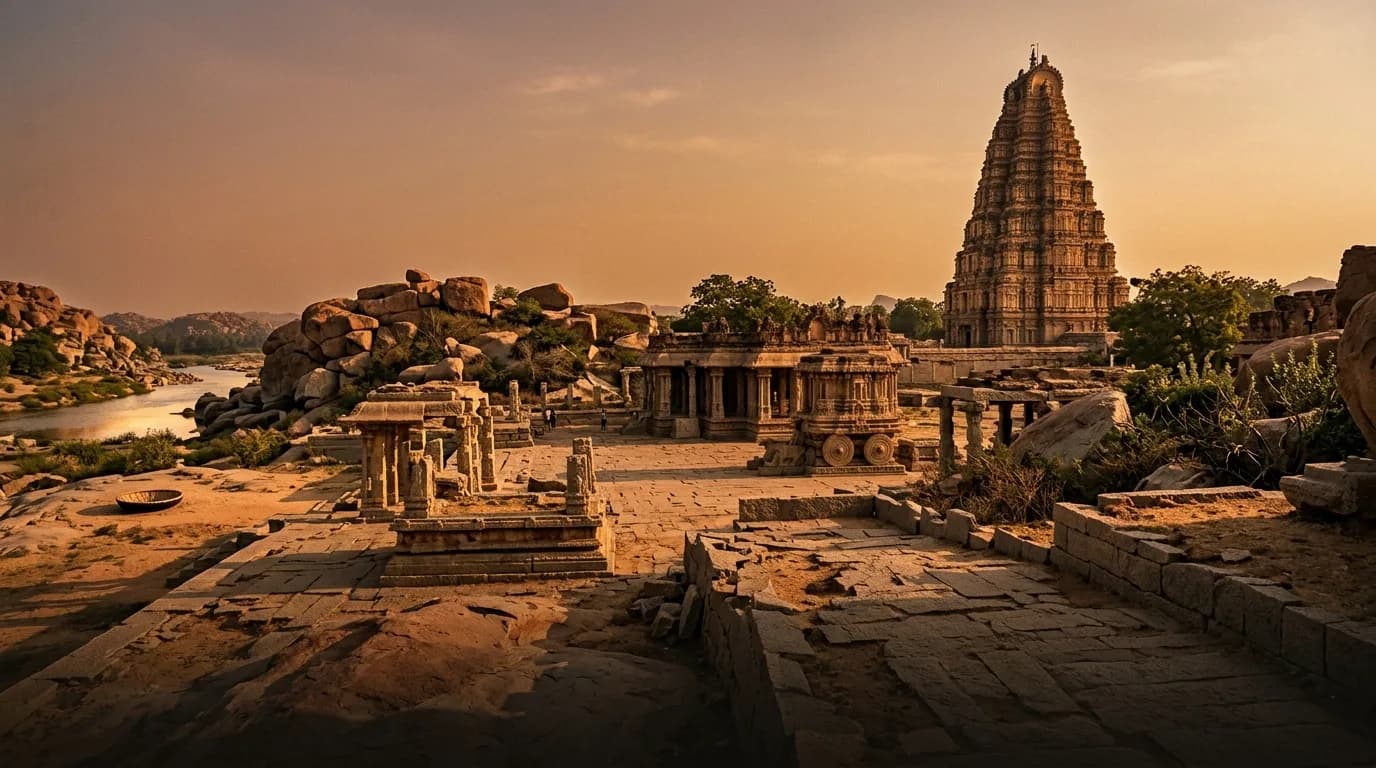
Hampi is a UNESCO World Heritage Site in Karnataka, with the ruins of the former Vijayanagara capital scattered south of the Tungabhadra River. The usual circuit runs from Virupaksha Temple to the Vitthala complex, with two hills for viewpoints.
| Basic | What to know |
|---|---|
| Region and state | Karnataka, South India, along the Tungabhadra River |
| Main circuit | Virupaksha Temple, Hampi Bazaar, Hemakuta Hill, Vitthala Temple Complex, Matanga Hill |
| Best season | November to February: cooler and drier, with low rain |
| Ideal trip length | 2-3 nights for the key highlights; 4-5 nights for a deeper visit |
| Nearest railhead | Hospet Junction, about 12 km from Hampi |
| Nearest airport | Jindal Vijayanagar Airport, about 38 km from Hampi |
Kamalapura, close to the central ruins, holds the Archaeological Museum and several monument groups. March to early June turns hot, with temperatures reported at 35-42°C, and the monsoon from late June to September can leave monument areas muddy.
The ruins are spread across a wide landscape, so this is not a compact destination. Travellers who want everything within a short walk should plan to use auto-rickshaws or a bicycle between clusters. Tripstor's Hampi tour packages start from ₹9,500 per person, land only, twin sharing.
The main sites and why they matter
Hampi's sites show different sides of Vijayanagara life, from active worship to royal architecture. Seeing them in a sensible order helps you read the ruins as a capital city rather than a scatter of stones.
- Virupaksha Temple: An active temple dedicated to Lord Shiva and one of Hampi's central landmarks. Worship continues here daily, so visitors see rituals alongside heritage architecture. It stands at the western end of Hampi Bazaar.
- Vitthala Temple Complex: A riverside Vijayanagara complex dedicated to Lord Vitthala, an incarnation of Lord Vishnu. It is known for the Stone Chariot and the musical pillars, and visitors are asked not to tap the pillars.
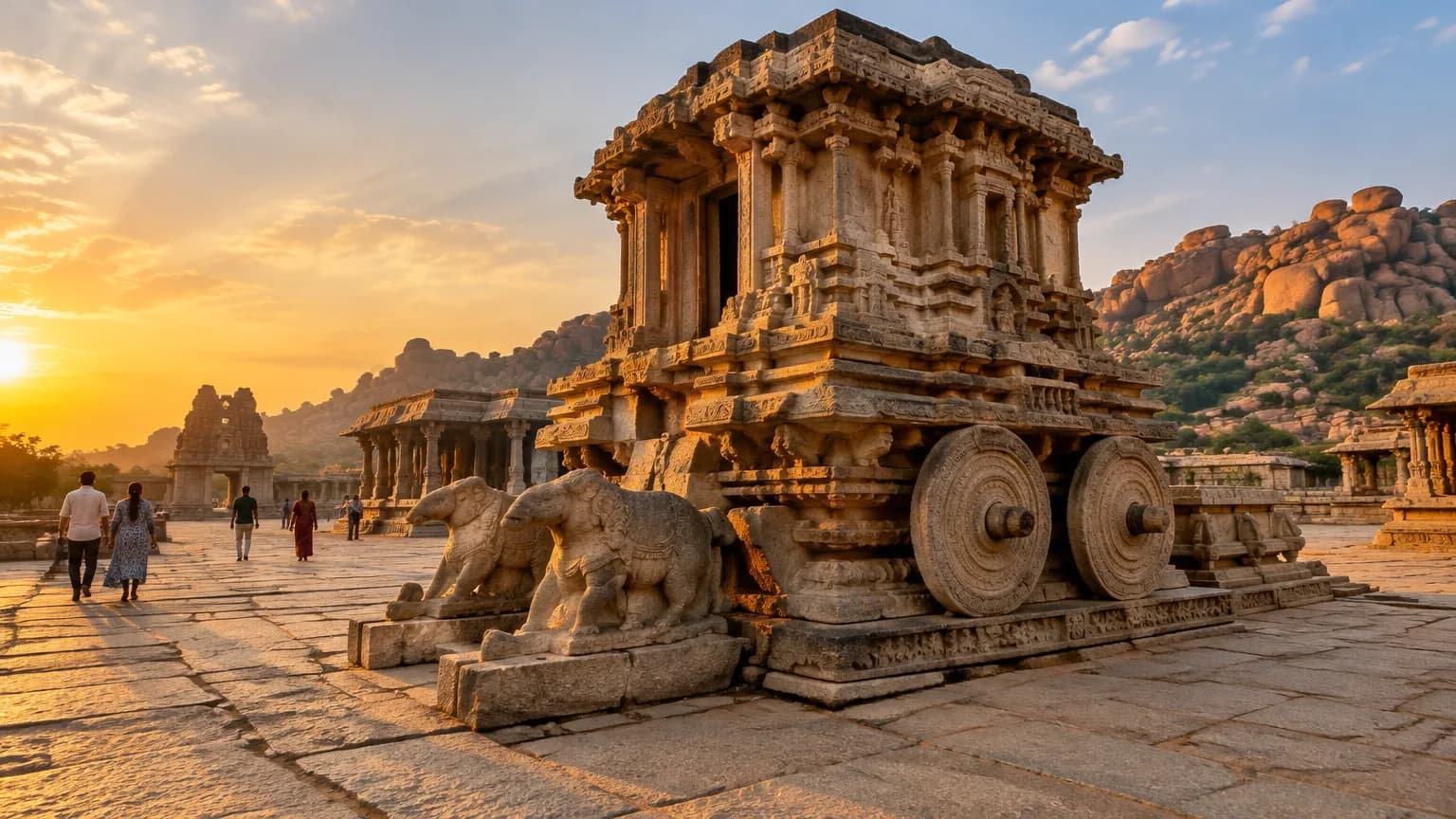
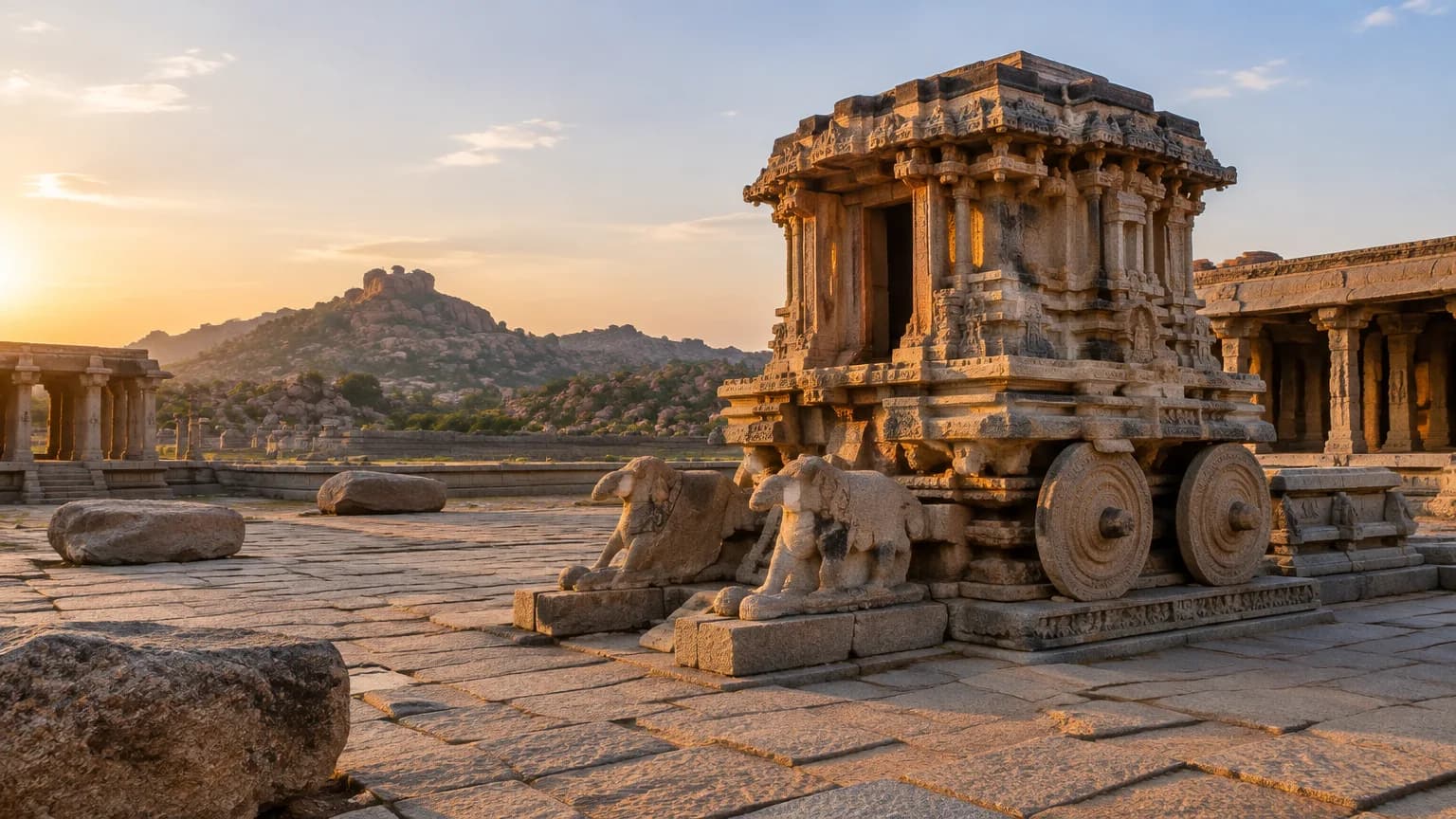
- Stone Chariot: A granite Garuda shrine built in the form of a temple chariot, inside the Vitthala complex. It is the image most travellers associate with Hampi.
- Hemakuta Hill: A rocky hill small early temples, close to the central ruins. It is a modest climb and a good sunset viewpoint.
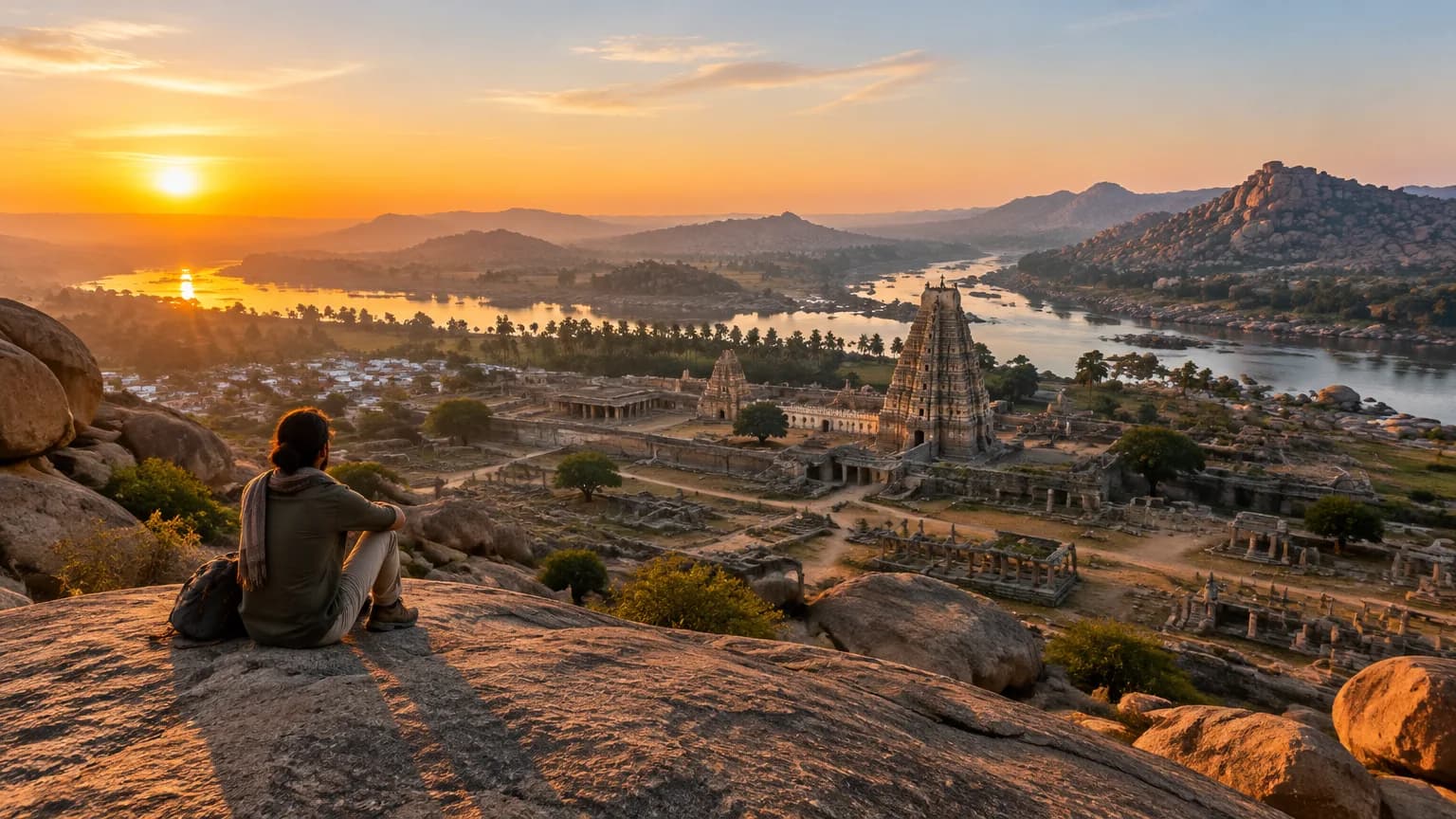
- Matanga Hill: A viewpoint over the ruins, river and surrounding landscape, best at sunrise or sunset. The climb takes about 20 to 30 minutes over uneven granite.
- Achyutaraya Temple: A temple complex reached along a riverbank route, usually quieter than the bazaar area. It suits travellers who prefer a calmer visit.
- Hampi Bazaar: A historic bazaar street that works as the starting point for walking and monument visits. A riverbank walk from here leads to the Vitthala complex.
- Tungabhadra River: The river has designated coracle-crossing points near Virupaksha, Kodandarama and Vitthala temples.
Darshan, queues and entry practicalities
Crowds at Hampi's main temples build through the morning and stay high until early afternoon. Early mornings are the calmest time for darshan and for walking the central ruins.
Weekends and festival weeks bring larger groups, especially around Virupaksha Temple and the Vitthala complex. A midweek visit in the first hour after opening usually means shorter waits and softer light for the carvings.
Dress modestly at Virupaksha Temple and remove shoes where requested. Traditional Indian attire is recommended, and shorts, sleeveless tops and revealing clothing are generally not permitted inside the sanctum sanctorum. Carry socks for hot stone floors and a cloth bag for footwear.
Visitors are advised not to climb on heritage structures, touch carvings or tap the musical pillars. Entry fees, darshan arrangements and timings change from time to time, so confirm at booking or check the official source before you travel. Karnataka Tourism updated its Hampi page in October 2026 with current access and fee information, and fees there are stated as subject to change.
Festivals and the best season
November to February is the most comfortable window for a Hampi pilgrimage, with cooler days and low rain. These are also the busiest and most expensive months, so book stays and transport early.
Hampi Utsava is the main cultural festival, held in February; the 2026 edition was scheduled for 13-15 February. It adds music, dance and heritage events and draws crowds, which suits travellers who enjoy a festival atmosphere. If you prefer a quiet darshan, plan around those dates, not through them.
March to May is hot, and a plan built around early mornings and late afternoons works better then. The monsoon from late June to September is low season with fewer visitors, but rain can make monument areas muddy and river crossings may be restricted when the Tungabhadra is high. October is a shoulder month with moderate rain and medium crowds, and it can work if you want to avoid the December rush.