Package overview
The thinking behind this journey.
A closer look at this 3-night journey through Hampi— who it's built for, what you'll experience, and why the pace works.
Journey notes
Why this route works
What you see on this Hampi trip
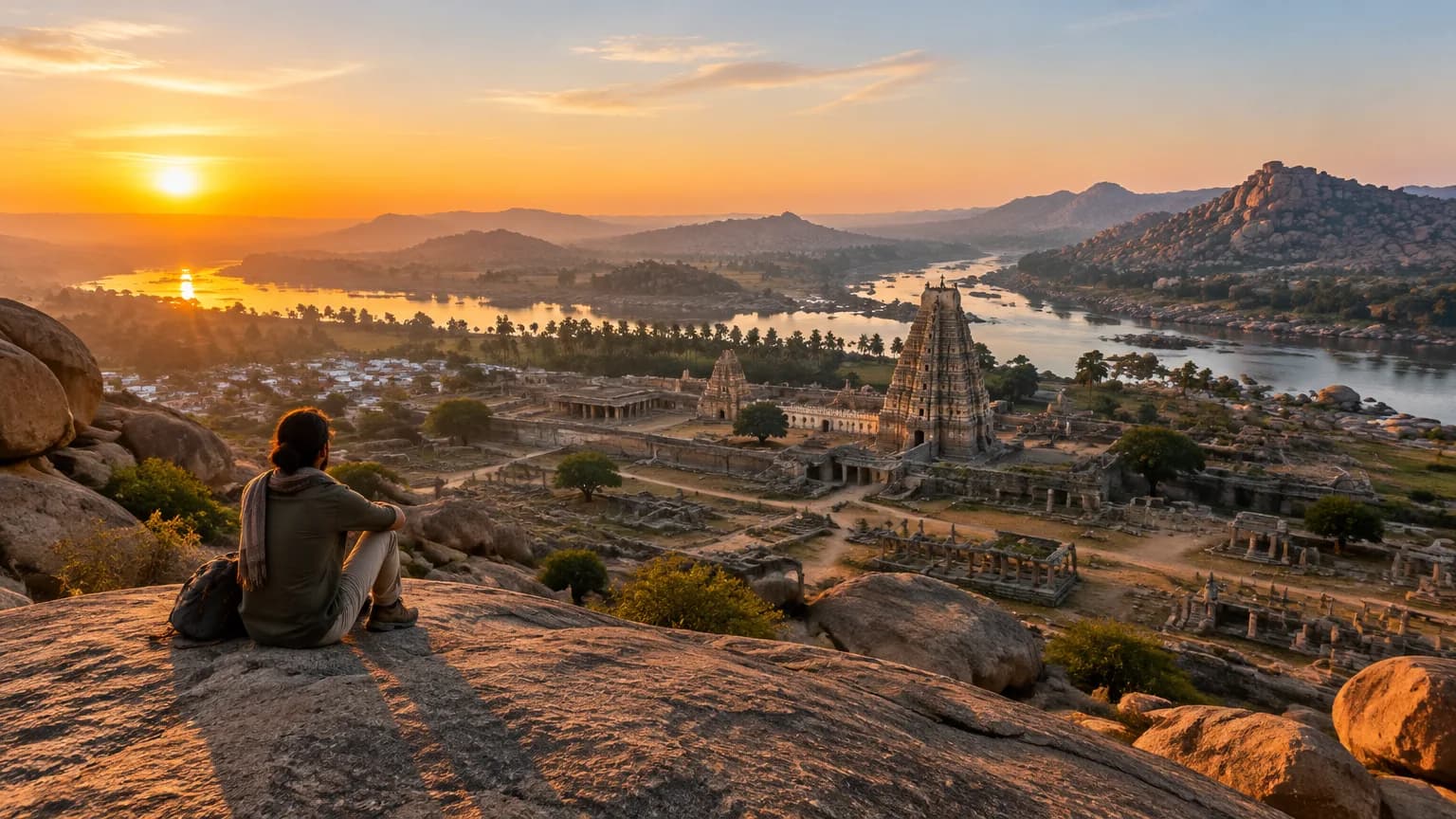
This trip covers six places that anchor most first visits: two temple zones, a river crossing, a hilltop viewpoint, the old market street and the north-bank cafe strip.
- Virupaksha Temple: An active Shiva temple in the sacred centre, best visited early morning before the day crowds build.
- Tungabhadra coracle ride: A short round-basket boat crossing at one of the designated points near Virupaksha, Kodandarama or Vitthala temples.
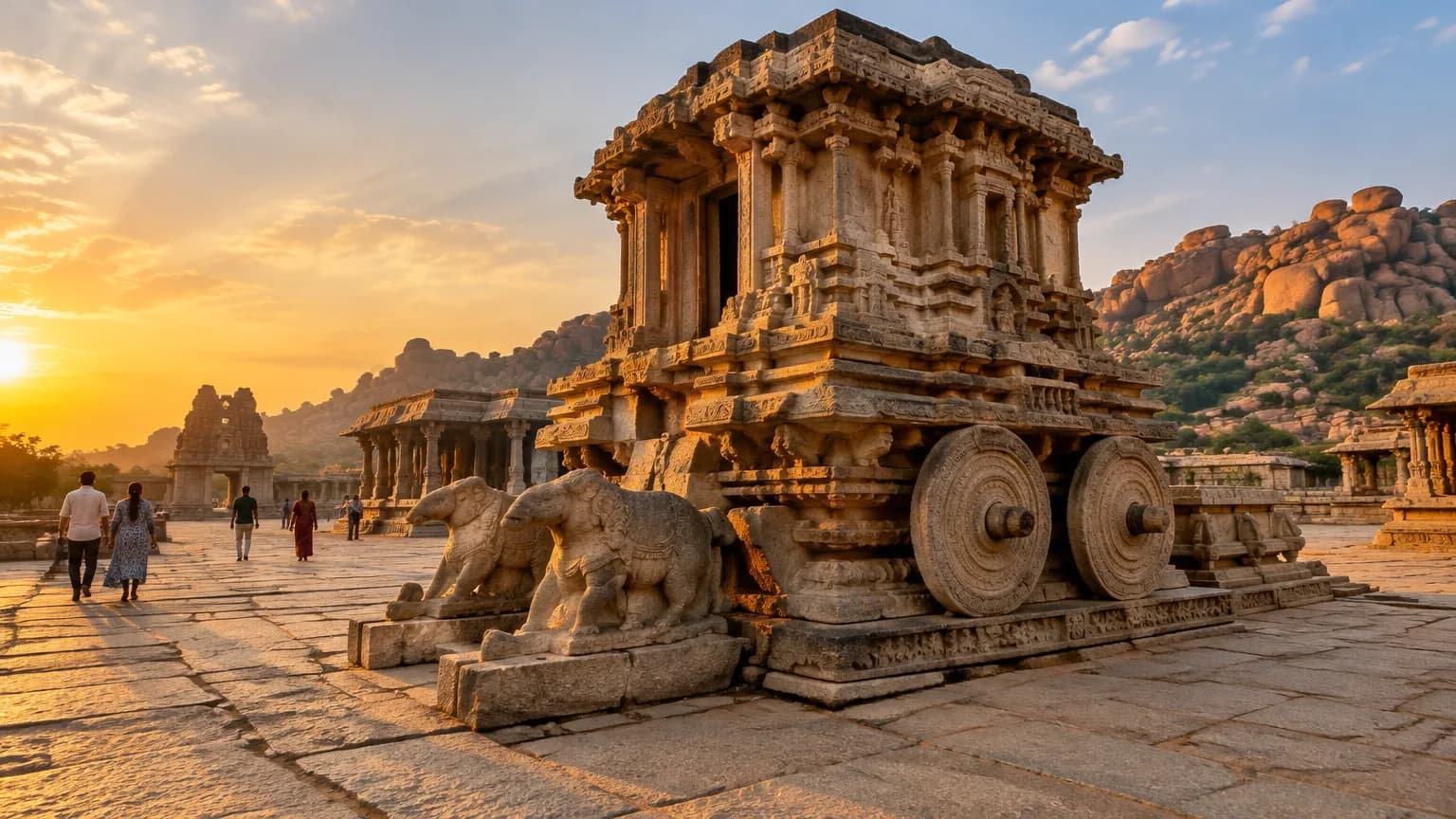
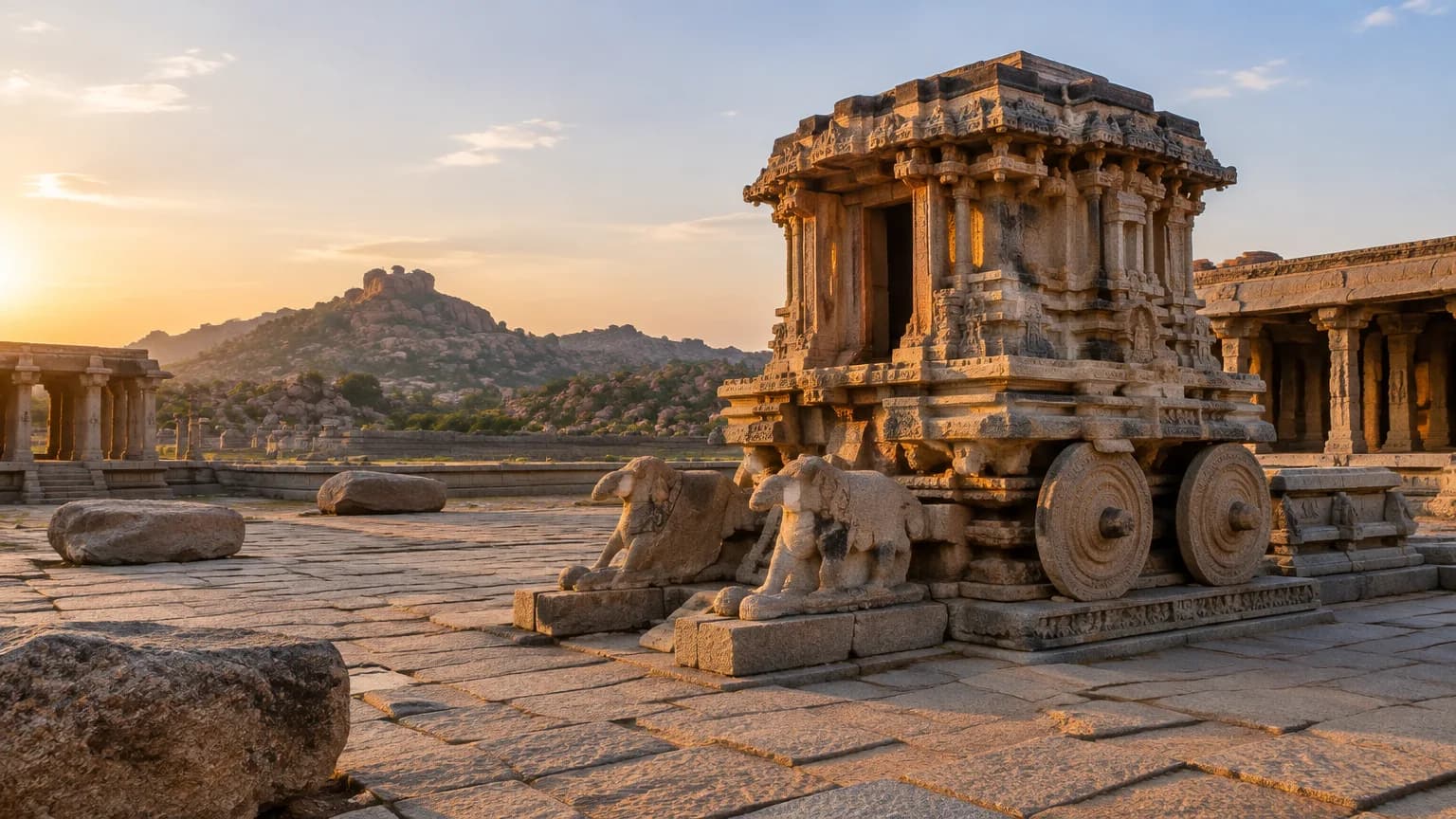
- Vijaya Vitthala Temple Complex: Home to the granite Stone Chariot and the musical pillars, reached by a riverbank walk or a short auto ride.
- Hippie Island (Virupapur Gaddi): The north-bank cafe strip across the river, quieter than the south bank and good for a slow afternoon.
- Hemakuta Hill: A rocky hill with small early temples and a wide view over the ruins, useful for sunset.
- Hampi Bazaar: The old market street that works as the starting point for most monument walks.
Where the savings come from
Three choices keep this price low: a budget 3-star stay on the south bank, shared transfers instead of a private car, and a meal plan limited to breakfast. Together they bring the land package to Rs.9,500 per person on twin sharing.
What you give up is flexibility. Shared transfers run to a set timing, rooms are basic rather than heritage-style, and lunches and dinners are your own choice and cost. For most couples on a short trip, that is a fair swap.
What this package covers
The package covers three nights of stay, daily breakfast, shared airport or station transfers, a guided sacred-centre morning, a Vitthala half-day, one coracle crossing and shared hops between monument clusters. It is best for couples and budget travellers who want the main Hampi sights over a long weekend.
Transport and stay location decide the cost of a Hampi trip more than anything else, because the ruins are spread over a wide area. This itinerary keeps you near Hampi Bazaar, within walking distance of Virupaksha Temple.
What is not included, and what you pay locally
Train or air fare, monument tickets, lunches, dinners, bicycle hire and extra auto rides are not in the Rs.9,500 price. The figures below are indicative local costs as of 2026; confirm at booking.
- Auto-rickshaw, short trip within the main ruins: about Rs.80-150
- Auto-rickshaw, longer trip to the north bank: about Rs.200-300
- Bicycle hire: about Rs.50-100 per day
- Coracle crossing: about Rs.50-100 per person
- Archaeological Museum: Rs.40 for Indian visitors, per the 2026 guide, subject to change
How the days are organised
The route is split by geography to avoid backtracking. Day 2 stays in the sacred centre and along the river, Day 3 goes to the Vitthala side and the north bank, and Day 4 is a relaxed morning before departure.
Shared transfers handle the longer hops to the Vitthala complex and Kamalapura, so you spend less time waiting for autos. Three nights is enough for the headline monuments without rushing. Travellers who want Badami or a longer ruin circuit should look at a longer Hampi and Badami heritage route instead.
Ways to save or stretch it
Start early. The walk through Virupaksha Temple and the climb up Hemakuta Hill are far easier before 9 am, when it is cooler and quieter. These tips also keep local spending down:
- Hire a bicycle for the flat stretch between Hampi Bazaar and the Vitthala complex instead of taking autos both ways.
- Split auto fares with another couple for the north-bank trip.
- Eat South Indian thalis at local restaurants rather than cafe menus on the north bank.
- Travel in October or in June to September if you can handle some rain, since prices and crowds drop.
- Carry some cash for small vendors and coracle tickets.
Dress modestly inside the sacred zone, and do not climb on or touch carvings or tap the musical pillars at Vitthala. Non-vegetarian food and alcohol are prohibited in Hampi Village and near the southern sacred heritage zones, according to the cited guide, so plan any non-vegetarian meals on the north bank.
Who should pick something else
This package is not ideal for travellers who want private transport, heritage-style rooms or a slow, multi-day ruin circuit. It also suits poorly if you want Badami, Daroji Sloth Bear Sanctuary or bouldering on the same trip, since none are in the plan.
Travellers with limited mobility may find the walking and hill climbs tiring, and the ruins offer little shade in March to May, when reported highs reach 35-42 C. Explore the wider Hampi tour packages if you need a different pace.
Where you stay in Hampi
Stays are on the south bank near Hampi Bazaar, adjacent to Virupaksha Temple and the major ruins. The indicative tiers below are per person and derived from the listed price; confirm at booking.
- Budget 3-star, approx Rs.7,000: Simple, clean rooms with basic amenities and breakfast.
- Standard 4-star, Rs.9,500 (default): Larger rooms, better fittings and more reliable service, close to the bazaar.
- Premium 5-star, approx Rs.15,000: Upscale heritage-style properties, usually in the Kamalapur area, with fuller facilities.
The package itself uses the budget 3-star category. Hospet has mid-range hotels and Anegundi offers a quieter village stay, but both add transfer time on a short trip.
Getting to Hampi and local logistics
Hospet Junction is the nearest railway station, about 12 km from Hampi, with local buses and autos for the last stretch. Jindal Vijayanagar Airport is about 38 km away with daily UDAN flights to Bengaluru and Hyderabad, and Hubballi Airport is about 150 km away.
By road, Bengaluru to Hampi is about 340 km and takes roughly 6-7 hours by car or bus. The Tungabhadra can restrict river crossings when it runs high, and monument areas turn muddy in the monsoon. No permits are needed for Indian visitors; confirm mobile connectivity and entry timings at booking.
Best time to visit Hampi
November to February is the best window for this trip. Days stay dry, temperatures sit around 16-31 C, and walking between monument clusters is comfortable. December and January are the busiest weeks and prices peak, so book stays early.
| Period | Weather | Crowds and prices |
|---|---|---|
| November to February | Cooler and drier, about 16-32 C | High crowds, peak prices |
| March to early June | Hot, reported highs of 35-42 C | Medium crowds, medium prices |
| Late June to September | Moderate to heavy rain, muddy monument areas | Low crowds, low prices |
| October | Moderate rain | Medium crowds, medium prices |
River crossings can be restricted when the Tungabhadra runs high, so treat the coracle ride as weather-dependent in the monsoon months.