Package overview
The thinking behind this journey.
A closer look at this 7-night journey through Rwanda— who it's built for, what you'll experience, and why the pace works.
Journey notes
Why this route works
What is a Rwanda wildlife and safari package?
A Rwanda wildlife and safari package is a guided, pre-planned itinerary built around the country's national parks, with game drives, forest walks and lodge stays arranged in one road route. On this trip the wildlife stops are Akagera and Nyungwe, linked by Kigali and Lake Kivu.
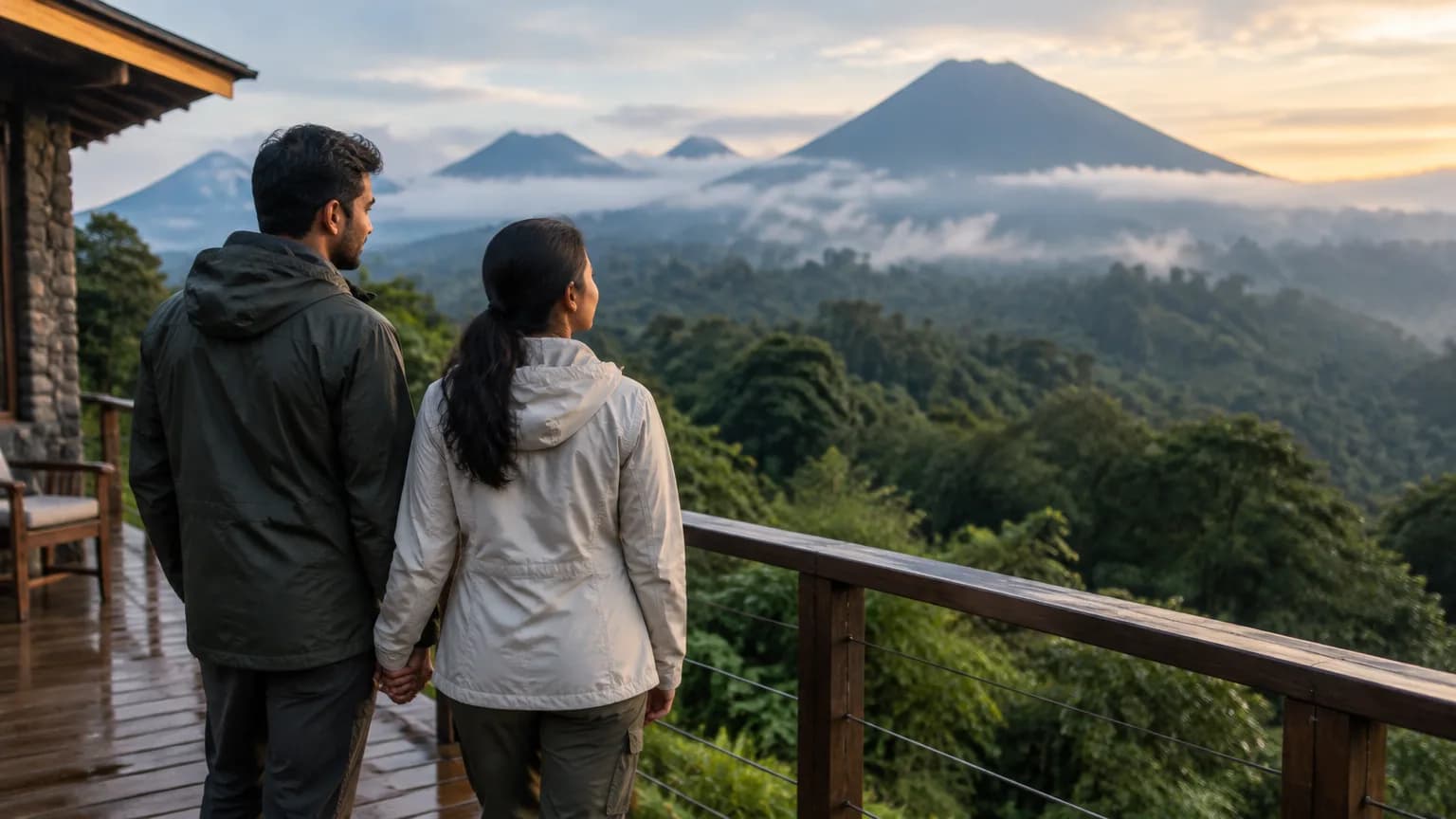
The route covers four regions in eight days: Kigali, Akagera in the east, Nyungwe in the southwest and the Kivu shoreline. Road distances are long, so the order is set to avoid backtracking. You get game drives and a boat safari in Akagera, one canopy walk and a forest trail in Nyungwe, a kayaking session on Lake Kivu and a full day in Kigali.
This is not a gorilla trekking itinerary. Volcanoes National Park, where gorilla tracking happens, sits outside this route. Gorilla tracking carries a standard 2026 fee of USD 1,500 per international visitor, and permits are limited. If gorillas are your main reason to visit, our Rwanda Gorilla Trekking Honeymoon plan is a better fit than this one.
A day on safari in Akagera
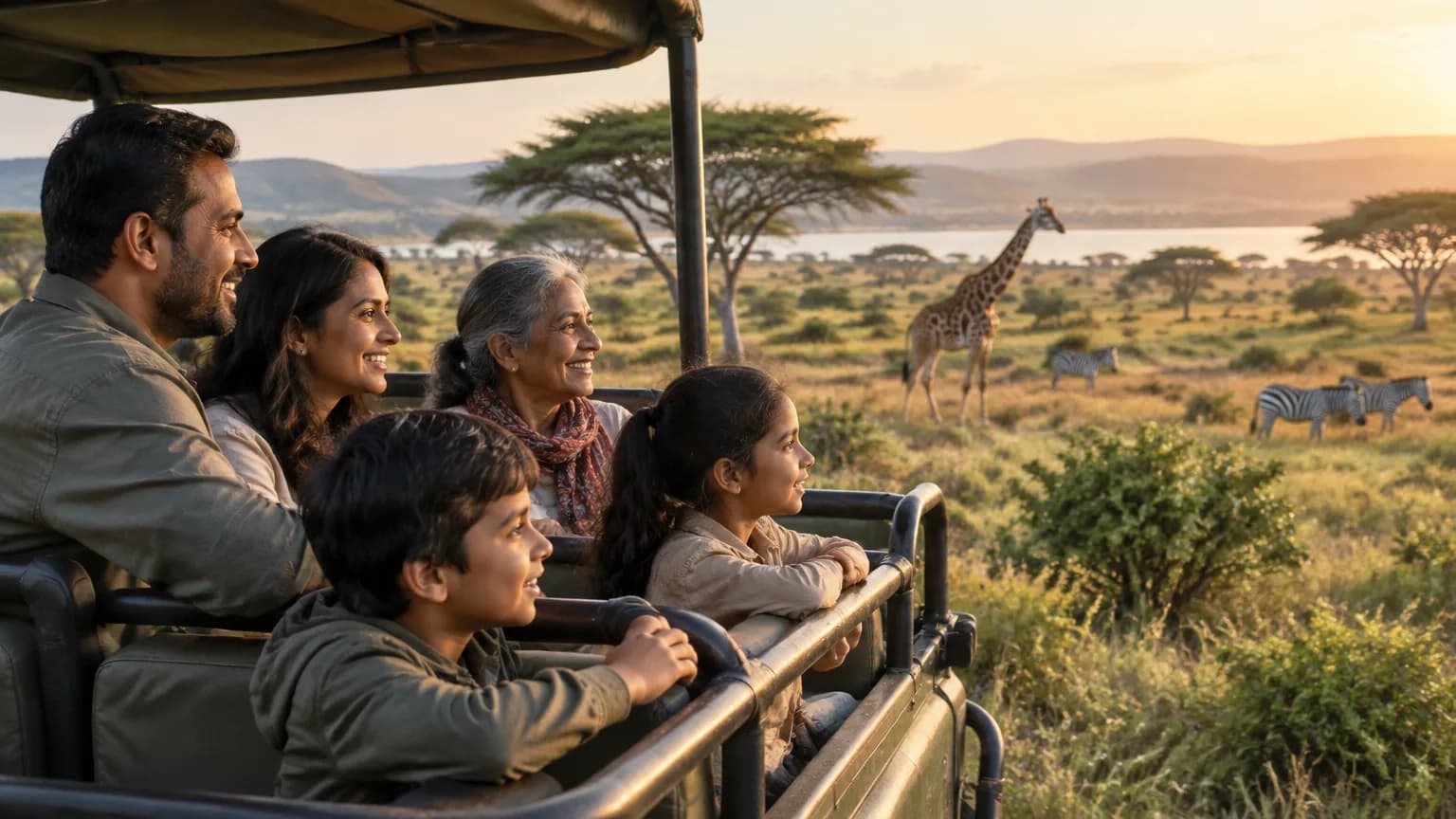
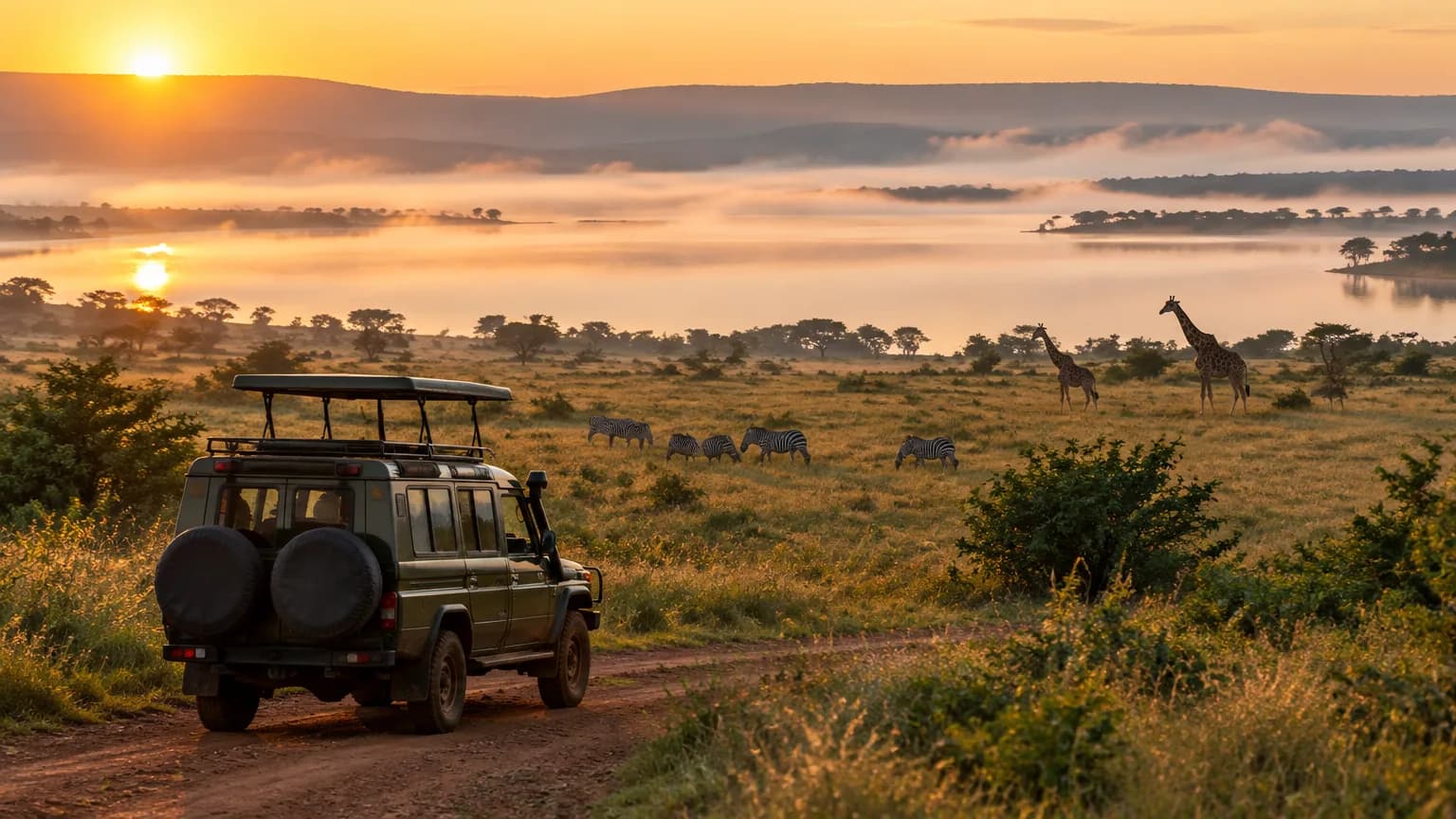
A typical Akagera day starts before sunrise and ends at dinner, with a long rest in the middle. Animals are most active in the first and last hours of light, so those are the hours you spend in the vehicle.
- Around 5:30-6:00 am: tea or coffee and a pre-dawn departure for the morning drive.
- Mid-morning: a bush breakfast stop at a picnic site, then more driving until the heat builds.
- Midday: back at the lodge for lunch, rest and a pool break while animals shelter from the sun.
- Mid-afternoon: a second drive, or the boat safari on Lake Ihema on Day 4.
- Dusk: a sundowner stop at a viewpoint, then the return to the lodge before dark.
Exact start times shift with sunrise and park rules, and your guide will confirm them the evening before.
What can you realistically see on this route?
Akagera is the Big Five park in Rwanda, and on a two-night stay you can reasonably expect common savannah species. Predators and rare animals are never guaranteed, and a good guide will say so plainly.
| Area | Animals you may see | Honest sighting odds |
|---|---|---|
| Akagera savannah | Zebra, giraffe, impala, topi, buffalo, waterbuck | High on most drives |
| Lake Ihema | Hippo, crocodile, waterbirds | High on the boat safari |
| Akagera, harder species | Elephant, lion, leopard, rhino | Possible but never guaranteed; depends on tracking, luck and season |
| Nyungwe forest | Colobus and other monkeys, forest birds; chimpanzees live in the park | Monkeys and birds are likely; chimpanzees are unpredictable on a short forest walk |
Chimpanzee tracking is a separate activity in Nyungwe and is not part of this itinerary, so treat any chimp sighting on the forest walk as a bonus.
How do the safari days work?
The safari days run on a fixed pattern: a private 4x4 with a driver-guide, game drives at the cooler ends of the day, and park registration at the gate on arrival. Akagera is a single savannah park with a southern lakes sector and a northern plains sector.
- Vehicle: a 4x4 safari vehicle for Akagera. Window seats are shared on a first-come basis inside your group.
- Guide: a driver-guide for road transfers, with a park or naturalist guide for the walks and drives where needed.
- Zones: the southern lakes circuit on Day 3 and the northern plains on Day 4.
- Nyungwe: on foot with a park guide; the canopy walk is a fixed walkway above the forest floor.
Exact departure times are confirmed at booking and again the evening before each drive.
Best season and sighting odds
June to September is the long dry season and the best window for game viewing in Akagera. In those months animals concentrate near water and the grass is shorter, which improves visibility. It is also the busiest, most expensive period.
Here is how the year breaks down, using monthly climate data for Rwanda:
| Months | Season | What it means for wildlife |
|---|---|---|
| June-September | Long dry season; high crowds, peak prices | Best visibility in Akagera; drier forest trails; rain of about 15-60 mm a month |
| December-February | Short dry season; medium crowds | Good game viewing, less busy than mid-year |
| March-May | Long rains; low crowds, low prices | Green, muddy and wet; April averages about 155 mm of rain |
| October-November | Short rains; low to medium crowds | Wet mountain parks, mixed conditions in the forest |
If you are asking when to go from India, September and December-February balance wildlife and cost best. The wet months are cheaper but trail conditions in Nyungwe get slippery.
Park fees, permits and rules
Akagera entry starts from USD 100 per day for international visitors, depending on the activity, according to published 2026 park fee guidance. This trip lists park entry fees as included, but the final amount is confirmed at booking.
- Akagera: fee depends on activity; boat and vehicle charges may be priced separately, to be confirmed at booking.
- Nyungwe: canopy walk and guided forest walk fees are confirmed at booking; chimpanzee tracking is not part of this trip.
- Gorilla permits: not included. The standard 2026 fee is USD 1,500 per international visitor, and peak-season dates can fill 9 to 12 months ahead. Permits are booked through the Rwanda Development Board portal or Irembo.
- Minimum age for gorilla tracking: 15 years.
Park rules apply throughout: stay inside the vehicle in Akagera unless your guide says otherwise, keep your voice low near animals and never feed or approach wildlife.
Photography and what to carry
A zoom lens does most of the work on a savannah drive, and a rain cover matters more than a second camera body. Pack for temperature swings: mornings are cool and mountain areas can be much colder than the east.
- A 200-400 mm lens or equivalent for wildlife, plus a wide lens for Kigali and the lake.
- Spare batteries and cards; charging points are shared in lodges.
- A beanbag or soft pouch to steady the camera on the vehicle window.
- A light rain jacket, a warm layer and closed shoes with grip for Nyungwe.
- Insect-bite protection, sunscreen and a hat.
- Neutral-coloured clothing; avoid bright colours on game drives.
Be careful at the Kigali memorial: ask your guide about photography rules before you raise a camera.
Where you stay: Akagera, Nyungwe and Lake Kivu
The stays follow the route: city hotels in Kigali, a mid-range safari lodge near Akagera, a forest lodge at Nyungwe and a lakeside hotel on Lake Kivu. All are in the standard 3-4 star range on twin sharing.
Akagera lodges sit close to the park so morning drives start soon after waking. The Nyungwe forest lodge is the coldest stop on the route, and rooms there are usually simple and warm in character rather than luxurious. Lake Kivu stays are near the shore at Rubavu or Karongi, with water access for kayaking. Specific property names are confirmed at booking.
Entry, money and flights from India to Rwanda
Indian passport holders need a Rwanda visa and should apply through the official Rwanda immigration portal; check the current fee and processing time there, and see our Rwanda visa for Indians guide for the steps. The local currency is the Rwandan franc, and US dollars are widely used for park fees and tours, so carry clean, recent notes. We do not quote an exchange rate because it moves daily. Flights from India reach Kigali International Airport (KGL), usually with one stop in the Gulf or East Africa, and total journey time varies by connection. Check fares and timings at booking.
What does this trip cost from India?
The package price is Rs.1,23,500 per person on twin sharing, land only. Flights, visa, drinks, tips and gorilla permits are extra. Browse the wider Rwanda tour packages range if you want to compare route lengths before booking.