
Field notes
Uzbekistan Offbeat Experiences for Indians 2026
Uzbekistan offbeat experiences for Indians centre on Zaamin National Park, the Nuratau Mountains, Imam-Ota tourism village and the Jeyran eco-centre, all reached by road away from the classic heritage circuit. These places suit travellers with three to five spare days who want mountain roads, village stays and a slower pace than Tashkent, Samarkand, Bukhara and Khiva.
At a glance
Offbeat Uzbekistan suits travellers who can add three to five days beyond the main circuit, which is usually planned over 7 to 14 days. Those who prefer walking, quiet guesthouses and rural scenery get the most from it. Travellers who want a city-only itinerary will find less here, and that is a fair trade-off to know before you book.
The Jizzakh region is the practical base for Zaamin National Park and the Nuratau Mountains, and Tashkent is the usual starting point for the wider detour. The best season for the mountain detours is October to March, when road conditions are more predictable and daytime temperatures suit walking. Summer heat makes long road legs tiring, particularly if you are travelling with children or older relatives.
The main difference from the heritage route is the rhythm of the day. Instead of tiled madrasas and minarets, you spend time on mountain roads, in village guesthouses and at a breeding centre for rare animals. Expect slower mornings, fewer restaurant options after dusk and more time in the car than on foot in the cities.
Which offbeat places are worth the detour?
Six lesser-known stops come up most often when travellers ask about Uzbekistan beyond the usual circuit. Each asks for a different level of effort, so check the access notes below before committing, and match the stop to the energy your group has at the end of a long travel day.
Zaamin National Park
Zaamin National Park in the Jizzakh region combines mountain scenery, trekking and rare flora and fauna. It is a national park rather than a heritage site, so the day is about walking and altitude rather than monuments. Access is by road from the Jizzakh region, roughly 3 to 4 hours, and the best window is October to March. Wear proper walking shoes and carry water, because facilities inside the park are minimal.
Nuratau Mountains
The Nuratau Mountains offer trekking and eco-tourism well away from the heritage circuit. The range is reached by road from the Jizzakh region, and the terrain is genuinely mountainous, so this is not a casual stop. Plan it around walking if you want an active add-on. Trails can be steep and rocky, so a rest day between a trek and the next long road transfer is a sensible way to pace the trip.
Imam-Ota tourism village
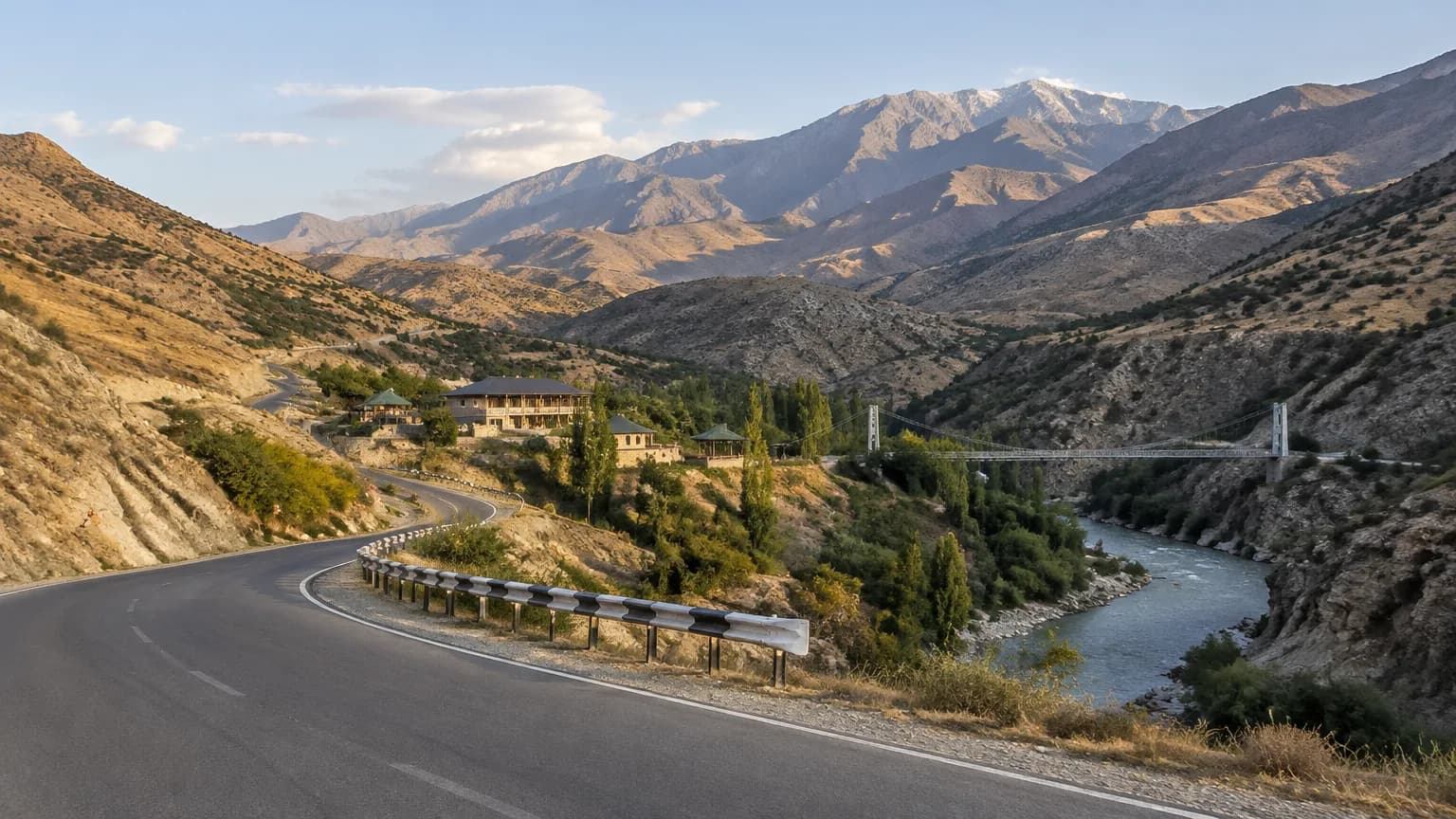
Imam-Ota in the Khojaabad district combines mountain scenery, a suspension bridge and amusement facilities. It is reached by road, and the mix of village walking and simple facilities makes it one of the easier offbeat stops to fit in, especially with children. Plan for a half day rather than a full day, since the village is compact and the bridge and amusements are the main draw.
Jeyran eco-centre
The Jeyran eco-centre breeds rare animal species and differs sharply from architectural sightseeing. It is a road transfer, and it works well as a half-day change of subject if your main circuit has been heavy on mosques and museums. Visitors often find it a welcome pause for younger travellers, since it is focused on animals rather than history.
Jizzakh region as a base
Jizzakh ties Zaamin, the Nuratau Mountains and the village stops together. Treat it as a district rather than a single sight: base yourself in the region and move between the park, the mountains and villages by road. This is where an offbeat Uzbekistan trip actually takes place. Ask your operator to confirm which town or village will host you, because the choice determines the drive time to each stop.
Village and eco-stays
Village guesthouses and eco-stays make these detours workable. They are simple, family-run and usually closer to trailheads than city hotels. Inventory is small and rarely listed on large booking sites, so reserve through your operator or confirm directly. Ask about hot water, heating in winter, and whether meals are included, since village kitchens keep fixed hours.
How do you get to the offbeat places from the main cities?
Every offbeat stop in this guide is reached by road from a regional hub. None sit on the Afrosiyob high-speed line, so plan road legs as half-day transfers rather than quick hops. Build a buffer into your schedule, because mountain roads slow down with weather, livestock and roadworks.
Zaamin National Park and the Nuratau Mountains are both reached by road from the Jizzakh region, with the park taking roughly 3 to 4 hours. Imam-Ota is reached by road to the Khojaabad district, and the Jeyran eco-centre is also a road transfer. Mountain roads rise from arid hills into higher scenery, so allow extra time in winter when visibility drops early in the afternoon.
For the main circuit that feeds these detours, the Afrosiyob high-speed train links Tashkent with Samarkand and Samarkand with Bukhara, and the two cities are less than two hours apart by fast train. Book high-speed train seats ahead for the main city circuit, especially on weekends and public holidays. Bukhara to Khiva can be covered by sleeper train, road or flight via Urgench, so choose based on your luggage and tolerance for an overnight journey. In the cities, Yandex Go handles taxi booking, and the ATTO transport card covers Tashkent bus and metro payment.
| Transport option | Route | Published typical cost |
|---|---|---|
| City bus or metro | Within city | $0.15 to $0.30 (as of April 2026) |
| Tashkent bus or metro | Within Tashkent | 1,700 UZS by contactless card, mobile payment or ATTO (as of September 2026) |
| Yandex taxi | City ride | $2 to $8 per ride (as of April 2026) |
| High-speed train | Samarkand to Bukhara | $8 to $15 (as of July 2026) |
| High-speed train | Tashkent to Samarkand | $10 to $20 (as of July 2026) |
| Sleeper train | Bukhara to Khiva | 130,000 to 250,000 UZS (as of September 2026) |
Private transfers can be arranged for Samarkand to Bukhara travel and for the mountain legs. Road transfer rates for the mountain regions are not quoted in the published sources, so confirm current prices at booking. Ask whether the quote covers waiting time, tolls and driver meals on long days.
Which places suit which travellers?
The effort level differs a great deal between a family with young children and a trekker, so match the detour to who is travelling. The table below sets out the best-fit stops for each group, with the practical trade-offs.
| Traveller type | Best for | Pros | Cons |
|---|---|---|---|
| Families | Imam-Ota tourism village, Jeyran eco-centre | Short road transfers; suspension bridge and amusement facilities at Imam-Ota; animal-focused stop at Jeyran | Mountain roads can tire young children; fewer dining choices than Tashkent |
| Couples | Nuratau Mountains, village eco-stays | Quiet guesthouse stays; walking together away from the city circuit | Basic rooms and limited privacy in some village stays |
| Adventure travellers | Zaamin National Park, Nuratau Mountains | Trekking, mountain terrain, rare flora and fauna at Zaamin | 3 to 4 hour road access to Zaamin; weather-dependent trails |
| Culture travellers | Jizzakh region villages, Imam-Ota | Village life and regional context beyond the heritage cities | Less monumental architecture; a guide helps with interpretation |
Families planning the detour should keep road days short and schedule the animal-focused stop as a midday break. Couples who value quiet will enjoy the village stays most in the shoulder months, when evenings are cool and walking is comfortable. Adventure travellers should keep a rest day after a trek. Culture travellers gain the most from a local guide who can explain village life and the region's history in plain terms.
If you are pairing the detour with a romantic trip, the Uzbekistan Khiva honeymoon itinerary shows how the main circuit is paced before the mountain days.
What should you know before visiting?
Mobile signal thins out on mountain roads and in village stays, and card machines are rare once you leave Tashkent, Samarkand and Bukhara. Carry enough cash for the detour days and treat connectivity as intermittent. Let family members know your route and expected return times before each mountain leg.
Opening times at parks, eco-centres and village facilities vary by season and by day, so confirm at booking rather than assuming a fixed schedule. Before locking flights, check the Uzbekistan visa guide for Indians, and keep printed copies of your passport, visa and booking confirmations, since phone batteries run down quickly on long road transfers.
Etiquette in village areas is simple: dress modestly, ask before photographing people, and remove shoes when entering a home. If a site requires a local permit or a registered guide, your operator should arrange it. Rules for community-based tourism can change, so confirm at booking. Tipping is not expected in village guesthouses, but a small gift or thank-you for a family host is appreciated.
- Carry cash in local currency for road transfers, guesthouses and small purchases.
- Download offline maps before the mountain legs.
- Keep one buffer day for weather delays on mountain roads.
- Ask your guesthouse about meal times, since village kitchens run on fixed hours.
- Confirm whether a driver or guide is included in your road transfer.
- Pack layers, since mountain nights are noticeably colder than city evenings.
The Uzbekistan package page lists the trips available now, if you would like to see them side by side.