
Field notes
Uzbekistan Food & Cuisine Guide for Indians 2026
Uzbekistan food & cuisine guide for Indians starts with plov, samsa, lagman and shashlik, all built around rice, tandoor bread and grilled meat. Vegetarians can eat well with clear instructions, since meat fat turns up in many dishes. The one mistake to avoid is assuming a dish is meat-free because the menu lists salad or bread.
Dishes to try in Uzbekistan
Start with plov, samsa and lagman, then work through shashlik and the salads. These are the dishes you will see on almost every menu, from a Tashkent oshxona to a Samarkand bazaar stall. Most of them are meat-based by default, so vegetarians should read the list with that in mind.
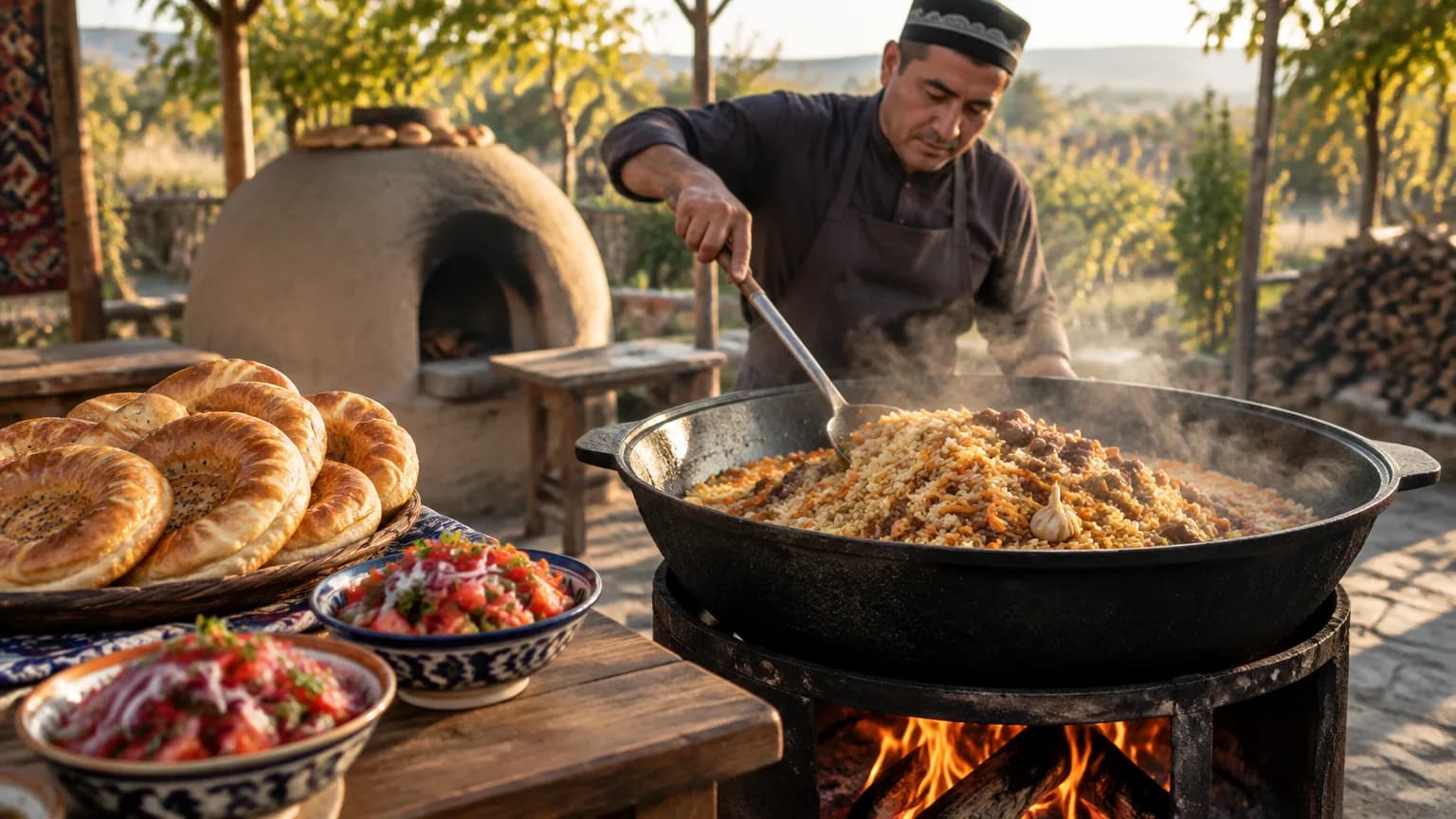
- Plov is the national rice dish, usually cooked with carrots, onion and meat. Local plov houses and oshxonas serve it fresh, often from late morning until it runs out. Ask for it without meat if you are vegetarian, and confirm that no meat fat has been used in the rice.
- Samsa is a baked pastry, commonly filled with meat and onion and cooked against the wall of a tandoor. Bakeries and bazaars sell them warm through the day. Vegetarian versions are less common, so check the filling before you order.
- Lagman is hand-pulled noodles, served in a broth or stir-fried. The broth version is common in Bukhara and Samarkand, while the fried version is more often seen in Tashkent. The broth is usually meat-based, so ask for the stir-fried style if you want to avoid it.
- Shashlik is lamb or mutton grilled on skewers and usually served with raw onion and bread. Street stalls and casual grills do this best in the evening, when the coals are hottest and the queues are longest.
- Achichuk is a salad of tomatoes, onion and cheese, usually served cold alongside grilled meat. It is one of the easiest vegetarian orders and works well as a light lunch with bread.
- Khivan dill noodles are a simple noodle dish from Khiva, made with dill and dairy. They suit travellers who want something light and meat-free, once confirmed with the kitchen, since some versions are finished with a meat-based broth.
- Non is the round tandoor bread served with almost every meal. Buy it fresh from a bakery or bazaar and eat it the same day, because it dries out quickly and loses its texture by evening.
For Indian travellers used to strong spice, Uzbek food can feel plain at first. Most dishes rely on cumin, black pepper, dill and garlic rather than heavy masalas, and the flavour comes from slow cooking and fresh bread. Carrying a small jar of pickle or chilli powder from home is a sensible move if you want more heat with your meals.
If you are building a longer trip around these meals, the Uzbekistan Khiva Honeymoon 8N 9D route covers Khiva, Bukhara and Samarkand, where most of the regional cooking differs. Dishes in Khiva lean towards noodles and dairy, while Samarkand is known for its plov.
Where to eat by area
Bukhara and Samarkand are the strongest food cities for a first trip, and Tashkent offers the most variety. Each area has a different strength, so plan meals around what you want to eat rather than around a single restaurant. Bazaars, plov houses and bakeries are the three most useful categories to know.
Bukhara
The bazaars around the old city are the main draw for food lovers. You can graze on bread, dried fruit, nuts and samsa in one walk, then sit down for lagman or shashlik nearby. Go in the morning for the freshest bread, since bakeries sell out by early afternoon. It is an easy city for a mixed group where some eat meat and some do not, because bazaar snacks suit everyone.
Samarkand
Plov houses and oshxonas are the reliable choice here, and they usually serve the rice dish from mid-morning. Around the bazaar streets you will find bakeries, tea houses and casual grills. Sit-down places near the main sites cost more than similar food a few lanes away, so walk two or three streets back for better value. Vegetarians can build a good day from bread, salads, dairy and bazaar sweets.
Tashkent
The capital has the widest range, including Korean, Georgian and Turkish food alongside Uzbek cooking. Chorsu Bazaar shows the full spread of bread, dairy, spices and produce in one stop, and it is the best place to see dried fruit, nuts and fresh herbs before you buy. It is also where you will find the most vegetarian-friendly salads and dairy dishes. Non-Uzbek restaurants can be easier for strict vegetarians, since their menus are often clearer about ingredients.
Khiva
Inside the walled old city, eating is simple and close to your stay. Expect bread, noodles, salads and grilled meat in small family-run places. Choice is narrower than in Bukhara, so vegetarians should plan ahead here and carry a few snacks for the evening. Ask your accommodation host to recommend a kitchen that will cook plain dishes on request, as this often works better than ordering from a printed menu.
Vegetarian, Jain and other dietary needs
Vegetarian eating in Uzbekistan is possible but not automatic. Meat is the default in most dishes, and some recipes use meat fat even when the visible meat is removed, so you need to ask clearly each time. Plan around bread, dairy, salads and bazaar food, and treat restaurant meals as a bonus rather than the base of your day.
What works well:
- Salads such as achichuk, ordered without any meat garnish.
- Tandoor bread, fresh from a bakery or bazaar.
- Plain dairy, including yoghurt and sour cream.
- Khivan dill noodles, once confirmed as meat-free.
- Bazaar food such as dried fruit, nuts, halva, fresh produce and pastries.
What to ask for:
- Say clearly that you want no meat and no meat fat. Pointing at the dish and repeating your request in simple words works better than a long explanation. A short phrase written on your phone screen can also help in busy kitchens.
- Ask whether the broth is meat-based, because lagman and soups often are.
- Ask for salads to be made fresh without a meat topping, rather than taken from a mixed platter.
- For Jain food, confirm there is no onion and no garlic. Expect this to limit you to bread, dairy, fruit and plain rice in many places.
Hidden non-vegetarian ingredients include meat fat in rice dishes, meat stock in soups and noodle broths, and shared cooking pots. If your diet is strict, eat your main meal at a sit-down place where the kitchen can cook something separately, and use bazaars for the rest of the day. Carry a small supply of snacks such as nuts, roasted chana and dry biscuits for long travel days, when restaurant options are limited.
Street food safety and eating etiquette
Street food is generally fine if you choose busy stalls and eat food cooked hot in front of you. The bigger risks are water, ice and food that has been sitting out, rather than the cooking itself. Good hygiene habits matter more than avoiding any single dish.
- Drink bottled or boiled water. Avoid tap water and skip ice in drinks unless you are sure it is made from bottled water.
- Pick stalls with a queue and high turnover, where samsa and shashlik come straight off the heat.
- Avoid cut fruit and salads left standing in the open, especially in summer.
- Peel your own fruit, and stick to bread, tea and cooked food on travel days.
- Carry hand sanitiser and wet wipes, since bazaar stalls may not have running water nearby.
On etiquette, bread is treated with respect, so do not put it on the floor or throw it away in the open. Tea is poured for others before yourself, and a small refill is normal. Tipping is not compulsory, but rounding up or leaving small change at a sit-down place is appreciated. Alcohol is available in cities but not everywhere, so do not assume a wine list. When eating in a group, wait for the eldest or host to start, and share dishes from the middle of the table.
What meals cost
Meal costs depend mainly on the kind of place you choose rather than on the city. A bazaar breakfast, a casual lunch and a sit-down dinner fall into three different price bands. Confirm current prices on arrival, since they move with the season and the exchange rate.
- Street stalls and bakeries are the cheapest option. Bread, samsa, tea and snacks from a bazaar make a light meal for very little.
- Casual plov houses and oshxonas sit in the middle. A plate of plov or a bowl of lagman with tea is affordable and filling.
- Sit-down restaurants are the highest band, especially near main tourist sites, where location pushes prices up more than quality does.
Bottled water, tea and soft drinks add a small amount to each meal. If you are budgeting, eat your main meal at a plov house or oshxona and use bazaars for the rest. Groups that eat together often find that sharing plov and a few salads costs less than ordering individual sit-down meals.
When you have settled on dates, the Uzbekistan package page is a good place to see what a full trip includes.