
Field notes
Cambodia Packing List for Indians 2026
Cambodia packing list for Indians depends on three things: the season you travel in, the temple dress code and the daily heat. The research places November to February as cool and dry at 22-32 C, March to May as hot and dry with April the hottest month, and June to October as wet and humid with heavy rain. Pack light cotton clothes, a packable rain jacket and covered-shoulder outfits for temples. The three items travellers most often forget are a universal power adapter, rehydration salts and printed copies of their visa or e-visa.
What the weather in Cambodia demands
Cambodia has three broad seasons, and each one changes what goes into the bag. November to February is cool and dry, with 22-32 C days and very little rain, and it is also the busiest and most expensive period. March to May is hot and dry, with temperatures reaching 35-36 C and April the hottest month. June to October is wet and humid, with 24-33 C days and heavy rain, especially in September and October.
The southwest monsoon brings strong winds and heavy rainfall from May to November. Flooding can affect rural roads and some attractions during these months, which means a road that looks fine on a map may be closed for a day. Plan spare time in your itinerary for wet-season delays, and avoid tight connections between a flight and a long road transfer.
For layers, the practical rule is simple. Pack one light fleece or shawl for air-conditioned buses, minibuses and restaurants, because interiors can feel much colder than the street outside. Keep a dry bag for electronics and documents in the wet months, and a small umbrella in your daypack for sudden showers that often arrive in the afternoon.
Humidity matters as much as temperature. In the wet season, clothes can stay damp for a day or more, so bring a small clothesline or a few clips to hang laundry in a fan-cooled room. Silica gel packs in your camera bag help keep lenses and phone screens clear.
Common mistake: travellers planning the hot season pack only summer clothes and forget the evening chill in highland areas. Two layers cover both extremes without adding much weight.
Essentials checklist
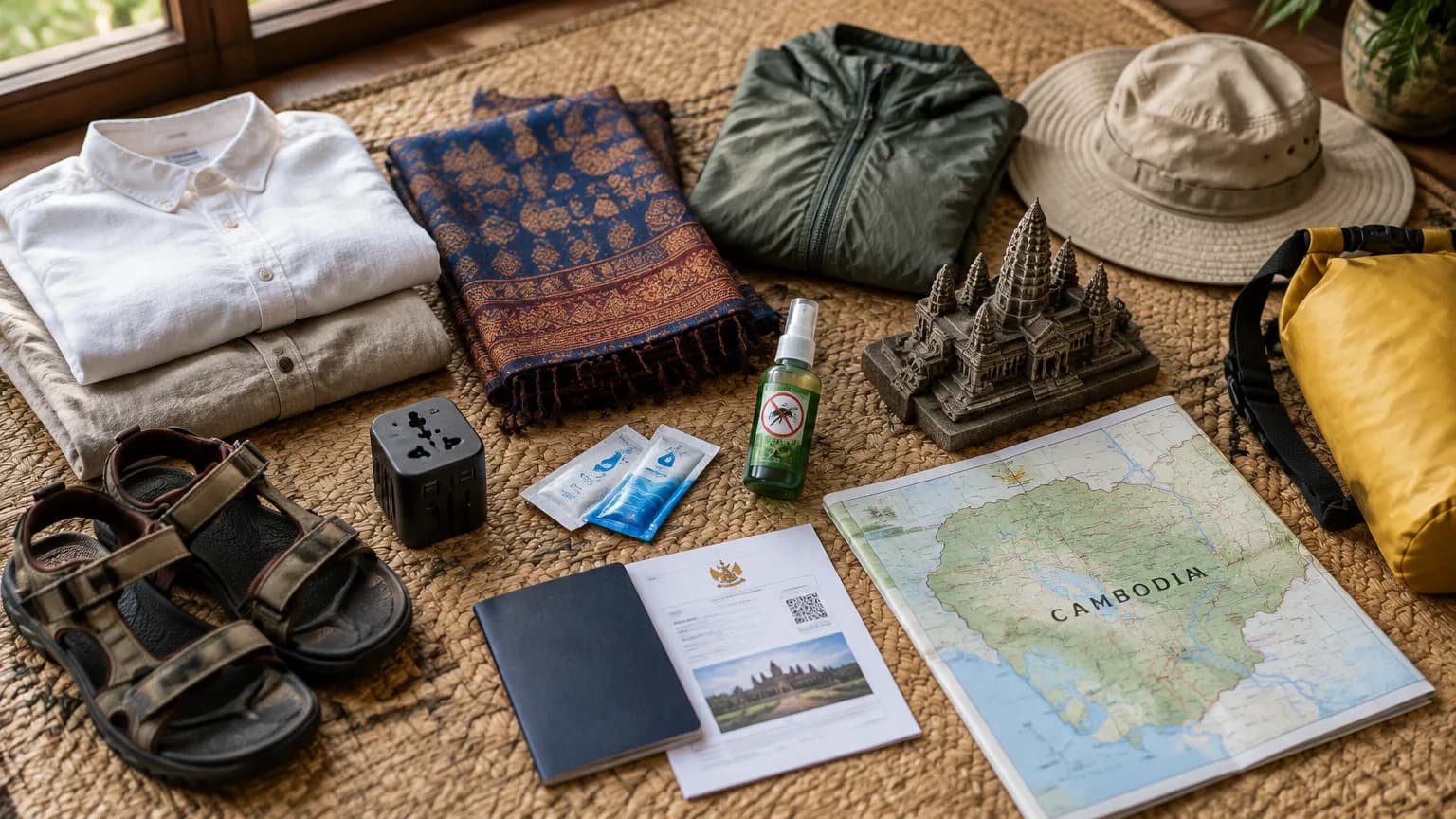
Keep the essentials together in one pouch so nothing gets left behind in a hotel room. This Cambodia packing checklist works for a week or a fortnight, and it applies to both first-time visitors and repeat travellers from India.
- Passport with at least six months validity, plus photocopies and a digital scan stored in cloud storage
- Cambodia e-visa or visa-on-arrival documents, printed and saved offline on your phone
- Travel insurance policy covering medical evacuation and emergency hospital costs
- Universal power adapter and a multi-port charger; plug types are not covered by the sources used here, so confirm locally
- Power bank within airline limits, plus spare cables
- Prescription medicines in original packaging with a doctor's note in English
- Rehydration salts, paracetamol, antacid, anti-diarrhoeal tablets and a basic first-aid kit
- Mosquito repellent with DEET or picaridin, and antihistamine cream for bites
- Sunscreen SPF 50, lip balm and a wide-brim hat
- Hand sanitiser, wet wipes and a reusable water bottle
- Small padlock for luggage and a crossbody bag or money belt
- Forex card and a small amount of US dollars in cash for small purchases
Check the visa guide for Indian travellers to Cambodia for current entry document rules before you print anything. Entry requirements can change, so confirm them on the official source before departure.
Medicines deserve a second look. Carry enough for the whole trip plus a few extra days in case of delays, and keep them in hand luggage rather than checked bags. Vaccination guidance for Cambodia is covered in the FAQ below, and it is worth reviewing with a doctor at least a few weeks before you fly.
Keep one photocopy of your passport bio page in a different bag from the original. If your passport is lost, that copy and your embassy contact details will speed up the replacement process considerably.
Clothing and footwear by season
Pack for the season you are travelling in, not for a generic tropical trip. Cotton and linen dry faster in humidity, and one light layer covers air-conditioned coaches and temple interiors. Synthetic quick-dry fabrics are useful in the wet months, but they can trap odour in heat, so mix materials.
Cool and dry season, November to February
- Light cotton shirts and t-shirts for 22-32 C days
- One thin fleece or shawl for early starts and night journeys
- Full-length trousers or a long skirt for temple visits
- Closed walking shoes for uneven stone paths at the Angkor temples
- A scarf or sarong that doubles as shoulder cover and a picnic mat
This is the busiest period, so book your clothing needs in advance only if you plan to buy formal items. Otherwise, casual cotton carries you through most days comfortably.
Hot and dry season, March to May
- Loose, light-coloured cotton in breathable weaves that reflect heat
- Shorts and sandals for town days, with one temple-ready outfit kept apart
- Wide-brim hat, sunglasses and a sweat towel
- Two pairs of socks if you plan long walking days, so one pair can dry while you wear the other
April is the hottest month, so plan temple visits for early morning or late afternoon. Midday sun on stone surfaces is intense, and carrying a spare set of clothes helps when you change after sweaty days.
Wet and humid season, June to October
- Quick-dry t-shirts and trousers rather than heavy denim, which stays wet for days
- A packable rain jacket or poncho that also covers your daypack
- Sandals with grip for flooded lanes, plus one pair of closed shoes for temples
- Dry bag for phone, passport and camera
- A spare set of clothes in your daypack, sealed in a zip bag
Footwear matters more than most people expect. Temples require shoes to be removed at many entrances, so slip-on styles save time at every stop. Pick shoes you can walk in for hours on hot stone, and break them in before the trip. If you are still choosing when to travel, the best time to visit Cambodia guide compares crowds and rainfall month by month.
Practical tip: pack one outfit that covers shoulders and knees and keep it accessible. Many travellers are turned away from temple entrances because they forgot their dress code on a day trip, and having a ready outfit prevents delays.
Gear for activities
Cambodia's main activities are temple circuits, Tonle Sap boat trips, light trekking and wildlife walks. Beach time in the south is also common. Pack only what those activities need, and rent the bulky items you use once.
- Temple days: a light long-sleeve shirt and long trousers or a sarong, plus slip-on shoes
- Tonle Sap boat trips: dry bag, sun hat and motion sickness tablets if you are prone to seasickness
- Light trekking in the hill areas: trail shoes, insect repellent and a 20-litre daypack
- Wildlife walks: neutral colours that blend into the environment, binoculars if you have them, and a torch for early starts
- Beach time in Sihanoukville or Kep: swimwear, quick-dry towel and reef-safe sunscreen
- Camera gear: spare batteries, silica gel packs for humidity and a microfibre cloth for lenses
Bicycles and motorbikes are commonly rented in Siem Reap and Kampot. Carry your own helmet liner if you plan to ride, and confirm your travel insurance covers two-wheelers before you do, because many standard policies exclude motorbike accidents. Check the bike's brakes and lights before you leave the rental shop.
Boat trips on the lake and rivers can be long and exposed to sun and spray. A dry bag keeps passports and phones safe, and a hat with a chin strap prevents loss in the wind. Life jackets are usually provided on organised trips, but ask before you board.
Early morning is the best window for wildlife and birdwatching walks, when animals are most active and the heat has not yet built up. Bring a light rain layer even in dry months, since weather can shift quickly near water.
What to leave at home or buy there
Everyday items are easy to find in Cambodia's tourist towns, so you can travel lighter than you think. Leave behind heavy toiletries, bulky towels and more than two pairs of shoes. Lightweight luggage also makes motorbike and tuk-tuk transfers far easier.
- Buy locally: shampoo, soap, sunscreen, mosquito repellent, bottled water, snacks and umbrellas
- Buy locally: light cotton clothing, sarongs and sandals from Siem Reap's markets
- Leave at home: hair dryers and irons, since most mid-range hotels provide them
- Leave at home: expensive jewellery, excess cash and more than one credit card
- Leave at home: formal wear unless a specific event needs it
- Leave at home: trekking boots for a temple-only trip
- Leave at home: heavy guidebooks, since offline maps on your phone cover most needs
Laundry services in tourist areas are quick, so four to five days of clothing is enough for a two-week trip. Carry a small bottle of detergent for hand washing underwear and quick-dry items. Hang clothes in a ventilated room rather than the bathroom, because humidity slows drying badly in the wet months.
Shopping for everyday items is cheapest in local markets, but convenience stores in towns stock most essentials as well. Check current prices locally before you buy, since they vary by town and season. For routes, regions and transport, see the Cambodia travel guide for Indians.
Browse the Cambodia tour packages to see how these choices turn into a bookable trip.