
Field notes
Cambodia Food & Cuisine Guide for Indians 2026
Cambodia food & cuisine guide for Indians covers the dishes worth ordering, the areas where to find them, and how vegetarian and Jain travellers can eat well. The mistake to avoid is assuming a Khmer dish is meat-free, because fish sauce, prahok and pork broth sit inside many curries, soups and stir-fries.
Dishes to Try in Cambodia
Most Khmer dishes are rice- or noodle-based, lightly spiced, and built around freshwater fish, pork or chicken. Vegetarian versions exist, but you usually have to ask for them specifically, and it helps to know which dishes are naturally close to vegetarian before you order.
- Amok: a steamed coconut curry, traditionally made with fish and served in a banana leaf. Siem Reap and Phnom Penh restaurants serve the best versions. Ask for a vegetable or tofu amok if you avoid fish, and confirm that the base is not made with fish-based paste.
- Kuy teav: a clear pork-broth noodle soup eaten mostly at breakfast. Morning stalls across Phnom Penh and provincial towns sell it. A vegetable version is possible but not standard, so you will need to ask the cook directly.
- Lok lak: cubed beef or pork stir-fried with black pepper and served with rice, a fried egg and a lime-pepper dip. It is common in sit-down restaurants in Phnom Penh and Siem Reap, and it is a good introduction to Khmer flavours for first-time visitors.
- Bai sach chrouk: grilled pork over broken rice, a morning staple. You will find it at roadside stalls and markets almost everywhere, usually served with a sweet and sour pickled vegetable.
- Nom banh chok: rice noodles in a fish-based green gravy, served with herbs, banana blossom and raw vegetables. It is a breakfast and market dish, especially in Battambang and Kampot, and it is one of the most distinctive Khmer plates to try.
- Fresh spring rolls: rice paper wrapped around herbs, noodles and usually shrimp or pork. Vegetarian versions are easy to find in tourist areas, and they are a light option for hot afternoons.
- Prahok: fermented fish paste used as a seasoning rather than a dish. It is the main hidden non-vegetarian ingredient in Khmer cooking, and it appears in dips, curries and some salads.
- Kralan: sticky rice with beans and coconut, cooked in bamboo tubes. It is a sweet snack sold at markets and along roads, and it makes a good mid-morning treat for travellers who avoid meat entirely.
Khmer food is milder than Thai or Indian food. Chilli usually comes on the side, so you control the heat yourself. Sour and salty flavours from lime, tamarind and fish sauce often matter more than spice, which can feel unfamiliar at first but suits many Indian palates once you get used to it.
A practical way to order is to pick one soup, one rice or noodle plate and one grilled or stir-fried dish for the table. Portions are generous enough to share among two people, and this lets you taste several dishes in one meal without ordering too much. Ask the server which dishes are made with fish sauce or prahok, since menus rarely list these ingredients in English.
Where to Eat by Area
Phnom Penh and Siem Reap offer the widest choice, including dedicated vegetarian kitchens and Indian restaurants. Smaller towns rely on markets and family restaurants, which suit travellers who enjoy simple local plates and do not mind a limited menu.
Phnom Penh
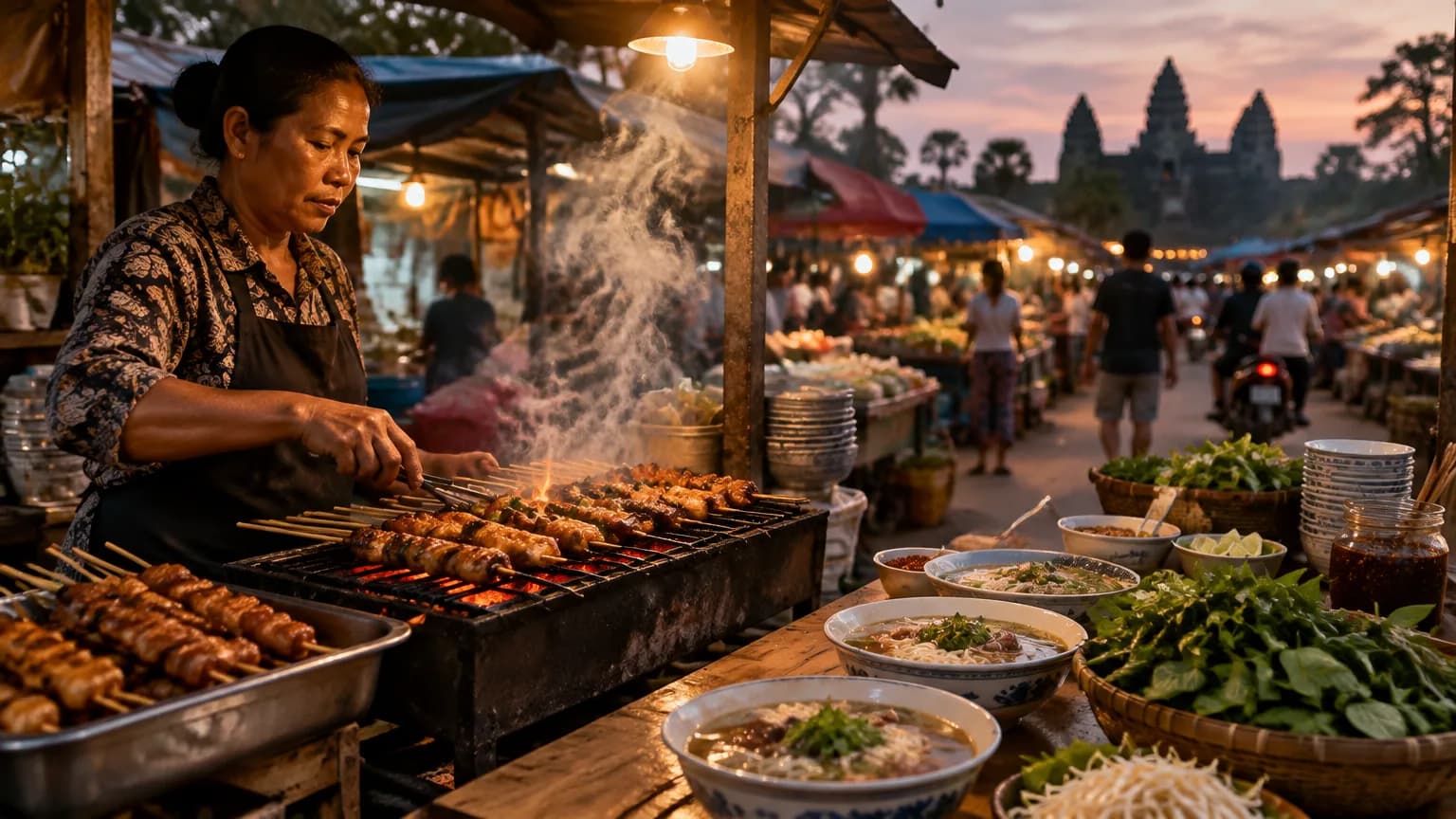
The riverside and the streets around the Royal Palace have the densest cluster of sit-down restaurants, including Indian and vegetarian options. For street food, the evening stalls near the night market area are the usual choice, and they are busiest after sunset. Russian Market suits daytime snacks, fresh fruit and browsing for ingredients you may want to try at home.
Plan your food stops around the city's rhythm. Breakfast noodle stalls are busiest before 9 am, while evening markets fill after 6 pm. Heat in the afternoon makes many travellers prefer a long lunch in a shaded restaurant, so book a table at a sit-down place if you have a set time to be somewhere.
Siem Reap
Pub Street and the lanes around it are the tourist eating zone, with Khmer, Indian and vegetarian menus side by side. Prices here are higher than elsewhere in the city. The old market area is better for cheap local plates, and the streets away from Pub Street have small family-run Khmer kitchens for a quieter meal after a full day at the temples.
Many visitors eat early or late because temple days start before sunrise. A light breakfast of kuy teav or fruit, a packed snack for the afternoon, and a proper dinner after returning to town works well. Ask your hotel to suggest a nearby vegetarian-friendly kitchen, as they usually know which ones handle special requests reliably.
Battambang and Kampot
Both towns are known for market food and pepper. Kampot pepper appears on menus across the country, and the crab dishes near Kep are a regional speciality. Battambang's morning market is the place to try nom banh chok and kralan, and it is quieter and cheaper than the Siem Reap markets.
These towns move at a slower pace, and many restaurants close earlier in the evening than in the capital. Eat your main meal at lunch or early evening, and carry a few snacks for the journey between towns, since long road stretches may have few food stops.
Coastal Areas
Sihanoukville and the islands lean on seafood, with grilled fish and squid at beach restaurants. Vegetarian choice is thinner here, so plan around rice, noodles and vegetable stir-fries, and carry a few snacks for days when options run out. For a wider view of how the regions connect, see the Cambodia travel guide.
Seafood is often sold by weight at beach restaurants, so ask the price per kilo before choosing. Prices can rise sharply in peak season from December to January, so confirm costs before ordering a large platter.
Vegetarian, Jain and Other Dietary Needs
Vegetarian food is manageable in tourist areas but not automatic. Jain food is harder, mainly because onion and garlic form the base of most dishes. Eat at Indian restaurants, vegetarian-friendly Khmer kitchens and hotel buffets where possible, and explain your needs clearly at each meal.
- Easy options: vegetable fried rice, plain rice, stir-fried morning glory, fresh fruit, banana and coconut desserts, and Indian restaurants in Phnom Penh and Siem Reap.
- Ask for: no fish sauce, no shrimp paste, no oyster sauce, no pork broth and no egg. Say it in simple English, point to the word on a card, and repeat it when the dish arrives.
- Hidden ingredients: fish sauce in most stir-fries and dips, prahok in many curries, shrimp paste in some soups, and pork broth in kuy teav and many noodle bowls.
- Jain travellers: onion and garlic are standard, so request dishes cooked without them. This works best at Indian restaurants and larger hotels rather than street stalls, and it is worth asking whether the kitchen can prepare a separate pan.
- Halal and egg-free: halal options are limited outside Muslim neighbourhoods and a few dedicated restaurants. Egg-free is easier, since many rice and vegetable dishes are made without egg by default, but fried rice often includes it.
Pack a small supply of snacks such as nuts, roasted chana or dry fruit for days when suitable meals are hard to find, especially on island trips and long road journeys. Keep these separate from the rest of your luggage so they stay dry during the rainy season.
A written note in Khmer saves time at stalls where English is limited, and your hotel can write one for you. Keep a short list of safe dishes on your phone so you can show it at any counter. If you are also arranging paperwork, the visa guide for Indian travellers to Cambodia covers the entry steps separately.
Street Food Safety and Eating Etiquette
Street food in Cambodia is generally fine if you choose busy stalls and eat freshly cooked food. The main risks are ice, raw vegetables and tap water rather than the cooking itself. Etiquette is relaxed, but a few habits help you blend in and avoid stomach trouble.
- Drink bottled or filtered water only. Tap water is not safe to drink, and this includes water used for brushing teeth.
- Treat ice with caution outside hotels and established restaurants. Ask for drinks without ice if unsure.
- Choose stalls with a queue and high turnover. Hot, freshly cooked food is safer than pre-cooked trays left out in the heat.
- Peel your own fruit and avoid pre-cut fruit that has been left out.
- Eat with a spoon and fork, using the fork to push food onto the spoon. Chopsticks are used for noodles.
- Do not point with your feet or touch people's heads. Pass items with your right hand or both hands.
- Tipping is not expected but appreciated. Rounding up or leaving small notes is normal in tourist areas.
During the rainy season, from May to October, heavy showers can flood low streets and slow deliveries, which affects how fresh market food stays. Eat at high-turnover places and avoid leaving cooked food standing in humid conditions. Hot dry months from March to April can also raise food-spoilage risk in the open air, so the same rule applies.
If your stomach is sensitive, stick to hotel and restaurant food for the first two days, then try stalls. Carry oral rehydration salts and a basic medicine kit, and keep a note of the nearest clinic in each town you visit. The best time to visit Cambodia also affects food choice, since the rainy season changes what is available at markets and how quickly food spoils in the heat.
What Meals Cost
Meal costs in Cambodia depend more on the type of place than on the city. Street stalls are the cheapest, casual local restaurants sit in the middle, and hotel or tourist-area restaurants cost the most. Siem Reap and Phnom Penh are pricier than Battambang, Kampot or the islands, and peak season pushes prices up further.
- Street stalls and markets: the lowest cost, usually rice, noodles or grilled skewers. Portions are small, so you may order two items to feel full.
- Casual local restaurants: a step up, with more seating and a wider menu, still budget-friendly by international standards.
- Sit-down and tourist-area restaurants: the highest of the three, especially on Pub Street and the Phnom Penh riverside. Indian and vegetarian restaurants often fall in this band.
- Hotels and resorts: the priciest option, with prices closer to what you would pay at home.
US dollars are widely accepted for hotels, tours and larger bills, while small change is often given in riel. Carry small notes for stalls, since vendors may not have change for large bills. Confirm current prices at the time of travel, as menu prices change. The Cambodia tour packages show how food stops fit into a full trip.
Budgeting for food is easiest when you plan one sit-down meal a day and fill the rest with stalls and markets. Seafood platters, imported drinks and Western-style breakfasts add up quickly in tourist zones, so check menu prices before ordering. Keep a rough daily food figure in mind and adjust it based on how many meals you eat out.
To see this turned into a complete trip, have a look at the Cambodia holiday packages.