
Field notes
Bhutan Best Time to Visit for Indians 2026
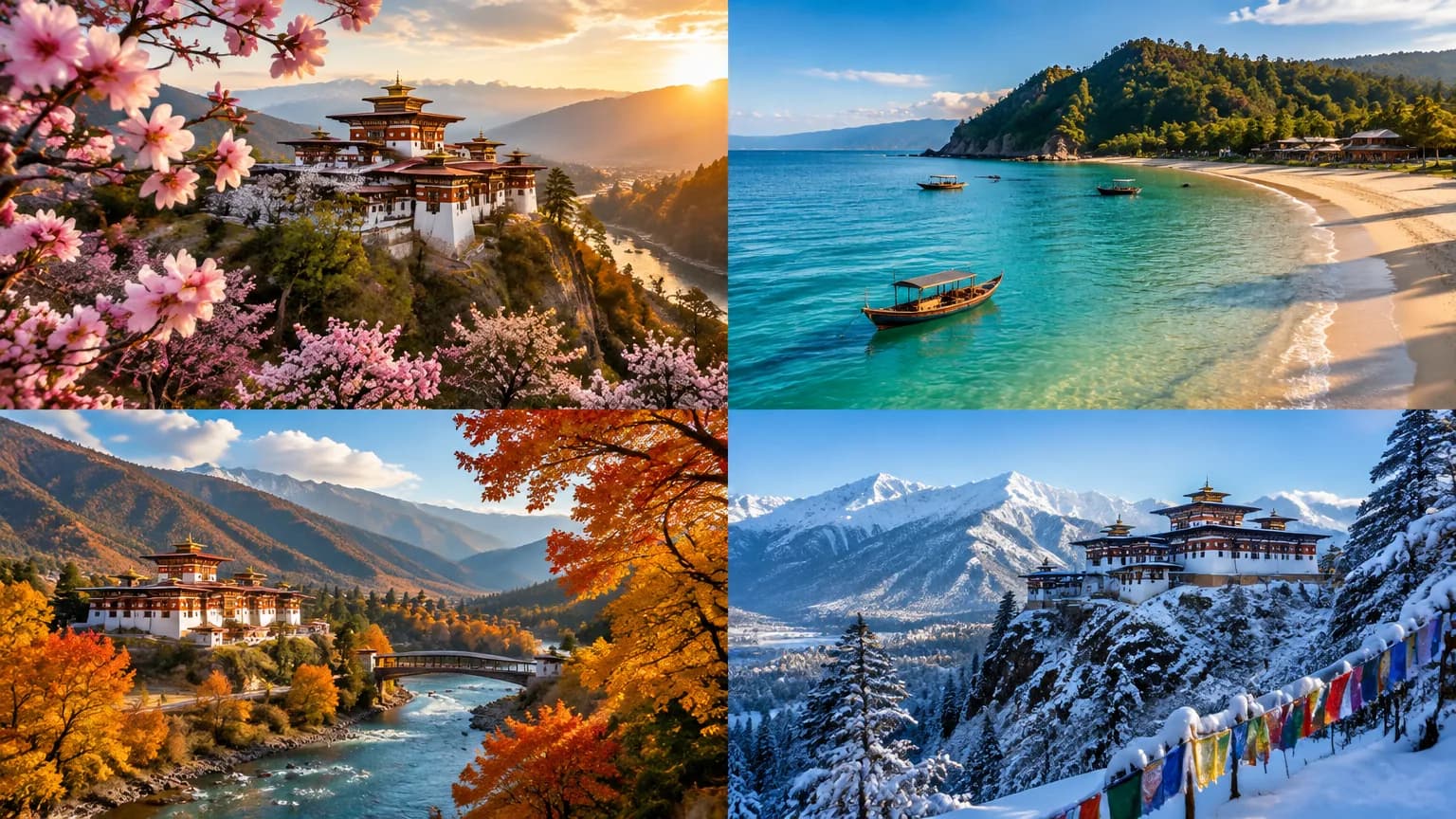
The best time to visit Bhutan from India is October to December and March to May, when skies are clear and mountain views are sharp. Temperatures range from 10°C to 22°C, crowds are moderate to high, and prices are at a seasonal premium. June to September brings heavy monsoon rain and lower costs.
What is the month-by-month breakdown for visiting Bhutan?
Each month in Bhutan offers a distinct combination of weather, crowd levels, and pricing that directly affects what Indian travelers can do and how much they will pay. The table below covers all twelve months so you can match your travel dates to your priorities.
| Month | Avg Temp (°C) | Rainfall | Tourist Crowd | Price Level | Best For |
|---|---|---|---|---|---|
| January | 2–12 | Low | Low | Moderate | Winter festivals, snow views |
| February | 4–14 | Low | Low–Moderate | Moderate | Punakha Tshechu, rhododendron early bloom |
| March | 8–18 | Low–Moderate | Moderate–High | High | Spring flowers, Paro Tshechu build-up |
| April | 12–22 | Moderate | Very High | Peak | Paro Tshechu, trekking, clear skies |
| May | 14–24 | Moderate | High | High | Rhododendron bloom, Haa Valley |
| June | 16–26 | High | Low | Low | Budget travel, lush green valleys |
| July | 17–27 | Very High | Very Low | Low | Haa Summer Festival, off-season savings |
| August | 17–26 | Very High | Very Low | Low | Thimphu Tshechu preparation, green landscapes |
| September | 15–24 | High | Low | Low–Moderate | Late monsoon, Thimphu Tshechu |
| October | 10–20 | Low | Very High | Peak | Thimphu Tshechu, trekking, clear mountain views |
| November | 6–18 | Very Low | High | High | Punakha, photography, Jambay Lhakhang Drup |
| December | 2–14 | Very Low | Moderate | Moderate | Quiet travel, winter festivals, Druk Path Trek |
October and April consistently record the highest demand from Indian travelers flying out of Kolkata, Delhi, and Bagdogra on DrukAir and Bhutan Airlines. September and November offer a useful middle ground between cost and conditions.
When is peak season in Bhutan for Indian tourists?
Peak season in Bhutan runs from late March through May and again from October through November. These months offer the clearest skies, the best mountain visibility, and the most active festival calendar. Hotel rates and package prices run 25–40 percent above the annual baseline during these windows.
April is the single busiest month. The Paro Tshechu festival — a five-day masked-dance event held at Paro Dzong — draws large numbers of both Indian and international visitors. Paro Tshechu falls in late March or April depending on the Bhutanese lunar calendar; the 2026 dates are expected in the first week of April.
October is the second peak. The Thimphu Tshechu, held at Tashichho Dzong in Thimphu, typically runs for three days in late September or early October. Thimphu is Bhutan's capital city, located at 2,334 metres above sea level. The festival coincides with post-monsoon clarity, making mountain views from Dochula Pass particularly sharp.
Indian travelers booking peak-season Bhutan packages should confirm accommodation at least 60–90 days in advance. Hotels in Paro and Thimphu fill quickly during festival weeks. A standard 5-night Bhutan package from India during peak season costs roughly INR 80,000–1,20,000 per person depending on hotel category, inclusions, and departure city.
The Sustainable Development Fee (SDF) for Indian, Bangladeshi, and Maldivian nationals is INR 1,200 per person per night as of 2025 policy. Confirm the current SDF rate with your tour operator before booking, as Bhutan's Royal Government reviews this periodically.
Which months offer the best shoulder season value in Bhutan?
Bhutan's shoulder season covers February to early March and the month of November. These months combine reasonable weather with lower crowd pressure and prices that sit 10–20 percent below peak-season levels. Most trekking routes, dzongs, and monasteries remain fully accessible.
February is particularly strong for Indian travelers. The Punakha Tshechu festival takes place at Punakha Dzong, a 17th-century fortress at the confluence of the Pho Chhu and Mo Chhu rivers. Punakha sits at 1,200 metres, making it warmer than Thimphu in winter. The Punakha Drubchen, held just before the Tshechu, re-enacts a 17th-century battle and is one of Bhutan's most visually distinctive events.
November offers dry, cool conditions after the monsoon fully clears. Visibility to Himalayan peaks — including Gangkhar Puensum, Bhutan's highest unclimbed mountain at 7,570 metres — is excellent. The Jambay Lhakhang Drup festival in Bumthang district falls in late October or November and includes a rare naked fire dance performed at night.
Travelers who want a festival experience without peak-season pricing should target the Punakha Tshechu in February or the Jambay Lhakhang Drup in November. Both events have lower international visitor numbers than the Paro or Thimphu Tshechus.
Is Bhutan worth visiting during the monsoon or winter off-season?
Bhutan's off-season spans two distinct periods: the monsoon from June through August, and the cold winter from December through January. Both periods offer significant cost savings and far fewer crowds. Certain experiences — green valley landscapes, winter festivals, and budget trekking — are actually better in the off-season.
The monsoon brings heavy rainfall, particularly in southern and central Bhutan. Landslides can block roads, especially on the Thimphu–Punakha highway via Dochula Pass. Trekking routes at higher elevations become slippery and leeches are common below 2,500 metres. That said, the Haa Summer Festival — a two-day cultural event in Haa Valley — runs in July and is one of the few festivals specifically designed to attract visitors during the wet season.
Thimphu and Paro remain accessible and functional through the monsoon. Dzongs, museums, and the Tiger's Nest Monastery (Paro Taktsang) are open year-round. The trail to Tiger's Nest is manageable in light rain but becomes slippery after heavy downpours; morning visits reduce rain risk.
Winter in Bhutan (December–January) is cold but dry. Thimphu temperatures drop to 2–5°C at night. The Druk Path Trek, a 6-day route between Paro and Thimphu, is feasible in December for acclimatised trekkers. The Monggar and Trashigang Tshechus in eastern Bhutan fall in November–December and see very few foreign visitors, giving Indian travelers a more local experience.
Off-season package prices from India can be 20–35 percent lower than peak rates. The SDF still applies year-round, so the per-night government fee does not change with season.
What is the festival and event calendar for Bhutan in 2026?
Bhutan's festival calendar is the single biggest driver of travel timing decisions for Indian tourists. Most major festivals are Tshechus — religious masked-dance events held at dzongs on specific dates in the Bhutanese lunar calendar. Exact 2026 Gregorian dates should be confirmed with your operator as lunar calendar conversions shift annually.
| Festival Name | Approximate 2026 Date | Why Indian Travelers Value It | Advance Booking Needed? |
|---|---|---|---|
| Punakha Drubchen | Late February | Battle re-enactment, warm valley location, lower crowds | Yes — 45–60 days |
| Punakha Tshechu | Late February – Early March | Colorful masked dances, accessible from Thimphu | Yes — 45–60 days |
| Paro Tshechu | Late March – Early April | Largest festival, giant thangka unfurling at dawn | Yes — 90 days minimum |
| Haa Summer Festival | July (2 days) | Nomadic culture, archery, off-season pricing | No — walk-in friendly |
| Thimphu Tshechu | Late September – Early October | Capital city setting, post-monsoon clarity | Yes — 60–90 days |
| Jambay Lhakhang Drup | Late October – November | Rare fire dance, Bumthang valley, low foreign crowds | Yes — 30–45 days |
| Monggar Tshechu | November | Eastern Bhutan, very few tourists, authentic setting | No — low demand |
| Druk Wangyel Tshechu | 13 December | Dochula Pass location, mountain backdrop, patriotic theme | No — moderate demand |
The Paro Tshechu's giant thangka — a silk appliqué religious painting — is unfurled at dawn on the final day. This single event draws more Indian visitors than any other Bhutanese festival. Arriving in Paro two days before the thangka unfurling gives time to see the preceding masked dances without the final-day crowd surge.
What is the best time in Bhutan for specific travel purposes?
The right travel window depends on what you want from the trip. Bhutan suits honeymoon couples, families, trekkers, and budget travelers differently, and each group has an optimal season.
When should honeymoon couples visit Bhutan?
October and November are the strongest months for honeymoon travel to Bhutan. Clear skies, cool temperatures between 10°C and 20°C, and post-monsoon greenery create good conditions. Punakha in February is a quieter, warmer alternative with the Punakha Tshechu as an added draw.
When is Bhutan best for families with children?
April and October work best for families. Both months have stable weather, open roads, and active festival calendars that hold children's attention. April's warmer daytime temperatures (up to 22°C in Paro) make outdoor sightseeing more comfortable for younger travelers.
When is the best time for trekking in Bhutan?
October to November and March to April are the two trekking windows. The Snowman Trek — a 25-day high-altitude route crossing passes above 5,000 metres — is only viable in October. The Druk Path Trek and Jomolhari Trek are accessible in both windows. Trails are wet and leech-prone from June through August.
When should budget travelers visit Bhutan?
June through August offers the lowest package prices. The SDF remains fixed, but hotel and operator rates drop noticeably. Travelers comfortable with rain and flexible on trekking can save 25–35 percent versus peak season. The Haa Summer Festival in July provides a festival experience at no premium.
How does Bhutan's timing compare to Nepal for the same season?
Indian travelers often weigh Bhutan against Nepal when planning an autumn or spring Himalayan trip. Both destinations peak in October–November and March–May, so the seasons overlap directly. Nepal's trekking infrastructure — particularly the Annapurna and Everest Base Camp routes — is more developed and less regulated than Bhutan's, meaning last-minute bookings are easier in Nepal.
Bhutan's SDF adds a fixed daily cost that Nepal does not have. Nepal charges a trekking permit fee (TIMS card, approximately NPR 2,000) and national park entry fees, but these are lower than Bhutan's per-night government levy. A 7-night Bhutan trip from India costs more than a comparable Nepal trip in the same season, primarily due to the SDF and mandatory licensed-guide requirement.
The trade-off is crowd density. Bhutan's Paro Valley in April has far fewer visitors than Nepal's Namche Bazaar in October. Indian travelers who want a Himalayan festival experience with less congestion generally find Bhutan more suitable, despite the higher cost. Those prioritising trekking variety and lower spend tend to choose Nepal.
What climate data and airline routes should Indian travelers know?
Bhutan's Department of Meteorology operates weather stations at Paro Airport (2,235 metres), Thimphu (2,334 metres), and Bumthang (2,800 metres). Paro Airport records an annual average rainfall of approximately 650 mm, with 70 percent falling between June and September. Thimphu averages 650–700 mm annually on a similar distribution.
Paro International Airport is Bhutan's only commercial airport. DrukAir and Bhutan Airlines operate scheduled services from Kolkata, Delhi, Mumbai, Bagdogra, Guwahati, and Kathmandu. Bagdogra (Siliguri) is the closest Indian airport to Paro, with a flight time of approximately 45 minutes. Delhi–Paro takes roughly 2 hours.
Seasonal flight frequency increases in April and October to meet festival demand. Indian travelers booking April departures should confirm seat availability at least 60 days out, as DrukAir's Paro-bound flights from Delhi and Kolkata fill quickly during Paro Tshechu week. Bagdogra is a useful alternative departure point for travelers from West Bengal, Sikkim, and northeast India, as it often has more available seats than Delhi during peak weeks.
Mountain visibility from Paro Airport — where the approach passes close to peaks above 5,000 metres — is best in October and worst in July–August. Fog and low cloud can delay or divert Paro landings in winter mornings; December and January travelers should build a buffer day into their itinerary for potential flight disruptions.