This holiday starts in Paro, spends two nights in Thimphu, moves to the Phobjikha valley for two nights, drops to Punakha for one night and returns to Paro for the flight home. Mornings are for sightseeing, afternoons leave room for rest, and dinners stay early. Every transfer is by private SUV, so the family travels together and stops when the children need a break.
What is a Bhutan family holiday and who is it for?
A Bhutan family holiday is a land package built for mixed age groups, with short transfers, easy sightseeing and rest windows in the day. It works best for parents travelling with children aged eight and above and grandparents who want cultural sights without steep climbs.
- Group: two to three generations, usually 4 to 8 people
- Pace: one main sight per slot, with lunch and a rest at the hotel
- Not suited to: families looking for crowded city nightlife or beach time
Which places does this Bhutan trip cover?
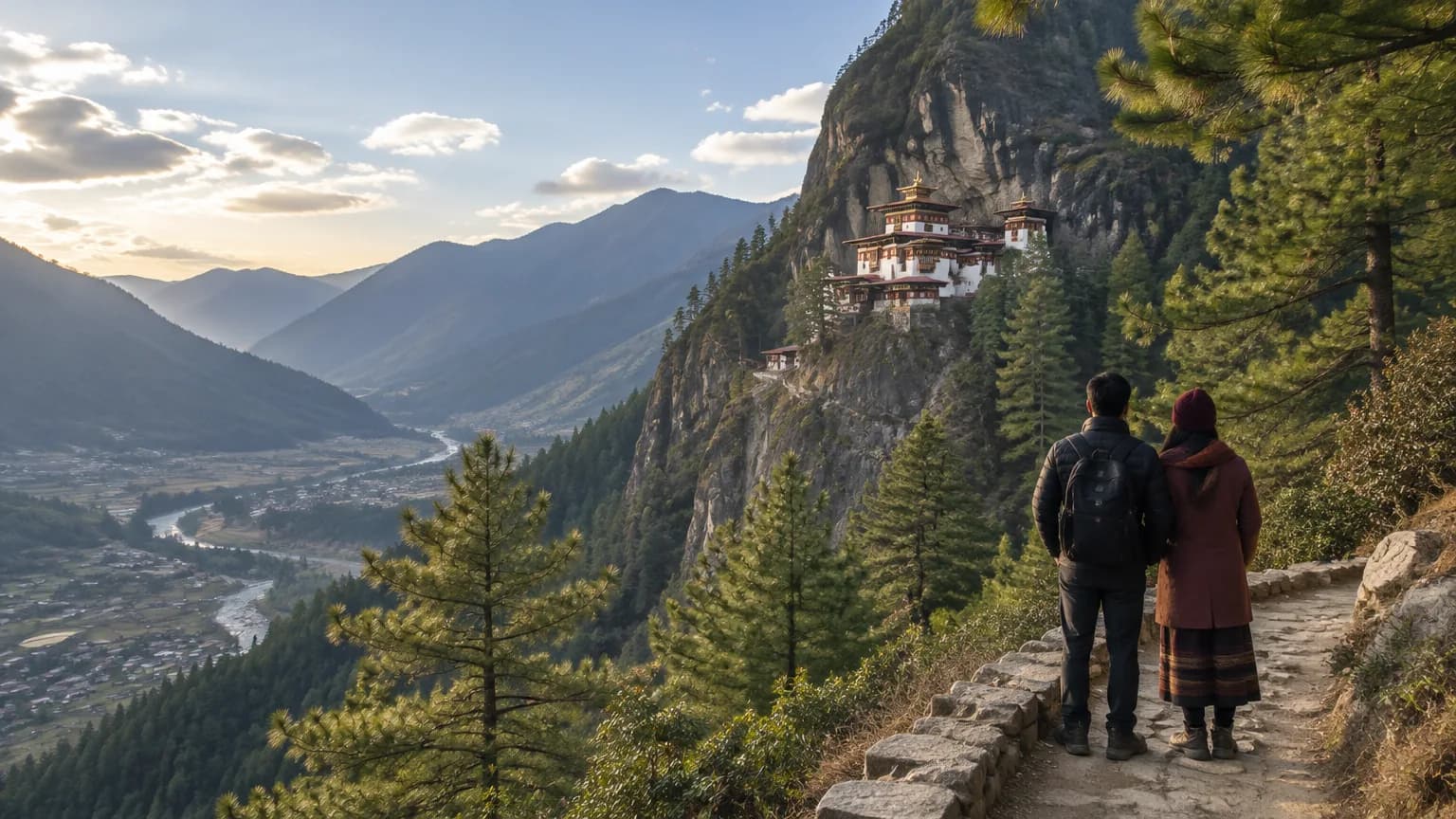
The route covers Paro for the National Museum at Ta Dzong and Tiger's Nest, Thimphu for the Takin Preserve, Buddha Dordenma and the weekend market, and Phobjikha for flat valley walks among farmhouses and black-necked cranes. Dochula Pass, Punakha Dzong and Chimi Lhakhang fall on the road between the valleys.
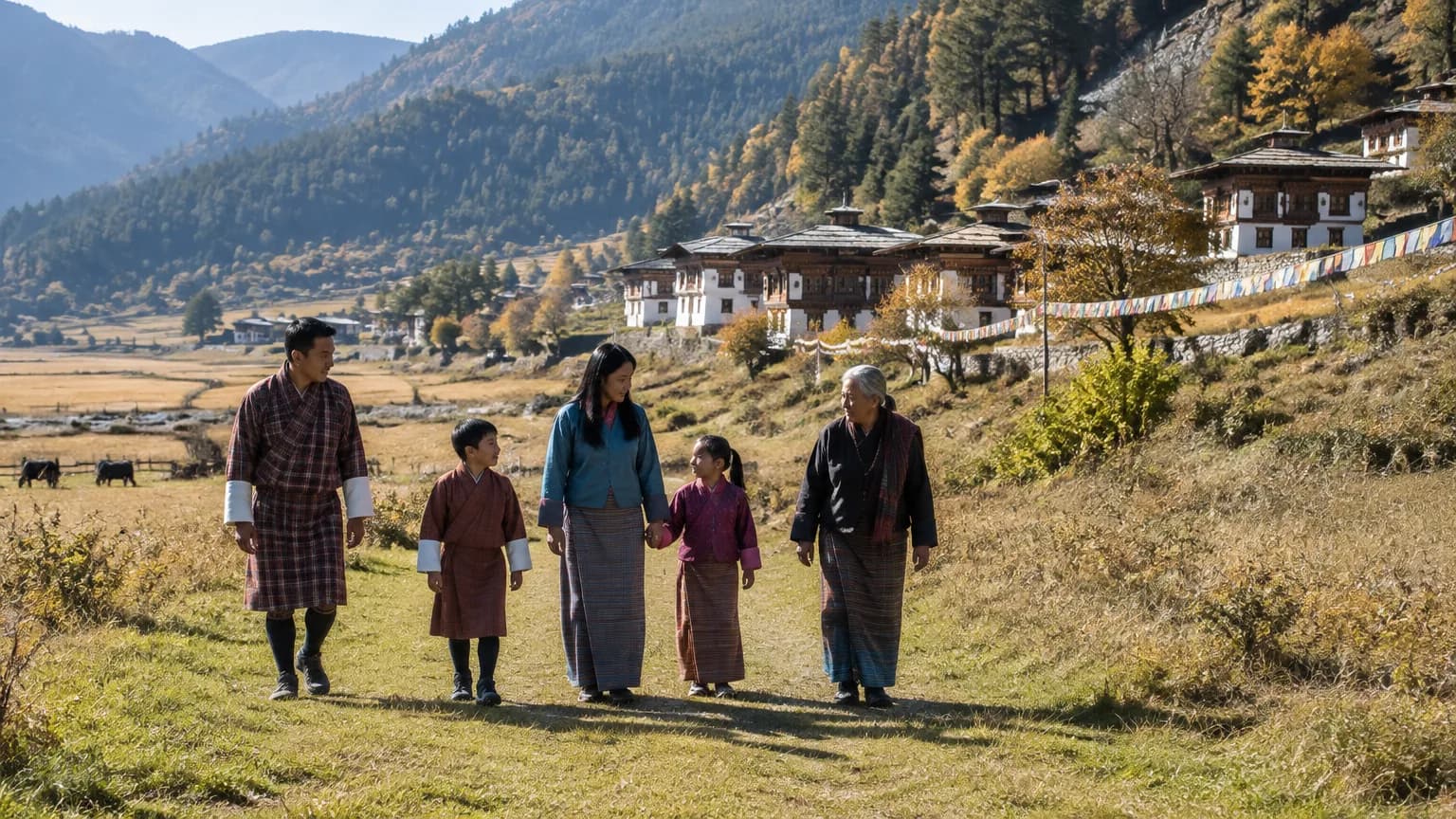
Phobjikha is the part most families remember. The valley floor is wide and level, so grandparents and younger children can walk the same path. Cranes are seen in the colder months, so confirm bird sightings with us if that matters to your group.
When is the best time to visit Bhutan from India?
March to May and September to November are the most comfortable months for a family trip. October and November have the clearest skies but also high crowds and peak prices. March to May is milder and cloudier, with flowers and wildlife in the valleys.
Season notes above are drawn from Bhutan's official tourism information and published climate guides for 2026.
How much does a Bhutan family trip cost?
This 7N/8D holiday costs Rs.53,000 per person for 2026 departures, on twin sharing, land only, with flights excluded. Child rates depend on age and bed sharing, so confirm them at booking. The Bhutan trip cost changes with hotel category, season and group size.
A 5% Goods and Services Tax began applying to tourism services in January 2026. It covers accommodation, guided tours, local transport and meals, while the Sustainable Development Fee is excluded. Our Bhutan trip cost breakdown shows how the figure splits up.
Why does this itinerary work for families?
This itinerary works for families because no drive is long, every day has a rest window and each sight can be enjoyed by more than one age group. The Takin Preserve and the museum are described as family-friendly, and Phobjikha walks are flat.
- Short transfers: the longest drive, Thimphu to Phobjikha, is about five hours with a Dochula stop
- Shared activities: children and grandparents do the same walks and museum visits
- Food: hotels serve mild vegetarian dishes such as kewa datshi and shamu datshi, plus rice and momos
- Flexibility: one free afternoon in Phobjikha and one in Paro
Highlights by age group
Each age group gets at least one sight built around it. Younger children enjoy the animals, teenagers like the market and the hike, and grandparents get gentle culture and valley walks.
Younger children (8 to 12)
- Takin Preserve in Thimphu, described as appealing to children
- Pony ride for part of the Tiger's Nest trail
- Prayer flags and farmhouse walks in Phobjikha
Teenagers
- Thimphu weekend market for snacks and local crafts
- The Tiger's Nest climb through pine forest, which is demanding for young children but manageable for teenagers
- Buddha Dordenma and the view over Thimphu valley
Grandparents
- National Museum at Ta Dzong, a cultural visit that is not overwhelming
- Easy valley walks in Phobjikha
- Punakha Dzong, with the option to skip the longer walks
Pace, rest and daily logistics
The daily rhythm is breakfast at the hotel, one main sight before lunch, a rest after lunch and an early dinner. Drives are between one and five hours, with tea and toilet stops planned on the long days.
- Paro to Thimphu is about an hour on a paved road, so Day 1 stays light
- Thimphu to Phobjikha is about five hours with a Dochula Pass stop
- Phobjikha to Punakha is about three hours, mostly downhill
- Punakha to Paro takes the better part of a day, with a Chimi Lhakhang stop
Mountain roads have steep drops and changeable weather can delay flights, so we keep a buffer on the last day.
Rooms, meals and comfort
Stays are standard 3-4 star hotels and valley lodges, and families can usually be placed in family rooms or two adjoining rooms. Room types vary by property, so we confirm the layout at booking. Breakfast and dinner are included, with lunch paid separately.
Vegetarian meals are easy to arrange in Thimphu, Paro and Punakha. Ema datshi, the national chilli-and-cheese stew, is hot, so ask for mild options for children. Tell us about Jain or allergy needs early, as supply is thinner in Phobjikha.
Travelling with kids and elders: five tips
Five checks make the trip easier for mixed age groups. They cover altitude, layers, motion sickness, documents and the Tiger's Nest climb.
- Altitude: take the first evening easy, drink water and avoid heavy meals after landing in Paro.
- Layers: Phobjikha and Dochula can be cold even when Punakha is warm, with frost common above 3,000 metres in winter.
- Motion sickness: carry tablets for the winding roads and seat children near the front.
- ID: carry passport copies for every traveller, including children, and keep originals in hand luggage.
- Tiger's Nest: the hike is demanding for young children, and ponies cover only part of the trail, so grandparents may prefer the museum instead.
Stay options on the Thimphu and Phobjikha route
Stays on this route are in Thimphu town, a Phobjikha valley lodge, a Punakha riverside hotel and a Paro hotel, with the category decided by your budget. The indicative per-person tiers below help you compare, and the Standard 4-star tier is the default for this package.
Hotel names are confirmed at booking. Phobjikha has fewer properties than Thimphu or Paro, so lodges there are simple and warm rather than large.
Entry, money and flights for Indian travellers
Indian passport holders need an entry permit arranged before travel, and we handle the paperwork for this package. Check the Bhutan visa guide for Indians and the official government portal for the current fee, as rules change.
Bhutan's currency is the ngultrum, pegged one-to-one with the Indian rupee, so budgeting is simple. Paro International Airport (PBH) is the main entry point, with flights from Delhi, Mumbai and Kolkata as of August 2026. Confirm duration and fares with us at booking. For wider planning, read our Bhutan travel guide, or browse other Bhutan tour packages.
Share how many adults and children are travelling and their ages, and we will adjust rooms, pace and activities.