
Field notes
Bhutan Packing List for Indians 2026
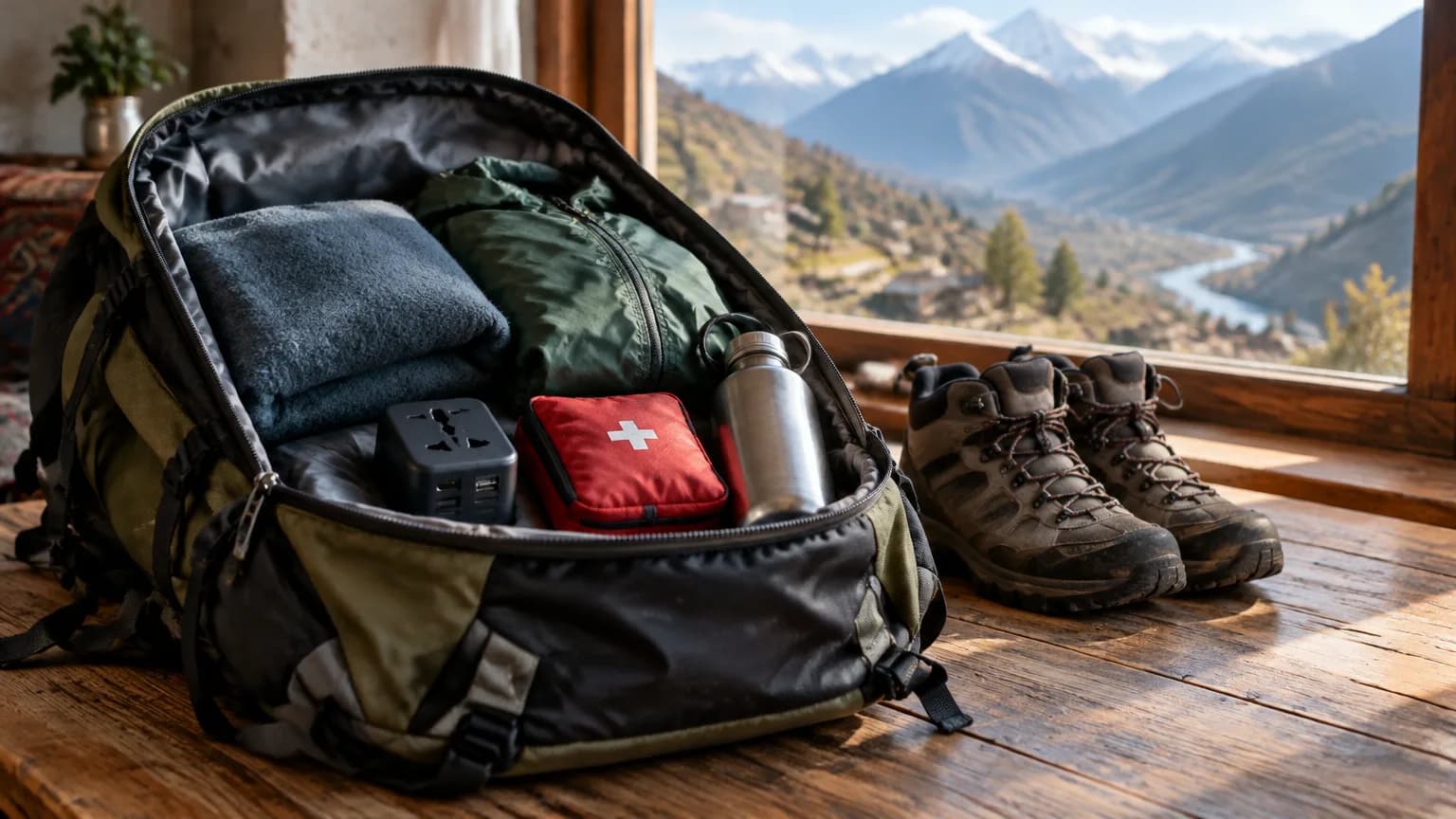
The Bhutan packing list for Indians is shaped by three things: the season you travel in, the altitude you reach and the activities you plan. Pack layers, rain protection and broken-in shoes. The three items travellers forget most often are a universal power adapter (plug types G, C and D), medicines for altitude and stomach upsets, and modest clothing for dzong visits.
What the weather in Bhutan demands
Bhutan has four distinct seasons, and your luggage should change with each. Winter is crisp, clear and sunny, spring is cloudier and wetter, the summer monsoon is heavy with rain, and autumn is milder with clearer skies.
Winter (December to February) brings frost, and snowfall is common above 3,000 metres. Spring (March to May) can be cloudier and wetter than autumn, though flowers and wildlife are at their best. The monsoon (June to August) brings heavier rainfall and possible disruption in some areas. Autumn (September to November) follows the rains with milder weather and clearer skies. Rain is low in October, November, December, January and February, moderate in March, April, May and September, and heavy from June to August.
Rain matters as much as temperature. Heavy monsoon rainfall can cause landslides, flash floods and road closures. Snow in January and February may block mountain passes between western and central valleys. Mountain roads have steep drops, and changeable weather can delay flights. Keep a waterproof layer at the top of your bag, not buried at the bottom.
Crowds and prices follow the weather too. October and November see high crowds and peak prices, September is also at peak prices, and the monsoon months are the quietest and cheapest. If you travel in peak autumn, book flights and hotels early. If you travel in the rains, pack for delays and keep a day of slack around any flight.
Use this table as a quick reference for what each season asks of your luggage.
| Season | Weather pattern | What to pack |
|---|---|---|
| Winter (Dec-Feb) | Crisp, clear, sunny; frost and snow above 3,000 m | Thermal inners, fleece, down jacket, gloves, beanie, warm socks |
| Spring (Mar-May) | Cloudier and wetter than autumn; flowers and wildlife | Light layers, waterproof shell, quick-dry trousers, insect repellent |
| Monsoon (Jun-Aug) | Heavy rain; landslide and road-closure risk | Rain jacket, bag rain cover, waterproof shoes, dry bags |
| Autumn (Sep-Nov) | Milder weather, clearer skies, higher crowds | Fleece, light jacket, sun hat, sunglasses, layers for cool evenings |
Altitude is the other factor. Altitude sickness is a risk above approximately 3,000 metres. Routine and emergency medical services are limited, especially in rural areas, so carry your own basic medical kit instead of counting on a pharmacy nearby.
How layers work in practice
Think of three layers. The base layer sits against your skin and should be thermal or quick-dry, not cotton. The mid-layer is a fleece or light down jacket that traps warmth. The outer layer is a windproof, waterproof shell that goes over everything. You peel layers off as you climb and add them back when you stop.
Indian travellers from the plains often underestimate the evening drop in temperature. A day that feels mild at midday can turn cold once the sun goes behind a ridge. Keep a warm layer in your daypack even when the morning looks clear.
Essentials checklist
The essentials are documents, power and charging gear, medicines and a few daily items. Sort these first, because they are the hardest to replace once you are in the mountains.
Documents
- Passport with sufficient validity, plus a photocopy kept separately
- Visa or permit paperwork; the Bhutan visa for Indians guide covers entry rules
- Printed hotel and transport confirmations, in case phone battery or signal fails
- Travel insurance papers that include medical cover
- Passport-size photographs, a few spare
- A written list of emergency contacts, your tour operator's number and your hotel addresses
Keep originals in a flat pouch inside your daypack and copies in your main bag. Take photos of every document and save them offline on your phone. A common mistake is leaving printed confirmations in the checked suitcase, then needing them at the first checkpoint.
Power and connectivity
Bhutan uses 230 volts and 50 Hz, and plug types G, C and D are in use. A universal adapter is the safest choice. Indian appliances at 230 volts generally work, but check the label on each charger. Add a power bank, charging cables and a torch or headlamp for evenings, since power cuts and dark mountain roads are easy to underestimate.
Bhutan Telecom provides a prepaid tourist SIM with mobile data, calls and texts, so you do not need an international roaming pack. Ask your tour operator how to collect it on arrival. Download offline maps and your booking documents before you leave Indian networks, because signal in high valleys can drop without warning.
Medicines and daily items
- Prescription medicines in original packaging, with a doctor's note
- Paracetamol, oral rehydration salts, antidiarrhoeal tablets, antiseptic cream, blister plasters
- Altitude sickness medicine, only after speaking to your doctor
- Motion sickness tablets for winding mountain roads
- Lip balm with SPF, moisturiser and sunscreen, since dry mountain air and strong sun are hard on skin
- Reusable water bottle, hand sanitiser, tissues, a small daypack
- Indian rupees in small notes and a forex card for card payments; confirm what works at your hotels when booking
Pack medicines in your carry-on, split between two bags if you travel as a couple. If you take regular medication for blood pressure, diabetes or thyroid, carry a full supply plus a few spare days, because refills in rural areas are not reliable. Ask your doctor before the trip, not at the airport, about altitude medicine and how it interacts with anything you already take.
Clothing and footwear by season
Pack in layers for every season: a base layer, a warm mid-layer and a waterproof outer shell. Bhutan's valleys and passes sit at very different heights, so one day can bring sun, wind and rain.
Winter, December to February
Bring thermal inners, woollen or fleece sweaters, a down or padded jacket, gloves, a beanie, a scarf and warm socks. For city days, layers suitable for cold winter conditions are enough. Waterproof boots with good grip handle frost and snow.
Add two or three pairs of thick socks per week and a spare pair in your daypack. Hand and toe warmers are small, light and useful on cold early starts. Remember that snow in January and February may block mountain passes, so a spare day of warm clothing in your bag helps if a transfer runs late.
Spring and autumn, March to May and September to November
A base layer, a fleece and a waterproof shell let you adjust through the day. Add quick-dry trousers, a sun hat and sunglasses, since autumn skies are clear and spring can turn wet. Comfortable walking shoes are essential for dzong courtyards, stairs and market lanes.
Spring brings flowers and wildlife, so a small pair of binoculars and insect repellent earn their space. Autumn is the busiest period, with high crowds in October and November, so expect early starts for popular sites and pack a warm layer for those cool mornings.
Monsoon, June to August
Bring a hooded rain jacket, waterproof trousers, a rain cover for your bag and shoes that dry quickly. Keep a warm layer even in summer, because higher altitudes stay cold. Pack spare socks in a zip bag.
Use dry bags or zip-lock covers for your phone, passport and camera. Because heavy rain can cause landslides and road closures, carry a few snacks, water and a power bank in your daypack on every drive. A quick-dry towel is worth carrying in this season.
Footwear notes
Wear broken-in hiking shoes for the Tiger's Nest hike, a mountain hike through pine forests with a long climb and stone stairs. Carry slip-on shoes or sandals for hotel rooms and short evening walks. Never start a steep trail in new shoes.
A sensible footwear set for most trips is three pairs: grippy walking or hiking shoes, light slip-ons for temples and rooms, and waterproof shoes or boots in the rains and winter. Pack blister plasters, and break in new shoes for at least two weeks before departure.
What to wear in town and at dzongs
For dzong visits and religious sites, wear modest clothing that covers shoulders and knees. Full-length trousers and tops with sleeves are the safe choice, and they are easier to layer anyway. Carry a light scarf or shawl you can wrap over bare arms or use against the cold.
For cities and markets, comfortable casual clothes work well. Avoid ripped, very short or sleeveless outfits at dzongs, monasteries and official buildings. The sourced data gives no formal dress rule, so ask your guide each morning what suits the day's stops.
Gear for activities
Pack gear only for what you will actually do. Bhutan's main activities are the Tiger's Nest hike, river rafting, mountain biking, dzong and museum visits, and family-friendly stops such as the Takin Preserve.
- Tiger's Nest hike: small daypack, rain shell, water, snacks, a hat and trekking poles if you use them. Ponies are available for part of the climb when children cannot walk the whole trail.
- River rafting near Punakha: quick-dry clothes, a dry change of clothes and secure footwear. Confirm with your operator what safety gear is provided.
- Mountain biking: padded shorts, gloves and a helmet if you prefer your own; check what can be arranged locally when booking.
- Dzong visits, such as Rinpung Dzong and Punakha Dzong: modest clothes covering shoulders and knees, and shoes that are easy to slip off.
- National Museum at Ta Dzong and the Thimphu weekend market: comfortable walking shoes, a light scarf and a cloth bag for purchases.
- Takin Preserve: ordinary daywear, a hat and snacks for children.
The sourced data lists no temple dress code, so ask your guide before each visit and carry a light scarf or shawl that can cover shoulders. If you are comparing how trips build activity time into the plan, the Bhutan tour packages page shows the options.
Packing for the Tiger's Nest hike
This is the one outing that justifies dedicated kit. The route climbs through pine forests with a long ascent and stone stairs, so pace matters more than speed. Carry at least a litre of water per person, a light snack, a rain shell and a warm layer, because weather changes quickly on the slope.
Wear a cap or hat and use sunscreen even on cloudy days. Trekking poles help on the stone stairs, especially on the descent, and many knees will thank you. Start early, keep your daypack under a few kilograms, and leave valuables at the hotel. If anyone in your group has heart, breathing or knee problems, speak to a doctor before you go and consider the pony-assisted option for part of the climb.
Packing for children and elders
Families visiting the Takin Preserve and the National Museum need little special gear beyond layers, snacks and a hat. For children, carry a spare set of clothes, wet wipes, familiar snacks, any regular medicines and a small toy or book for long drives. Ponies are available for part of the Tiger's Nest climb when children cannot walk the whole trail.
For elders, pack a walking stick, supportive shoes with grip, extra warm layers and a labelled pouch of daily medicines with the doctor's note. Mountain roads have steep drops and long stretches, so motion sickness tablets, a light neck pillow and a small cushion make drives easier. Keep a printed list of medicines, allergies and an emergency contact in their daypack.
What to leave at home or buy there
Leave bulky, heavy and duplicate items at home. Buy small consumables locally, and keep your luggage light for mountain roads and domestic transfers.
Leave at home
- Heavy bath towels and large toiletry bottles
- Several pairs of shoes; two or three are enough
- Extra gadgets, drones and anything you would hate to damage
- A spare phone, since the tourist SIM covers data, calls and texts
- Formal clothes you will not wear on a mountain trip
- Cotton jeans, which stay wet and cold in the rain
Easy to buy there
- Snacks, bottled water and basic toiletries in towns along the main valleys
- Sunscreen and insect repellent, though stock varies, so bring your preferred brand if you are particular
- Woollen items and local textiles, which also make useful souvenirs
Keep in mind that choice is thinner outside the main towns. Stock up in the larger valleys before heading to remote areas, and carry any brand-specific item, such as a particular medicine or baby product, from India.
Luggage choices
A 40-50 litre backpack or a medium suitcase plus a daypack suits most trips. Baggage allowances differ by airline, so confirm at booking. Keep medicines, documents, a change of clothes and your adapter in carry-on in case checked bags are delayed.
Leave some room for shopping, and pack heavy items at the bottom and light layers on top. Use packing cubes or zip bags to separate dry and wet clothes, and weigh your bag at home so there are no surprises at the airport. A small foldable duffel helps if your purchases grow.
Common packing mistakes
- Packing cotton layers that stay damp and cold instead of quick-dry or thermal ones
- Starting the Tiger's Nest hike in new shoes
- Putting medicines and documents in checked luggage
- Forgetting a universal adapter and discovering the plug does not fit
- Carrying too many clothes and too little rain protection
If you are ready to plan it, the Bhutan packages page shows current options you can compare.