
Field notes
Bhutan Main Travel Guide for Indians 2026
This Bhutan main travel guide for Indians covers a landlocked Himalayan country between India and China, centred on Paro, Thimphu and Punakha. Tiger's Nest Monastery is the signature sight, autumn (September to November) is the best season, and dzong visits, crane walks in Phobjikha Valley and rafting near Punakha stand out. It suits couples, families and culture-led travellers.
Bhutan at a Glance
Bhutan is a Himalayan country in South Asia, with the main tourism circuit running through Thimphu, Paro and Punakha. A first trip usually takes 5 to 7 nights, and Paro International Airport is the main gateway for travellers from India.
| Detail | What to know |
|---|---|
| Region | South Asia; landlocked between India and China |
| Currency | Ngultrum, pegged one-to-one with the Indian rupee |
| Best season | September to November for clear skies; March to May as the greener shoulder season |
| Ideal trip length | 5 to 7 nights for a first trip; 8 to 10 nights to include Bumthang |
| Gateways | Paro International Airport (PBH) and Gelephu International Airport (GLU) |
| Main circuit | Paro, Thimphu, Punakha; Phobjikha Valley and Bumthang as add-ons |
| Entry basics | Confirm current rules for Indian passport holders, permit needs and the Sustainable Development Fee before booking |
| Tax note | A 5% Goods and Services Tax applies to tourism services since January 2026; the Sustainable Development Fee is excluded |
The country runs from subtropical plains and forests in the south to subalpine forests and snowy mountains in the north. That range is why a drive of a few hours can move you from warm river valleys to cold passes. Packing for Bhutan therefore means layers, even in months that feel warm in Paro or Punakha.
Entry is not a simple passport stamp, so treat this as the one item to verify early. Rules for Indian nationals, route permits for travel beyond the main valleys and the treatment of the Sustainable Development Fee are revised from time to time. Confirm them with a licensed operator or the official source before you pay for anything.
Most first-time planners should think of Bhutan as a driving holiday with short walks, not a city-to-city hop. Distances look small on a map, but mountain roads are slow, so each move between valleys takes a good part of a day. Plan fewer bases and more time in each.
Why Travellers Choose Bhutan
Indian travellers pick Bhutan for three reasons: Himalayan landscapes close to home, a living Buddhist culture you see in daily life, and a trip that is easy to plan around the rupee. The holiday runs slower and quieter than most international options.
The landscape comes first. Paro Valley opens into pine-covered hills, the road to Punakha climbs through forest over the Dochula route, and Phobjikha Valley is a broad glacial-style bowl of farmland where black-necked cranes are watched in the cooler months. Roads follow ridges and river valleys, so the scenery keeps changing between stops. You do not need to be a trekker to see it; most of the best views come from the road, a short walk or a monastery courtyard.
Culture is the second reason. Rinpung Dzong in Paro and Punakha Dzong are fortress-monasteries that remain religious and administrative centres, not just photo stops. Chimi Lhakhang near Punakha is a small temple reached on foot, and the National Museum at Ta Dzong in Paro explains Bhutanese culture in a compact way before you visit bigger sites. Visiting the museum early in the trip makes the dzongs easier to understand later.
The third reason is ease. Because the ngultrum is pegged one-to-one with the Indian rupee, prices need no conversion. Indian currency is widely accepted in tourism areas, and the food has familiar elements such as rice, cheese and chilli. For a country that feels clearly different, Bhutan asks little in terms of adjustment.
There is also a pace advantage. Bhutan is not a crowded mass-tourism destination, so even in busy autumn months the main sites feel manageable if you start early. That suits families with older parents, couples looking for quiet, and anyone who wants a break from fast, packed itineraries.
Top Places to Visit in Bhutan
The places below are the ones most first-time visitors build a Bhutan holiday around. They are grouped by area, so you can see which ones sit close together and plan a sensible route.
Paro
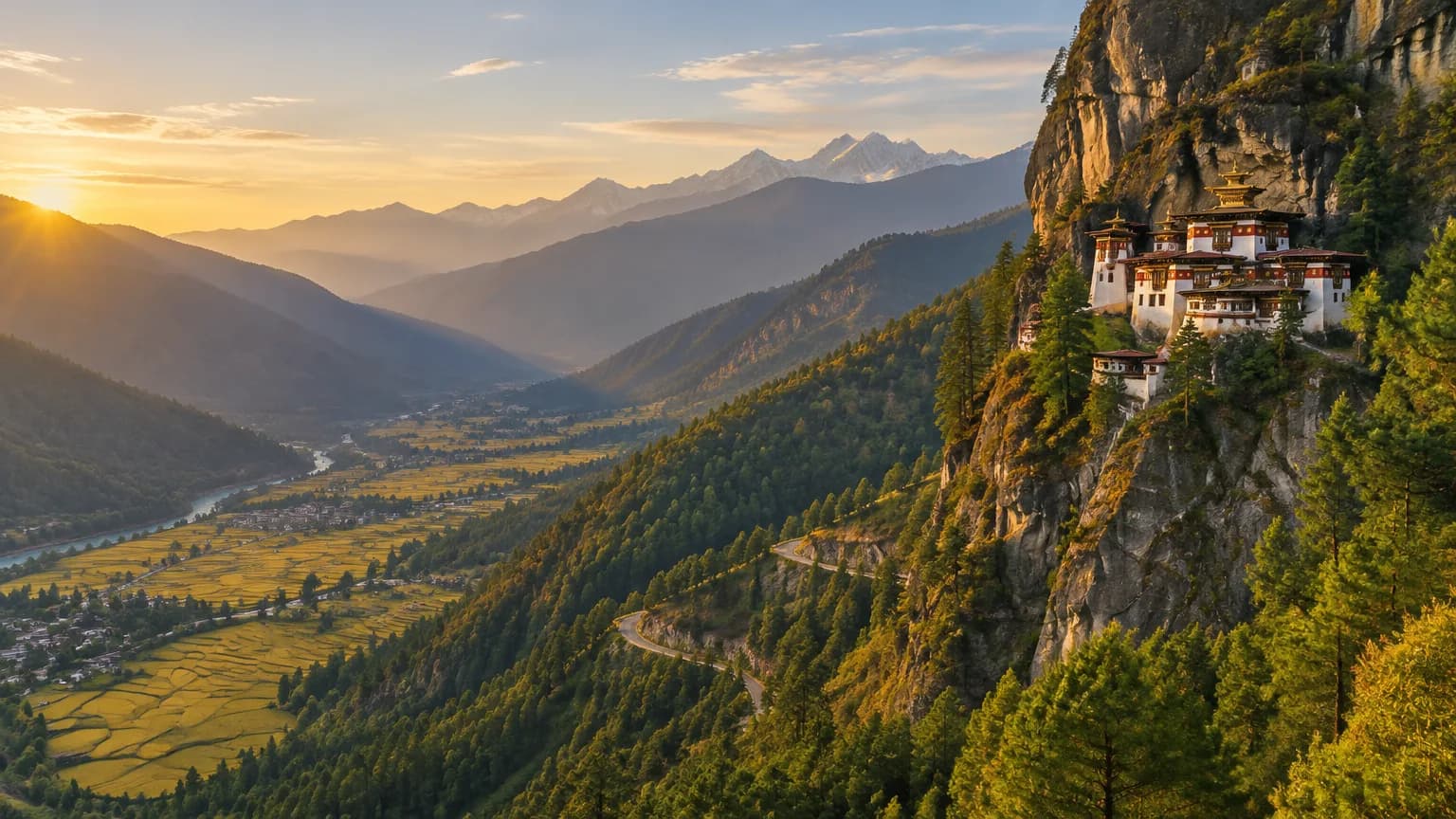
- Tiger's Nest Monastery (Taktsang): A cliffside monastery reached by a mountain hike through pine forest, with panoramic views. Allow 4 to 5 hours and start early. The route is a long climb with stone stairs, so wear shoes with good grip and carry water. Ponies are available for part of the climb if children cannot walk the whole trail.
- Rinpung Dzong: A fortress-monastery above Paro town. Visit in the morning, keep your voice low and dress modestly, since this is an active religious site.
- National Museum at Ta Dzong: A good, family-friendly introduction to Bhutanese culture that is not overwhelming. Treat it as a slower afternoon stop, especially after a hard morning hike.
Thimphu
- Buddha Dordenma: A large statue overlooking the capital. The stop is easy and works well late in the day for views across the valley.
- Takin Preserve: A small wildlife park for wildlife observation and bird watching. Children enjoy it and it does not need long, so pair it with another Thimphu stop.
- Weekend market: A cultural stop for local produce and handicrafts. Plan your Thimphu days so one falls on a Saturday or Sunday, because the market is a weekend event.
Punakha and Wangdue Phodrang
- Punakha Dzong: The best-known cultural attraction in the Punakha area. Go in the morning, before the day's tour groups arrive.
- Chimi Lhakhang: A temple reached by a short walk through the valley. The easy path makes it a pleasant break between drives.
- River rafting near Punakha: Rafting is listed among the activities around Punakha and suits adventure-minded travellers. Ask your operator about conditions for your travel month, since river levels change with season.
- Phobjikha Valley: A half-day to full-day stop for walks among traditional farmhouses and black-necked cranes. Carry a warm layer, as the valley is colder than Punakha.
If you have more time, Bumthang adds an eastern cultural region to the trip. It needs 8 to 10 nights in total and more driving, so it suits second-time visitors or those who prefer fewer crowds.
Best Time to Visit Bhutan from India
September to November is the best time to visit Bhutan from India, with milder weather and clearer skies after the rains. Spring, March to May, is the main shoulder season, and June to August is the monsoon.
October and November combine low rain with high crowds and peak prices, so book stays and permits early. December to February is crisp, clear and sunny with low crowds and prices, though frost and snow are common above 3,000 metres. Snow in January and February can block mountain passes between the western and central valleys.
- Best months: September, October, November
- Shoulder months: March, April, May (cloudier and wetter, with flowers and wildlife); December to February for cold, clear weather and lower prices
- Months to avoid: June, July, August, when heavy rain can cause landslides, flash floods and road closures
| Months | Rain | Crowds | Prices |
|---|---|---|---|
| January to February | Low | Low | Low |
| March to May | Moderate | Medium | Medium |
| June to August | Heavy | Low | Low |
| September | Moderate | Medium | Peak |
| October to November | Low | High | Peak |
| December | Low | Low | Low |
Changeable mountain weather can delay flights in any season, so keep a spare day at the start and end of the trip. A common mistake is booking a tight return connection the same evening you leave Paro; give yourself a night's buffer in Delhi, Mumbai or Kolkata if you have an onward flight.
What Does a Bhutan Trip Cost from India?
Bhutan trip cost depends mainly on your hotel category, the number of nights, the season and how much private driving you include. No fixed amount is quoted here, because the Sustainable Development Fee and package pricing change, so check current prices at booking.
One recent change matters. According to a January 2026 travel update, a 5% Goods and Services Tax now applies to tourism services, including accommodation, guided tours, local transport and meals. The Sustainable Development Fee is excluded from that tax. Ask your operator to show taxes and the fee as separate lines, so you can compare quotes properly.
| Tier | Stay category | Meals | Transfers |
|---|---|---|---|
| Budget | Simple guesthouses and family-run hotels in Paro, Thimphu and Punakha | Breakfast included; other meals at local eateries | Shared or small-group vehicle on fixed routes |
| Mid-range | Three-star style hotels with heating and valley views | Breakfast and dinner included; some lunches | Private SUV with driver for the full circuit |
| Luxury | Premium lodges and heritage-style properties in Paro, Punakha and Phobjikha | Most meals included, often set menus | Private vehicle with flexible timings |
What moves the price most: travelling in October or November, adding Phobjikha or Bumthang, choosing a higher hotel tier, flying between valleys instead of driving, and adding guided activities such as rafting. A tight 5-night Paro, Thimphu and Punakha trip sits at the lower end. To see what a full trip typically includes, browse the Bhutan tour packages.
When you compare quotes, check these points line by line:
- Whether the Sustainable Development Fee is included or added on top.
- Whether the 5% Goods and Services Tax is shown separately.
- Whether a private vehicle and driver stay with you for the whole trip or only for transfers.
- Whether the quote covers meals, and which ones.
- Whether guided entry to sites and activities such as rafting are included or optional.
The cheapest quote is often cheaper because something is left out. A clear line-by-line comparison saves surprises at the hotel desk.
How to Reach Bhutan from India
Travellers from India usually fly into Paro International Airport, which serves flights from Delhi, Mumbai and Kolkata as of August 2026. Gelephu International Airport is the second airport and can suit routes into southern and central Bhutan.
Most trips start with a flight from one of those three Indian cities into Paro, then continue by road. Kolkata is generally the shortest hop, while Delhi and Mumbai travellers often add a connection or a longer routing. Check current schedules and journey times with your operator, because flight details are revised often.
Paro is a mountain airport, and changeable weather can delay flights. Build a buffer day at the start and the end so a missed connection does not cost you the Tiger's Nest day or your flight home.
Once you land, the route between Paro, Thimphu and Punakha is on paved mountain roads. Tour operators arrange private vehicles and drivers for visitors, and that is how most itineraries move between valleys. Domestic buses and flights, mountain bikes, motorbikes and helicopter services are also listed as transport options, but for a first trip a private SUV with a driver is the practical choice. Entry paperwork is the other half of getting there, and the Bhutan visa for Indians guide covers it in more detail.
A few planning habits help. Book flights only after your entry paperwork and hotel dates are confirmed, because arrival dates are tied to them. Carry original identity documents in your hand baggage, not in checked luggage. Keep your driver's and hotel's contact details saved offline before you land.
Where to Stay in Bhutan
For a first trip, base yourself in Paro, Thimphu and Punakha. Add Phobjikha Valley or Bumthang only if you have 8 nights or more, since each extra base adds long drives.
- Paro: The arrival area and the base for Tiger's Nest and other cultural sites. Good for couples and families who want a calm valley town.
- Thimphu: The capital and the base for central Bhutan sightseeing. The widest choice of stays is here, which suits couples and families who want city comforts.
- Punakha: A river-valley destination with Punakha Dzong, reached on the Dochula route. Couples and families who want dzong visits and a gentler climate do well here.
- Phobjikha Valley: A valley stay associated with black-necked cranes and wildlife. Best for travellers who like quiet walks and do not mind cooler nights.
- Bumthang: An eastern cultural region included on longer trips. Expect extra driving time and a quieter pace.
By tier, budget trips use simple guesthouses and family-run hotels, mid-range trips use three-star style hotels with heating and valley views, and luxury trips use premium lodges and heritage-style properties. Ask about room heating if you travel between December and February, because nights are cold in all the valleys.
One practical point on room choice: if you are doing the Tiger's Nest hike, stay in Paro the night before so you can start early and fresh. Couples often prefer a valley-facing room in Punakha or Phobjikha, while families usually do better with two connecting rooms in Thimphu or Paro, where choice is widest.
Local Food and Cuisine in Bhutan
Bhutanese food is built on chilli, cheese and red rice, and most visitors find it approachable. Five dishes give you a good first taste.
- Ema datshi: A chilli-and-cheese stew and Bhutan's national dish. Heat levels run high, so ask for less chilli if you are unsure. Restaurants and home-style kitchens across all the main valleys serve it.
- Kewa datshi: A potato-and-cheese dish that is milder than ema datshi. A safe pick for children and first-timers.
- Shamu datshi: A mushroom-and-cheese dish, also milder than ema datshi. Look for it on set menus at hotels and local restaurants.
- Momos: Dumplings listed among popular Bhutanese dishes. Towns have them as an easy snack between sightseeing stops.
- Phaksha paa and jasha maru: Two popular dishes served with red rice, which accompanies Bhutanese meals. Both are non-vegetarian, so skip them if you eat vegetarian.
Vegetarians have a workable choice, since the datshi dishes and red rice carry most meals. Tell your hotel at check-in and your driver before long drives, because options thin out in smaller towns and rural stops.
Two small habits help on the road. Ask the hotel to pack a simple lunch on days with long drives or the Tiger's Nest hike, and carry some snacks and water, since rural stops may have little choice. Travellers who do not like chilli should say so early, because spice levels in home-style cooking can be strong.
Travel Tips for Indians
Before you book, confirm current entry rules for Indian passport holders, any permit needed beyond the main valleys and how the Sustainable Development Fee applies. These rules are revised periodically, so rely on a licensed operator or official source rather than older articles.
Entry paperwork and money
Start with a short document checklist: a valid passport, your confirmed hotel and flight dates, and any permit or approval your operator tells you is needed for your route. Keep digital and printed copies. Do not assume that rules you read in an older blog still apply.
On money, the ngultrum is pegged one-to-one with the Indian rupee, which keeps budgeting simple. Carry some cash for smaller towns, where card use can be patchy, and keep it in small denominations for tips, snacks and handicrafts.
Connectivity and power
For connectivity, Bhutan Telecom provides a prepaid tourist SIM with mobile data, calls and texts. An eSIM is another option if you prefer to set up connectivity before you fly. Signal can drop on mountain stretches, so download offline maps and keep key contacts saved.
Power in Bhutan is 230 volts at 50 Hz, and plug types include G, C and D. Carry a universal adapter so you can charge phones and cameras without hunting for one.
Health and safety
Altitude sickness is a risk above approximately 3,000 metres, and routine and emergency medical services are limited, especially in rural areas. Rest on arrival, drink water, avoid heavy exertion the first day and tell your guide early if you feel unwell. Carry your regular medicines in hand baggage, with prescriptions.
Mountain roads have steep drops and monsoon landslides can close them, so avoid night driving and keep buffer time. Emergency numbers are 113 for police, 112 for ambulance or medical emergency and 110 for fire and rescue. Families, couples and women travellers generally find the pace calm, but the practical risks are altitude, road conditions and limited medical care, so plan around those.
Etiquette
Dzongs and temples are active religious sites, so dress modestly, keep your voice low and follow your guide's cues on shoes, hats and photography. Ask before photographing people, and do not climb on or touch religious objects.
Common mistakes to avoid
- Packing only for warm weather; evenings and higher valleys are cold.
- Planning too many bases in a short trip and spending most of it in a vehicle.
- Attempting Tiger's Nest on the arrival day without rest.
- Booking a same-evening onward flight from Paro with no buffer.
- Treating older visa or fee information as current.
Is Bhutan Right for You?
Bhutan suits travellers who want cultural sites, Himalayan landscapes, nature and slower-paced travel. Anyone seeking crowded mass-tourism destinations, nightlife or beach-style holidays will find it less suited.
A short trip of 5 to 7 nights covers Paro, Thimphu and Punakha at a comfortable pace, with Tiger's Nest, one or two dzongs and a valley drive. This is the right choice for a first visit, for families and for anyone testing whether long mountain drives suit them. A longer trip of 8 to 10 nights adds Bumthang and more time in the valleys, with more hours in a vehicle but fewer crowds.
| Trip length | What it covers | Best for |
|---|---|---|
| 5 to 7 nights | Paro, Thimphu, Punakha; Tiger's Nest and one or two dzongs | First-timers, families, couples on a first visit |
| 8 to 10 nights | Adds Bumthang and more valley time, including Phobjikha | Repeat visitors, culture and nature-focused travellers |
- Suits: couples after quiet scenery, families with children who can manage short walks, culture-focused travellers, and wildlife and bird watchers.
- Suits with planning: adventure travellers, since the Tiger's Nest hike, rafting near Punakha and mountain biking are all available but depend on season and fitness.
- Does not suit: travellers who dislike long winding drives, need nightlife or large resorts, or prefer travelling without a driver and fixed plan.
When you have settled on dates, the Bhutan package page is a good place to see what a full trip includes.