
Field notes
Best Food in Goa: Where to Eat & What to Try
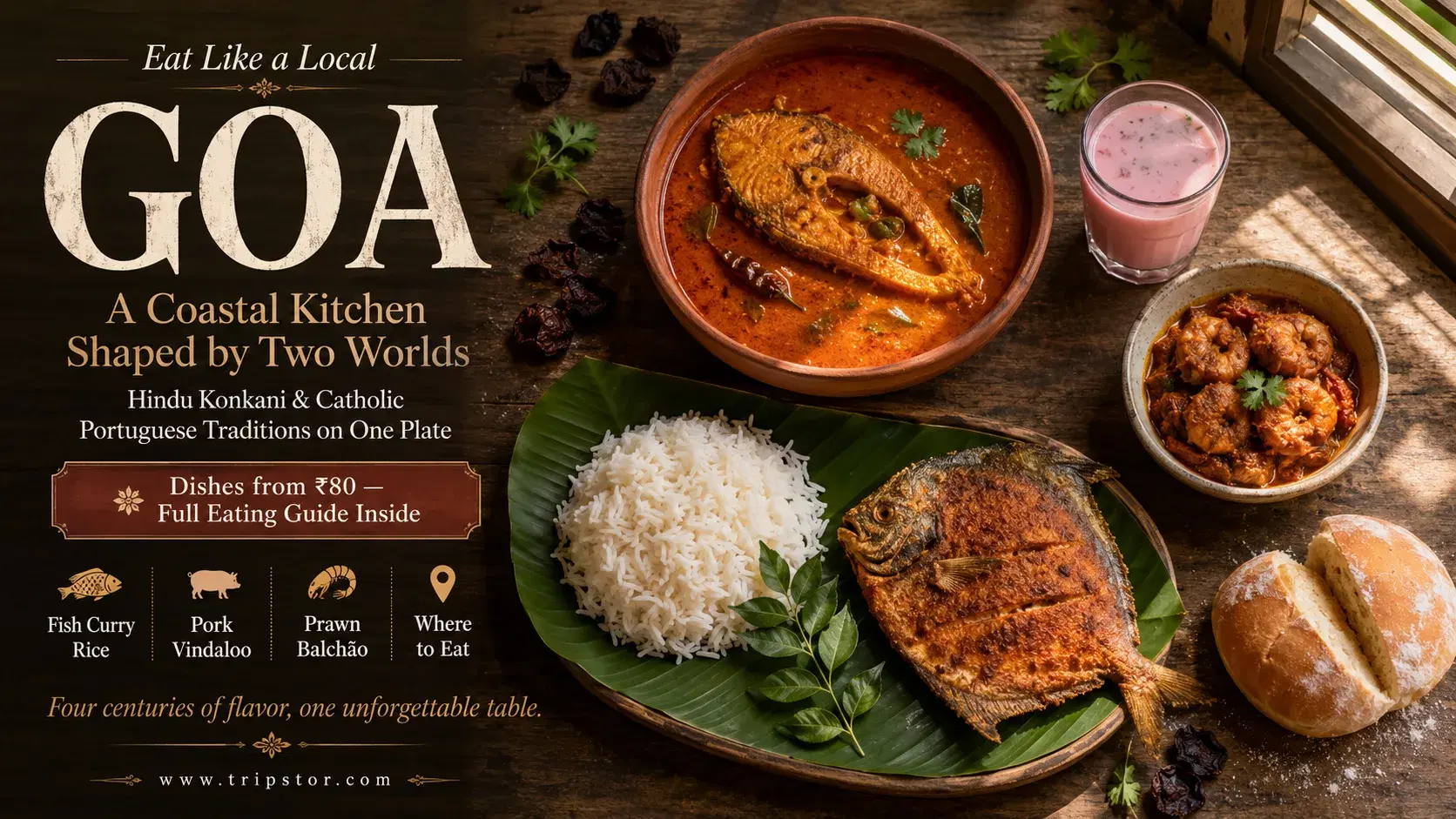
Goan cuisine is a regional Indian coastal food tradition built on two distinct cooking styles: Hindu Konkani cooking, which uses coconut, kokum, and rice as its base, and Catholic Goan cooking, which incorporates pork, vinegar, and bread from Portuguese colonial influence. If you are searching for the best food in Goa where to eat, the answer depends heavily on which part of Goa you visit. North Goa leans toward tourist-facing beach shacks and fusion menus. South Goa holds the older, family-run restaurants where traditional Catholic Goan recipes are still cooked the same way they were decades ago.
What makes Goan food different from other Indian coastal cuisines?
Goan food differs from other Indian coastal cuisines because it combines Portuguese colonial techniques — vinegar-based marinades, pork preparations, and wheat bread — with a Konkani Hindu base of coconut milk, kokum, and fresh seafood. No other Indian coastal region has this specific Portuguese-Konkani overlap.
The Portuguese ruled Goa for over 450 years, from 1510 to 1961. That occupation left a permanent mark on the local kitchen. Vindaloo originates from the Portuguese dish carne de vinha d'alhos, which translates to meat cooked in wine and garlic. Goan cooks replaced wine with toddy vinegar and added dried red chillies, producing a dish that is sharper and more acidic than any North Indian vindaloo variant.
Xacuti is a Goan curry made with roasted coconut, poppy seeds, and dried red chillies. Cafreal is a grilled chicken preparation marinated in green coriander-ginger-garlic masala, a recipe that traces its roots to African-Portuguese culinary exchange. Goan fish curry uses kokum — the dried fruit of Garcinia indica — as its souring agent, not tamarind, which is what most other South Indian fish curries use. That single ingredient difference gives Goan fish curry a lighter, fruitier acidity.
Related: If you are building a full trip around Goa's food and culture, see our Goa 5-day itinerary for a day-by-day plan that includes meal stops.
What are the dishes you should eat in Goa?
The dishes every visitor should eat in Goa include fish curry rice, pork vindaloo, chicken cafreal, prawn balchão, bebinca, and xacuti. These six preparations cover both Hindu Konkani and Catholic Goan cooking traditions and are available across price ranges from ₹80 street plates to ₹600 restaurant portions.
Fish curry rice is Goa's everyday staple. A plate costs ₹80–₹200 at a local eatery and consists of steamed rice, a kokum-based fish curry, and usually a piece of fried fish on the side. Pork vindaloo is the Catholic Goan dish most associated with the state outside India. The pork is marinated in vinegar and red chillies for at least 12 hours before cooking, which gives the gravy its sharp, tangy depth.
Prawn balchão is a pickle-style prawn preparation cooked in a tangy tomato-vinegar base. It is served as a side dish, not a main, and works well with plain rice. Bebinca is the traditional Goan layered dessert made from coconut milk, eggs, and sugar. Each of its 7 to 16 layers is baked separately before the next layer is poured, making it a time-intensive preparation. Confeitaria 31 de Janeiro in Panaji is one of the oldest bakeries in Goa still selling fresh bebinca by the slice.
Sol kadi is a drink-dish made from kokum and coconut milk. It is served cold and acts as a digestive after a heavy seafood meal. Poi is the local Goan bread — a small, crusty roll baked in a wood-fired oven — sold at village bakeries from early morning.
| Dish Name | Primary Protein / Base | Flavor Profile | Best Area to Try It | Typical Price Range (₹) |
|---|---|---|---|---|
| Fish Curry Rice | Local fish (kingfish or pomfret) in kokum-coconut gravy | Mildly sour, coconut-forward, low heat | South Goa village restaurants, Panaji tiffin rooms | ₹80–₹200 |
| Pork Vindaloo | Pork shoulder in vinegar-chilli marinade | Sharp, acidic, medium-high heat | South Goa Catholic restaurants, Margao | ₹200–₹450 |
| Chicken Cafreal | Whole chicken leg in green coriander-ginger masala | Herby, mildly spiced, grilled char | North Goa beach shacks, Panaji | ₹250–₹500 |
| Prawn Balchão | Prawns in tomato-vinegar pickle base | Tangy, slightly sweet, medium heat | South Goa family restaurants | ₹180–₹350 |
| Bebinca | Coconut milk, eggs, sugar (7–16 layers) | Sweet, rich, faintly eggy | Panaji bakeries, Margao sweet shops | ₹60–₹150 per slice |
| Xacuti | Chicken or lamb in roasted coconut-poppy seed gravy | Nutty, complex, medium heat | Fisherman's Wharf (Cavelossim), South Goa | ₹280–₹550 |
Related: Beach shacks are where you will eat most of these dishes in North Goa. See our guide to the best beaches in Goa for a North vs South comparison.
Where should you eat in North Goa for local and seafood food?
North Goa's best eating options are concentrated around Anjuna, Vagator, and Calangute, where licensed beach shacks serve fresh seafood from October to May. Thalassa in Vagator is the most-cited sit-down restaurant in North Goa, with mains priced at ₹600–₹1,800 per dish.
Beach shacks in North Goa operate under seasonal licenses issued by the Goa state government. Shacks are legally required to close between May and September during the monsoon season. If you visit between June and September, most shack-based eating options along Calangute, Baga, Anjuna, and Vagator will be shut. A handful of permanent restaurants stay open year-round, but the beach-front shack experience is strictly an October-to-May affair.
Thalassa in Vagator is a Greek-Goan fusion restaurant. It serves mezze platters alongside Goan seafood preparations. Reservations are recommended for dinner, especially on weekends. Most shacks in Anjuna and Calangute accept UPI payments now, but smaller ones still prefer cash. Carry ₹500–₹1,000 in cash when eating at beach shacks to avoid issues.
For purely local Goan food in North Goa, look for small tiffin rooms near Mapusa market. These are not tourist-facing and serve fish curry rice plates for under ₹150. The food is cooked fresh in the morning and typically runs out by 1pm.
Related: Shack closures during monsoon affect the entire North Goa food scene. Read our guide on Goa in monsoon: what changes before you book.
Where do you find traditional Goan food in South Goa?
Traditional Goan Catholic cooking is best found in South Goa, specifically around Margao, Benaulim, and Cavelossim, where family-run restaurants serve pork vindaloo, sorpotel, and crab xacuti. South Goa has fewer tourist-facing shacks and more home-style cooking.
Fisherman's Wharf is a Goan seafood restaurant chain with outlets in Cavelossim and Panaji. The Cavelossim outlet is the larger of the two and is known for its crab xacuti and prawn curry. A meal for two at Fisherman's Wharf costs approximately ₹800–₹1,500, depending on the seafood ordered. Most South Goa restaurants close by 10pm, which is earlier than North Goa's tourist belt.
Margao Municipal Market opens daily from 7am to 1pm and is South Goa's main produce and spice market. You can buy dried fish, kokum, and local spice blends here at prices significantly lower than tourist shops. The market is accessible by auto-rickshaw from most South Goa hotels. Sunday lunch is a cultural institution in South Goa Catholic households and some family restaurants offer a Sunday thali that includes sorpotel, rice, and bebinca.
According to Goa Tourism Development Corporation data, Goa receives over 7 million domestic tourists annually, with food and local cuisine consistently ranked among the top three reasons for repeat visits to the state.
| Area | Type of Eating Spot | Signature Dish to Order | Avg Meal Cost Per Person (₹) |
|---|---|---|---|
| Panaji (Fontainhas) | Heritage cafes and bakeries in the Latin Quarter | Bebinca, poi with butter, sol kadi | ₹150–₹400 |
| North Goa Beach Belt (Calangute–Vagator) | Licensed seasonal beach shacks, fusion restaurants | Grilled pomfret, chicken cafreal, prawn masala | ₹400–₹900 |
| Margao | Local tiffin rooms, municipal market stalls | Fish curry rice, pork vindaloo | ₹100–₹300 |
| South Goa Village Restaurants (Benaulim, Cavelossim) | Family-run Catholic Goan restaurants | Crab xacuti, sorpotel, prawn balchão | ₹350–₹700 |
| Anjuna Flea Market Area | Market stalls, casual cafes (Wednesday market days) | Grilled corn, Goan sausage rolls, fresh coconut | ₹80–₹250 |
Related: Panaji's Fontainhas quarter has some of Goa's oldest bakeries and heritage cafes. See our guide on things to do in Panaji for a full walking route.
Is Goa a good destination for vegetarians?
Goa is primarily a seafood and pork destination. Vegetarian options exist but are limited inside traditional Goan Catholic restaurants. Vegetarians eat better in North Goa, where multi-cuisine menus are common, and in Panaji, where Udupi-style South Indian restaurants serve full vegetarian meals.
Within Goan cuisine itself, vegetable xacuti — made with raw jackfruit or mixed vegetables in the same roasted coconut-poppy seed gravy — is available at several restaurants. Sol kadi is naturally vegan and widely available. Udupi-style restaurants in Panaji and Mapusa serve dosa, idli, and thali meals that are entirely vegetarian and priced between ₹80 and ₹200 per person. These restaurants are not Goan in origin but are a practical option for vegetarian travelers. Jackfruit preparations, locally called kathal, appear on menus in South Goa during summer months when the fruit is in season.
What is feni and is it worth trying in Goa?
Feni is a Goa-specific distilled spirit made from either cashew apple juice or coconut toddy. Cashew feni holds a Geographical Indication tag from the Government of India and is produced exclusively in Goa. It is not manufactured or sold as feni anywhere else in the country.
Cashew feni has a strong, sharp taste with a fermented fruit note. Coconut feni is slightly milder. A basic bottle of cashew feni costs ₹150–₹400 at government-licensed liquor shops across Goa. Local bars serve it as a shot or mixed with lime and soda. It is an acquired taste — many first-time visitors find the smell stronger than expected. If you want to carry a bottle home, note that feni in checked baggage is permitted on domestic flights, but bottles must be sealed and within airline liquid limits. Carry-on is not allowed for liquids above 100ml on flights.
Related: For first-time visitors to Goa, our Goa travel tips guide covers visa rules, transport, and what to pack.
What do most travelers get wrong when eating in Goa?
The most common mistake travelers make in Goa is eating only at tourist-facing beach shacks and never trying a local tiffin room or market eatery. Ordering North Indian food — butter chicken, dal makhani — at a Goan restaurant wastes the one meal you could have spent on fish curry rice or vindaloo.
A second common error is visiting during monsoon without checking shack schedules. Most North Goa beach shacks close from May to September. Travelers who arrive in July expecting the full shack experience find empty beachfronts. A third mistake is skipping South Goa entirely. Many first-time visitors stay in North Goa and assume they have experienced Goan food. The Catholic Goan cooking tradition — sorpotel, vindaloo, bebinca — is far more accessible in South Goa's family restaurants than in North Goa's tourist belt. Finally, do not skip the local bakeries in the morning. Poi bread with butter or a slice of bebinca from a Panaji bakery costs under ₹50 and is a better breakfast than any hotel buffet item.
Related: If you are planning a Goa trip as a couple, our Goa honeymoon packages include curated food experiences alongside accommodation and transport.
Ready to Plan Your Trip?
Tripstor's Goa specialists can build a food-focused itinerary around your travel dates and budget. We cover both North and South Goa with restaurant recommendations, transport, and accommodation sorted in advance. For package booking assistance, call us at +91 98253 43323.