
Curated starting points
Find a Australia journey that feels like yours.
Begin with a thoughtfully paced itinerary, then change the stays, experiences, route, and budget with a Tripstor specialist.
Australia · Flexible itinerary
Australia Reef & Blue Mountains Adventure 8N 9D
Starting from
₹93,500/ person

Australia · Flexible itinerary
Mumbai to Australia Family Package 8N/9D
Starting from
₹1,85,000/ person

Australia · Flexible itinerary
Pune to Australia Couple Package 8N/9D
Starting from
₹1,85,000/ person
Depart from India
Your Australia journey starts closer to home.
Explore thoughtfully planned routes with flights, stays, and experiences shaped around your departure city.
Destination guide
Know Australia before you go.
Practical context, local highlights, and honest planning advice — written for travellers from India.
Field notes
A considered guide to Australia
Australia at a glance
Australia is both a country and a continent in Oceania, so a first trip means choosing a few bases and flying between them. It is a long-haul international holiday from India, best planned over 7 to 10 nights, with the best season running from May to October.
| Detail | What to know |
|---|---|
| Region | Oceania; mainland states plus island territories |
| Trip type | City breaks combined with reef, wildlife and outback stops |
| Best season | May to October, when northern Australia is generally dry |
| Ideal trip length | 7 to 10 nights for two or three bases; 14 nights for a grand route |
| Main gateways | Sydney and Melbourne, with Brisbane, Perth, Adelaide, Cairns and Darwin also served from India |
| Flight time from India | About 11 to 13 hours on the routes listed, as of October 2026 |
| Starting price | From Rs.1,20,999 per person, land only, twin sharing |
Distances between regions are large, so internal flights are a normal part of the plan rather than an extra. Each stop needs at least two or three nights to feel worthwhile.
Why travellers choose Australia
Indian travellers choose Australia for varied landscapes in a single trip, cities that are simple to get around, and food that suits vegetarian, Jain and halal diets. These three reasons make a long-haul holiday manageable for families and elders as well as couples.
- Landscape variety. A trip can include snorkelling or diving on the Great Barrier Reef, wildlife on Kangaroo Island, and hiking or cultural tours in Kakadu National Park. Few countries put reef, island wildlife and outback wilderness into one itinerary.
- Easy city transport. Buses, metros, trains and trams serve the main attractions in Australian cities, and ferries add a scenic option in Sydney. Melbourne's City Circle Tram is free, and Sydney has weekly public-transport fare caps, so daily costs stay predictable.
- Food and comfort for Indian travellers. Vegetarian options are widely available in major cities, and Jain-friendly and halal dining can be found too. Harris Park in Sydney, Dandenong in Melbourne and South Brisbane are known for Indian restaurants and street food.
Top places and areas to visit in Australia
The places below are the ones most first-time itineraries are built around. For a 10-night trip, choose three or four of them rather than trying to cover the country.
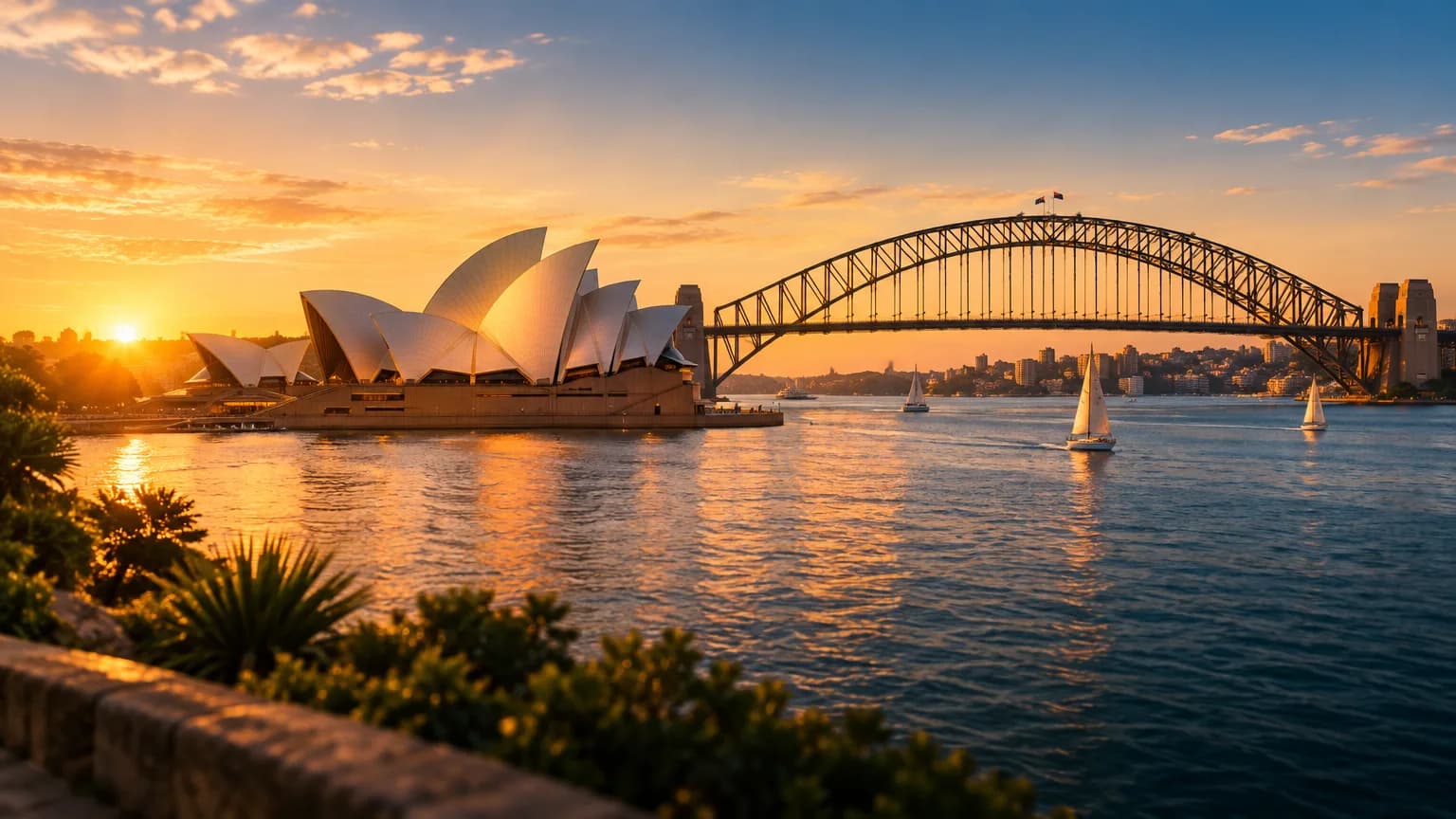
- Sydney, New South Wales. The Opera House, Harbour Bridge and Bondi Beach make up the classic first-timer circuit. Use ferries and trains between sights, and keep a full day for the harbour and The Rocks.
- Melbourne, Victoria. The city is associated with art, cafés and culture, with Federation Square as a central precinct. Stay in the CBD or Southbank and use the free City Circle Tram for short hops.
- Great Ocean Road, Victoria. This coastal drive starts from Melbourne and suits travellers who hire a car. Treat it as an overnight trip rather than a rushed day return.
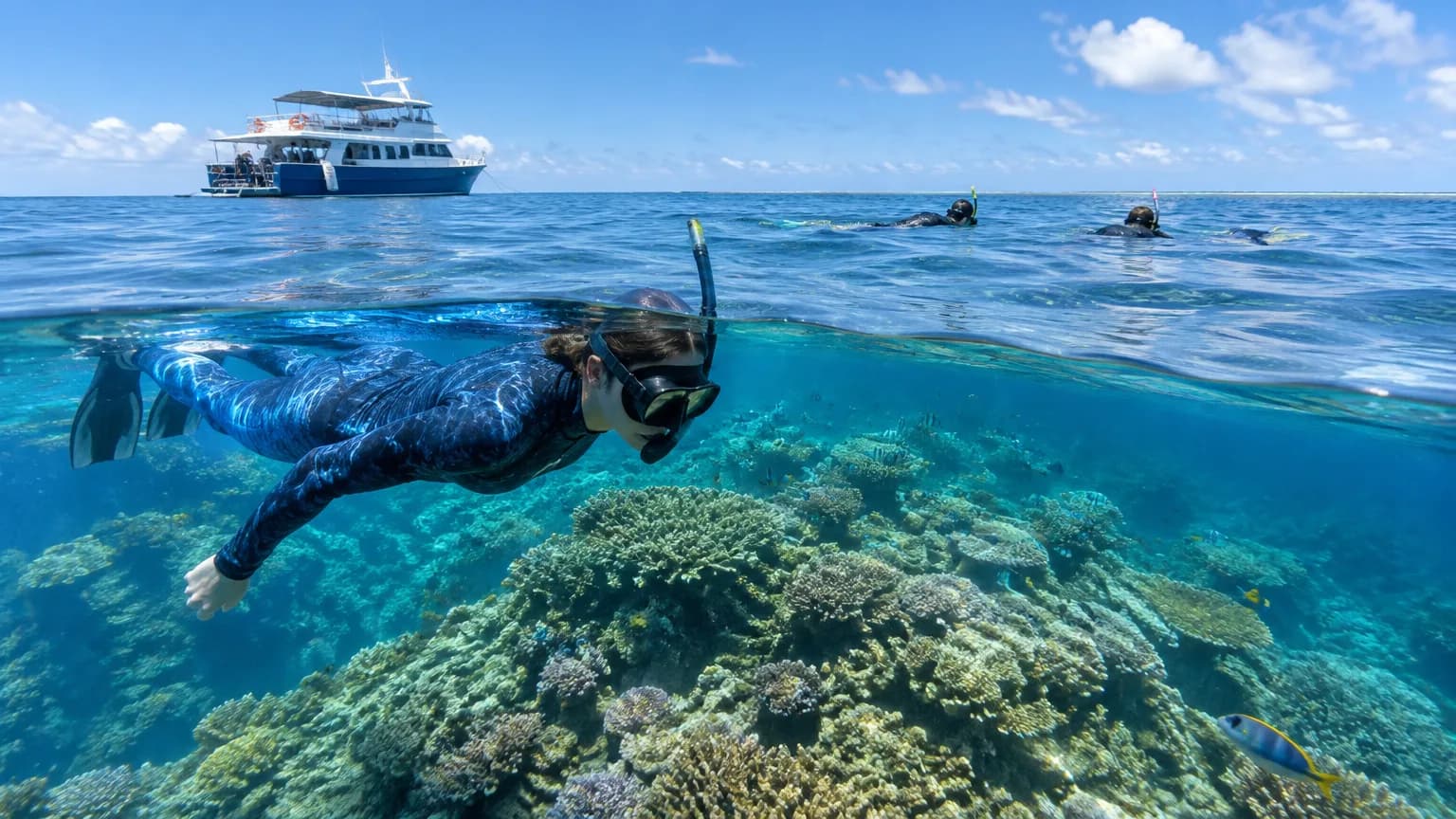
- Cairns, Queensland. Cairns is the base for the Great Barrier Reef and nearby rainforest. It is the easiest place on the trip to add snorkelling or diving.
- Great Barrier Reef. The world's largest reef system offers diving and snorkelling among coral, fish and turtles. From November to April, stinger protection such as a full-body wetsuit is advised.
- Gold Coast, Queensland. Surfers Paradise and Burleigh Heads sit within a beach region known for theme parks. It suits families who want beach days mixed with rides.
- Kangaroo Island, South Australia. Visitors see kangaroos, koalas and echidnas in natural habitats. Allow a full day at least, since it involves a ferry crossing.
- Kakadu National Park, Northern Territory. The park offers hiking, wilderness, cultural tours and outback safari experiences. Some tourism operations and parts of the park can close in the northern wet season because of flood risks.
- Brisbane, Queensland. The South Bank riverside precinct is the main outdoor area. It works as a relaxed arrival or departure city.
- Purnululu National Park, Western Australia. Tourism Australia lists the park among its destinations to visit. It is remote and suits longer trips with time to spare.
Best time to go
May to October is the best window for a first Australia holiday, because northern Australia is generally dry and sunnier, and southern cities are cool instead of hot. During this period the ocean is generally free of marine stingers, so reef swimming is possible in many areas without nets or protective suits.
- Best months: May to October. The dry season in the north. July is the busiest month, with high crowds and peak prices, while May has lower prices and medium crowds.
- Shoulder months: March, April and October. Crowds and prices are medium. The north still sees heavy rain in March and April, and rain starts increasing again in October.
- Months to avoid for the north: November to April. The wet season brings heavy rain, high humidity, tropical storms and possible cyclones. Flooding can close parts of Kakadu and other northern tourism areas.
December to February is hot across most of Australia, with high crowds and peak prices. If you must travel then, keep to southern cities and the coast, and leave the tropical north for another year.
How to reach Australia from India
Indian travellers usually fly into Sydney or Melbourne, and Brisbane, Perth, Adelaide, Cairns and Darwin are also served on routes from India. Flight-search data lists journey times from about 11 hours 15 minutes, and longer itineraries depend on the origin and the Australian city.
- Delhi: via Sydney or Melbourne, about 12 hours 45 minutes, as of September 2026.
- Mumbai: to Sydney, Brisbane, Adelaide, Cairns, Perth, Melbourne or Darwin, about 13 hours 10 minutes, as of October 2026.
- Bengaluru: to the same set of cities, about 12 hours 25 minutes, as of October 2026.
- Kochi: to the same set of cities, about 12 hours 30 minutes, as of October 2026.
Durations differ by routing, so confirm the exact itinerary and any stop at booking. Sydney Kingsford Smith Airport and Melbourne Airport are the usual arrival points, and onward transfers into the city are by rail, bus or taxi.
Sydney is also getting a second airport. Western Sydney International Airport is scheduled to receive its first passengers on 25 October 2026, and a Sydney Metro line is designed to link it with St Marys in about 15 minutes. Before booking, check the current entry rules for Indian passport holders on the official Australian government source.
Where to base yourself
Base in Sydney or Melbourne for city-focused trips, and in Cairns or the Gold Coast for reef, beach and family holidays. Stay types range from central hotels to apartments in neighbourhoods with their own cafés and dining.
| Area | Best for | Price level |
|---|---|---|
| Sydney CBD, Circular Quay, The Rocks and Darling Harbour | Couples and first-time visitors; close to harbour sights and transport | Upscale |
| Surry Hills, Potts Point and Newtown | Couples and food-focused travellers; neighbourhood cafés and restaurants | Mid-range |
| Bondi, Sydney | Couples and beach visitors; beach access and the Bondi–Coogee coastal walk | Mid-range |
| Melbourne CBD and Southbank | Couples and culture-focused travellers; cafés, art and Yarra River access | Mid-range |
| Gold Coast, including Surfers Paradise and Burleigh Heads | Families and beach visitors; theme parks and cafés | Mid-range |
| Cairns | Families and nature-focused travellers; base for the Great Barrier Reef and rainforest | Mid-range |
Budget travellers can stay a short transit ride from the centre and rely on public transport. Upscale stays cluster around Sydney's harbour and central Melbourne. Rates change by season, so confirm room type and dates at booking.
A route worth following
A sensible first route runs Sydney, Cairns and Melbourne over 10 to 11 nights, ordered so that internal flights are short and there is no doubling back. It balances two city stays with one nature block.
- Sydney, 3 nights. Starting here eases you into the time difference, with the harbour, The Rocks, Bondi and a ferry ride as the core.
- Cairns, 3 nights. This is the reef and rainforest block, and it works best from May to October when the north is dry.
- Melbourne, 4 nights. Finish with cafés, Federation Square and an overnight Great Ocean Road drive, then fly home from a major hub.
With 14 nights, a route covering Sydney, Melbourne, Cairns and Uluru is a common long option. Uluru adds an extra flight each way, so keep it for trips with time to spare.
Is Australia right for you?
Australia suits travellers who want cities and nature in one trip and are comfortable with a long flight and internal hops. It works for families, couples on a first big trip, and elders who value accessible transport and clean cities.
It is a weaker fit for anyone wanting a short, low-effort break or a single base with everything nearby. A 4-night trip covers only one city, so the country rewards longer stays. Travellers who dislike flying between regions should keep to Sydney and Melbourne, or to a single state.
Ways to travel to Australia
Tripstor offers several trip styles for this destination, and the right one depends on how much ground you want to cover and the pace you prefer.
- Best of: main cities plus one nature highlight, for first-timers wanting a balanced introduction.
- City Explorer: focused on cities such as Sydney and Melbourne, for travellers who want fewer internal flights.
- Adventure: reef diving, hiking and outback experiences, for active travellers.
- Extended / Grand Tour: a longer multi-state route, for travellers with 14 nights or more.
- Luxury: upscale stays and a slower pace, for couples and travellers marking an occasion.
- Offbeat Explorer: remote parks and less-visited regions, for repeat visitors.
- Wellness & Relaxation: comfortable stays with downtime built in, for travellers who want rest over sightseeing.
Traveller tips
These five tips cover what to carry, etiquette, safety, money and entry rules for Indian travellers planning an Australia holiday.
- What to carry. Pack layers, since southern cities are cool from June to August. Add reef-suitable swimwear, and stinger protection if you swim at the reef between November and April.
- Dietary requests. Strict vegetarian and Jain diners should state their needs clearly and check ingredients such as egg, fish sauce and gelatine. Double-check requests with food providers.
- Safety. Dial Triple Zero (000) for ambulance, fire or police; mobile phones can also dial 112. At beaches, swim at patrolled beaches between the red and yellow flags, and avoid swimming alone or at night.
- Money and phone. Carry a card that works abroad and keep a small amount of cash. Arrange a roaming plan or local SIM before relying on phone maps and transport apps.
- Entry rules. Check the current entry requirements for Indian passport holders on the official Australian government source before booking, and again before you fly.
To see this turned into a complete trip, have a look at the Australia holiday packages.
Personalise your trip
Shape Australia around the way you travel.
Choose a travel style as your starting point. We'll refine the pace, stays, experiences, and budget until the journey feels entirely yours.
Not sure which fits? Use our trip builder — it takes under two minutes.
Got questions?
The questions travellers ask about Australia.
Straight answers on visas, pricing, best time to visit, and how our packages work for Indian travellers.
8 answered below
Social proof
What Tripstor travellers say
Feedback from Indian holidaymakers who travelled with Tripstor.
4.8
from 432+ reviews
HoneymoonHoneymooned in Kashmir for 7 nights in May. Gulmarg had light snow still and we got a gondola ride on Day 4. The tulip garden in Srinagar was in full bloom. Tripstor arranged a candlelit dinner on the houseboat which was a nice touch.
FriendsThree friends and I did a 9-night Australia package with stops in Melbourne and Sydney. We spent an afternoon at the Melbourne Cricket Ground and caught a local match. Tripstor sorted our group visa applications together which saved a lot of back and forth. Good experience overall.
FamilyTravelled with my parents who are in their late 50s. Tripstor recommended two full acclimatization days in Leh before any high-altitude drives and that made a real difference. Tso Moriri was quieter than Pangong and honestly more worth the drive.