Package overview
The thinking behind this journey.
A closer look at this 6-night journey through Spiti Valley— who it's built for, what you'll experience, and why the pace works.
Journey notes
Why this route works
Chandratal camp, Key Monastery and Pin Valley: what this route covers
This route runs from the Shimla side into Spiti, then out over Kunzum Pass to Chandratal. Six places and moments anchor it.
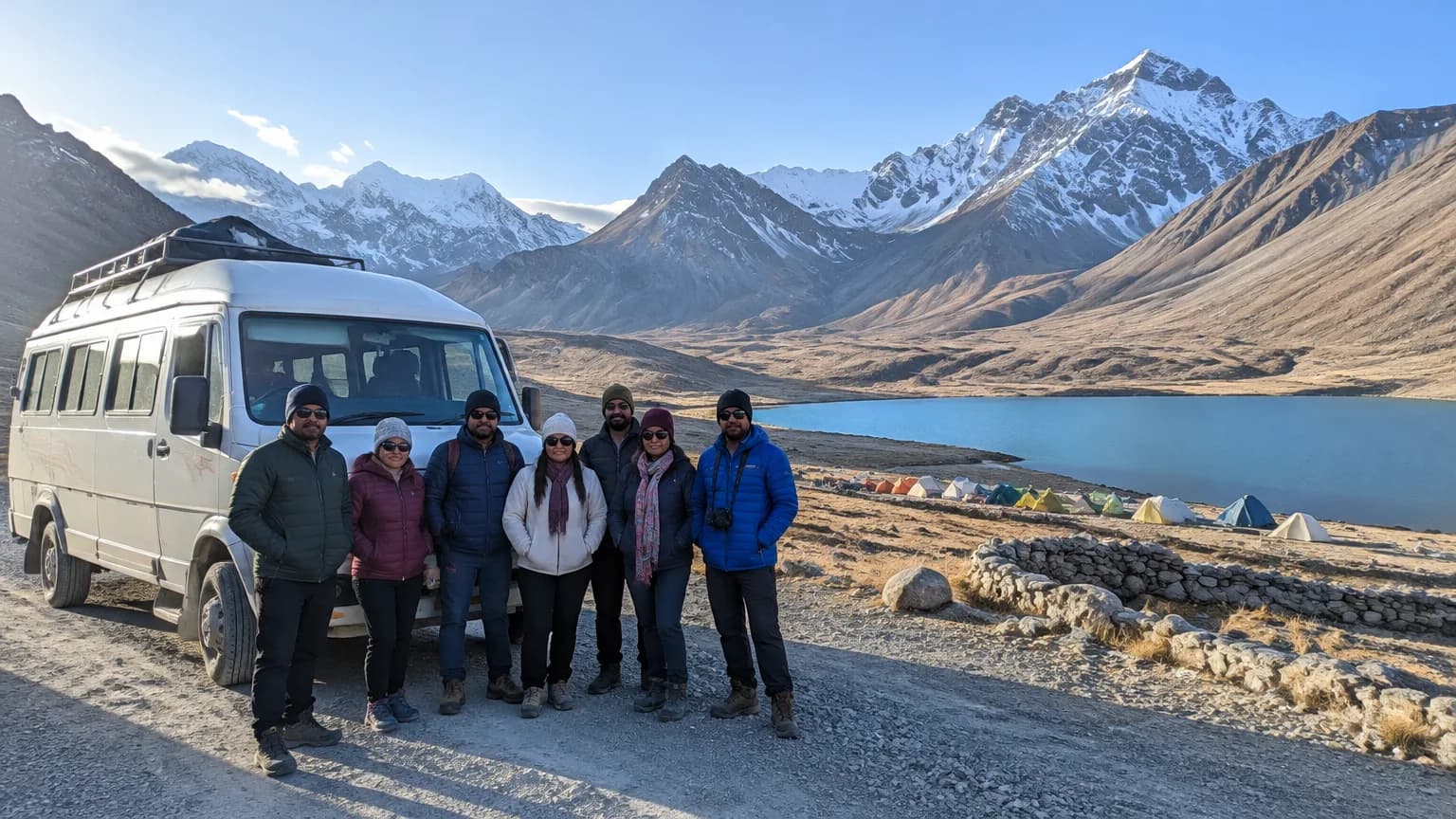
- Chandratal Lake camp: one night in tents beside the lake on the Kaza to Manali leg, subject to Kunzum Pass and road status.
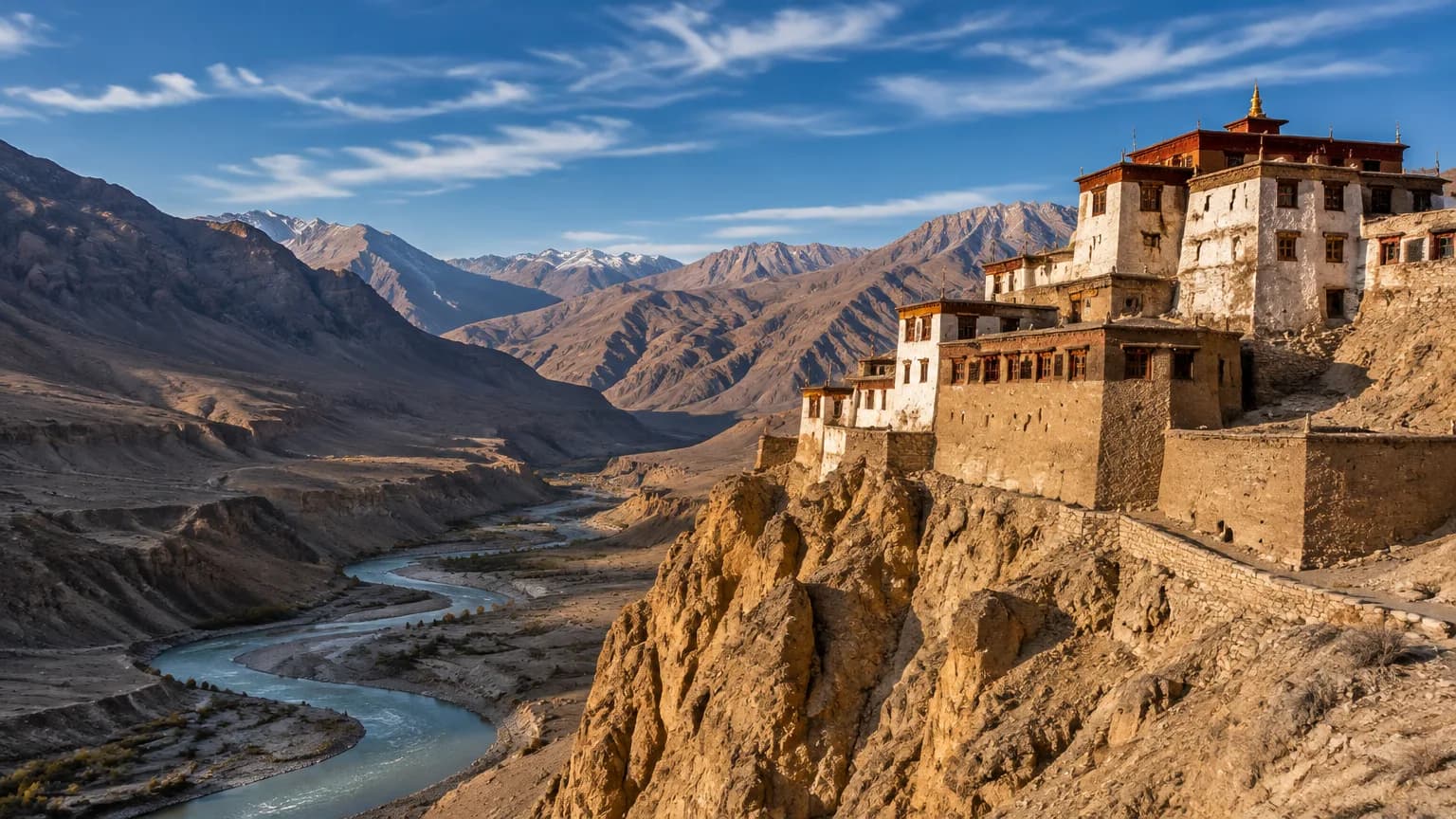
- Key Monastery: the largest monastery in Spiti, built on a ridge above Kaza, visited on a full village day.
- Hikkim and Komic: the high-altitude post office at Hikkim, and Komic, described as one of the world's highest villages.
- Pin Valley trek: a guided walk in Pin Valley National Park, which protects more than 20 species of animals and birds, including the endangered snow leopard.
- Kunzum Pass: the high pass on the Kaza to Chandratal road, usually open from mid-June to mid-October.
- Tabo and Dhankar monasteries: Tabo is over a thousand years old with ancient murals and manuscripts; Dhankar clings to a cliff between Tabo and Kaza.
Trip summary at a glance
The table below gives the core facts of this Spiti Valley group tour package in one place, so each row can be read on its own.
| Item | Detail |
|---|---|
| Duration | 6 nights, 7 days |
| Price | Rs.23,500 per person, twin sharing, land only, flights excluded |
| Group size | 8 to 30 travellers, to be confirmed at booking |
| Stay type | Standard 3-4 star hotels, village guesthouses and one tented camp night |
| Transport | Shared coach or tempo traveller |
| Best months | June to September for road access; May and October for lower prices |
| Altitude range | About 3,000 to 4,500 metres; Kaza is at about 12,500 feet |
Who this group departure suits
This departure suits travellers who prefer a set date, a shared vehicle and a group leader handling permits, stays and altitude pacing. Rooms are on twin sharing. Solo travellers are usually paired with a same-gender roommate unless a single supplement is paid, to be confirmed at booking.
It is a road-heavy plan with long driving hours and limited medical facilities beyond Kaza. Travellers with heart or respiratory conditions should get a doctor's clearance first. For a wider range of routes, see the Spiti Valley tour packages hub.
Group size, coaches and who manages the ground
Departures typically run with 8 to 30 travellers, with the final group size confirmed at booking. Smaller groups travel in a tempo traveller and larger ones in a coach or a mix of vehicles.
A group leader stays with the batch for all seven days, handles check-ins and permits, and sets the daily pace. Rooms are twin sharing, and a single supplement can be requested subject to availability. Village guesthouses have few single rooms, so ask early.
What the Rs.23,500 covers
The fare covers six nights of stay, shared transport, the group leader, meals as listed and the sightseeing on the route (as of 2026). It suits budget-minded travellers and small friend or colleague groups who would rather split vehicle and stay costs than hire a private car.
Cost moves with departure month, room category and group size. Peak June to August departures price higher than May, September and October.
Costs you pay separately
Flights or train fares to the starting point are not part of the fare. Personal spending, tips, laundry, bottled water, travel insurance and optional add-ons are also paid by you.
Carry enough cash. ATMs are limited beyond Kaza, and card acceptance in the villages is patchy. Any extra night caused by a landslide or pass closure is a local cost, not part of the package.
How the seven days are organised
The route is built as one continuous loop rather than separate day trips, which saves repeat driving and hotel changes. The first three days move steadily up the Shimla side with monastery stops at Tabo and Dhankar, which also helps acclimatisation.
Kaza is used as a base for two nights of local sightseeing and the Pin Valley trek. The last leg crosses Kunzum Pass to Chandratal and ends the group services on the Manali side.
Ways to save or stretch the trip
- Pick a May or early October departure for medium crowds and lower prices, accepting colder nights.
- Book a few weeks ahead, since camp and guesthouse beds are limited on this route.
- Travel with a friend and share a twin room to avoid the single supplement.
- Carry your own water bottle, snacks and warm layers to cut small daily spends.
- Add an extra night in Kaza or Manali yourself if you want a buffer against pass delays.
When another kind of trip fits better
Pick something else if you want a short, low-altitude holiday, since this route involves long drives and high passes. It is also a poor fit for a winter trip, because most passes close between November and April and the Manali route becomes inaccessible.
Travellers who want full control over timing, or a private vehicle for photography stops, will find a group fixed-departure restrictive. Families with very young children or anyone with altitude-related health issues should also think twice.
Where the group stays in Spiti
Stays are in three kinds of places: standard 3-4 star hotels in the larger towns, village guesthouses or homestays on the way, and one tented camp at Chandratal. Hotel names are confirmed closer to departure.
Indicative price tiers per person, derived from the listed fare, are Budget 3-star around Rs.17,500, Standard 4-star at Rs.23,500 (this package) and Premium 5-star around Rs.37,500. Spiti has very few premium properties, so the top tier means better rooms rather than luxury.
- Kaza hotel: the main hub, with heated rooms and access to nearby monasteries and villages.
- Village guesthouse or homestay: simple rooms and home-style meals in villages such as Tabo, Nako or Dhankar.
- Chandratal tented camp: shared tents with bedding and a basic dining tent; nights are very cold even in summer.
Reaching Spiti Valley: roads, passes and connectivity
Spiti has no airport or railway station, so access is by road from the Shimla-Kinnaur side or from Manali. Nearest railheads are Kalka and Chandigarh, and Bhuntar is the nearest airport, followed by a long road transfer.
Delhi to Kaza takes about two days via Shimla, or 12 to 14 hours of nonstop driving on the Manali route. Kunzum Pass and Chandratal are usually open mid-June to mid-October, and monsoon landslides can delay the Manali approach. Inner-line and camp permit details are to be confirmed at booking, and mobile signal is unreliable outside Kaza and Nako.