
Laos at a Glance
Laos is a landlocked mainland Southeast Asian country bordered by Thailand, Vietnam, Cambodia, China and Myanmar, with mountains and plateaus covering much of its interior. River towns, Buddhist temples and a developing rail network define the travel experience here.
| Detail | What to Know |
|---|---|
| Region | Mainland Southeast Asia |
| Trip type | Culture, heritage, river travel, slow travel |
| Best season | November to February (cool dry season) |
| Ideal first-trip length | 7 nights; 14 nights for the Plain of Jars or slow boat |
| Main gateways | Wattay International Airport, Vientiane (VTE); Luang Prabang International Airport (LPQ); Pakse International Airport (PKZ) |
| Internal transport | Laos–China Railway, buses, tuk-tuks, Mekong boats |
Why Travellers Choose Laos
Three things consistently draw Indian travellers to this destination: the Mekong river towns, the ease of the rail route between major stops, and a cultural depth that does not require much effort to access.
- The Mekong sets the pace. Luang Prabang sits where two rivers meet, and boat cruises on the Mekong run from the town for travellers who want a quiet evening on the water. The two-day slow boat between Huay Xai and Luang Prabang is one of the more memorable ways to arrive in the north.
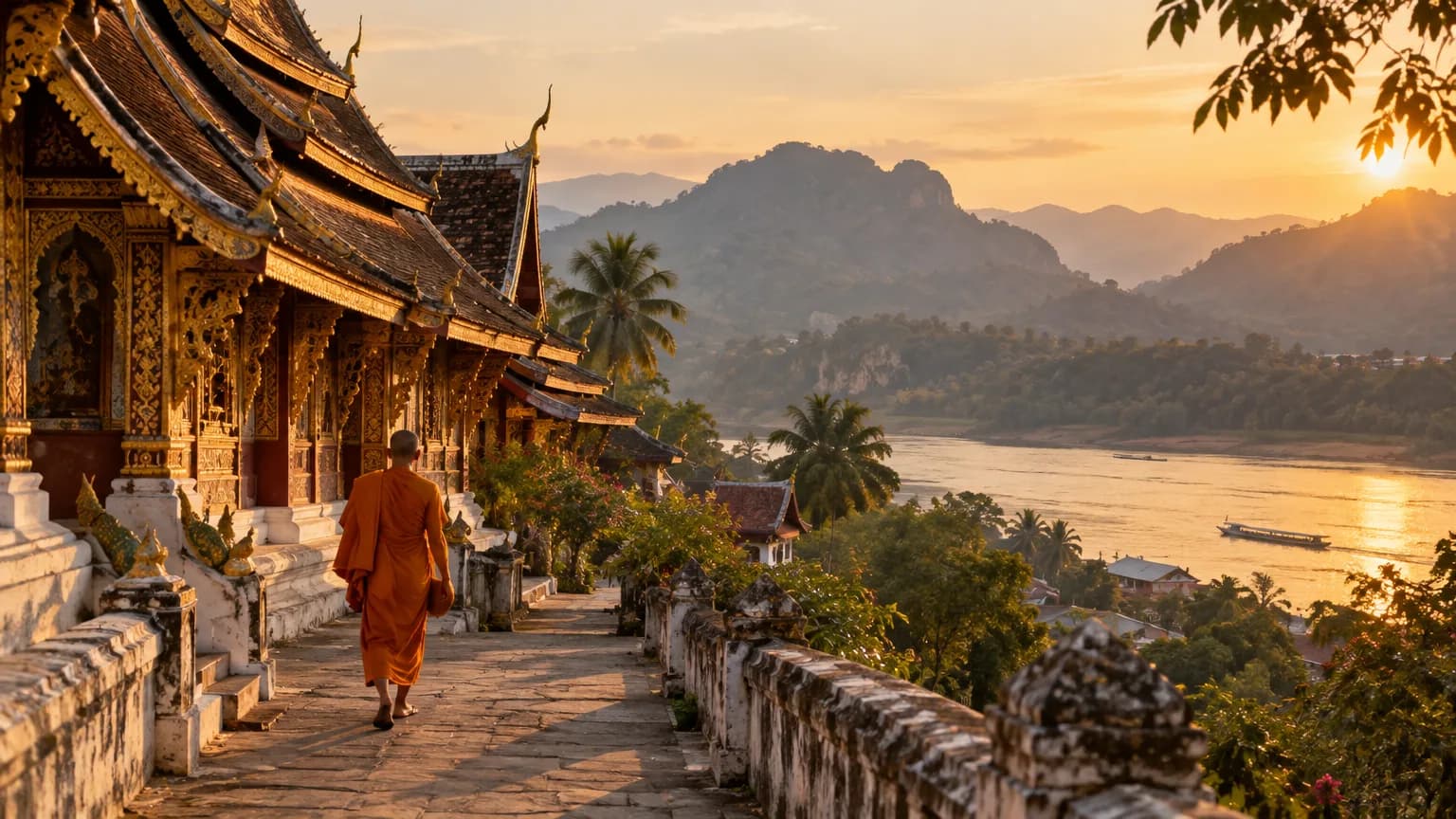
- Buddhist heritage is compact and accessible. Luang Prabang is a UNESCO World Heritage city where temples, a night market and Mount Phou Si sit within walking distance of each other. Vientiane adds That Luang, Wat Sisaket and Buddha Park to the list. You do not need a car or a guide to reach most of these.
- The Laos–China Railway changes the logistics. The rail line connects Vientiane, Vang Vieng and Luang Prabang, cutting travel time between the three main towns significantly compared to road. For Indian travellers used to train journeys, this makes the route feel familiar and manageable.
Top Places and Areas in Laos
Six areas cover most first trips and longer itineraries. Each works at a different pace, so plan two or three stops rather than trying to cover them all in one go.
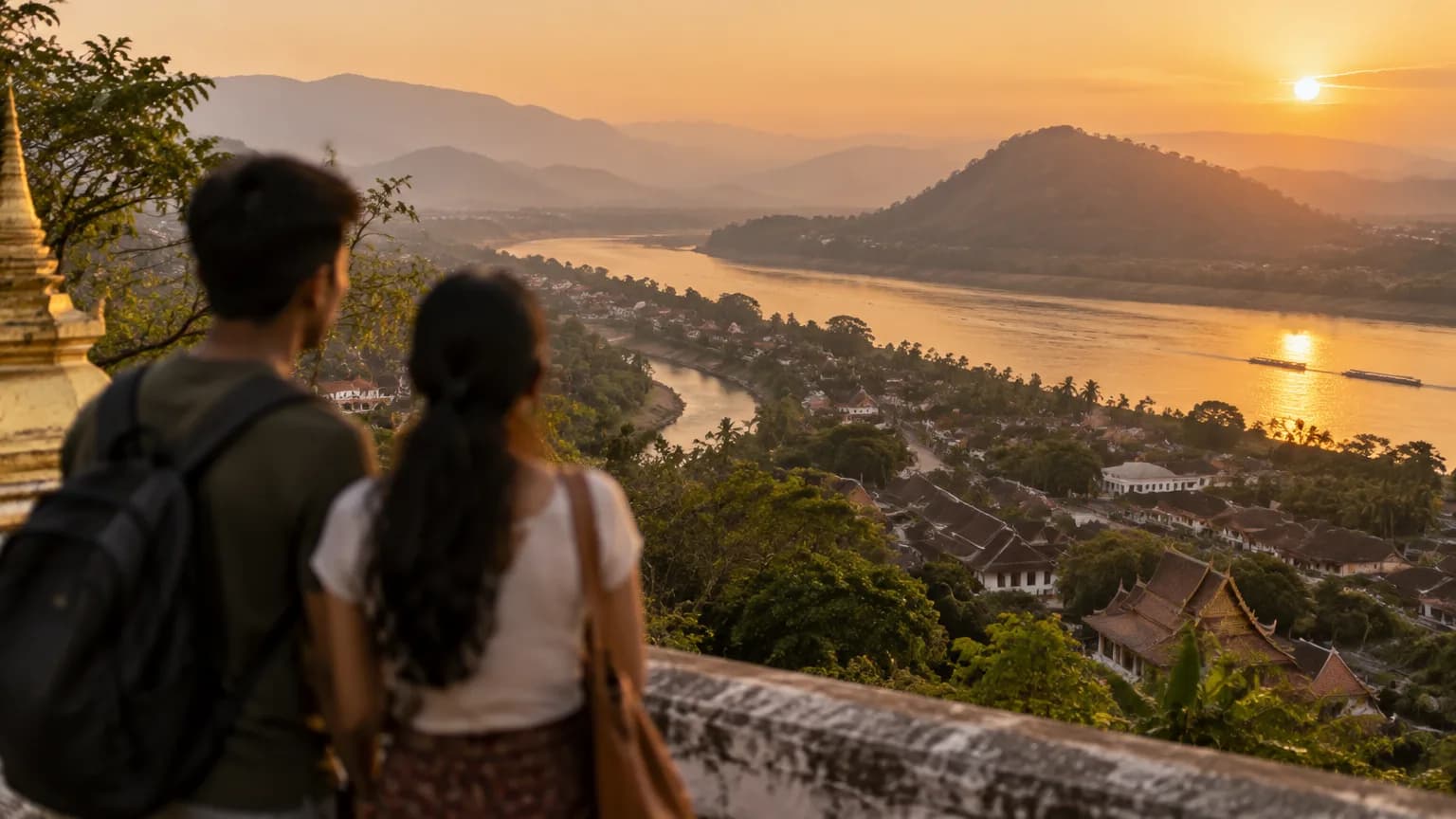
- Luang Prabang — The cultural centre of the country. Wat Xieng Thong, Wat Visounnarath, the former Royal Palace and Mount Phou Si sit within a compact old town. Climb Mount Phou Si in the late afternoon for the view over the rivers. The night market runs every evening along the main street.
- Vientiane — The capital and the usual flight-in or flight-out point. That Luang, Wat Sisaket, Patuxay, Hor Phra Keo and Buddha Park are the main sites. The Mekong riverfront is the place to be at sunset. Central sights are close enough to cover on foot or by tuk-tuk.
- Vang Vieng — A town surrounded by limestone karst hills, caves and the Nam Song River. Blue lagoons and Kaeng Nyui Waterfall are the main draws; access to the waterfall improved after a ring-road upgrade along the Nam Song was completed in April 2026. Better suited to active travellers than to those looking for a quiet cultural stop.
- Champassak and the Don Det area — In the south, the Nakasang–Don Det–Don Khon corridor is reached from Pakse. This area suits travellers adding a southern leg to a longer trip, with river islands and a slower pace than the northern route.
- Phonsavan — The base for visiting the Plain of Jars, a landscape of large stone jars of uncertain ancient origin. A small town with basic to mid-range accommodation, best for history-focused travellers who want a less-visited stop.
- Huay Xai — The Mekong border town where the two-day slow boat journey to Luang Prabang begins. Worth considering for travellers who prefer river travel over rail and have the time to spare.
Best Time to Visit Laos
November to February is the most comfortable window, with daytime temperatures between 14 and 31°C, minimal rain and clear skies. This is also peak season, so accommodation fills up and prices are higher — confirm and book ahead.
March and April are the shoulder months. Temperatures climb toward 34°C and can exceed 35°C, sometimes approaching 40°C by late April. The Lao New Year (Pi Mai Lao) falls on 14–16 April, with water-throwing celebrations and temple visits across the country — a lively time to travel if the heat does not put you off, though crowds and prices peak around the festival.
May to October is the wet monsoon season. Rainfall is heaviest in August and September, and roads in the south can become impassable during this period. Prices drop and crowds thin considerably, which suits budget-conscious travellers who are flexible about outdoor plans. October, when rain tapers off and prices are still moderate, is a reasonable compromise before the November peak begins.