Curated starting points
Find a Italy journey that feels like yours.
Begin with a thoughtfully paced itinerary, then change the stays, experiences, route, and budget with a Tripstor specialist.
Italy tour packages from India 2026 cover historic cities, Alpine and Apennine mountains, coastal stretches and active volcanoes across one trip. This destination suits first-time Europe travellers, couples, families and anyone combining Renaissance art with regional food and scenic train journeys. Go in May, June or September for the most comfortable weather and manageable crowds.
Curated starting points
Begin with a thoughtfully paced itinerary, then change the stays, experiences, route, and budget with a Tripstor specialist.
Starting from
₹1,18,000/ person
Depart from India
Explore thoughtfully planned routes with flights, stays, and experiences shaped around your departure city.
Destination guide
Practical context, local highlights, and honest planning advice — written for travellers from India.
Field notes
A considered guide to Italy
Italy sits in Southern Europe, bordered by France, Switzerland, Austria and Slovenia, with the Mediterranean to the west and the Adriatic to the east. Rome's Fiumicino airport is the standard gateway from India, with Milan Malpensa, Venice and Naples serving as useful entry points depending on your first base. A typical first trip runs 7 to 8 nights for a Rome–Florence–Venice circuit, extending to 9 to 12 nights when the Amalfi Coast or Tuscany is added.
| Detail | What to know |
|---|---|
| Region | Southern Europe |
| Gateway airports | Rome Fiumicino (FCO), Milan Malpensa (MXP), Venice (VCE), Naples (NAP) |
| Typical trip length | 7–8 nights (Rome–Florence–Venice); 9–12 nights with coast or countryside |
| Best season | May–June and September–October |
| Travel time from India | Approximately 17–18.5 hours with one stopover |
| Starting price (land only) | From Rs. 1,10,000 per person, twin sharing |
Three things consistently pull Indian travellers to this destination: the density of history, the variety of landscape and the relative ease of navigating food as a vegetarian or Jain traveller.
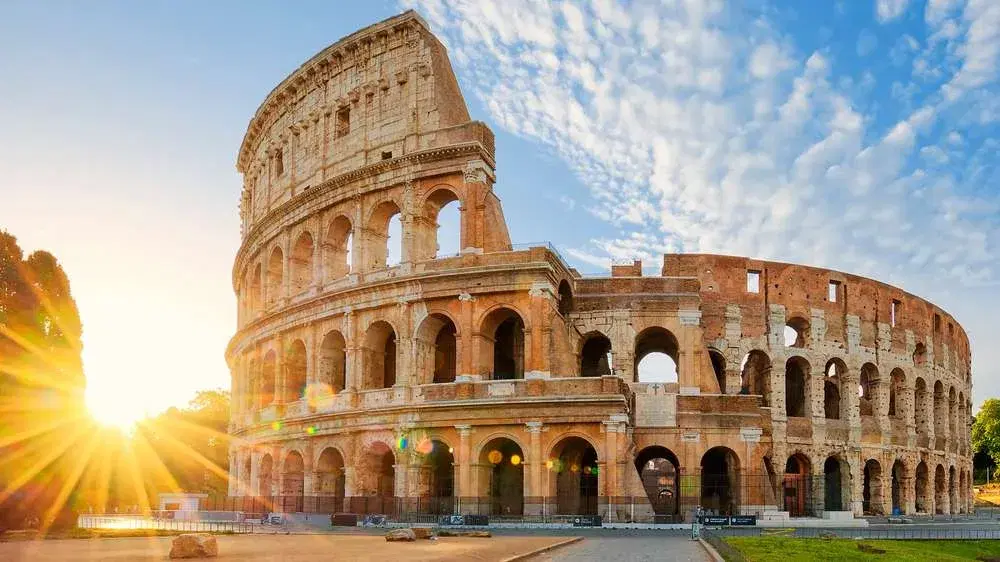
Rome alone pairs the Colosseum, Roman Forum and Palatine Hill in one walkable archaeological zone, with the Vatican Museums and Sistine Chapel a short distance away. That concentration of high-quality heritage in a single city is hard to match anywhere in Europe.
Within a few hours by train, the landscape shifts completely. The Apennine mountains, the Cinque Terre coastal cliffs, the Amalfi Coast and the active volcanoes of Vesuvius and Etna all sit within the same country. Travellers who want variety without long-haul hops between countries find this particularly practical.
For Indian travellers, menus tend to list ingredients clearly. Pasta, bruschetta, soups, tiramisu and pastries are commonly available, making it easier for vegetarians to eat well without extensive research. Halal-conscious travellers can also find vegetarian options in most cities. That said, UPI is not widely accepted, so cards and cash remain the practical choice throughout.
A first Italy trip works best when you anchor around two or three cities and add one coastal or countryside stop. The places below each earn their place on a first visit.
Late April to June and September to mid-October are the strongest windows, combining warm temperatures, open coastlines and manageable crowds at major sites.
Peak season (June–August) brings the warmest weather and the longest days, but inland cities can push past 30–35°C in July and August, and top attractions sell out well in advance. Ferragosto on 15 August can close museums, shops and restaurants outside major tourist centres. If you travel in August, plan around this.
Shoulder season (April–May and September–October) is the sweet spot for most Indian travellers. Temperatures sit between 8–24°C in spring and 12–28°C in early autumn. Spring can bring rain, particularly March to May, and late October turns wetter. Prices and crowds stay moderate.
Winter (December–February) is cold, with snow in the Alps and mountain areas. Cities are quieter and cheaper outside the Christmas and New Year period, when prices and crowds spike again. Venice Carnival in February increases crowds in that city, particularly on weekends. Coastal businesses and some seasonal hotels close in winter.
The national holidays on 25 April (Liberation Day) and 1 May (Labour Day) can bring closures to museums, shops and restaurants, so factor these in if your dates fall nearby.
Rome Fiumicino is the most common entry point for travellers from India, with Milan Malpensa, Venice and Naples as alternatives depending on your itinerary. Most Indian cities connect through one stopover, and total travel time from Delhi, Mumbai, Bengaluru, Chennai, Hyderabad, Kolkata, Ahmedabad or Kochi typically runs between 17 and 18.5 hours.
From Fiumicino, the most straightforward onward transfer to central Rome is a high-speed train or a private transfer. If Venice is your opening base, flying into Venice airport and working the circuit in reverse — Venice, Florence, Rome — is equally practical and avoids backtracking.
Always confirm current entry requirements for Indian passport holders on the official Italian government source before booking flights. Rules can change between planning and departure, and it is worth checking again close to your travel date.
Two or three bases work better than a new hotel every night. Rome's historic centre is the natural first stop for couples and families, with the archaeological zone and Vatican both within reach on foot or by short taxi.
Florence's historic centre suits art-focused stays. The Santa Maria Novella area is the better choice if you plan to take day trips by train, since it sits closer to the main station. Venice island offers Dorsoduro, Cannaregio, San Polo and Santa Croce as quieter neighbourhoods away from the most crowded lanes near San Marco.
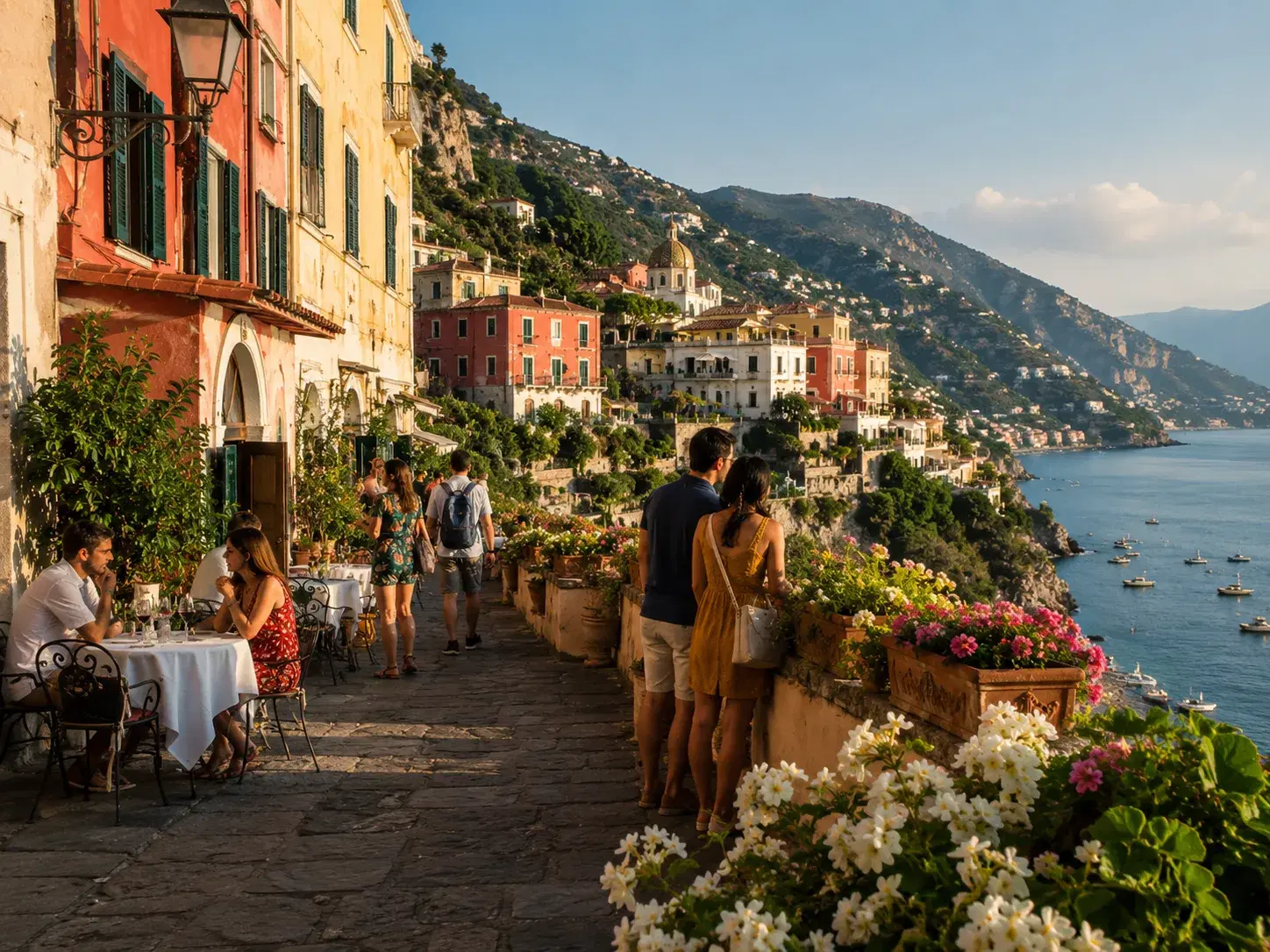
On the Amalfi Coast, Sorrento is the practical family hub, while Positano delivers sea-view rooms for couples at a higher price tier. Tuscany's countryside suits a rural stay paired with Florence for a 7–10 night trip.
Budget travellers do well with three-star rooms near train stations, using regional trains and buses for day trips. Mid-range stays in four-star boutique properties inside historic centres give a good balance of location and comfort. At the higher end, sea-view suites on the Amalfi Coast and converted historic buildings in Rome or Venice are the typical choices. Nightly prices shift significantly with season, so confirm at booking.
A sensible first trip runs three bases over 8 to 10 nights, moving north so the journey ends in Venice — a lighter, walkable finish that does not require a car.
Start with 4 nights in Rome. This gives you a full day for the Colosseum, Forum and Palatine Hill, a morning for the Vatican Museums and Sistine Chapel, and time for the Trevi Fountain, Pantheon and Piazza Navona walking circuit. A half-day at Villa Borghese works well for families or as a slower afternoon.
Move to Florence for 2 to 3 nights. One day covers the Uffizi and the historic centre; a second day suits a Tuscan hill-town outing. Finish with 2 nights in Venice, where a vaporetto pass and one gondola ride cover the main experience without a car.
For a 9 to 12 night trip, add Cinque Terre for 2 nights between Florence and Venice, or extend south from Rome to Sorrento or Positano before the northern circuit. The Rome–Florence–Venice leg works well on Frecciarossa high-speed trains, which are fast and bookable in advance through Trenitalia. Coastal legs need more buffer time, so keep those days flexible.
Italy suits travellers who enjoy cities with deep history, food-led days, short train hops and a mix of museums and open landscapes. It works well for couples on a first Europe trip, families with school-age children, and older travellers who prefer walkable centres with frequent cafes and seating.
Families with young children can use Villa Borghese's park for cycling and open space, take Venice's vaporetto rides and visit the Ligurian or Tuscan coast for beach days. Easy trekking at Val Fondillo suits children who can manage a gentle trail. Elders tend to do well in Rome and Florence, where the pace can be set by the traveller.
This destination is less suited to travellers who want a single beach-resort holiday, need widespread UPI acceptance, or dislike moving between hotels. Solo travellers on a budget can do well using the centro storico walking circuit in Rome and the Cinque Terre Card for village-hopping, keeping costs lower with free national park trails and pizza al taglio from takeaway spots.
Two package styles cover most first trips from India, and both can be shaped around the same core cities.
Cultural and Heritage suits travellers who want guided visits to the Colosseum, Vatican Museums, Uffizi Gallery and similar archaeological and art sites, with a structured itinerary across Rome, Florence and Venice. This style works well for first-timers who prefer a planned framework over self-navigation.
suits those who prefer slower stays, regional food experiences, winery visits and time in smaller towns alongside the headline cities. Bologna, the Piedmont hills and Tuscany's countryside fit naturally into this style.
Both styles run from around 5 nights on a short trip to 9 to 12 nights on an extended one. Land-only packages start from Rs. 1,10,000 per person on twin sharing, with flights and seasonal supplements quoted separately. Confirm current inclusions and travel dates at booking.
Browse the Italy holiday packages to see how these choices turn into a bookable trip.
Personalise your trip
Choose a travel style as your starting point. We'll refine the pace, stays, experiences, and budget until the journey feels entirely yours.
Not sure which fits? Use our trip builder — it takes under two minutes.
Got questions?
Straight answers on visas, pricing, best time to visit, and how our packages work for Indian travellers.
8 answered below
Social proof
Feedback from Indian holidaymakers who travelled with Tripstor.
4.8
from 432+ reviews
FamilyTravelled with my parents who are in their late 50s. Tripstor recommended two full acclimatization days in Leh before any high-altitude drives and that made a real difference. Tso Moriri was quieter than Pangong and honestly more worth the drive.
FamilyBooked a family package for 7 nights covering Port Blair, Havelock, and Neil. The Cellular Jail light and sound show on Day 1 set a good tone for the trip. Kids were engaged throughout and the itinerary was not too rushed.
FriendsThree friends and I did a 9-night Australia package with stops in Melbourne and Sydney. We spent an afternoon at the Melbourne Cricket Ground and caught a local match. Tripstor sorted our group visa applications together which saved a lot of back and forth. Good experience overall.