Curated starting points
Find a Goa journey that feels like yours.
Begin with a thoughtfully paced itinerary, then change the stays, experiences, route, and budget with a Tripstor specialist.
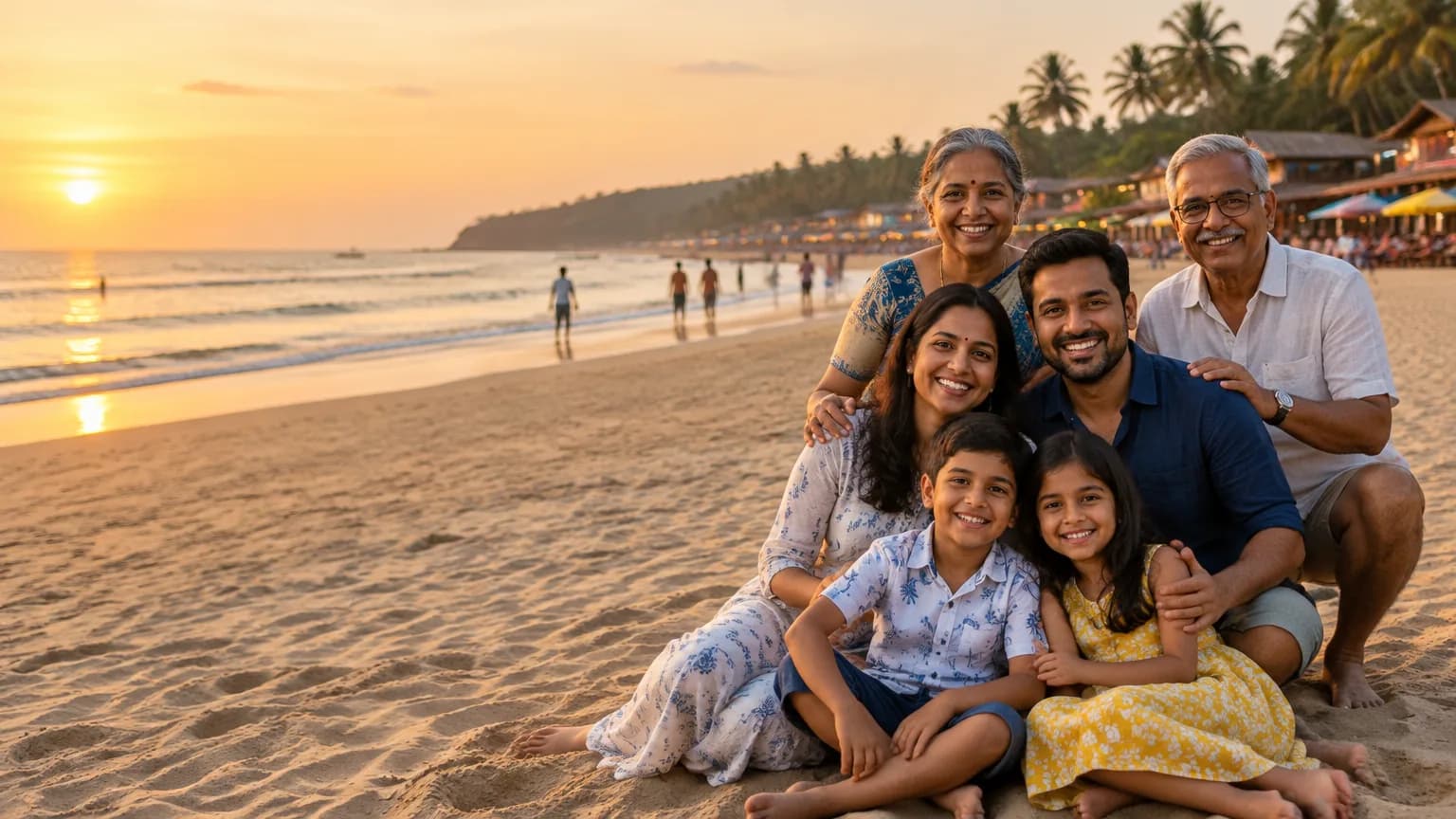
Goa Tour Packages 2026 cover a 3,702 sq km coastal state on the Arabian Sea, with busier beach belts in the north and calmer ones in the south. The state suits beach-first couples, families and groups of friends. November to February gives the calmest sea and driest days, while June to September is monsoon.
Curated starting points
Begin with a thoughtfully paced itinerary, then change the stays, experiences, route, and budget with a Tripstor specialist.
Starting from
₹14,500/ person
Destination guide
Practical context, local highlights, and honest planning advice — written for travellers from India.
Field notes
A considered guide to Goa
Goa is a coastal state in western India, set between the Arabian Sea on the west and the Sahyadri mountains on the east. The best months are November to February, and five to six nights is a sensible trip length if you want both a north and a south base.
The coast splits into the busier North Goa belt around Baga, Calangute and Anjuna, and the calmer South Goa belt around Palolem and Agonda. Panaji is the state capital, and inland Goa holds heritage sites such as the churches of Old Goa.
The gateway is Dabolim Airport (GOI), about 26 km from Panaji, 24.4 km from Margao and 6 km from Vasco da Gama. Rail access comes through Thivim, Karmali, Madgaon and Vasco da Gama stations, and national highways link the state to the rest of India.
Travellers from across India often start by comparing Goa holiday packages by month, because the season changes the sea, the crowds and the prices more than any other factor.
Goa's coastline is a series of belts, each with its own mood, so the right beach depends on your group. North Goa is lively and social, while Palolem and Agonda in the south are slower and quieter.
Candolim and Sinquerim, also in the north, are quieter than Baga and sit close to Fort Aguada. They suit couples and first-time visitors who want upscale stays without the loudest strip.
The sea in Goa follows the monsoon calendar. It is calm from November to March, usually workable in April and May, and not safe for swimming from June to September, when the southwest monsoon brings rough water.
| Months | Swimming | What the sea is like |
|---|---|---|
| November to March | Safe, within local flags | Calm during the dry winter period |
| April to May | Safe, with changing conditions in May | Calm or warming before the monsoon |
| June to September | Not advised | Rough seas and unsafe swimming |
| October | Restricted | Improving, but rain and sea state stay variable |
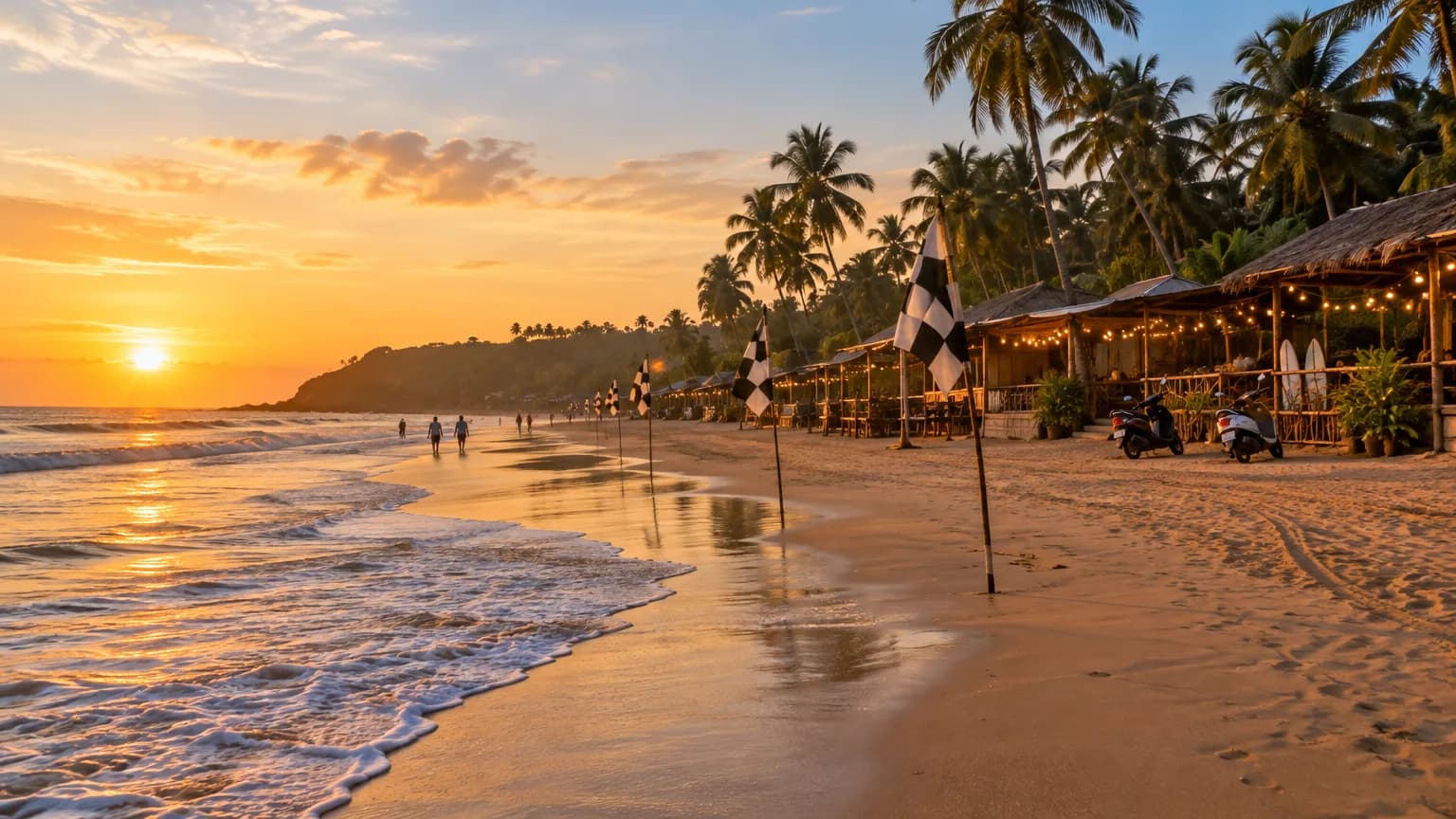
Underwater currents along the coast can be strong and unfamiliar to visitors. Goa Tourism advises staying between the black-and-white chequered flags, and not entering the sea after alcohol or when you have a medical issue.
Water sports in Goa operate under a state policy that requires trained personnel for emergencies and rescue procedures. Pick licensed, visibly equipped providers rather than the cheapest offer on the sand.
November to February is the best window for a Goa beach holiday. Temperatures sit around 25 to 27 C with almost no rain, but crowds are high and prices peak, especially around Christmas and New Year.
| Months | Verdict | Weather and sea | Crowds and prices |
|---|---|---|---|
| November to February | Best | 25 to 27 C, little rain, calm sea | High crowds, peak prices |
| March | Good shoulder | About 27 C, 4 mm rain | Medium crowds and prices |
| April and May | Shoulder, hot | 29 to 30 C, humid, May can pass 33 C | Low crowds, low prices |
| June to September | Avoid for beach time | Heavy rain, rough sea, unsafe swimming | Low crowds, low prices, closures |
| October | Transition | About 27 C, 122 mm rain, variable sea | Medium crowds and prices |
June to September is the monsoon, with rainfall of about 500 mm in June and 890 mm in July. Low-lying areas can flood, roads turn wet and hazardous, and many beach shacks shut. Goa has monsoon charm for travellers who want green hills and cheaper stays, but it is not a beach-first season.
The Goa Carnival falls in February, and Sao Joao in June marks the start of the monsoon. Book peak weeks early, and treat March to May as the value window if you can handle the heat.
Your base shapes your daily rhythm more than any other choice. Baga and Calangute suit lively evenings and budgets, Candolim and Sinquerim suit upscale quiet, and Palolem and Agonda suit slow, peaceful days.
| Area | Character | Best for | Budget tier |
|---|---|---|---|
| Baga and Calangute | Beach areas with nightlife | Evenings, budget trips | Budget |
| Candolim and Sinquerim | Quieter than Baga, near Fort Aguada | Couples, first-time visitors | Upscale |
| Anjuna | Backpacker-oriented, Wednesday market | Solo travellers, budget stays | Budget |
| Vagator | Beach area near Chapora Fort | Couples, evenings | Budget to mid |
| Assagao | Boutique villas near North Goa beaches | Couples | Mid |
| Palolem | Peaceful southern beach area | Couples, families | Budget |
| Agonda | Quiet southern beach area | Couples, families | Budget |
| Benaulim | Peaceful southern beach area | Couples, families | Budget to mid |
Guesthouses and small resorts dominate the budget tier in Anjuna, Palolem and Agonda. Boutique villas and mid-range stays sit in Assagao and Vagator, and upscale resorts cluster around Candolim and Sinquerim. Rates swing sharply across peak weeks, so confirm at booking rather than relying on last season's numbers.
Dabolim Airport (GOI) is the nearest airport for Goa's beach belts, with Madgaon the main railhead for the south. Flights from Delhi take about 2 hours 35 minutes, and from Mumbai about 1 hour 30 minutes, as of 2026.
Bengaluru, Chennai, Kolkata and Pune also connect to Dabolim by air. Rail access comes through Thivim, Karmali, Madgaon and Vasco da Gama stations, and national highways connect Goa with the rest of the country if you prefer to drive.
Outside Dabolim Airport, prepaid taxis and Goa Miles cabs handle transfers. Kadamba public transport services connect the airport with major tourism destinations, and local buses link Panaji, Margao and Mapusa.
Before renting a two-wheeler, check the helmet rule, the condition of brakes and tyres, and what the rental agreement says about damage. The Mhaji Bus Scheme took effect in Goa on 1 August 2026, so confirm current routes and timings locally.
A five to six night split across two bases covers both coastlines without long daily drives. Start in North Goa, break the transfer with a heritage night in Panaji, and finish in the quieter south.
The transfer from north to south takes the better part of a half day by road, so schedule it for the morning. With seven nights, add a day for the Dudhsagar Falls jeep safari through Bhagwan Mahavir Wildlife Sanctuary or a Mollem National Park visit. Both are inland and need a full day.
Goa suits travellers who want beach mornings, heritage afternoons and a strong food scene within short road distances. It works for honeymooners, families, groups of friends and water-sports fans who travel between November and March.
Goa is a weaker fit for travellers who need a guaranteed empty shoreline in peak season, because November to February is crowded and priced at peak. Quiet-seekers do better in the south or in April and May, accepting the heat. Anyone travelling in the monsoon should plan for inland and indoor days rather than beach time.
Tripstor offers Goa tour packages across several trip styles, and the right one depends on who is travelling and how much you want pre-arranged. Travellers from any Indian city can match the style to their group and season.
Goa packages start from Rs.50,000 per person, land only and twin sharing. Travel month, stay category and the number of internal transfers move the final figure, so confirm at booking.
A few habits prevent most Goa beach problems. They are mostly about sea safety, local etiquette and booking early for peak weeks rather than about packing.
When your dates are settled, the Goa package page is a good place to see what a full trip includes.
Personalise your trip
Choose a travel style as your starting point. We'll refine the pace, stays, experiences, and budget until the journey feels entirely yours.
Not sure which fits? Use our trip builder — it takes under two minutes.
Got questions?
Straight answers on visas, pricing, best time to visit, and how our packages work for Indian travellers.
8 answered below
Social proof
Feedback from Indian holidaymakers who travelled with Tripstor.
4.8
from 432+ reviews
CoupleNorway is expensive but the experience is worth planning for. We did the Flam Railway and the Sognefjord on Day 5. Tripstor gave us a realistic budget breakdown before we booked, which I appreciated. No surprises on the ground.
HoneymoonHoneymooned in Kashmir for 7 nights in May. Gulmarg had light snow still and we got a gondola ride on Day 4. The tulip garden in Srinagar was in full bloom. Tripstor arranged a candlelit dinner on the houseboat which was a nice touch.
FriendsThree friends and I did a 9-night Australia package with stops in Melbourne and Sydney. We spent an afternoon at the Melbourne Cricket Ground and caught a local match. Tripstor sorted our group visa applications together which saved a lot of back and forth. Good experience overall.
Travel guides
Useful local context, seasonal advice, and practical planning notes for a more considered journey.
Looking for privacy and space on your Goa trip? This guide explains why beachfront villas are ideal for families and groups. Learn about North vs South Goa, villa benefits like private pools and butler service, and what to expect.
Read guide Destination Guides
Complete guide: best nightlife in goa: clubs, beach parties & what to expect. Expert tips, best time & booking advice for Indian travellers.
Read guide Destination Guides
Complete guide: north goa vs south goa: complete guide. Expert tips, best time & booking advice for Indian travellers.
Read guide Travel Planning
How to travel around Goa easily. Local buses, taxis, trains, autos & ride-hailing apps explained.
Read guide Travel Planning
Don't miss a thing for your Goa trip! Complete packing checklist: clothes, essentials & must-have items.
Read guide Monthly Guides
Is February a good time to visit Goa? Weather, top activities, crowd levels & cost tips.
Read guide