Field notes
Goa Packing List: What to Pack & Carry
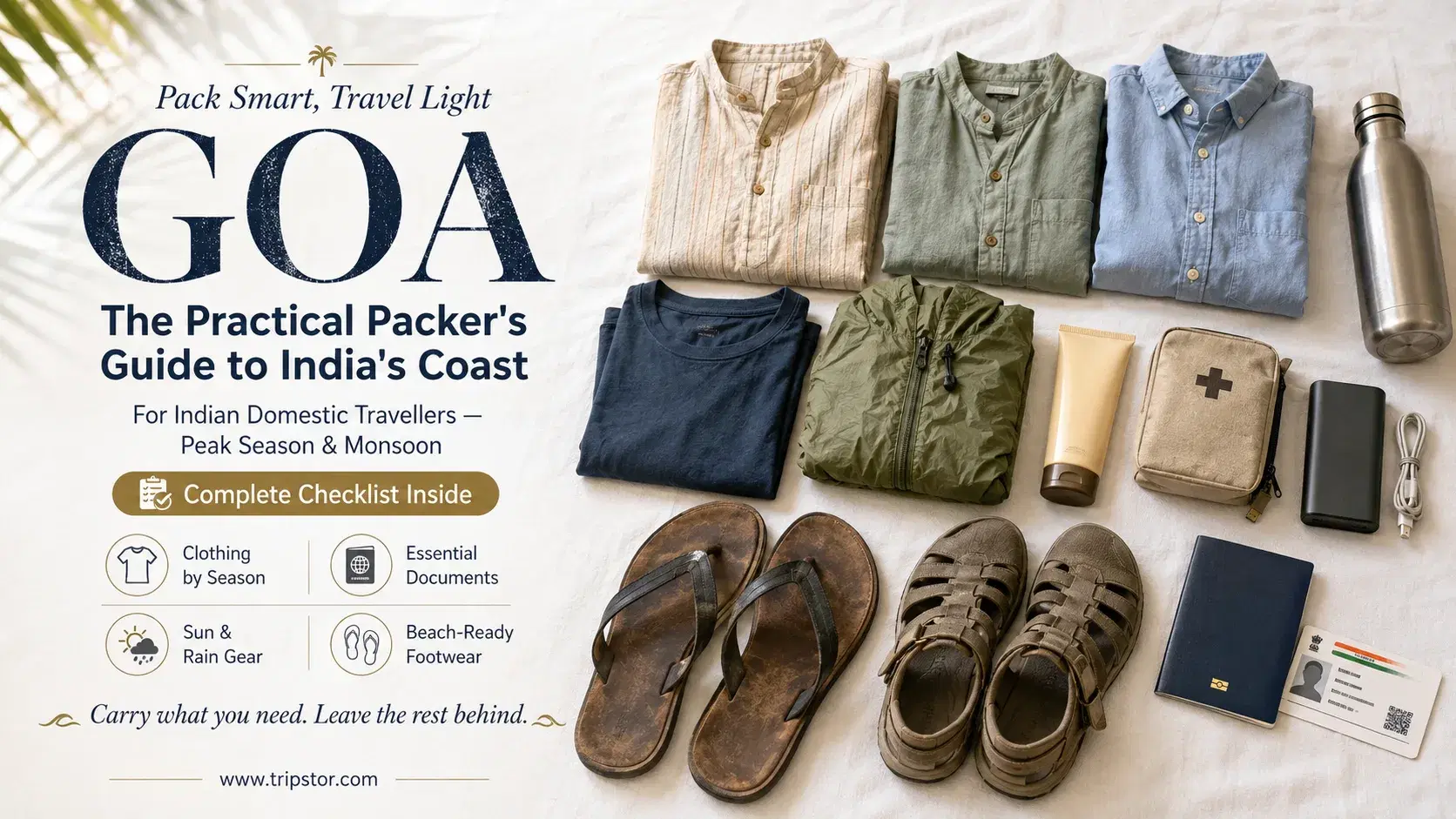
A good Goa packing list depends on when you are travelling and what you plan to do there. Goa's climate shifts significantly between November and September. Indian domestic travellers also need specific documents that many generic lists skip. This guide covers clothing, documents, toiletries, electronics, and seasonal adjustments — so you carry exactly what you need and nothing extra.
What are the essential items on a Goa packing list?
A Goa packing list covers five core categories: clothing suited to coastal heat, valid government-issued photo ID, basic toiletries including SPF 50+ sunscreen, a charged power bank, and a small set of OTC medications. These categories apply to all trip types and durations.
A packing list is a pre-trip checklist of items matched to a specific destination, duration, and travel purpose. For Goa, the list changes based on whether you visit in peak season (November to February) or monsoon (June to September).
The five categories work as a framework. Clothing covers beach wear, evening wear, and footwear. Documents include Aadhaar or passport, hotel vouchers, and tickets. Toiletries cover sun protection and personal hygiene. Electronics focus on power and connectivity. Medications address common travel health needs in a coastal, humid environment.
Each category is covered in detail in the sections below, with seasonal adjustments and a comparison table for quick reference.
What clothes should you pack for Goa?
Pack lightweight cotton or linen clothing for Goa. Temperatures range from 28 to 35°C in peak season. Carry 4 to 5 casual daywear sets, 2 beach cover-ups, and 1 to 2 smart-casual outfits for evenings. Quick-dry fabrics work better than denim or synthetic blends in coastal humidity.
Beach clothing for Goa means lightweight, quick-dry fabrics that handle temperatures between 28 and 35°C without retaining moisture. Cotton shorts, linen shirts, and breathable kurtas are practical choices for daytime. Avoid dark synthetic fabrics — they trap heat and take longer to dry after water exposure.
For quantity, 5 nights in Goa typically requires 4 to 5 daywear sets. Pack 2 swimwear pieces if you plan daily beach time. One or two smarter outfits cover dinner at beach shacks or a club night in North Goa.
What footwear works best for Goa's beaches and streets?
Flip-flops handle most beach and shack situations. Carry one pair of closed-toe sandals or light sneakers for heritage sites like Old Goa churches or Panjim streets. Water shoes are useful at rocky beaches such as Vagator or for water sports entry points where sharp surfaces are common.
Do you need formal or semi-formal clothes for Goa nightlife?
Most Goa clubs and beach bars follow a smart-casual dress code. One semi-formal outfit — a collared shirt or a simple dress — is enough for most evenings. Fully formal wear is unnecessary and takes up space better used for beach gear.
Related: Adventure Activities in Goa: Complete Guide
How does the packing list change between Goa's peak season and monsoon?
The Goa packing list changes significantly between peak season (November–February) and monsoon (June–September). Peak season requires sun protection and light beach gear. Monsoon travel needs waterproof bags, rain ponchos, and quick-dry footwear due to Goa's average annual rainfall of 2,932 mm.
What extra items do you need for a monsoon trip to Goa?
Monsoon in Goa runs from June to September. During this period, most beach shacks close and water sports stop. Your packing priorities shift from beach gear to rain protection.
Carry a compact rain poncho or a foldable waterproof jacket. Umbrellas work in light rain but become impractical in Goa's heavy downpours. A poncho keeps both you and your bag dry while moving between sites.
Footwear choice matters in monsoon. Rubber flip-flops or waterproof sandals dry quickly. Avoid canvas shoes or fabric sneakers — they stay wet for hours and cause discomfort.
Pack a dry bag or a waterproof backpack cover. Your phone, documents, and camera need protection from sudden rain. A small ziplock pouch for your phone costs almost nothing and prevents damage.
Clothing fabric is another practical consideration. Quick-dry synthetic fabrics like nylon or polyester are far more useful than cotton in monsoon. Cotton absorbs moisture and takes hours to dry in Goa's humid conditions. Pack at least two sets of quick-dry clothes for every three days of travel.
Mosquito repellent becomes more important in monsoon than in peak season. Standing water after heavy rain increases mosquito activity across North and South Goa. Carry a DEET-based repellent of at least 20% concentration. A travel-size mosquito repellent coil or plug-in device is useful for guesthouse rooms without screens.
According to India Meteorological Department data, Goa receives over 2,900 mm of rainfall annually, with July being the wettest month. UV Index levels on Goa beaches range from 8 to 11 during peak season — among the highest recorded for Indian coastal destinations.
What can you leave behind if you visit Goa in peak season?
Peak season visitors (November to February) can skip rain gear entirely. Temperatures stay between 23°C and 32°C with low humidity. You do not need heavy jackets or thermal layers.
Beach gear becomes the priority. Carry a sand-resistant beach bag, extra swimwear, and SPF 50+ sunscreen. UV Index levels of 8–11 are common even in December, so sun protection is non-negotiable regardless of season.
Evening temperatures in December and January can drop to around 20°C, particularly in inland areas like Ponda or Sanguem. A single light cotton layer or a thin full-sleeve shirt is enough for evenings. You do not need a jacket unless you plan to stay in an air-conditioned room for extended periods.
Peak season is also when Goa's flea markets, beach parties, and water sports are fully operational. Pack water shoes if you plan to try parasailing, jet skiing, or banana boat rides. Standard flip-flops are not suitable for water sports activity.
| Packing Item | Peak Season (Nov–Feb) | Monsoon Season (Jun–Sep) |
|---|---|---|
| Clothing type | Light cotton, linen, shorts | Quick-dry fabrics, full-sleeve options |
| Footwear | Flip-flops, water shoes for sports | Rubber sandals, waterproof footwear only |
| Sun protection | SPF 50+ sunscreen, UV sunglasses, hat | SPF 30–50 still needed on clear days |
| Rain gear | Not required | Rain poncho or waterproof jacket essential |
| Beach gear | Beach bag, towel, swimwear | Most beaches inactive — minimal beach gear needed |
| Bag type | Standard daypack suitable | Waterproof bag or dry bag cover required |
| Insect repellent | Optional — low mosquito activity | Essential — high mosquito activity post-rain |
| Evening layer | Thin cotton shirt for 20°C nights | Not needed — humidity stays high after dark |
Related: Best Time to Visit Goa: Month-by-Month Season Guide
How does the packing list change between Goa's peak season and monsoon?
The Goa packing list shifts significantly between November–February and June–September. Peak season calls for light cotton, sun protection, and beach gear. Monsoon travel requires waterproof bags, rain ponchos, quick-dry footwear, and insect repellent as non-negotiable items.
According to the India Meteorological Department, Goa receives an average annual rainfall of 2,932 mm, with over 80% falling between June and September. UV Index on Goa beaches regularly reaches 8–11 even during overcast monsoon days.
What extra items do you need for a monsoon trip to Goa?
A waterproof bag or dry bag cover is the first addition for monsoon travel. Standard backpacks absorb water quickly in Goa's heavy downpours. A compact rain poncho works better than an umbrella on a scooter or beach walk. Quick-dry fabrics — polyester blends or nylon — replace cotton for monsoon trips because cotton stays damp for hours in high humidity. Rubber sandals or waterproof slip-ons replace flip-flops, which become slippery on wet roads. Insect repellent with at least 20% DEET concentration is essential from June onward. Mosquito activity increases sharply after the first rains. ORS sachets and antacids matter more in monsoon because food hygiene at beach shacks drops during the off-season.
A small first-aid kit with antihistamine tablets is worth carrying in monsoon. Skin rashes and mild allergic reactions are more common in high humidity. Carry a spare pair of footwear in a sealed plastic bag inside your luggage. Wet footwear takes 12–18 hours to dry indoors during monsoon in Goa. A portable phone pouch or waterproof phone case protects your device during scooter rides in rain. Most rental scooters in Goa do not have covered storage compartments.
What can you leave behind if you visit Goa in peak season?
Rain gear is unnecessary between November and February. Goa's peak season sees fewer than 10 mm of rainfall per month on average. A waterproof bag cover is optional, though useful near water sports zones. Heavy evening layers are not needed either. Temperatures drop to around 20°C at night, so a thin cotton shirt or light linen layer is enough. Rubber footwear can stay home — standard sandals and flip-flops work across North and South Goa beaches during this period.
You can also skip the dry bag insert for your camera during peak season. Beach shacks and water sports operators are fully active from November, so you will not need to carry your own snorkelling gear. Most shacks rent equipment on-site. A basic cotton tote bag works as a beach bag for peak-season day trips. You do not need a heavy-duty daypack unless you are doing a day trek to Dudhsagar Falls.
| Packing Item | Peak Season (Nov–Feb) | Monsoon Season (Jun–Sep) |
|---|---|---|
| Clothing type | Light cotton, linen, shorts | Quick-dry fabrics, full-sleeve options |
| Footwear | Flip-flops, water shoes for sports | Rubber sandals, waterproof footwear only |
| Sun protection | SPF 50+ sunscreen, UV sunglasses, hat | SPF 30–50 still needed on clear days |
| Rain gear | Not required | Rain poncho or waterproof jacket essential |
| Beach gear | Beach bag, towel, swimwear | Most beaches inactive — minimal beach gear needed |
| Bag type | Standard daypack suitable | Waterproof bag or dry bag cover required |
| Insect repellent | Optional — low mosquito activity | Essential — high mosquito activity post-rain |
| Evening layer | Thin cotton shirt for 20°C nights | Not needed — humidity stays high after dark |
How does bag size requirement differ by season?
Peak-season travellers to Goa typically manage with a 30–40 litre cabin bag for trips up to five nights. Monsoon travellers need 10–15 litres of extra space. Wet clothes, spare footwear, and a rain poncho take up more room than equivalent dry-season items. A 45–50 litre bag is the practical minimum for a four-night monsoon trip if you are checking in luggage. Carry-on-only travel in monsoon is harder unless you pack exclusively quick-dry clothing that compresses well.
| Trip Duration | Recommended Bag Size — Peak Season | Recommended Bag Size — Monsoon Season |
|---|---|---|
| 2–3 nights | 20–25 litres (cabin bag) | 30–35 litres minimum |
| 4–5 nights | 30–40 litres | 45–50 litres |
| 6–7 nights | 40 litres | 55 litres or checked luggage |
Related: Best Time to Visit Goa: Month-by-Month Season Guide
What are the most common packing mistakes people make for a Goa trip?
The most common packing mistakes for Goa include overpacking formal clothes, skipping sunscreen, forgetting a waterproof bag, and leaving out basic medications. Most travellers realise these gaps only after reaching the destination, when fixing them costs more.
- Overpacking formal wear: Goa's dress code is relaxed. Two smart-casual outfits cover most restaurant and club visits. Formal shirts and trousers take up space without earning their place.
- Forgetting SPF 50+ sunscreen and then buying it at a beach shack at two to three times the MRP.
- Carrying a regular cloth bag to the beach. Sand and water damage phones and wallets. A waterproof pouch or dry bag costs under ₹300 and prevents real loss.
- Skipping ORS sachets and antacids. Goa's food is oily and spiced differently from what most North Indian travellers eat daily. Stomach issues on Day 1 are common.
- Carrying large amounts of cash. Most beach shacks, taxis, and shops in Goa accept UPI. Keep ₹2,000–3,000 in cash for small vendors and that is enough for a day.
- Not packing a power bank. Charging points at beaches do not exist. A 10,000 mAh bank covers a full day of maps, photos, and calls.
Related: Complete Goa Travel Guide: Everything You Need to Know
What do travellers most often ask about packing for Goa?
Travellers planning a Goa trip most often ask about clothing choices, document requirements, monsoon-specific gear, and whether to carry medicines. The answers below address the most repeated queries from first-time and repeat visitors.
Can I wear shorts and sleeveless tops everywhere in Goa?
Beachwear is fine on the beach and at beach shacks. Carry a light cover-up or shirt for entering churches, temples, and local markets. Some restaurants near Calangute and Panjim have a no-sleeveless policy for entry.
Is Aadhaar card enough as ID for a Goa trip from another Indian state?
Yes. Aadhaar is accepted at hotels, airports, and railway stations across Goa. Keep a digital copy on your phone as backup. Some smaller guesthouses also accept a PAN card or voter ID.
Do I need to carry a rain jacket even if I visit in November?
November sits at the tail end of Goa's monsoon. Light rain is possible in early November. A compact rain poncho takes almost no space and removes the risk of getting caught in an unexpected shower.
Should I pack a first-aid kit or is it easy to find a pharmacy in Goa?
Pharmacies are available in Calangute, Panjim, and Margao. Remote beach areas have limited access. Carry a basic kit with antacids, antihistamines, and ORS sachets to avoid a long detour on your first day.