
Egypt's sacred sites, season and basics at a glance
Egypt is a North African country whose main heritage circuit follows the Nile from Cairo and Giza south to Luxor and Aswan. The best months are October to April, an ideal full trip is 9 to 13 nights, and Cairo International Airport is the usual gateway.
| Item | What to know |
|---|---|
| Region | North Africa; the Nile Valley is the main travel corridor |
| Main circuit | Cairo and Giza, then Luxor, then Aswan and Abu Simbel, with an optional Red Sea finish |
| Best season for comfort | October to April, with cooler days for temples and tombs |
| Ideal trip length | 5 nights for a short trip; 9 to 13 nights for Cairo, a Nile cruise and the Red Sea, with 10 days a balanced plan |
| Gateway | Cairo International Airport, with Luxor, Aswan, Hurghada and Sharm el-Sheikh airports for onward travel |
| Starting price | From ₹80,000 per person, land only, twin sharing |
Beyond the Nile, the Western Desert holds oases such as Siwa and Bahariya, and the White Desert near Farafra. These suit travellers who have time beyond the classic route.
The main sites and why they matter
Egypt's essential heritage sites sit in three clusters: Giza and Cairo, Luxor, and Aswan with Abu Simbel. Most travellers visit them north to south, which follows the country's own timeline from the pyramid age to the later temple builders.
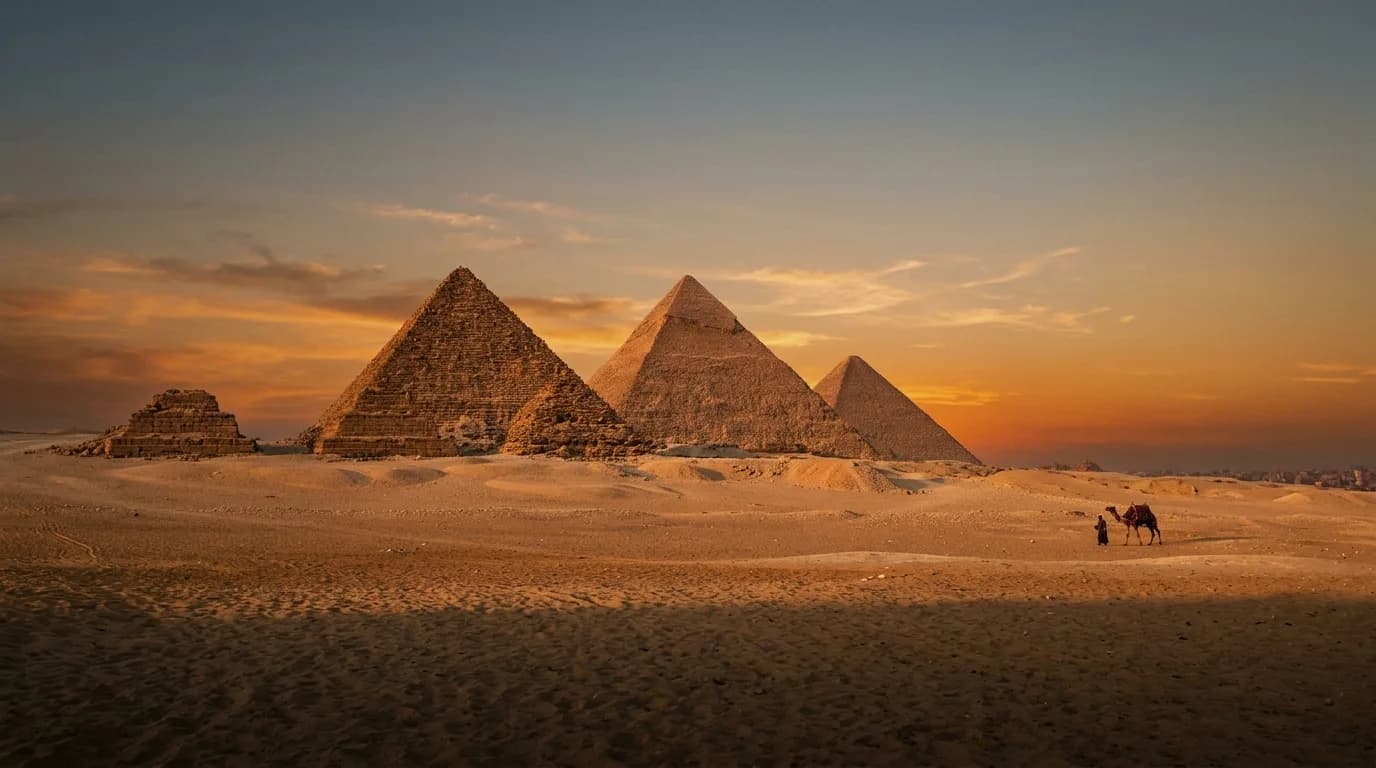
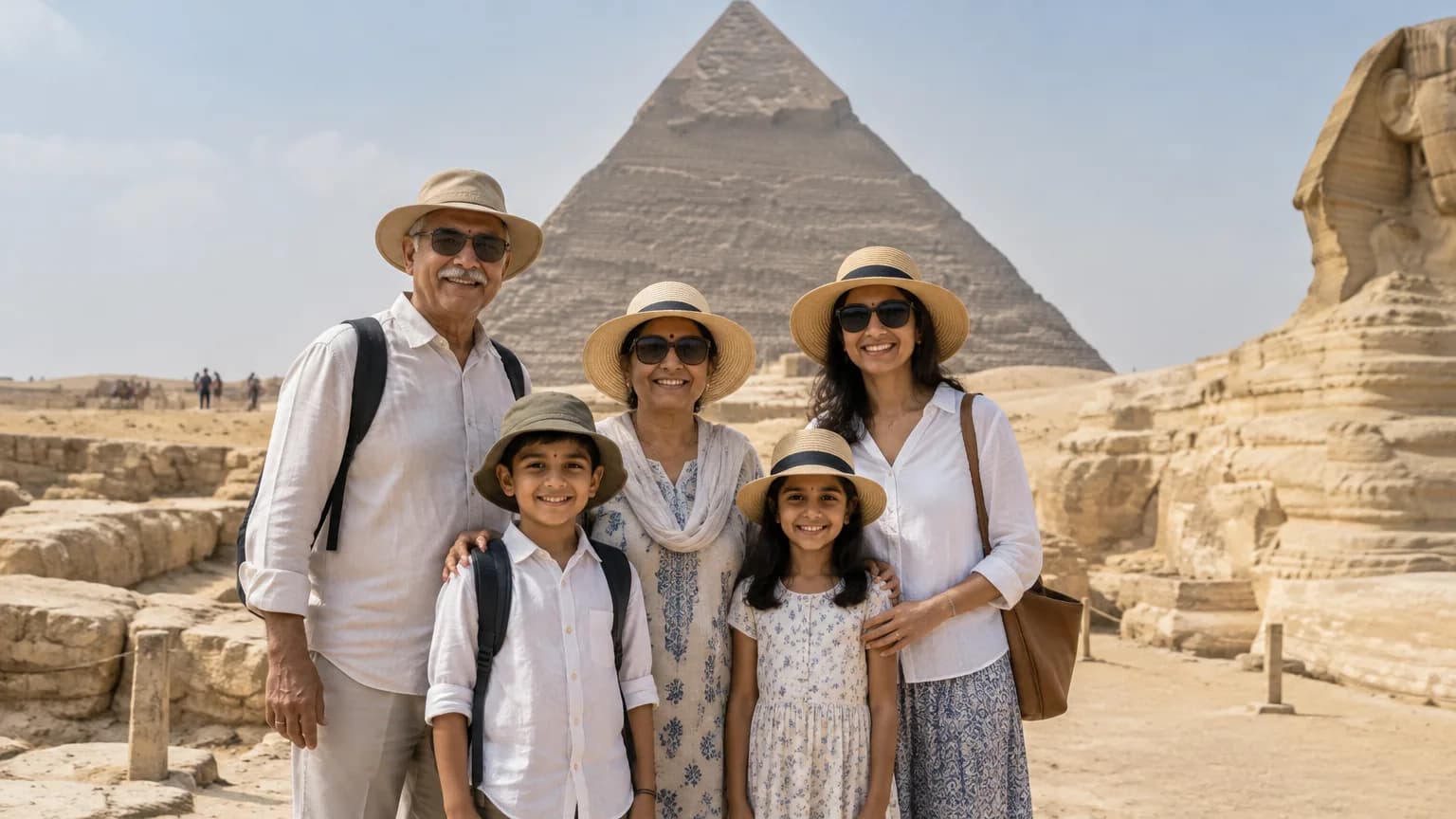
- Giza Pyramid Complex (Giza): The pyramids and the Sphinx stand on the edge of Greater Cairo. Visitors walk the plateau and view the monuments from outside, and entering the Great Pyramid needs an additional ticket. It is the most recognised ancient site in the country.
- Egyptian Museum (Cairo): A central Cairo museum of Egyptian antiquities, including royal mummies and everyday objects. It is an indoor stop, useful on a hot or dusty day.
- Grand Egyptian Museum (Giza): A museum near the pyramid area with Egyptian collections in a modern building. It pairs well with a Giza plateau visit on the same day.
- Karnak Temple Complex (Luxor): A vast temple site on Luxor's East Bank, built up over many centuries. Visitors walk through halls of columns and open courtyards. It is the centrepiece of most Luxor itineraries.
- Luxor Temple (Luxor): A temple in the middle of Luxor city, lit in the evening. It is smaller than Karnak and easy to reach on foot from the corniche.
- Valley of the Kings (Luxor West Bank): Royal tombs cut into the desert rock. A standard ticket covers three tombs, and special tombs cost extra. Expect walking, and steps down into underground chambers.
- Abu Simbel Temples (Aswan): Two rock-cut temples south of Aswan, visited as an excursion. The scale of the facade and the carved interiors make it a highlight for many visitors.
- Philae (Aswan): A temple among the principal Aswan sightseeing stops, reached by a short boat ride. It is calm and best visited in the cooler part of the day.
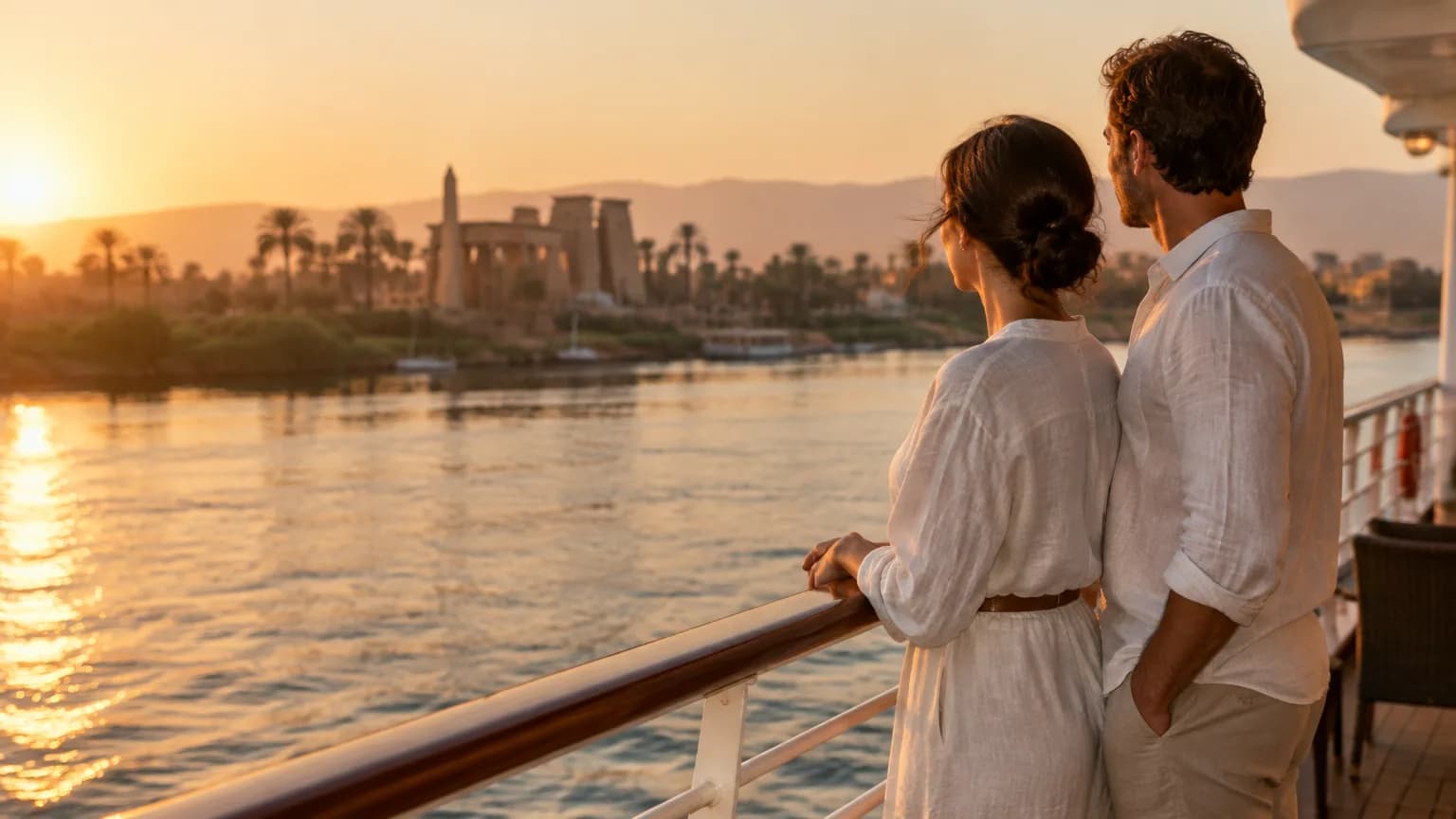
The Nile itself is part of the experience. Cruises commonly connect Luxor and Aswan over three to four nights, so temples can be seen along the way without daily road transfers. The Red Sea coast adds shore swimming and snorkelling at the end of the trip.
Queues, dress and entry practicalities at the sites
Crowds at Egypt's main sites build through the morning and stay heavy until early afternoon. Arriving at opening time is the most effective way to see Karnak, the Valley of the Kings or the Giza plateau with fewer people around.
Weekends and public holidays bring more local visitors, so a weekday start helps. Tour groups tend to arrive in waves mid-morning, which is another reason to go early and keep the hot middle of the day for rest.
Dress modestly at temples, tombs and mosques. Loose cotton clothing that covers shoulders and knees works for both men and women, and a scarf helps women at mosques and doubles as sun protection. Closed shoes with grip suit sand, gravel and uneven stone better than sandals.
Photography rules vary. Many tombs and museums restrict flash or tripods, and some areas ban photography entirely. Notices are usually posted at the entrance, but ask a guide or site staff before shooting. Ticket categories, special-tomb access and opening hours can change, so confirm them locally or at booking.
Festivals and the best months to go
October to April is the most comfortable stretch for temple-heavy travel. December to February is the cool peak season with the highest crowds and prices, while March to May and October to November are warm shoulder months with moderate crowds.
| Period | Typical temperature | Crowds and prices |
|---|---|---|
| December to February | About 9 to 21 C | High crowds, peak prices |
| March to May | About 12 to 33 C | Medium falling to low |
| June to September | About 23 to 38 C, hotter inland | Low crowds, lower prices |
| October to November | About 14 to 30 C | Medium rising to high |
Three dates shape crowd planning. Coptic Christmas on 7 January can cause local closures. The Abu Simbel Sun Festival on 22 February draws large crowds to Abu Simbel, so transport and rooms there fill early. Easter in April is one of the busiest travel periods, and prices rise.
Khamsin winds and occasional sandstorms can occur from March or April, mainly in desert areas. Rain is sparse and falls mostly on the Mediterranean coast. Travellers with dust allergies should carry a mask and eye drops in the windy months.