
Curated starting points
Find a Morocco journey that feels like yours.
Begin with a thoughtfully paced itinerary, then change the stays, experiences, route, and budget with a Tripstor specialist.
Morocco · Flexible itinerary
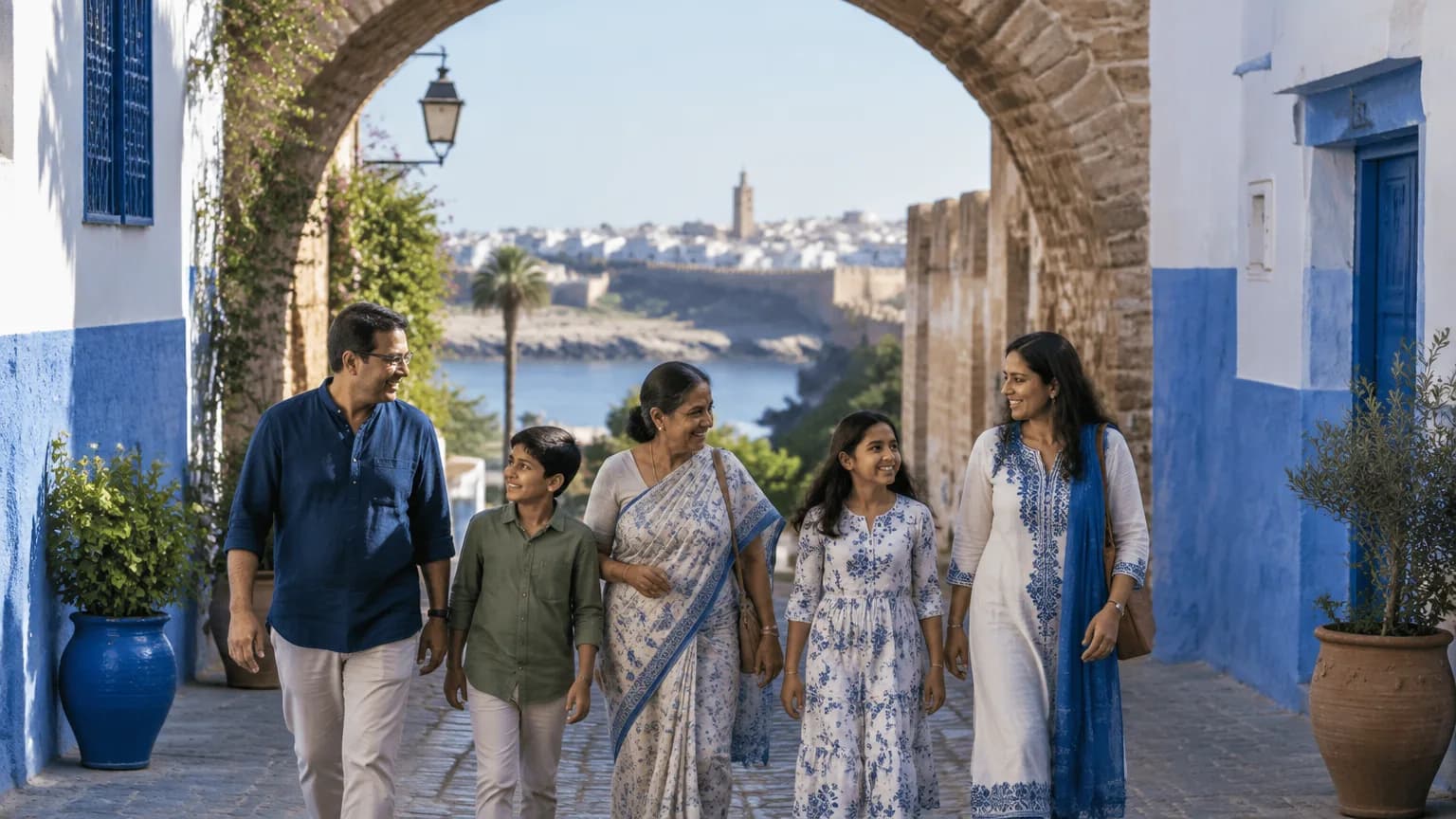
Morocco Casablanca & Rabat Family Holiday 8N 9D
Starting from
₹90,500/ person
Morocco · Flexible itinerary
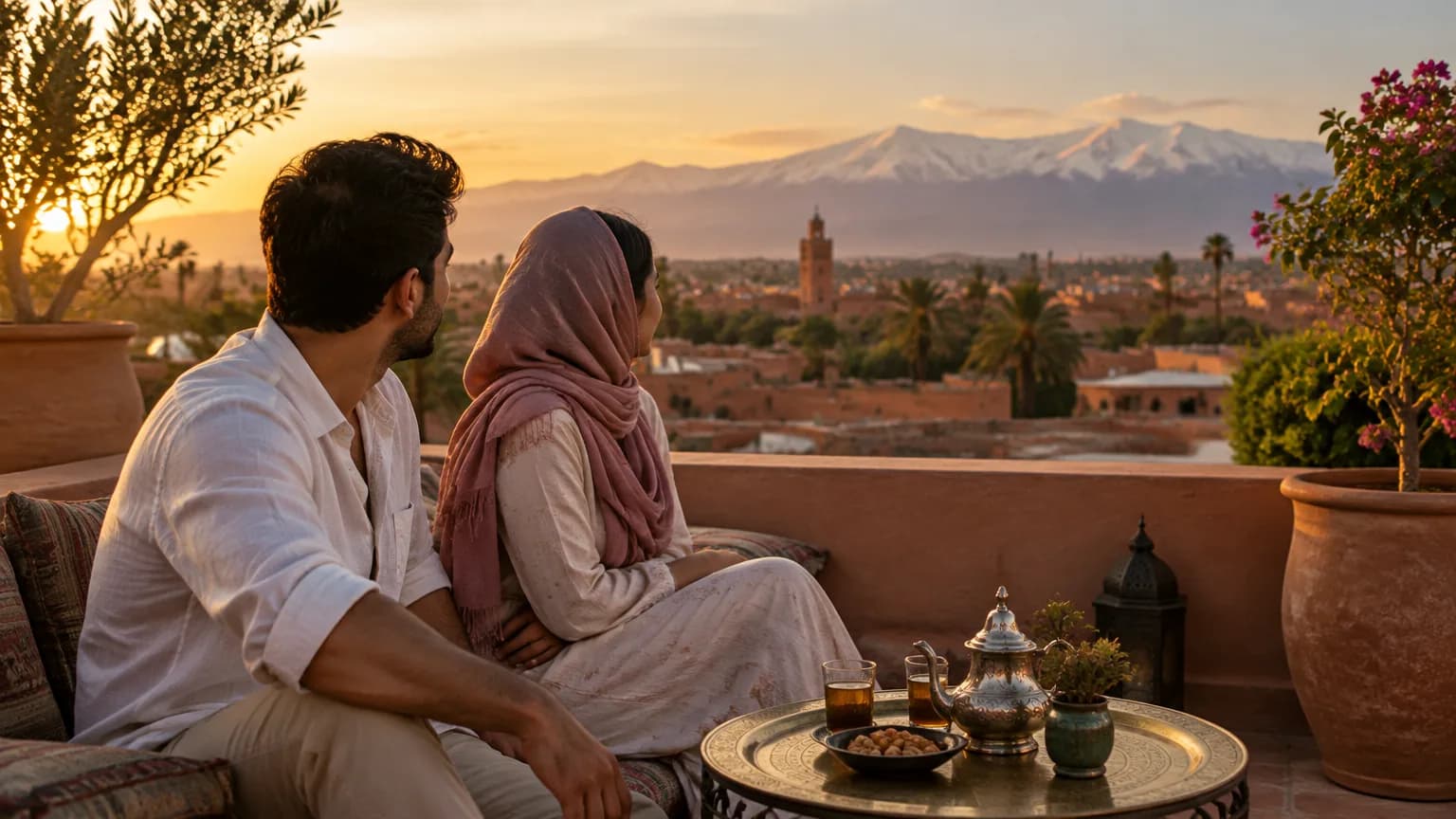
Morocco Marrakech & Atlas Honeymoon 7N 8D
Starting from
₹89,000/ person
Destination guide
Know Morocco before you go.
Practical context, local highlights, and honest planning advice — written for travellers from India.
Field notes
A considered guide to Morocco
Morocco at a Glance
Morocco is a North African destination that combines imperial cities, mountain parks and desert landscapes within a single itinerary. It is an international trip for Indian travellers, not a beach resort holiday, and it works best as a multi-city circuit.
| Detail | What to Know |
|---|---|
| Region | North Africa |
| Gateway airports | Casablanca (CMN), Marrakech (RAK) |
| Ideal trip length | 6 nights / 7 days (Imperial circuit); 5 nights for Casablanca–Marrakech only |
| Best season | April–May and September–October |
| Starting price (land only) | From Rs. 35,000 per person, twin sharing |
| Internal transport | ONCF trains, Al Boraq high-speed rail, CTM buses, petit taxis |
Why Travellers Choose Morocco
Three things consistently bring Indian travellers to this destination: the variety of landscapes packed into one country, the depth of medina culture, and the practical ease of moving between cities by rail.
The geography shifts quickly. A morning in a coastal medina can be followed by mountain forest or desert dunes the next day. Talasemtane National Park in the Rif Mountains offers hiking and trekking, while Khenifra National Park near Beni Mellal has canoeing, kayaking and rafting — both are well within reach of the main city circuit.
The rail network makes independent movement straightforward. ONCF trains connect Casablanca, Rabat, Marrakech, Fes and Meknes. The Al Boraq high-speed service runs the Casablanca–Tangier corridor in about two hours ten minutes. For Indian travellers combining Morocco with a Gulf or European stopover, the routing fits naturally into a longer international trip.
Top Places and Areas in Morocco
These are the places most first-time itineraries include, each with a practical note on what to expect and when to visit.
- Marrakech Medina — the historic core with Jemaa el-Fna, gardens and palaces. Visit the souks early in the morning and return to the square in the evening to watch acrobats and storytellers. Suits couples and families.
- Fes el Bali Medina — a UNESCO World Heritage medina with traditional urban attractions and one of the world's oldest universities. Wear closed shoes; the lanes are uneven and you will walk several kilometres in a day.
- Casablanca — the main arrival city, home to the Hassan II Mosque and the new commuter rail connecting the airport to the city centre. Most travellers use it as a one-night transit stop rather than a base.
- Rabat — the capital, with Hassan Tower, the Mausoleum of Mohammed V and the Kasbah of the Udayas. Quieter than Marrakech and manageable in a half-day of sightseeing.
- Chefchaouen — a mountain town known for its blue-painted medina, walks and mountain views. Best for couples; morning light is the most photogenic time to walk the lanes.
- Merzouga and Erg Chebbi — the Sahara area with desert camps, camel rides and sand dunes. Plan at least one overnight here; the drive from Fes is long, so factor in transfer time.
- Talasemtane National Park — Rif Mountains park for hiking and trekking. Carry layers, as mountain weather is noticeably cooler than the plains below.
- Ifrane forests — forest walks with waterways and caves, useful as a half-day stop when driving between Fes and the Middle Atlas.
- Khenifra National Park — near Beni Mellal, with canoeing, kayaking and rafting on the river. Better suited to active travellers than sightseers.
- Essaouira — an Atlantic coast town, windier and cooler than inland cities, with a Gnaoua music festival each June. A good two-night break from inland heat, and a natural add-on for honeymoon or wellness trips.
Best Time to Visit Morocco
April, May, September and October are the strongest months for touring: days are warm, rainfall is light and the main sights are fully accessible. These are also peak-crowd and peak-price months, so book accommodation and transport early.
March and November are the shoulder months. March brings medium crowds and medium prices with some rain; November is mild but wetter, with rainfall rising through the month. June is a reasonable middle option — temperatures of 18–30 °C, very little rain and medium crowds — and the Fes Festival of World Sacred Music and the Essaouira Gnaoua Music Festival both fall in June.
Avoid inland and southern travel in July and August. Temperatures in those regions reach around 40 °C, and coastal areas get busier. December to February is cool and low-priced, which suits travellers on a tighter budget, but mountain areas are colder and can see snow, so keep desert and mountain plans flexible if you travel in winter.
How to Reach Morocco from India
Indian travellers fly into Casablanca (CMN) or Marrakech (RAK) with one connection, typically through the Gulf or a European hub. There are no non-stop flights from India, so plan for a layover and check current schedules when booking.
From Casablanca airport, the new commuter rail service connects Mohammed V International Airport to Casa-Port and the city centre, making the transfer straightforward. For Marrakech, a pre-booked car or taxi to your first base is the standard option. If you land in Casablanca and plan to head straight to Rabat or Fes, the ONCF train is a practical onward connection.
Entry rules for Indian passport holders can change. Check the current requirements on the official government source — the Ministry of Foreign Affairs or your country's official travel advisory — before you book flights. Do not rely on older forum posts or travel blogs for entry information.
Where to Base Yourself in Morocco
Most trips use two or three bases rather than one, because the country is large and the main cities are spread across it. Marrakech and Fes are the two strongest first bases; Casablanca works best as a single transit night.
In Marrakech, staying inside the medina puts you close to Jemaa el-Fna and the souks; staying in the newer city areas gives easier vehicle access and quieter nights. Both suit couples and families. Fes el Bali is best for travellers who want the medina experience on their doorstep, though the lanes are narrow and noisy early in the morning.
Rabat suits couples and families who prefer a calmer capital with good rail connections. Chefchaouen is a natural choice for couples on a slower pace. Merzouga is worth one or two nights for the desert experience, though it requires a long transfer from the nearest city.
On budget, small family-run guesthouses and riads in the medinas give the most local feel. Mid-range travellers get more space and reliable plumbing in newer city properties. Luxury travellers can choose larger riads with private courtyards and upgraded desert camps with private facilities. Confirm inclusions at booking.
A Route Worth Following
A sensible first route uses three bases over six nights: one night in Casablanca on arrival, two nights in Fes, then three nights in Marrakech. This order works because Casablanca is the main arrival hub, Fes rewards you when you are fresh and have energy for the medina, and Marrakech has the most evening activity and the easiest departure airport.
For a five-night trip, drop Fes and run Casablanca to Marrakech with a desert or Essaouira side trip. For eight nights or more, add Chefchaouen between Casablanca and Fes, or build in one night at the Merzouga dunes between Fes and Marrakech. The Kenitra–Marrakech high-speed rail project, launched in 2026, will eventually cut the Casablanca–Marrakech journey to about one hour fifteen minutes, making this corridor even more practical.
Is Morocco Right for You?
Morocco suits travellers who enjoy walking, markets, architecture and moving between cities. It works well for couples, families with older children, and groups comfortable with early starts and occasional long transfer days to reach the desert or mountain areas.
It is less suited to travellers who want a resort-style holiday with minimal movement, or to anyone who finds crowded lanes and persistent bargaining stressful. Elders can manage the main cities by train, but medina lanes involve uneven ground, stairs and no vehicle access, so mobility needs careful planning.
If you want a relaxed beach trip with one base and no transfers, this destination is not the right fit. If you want history, desert and mountains in one itinerary — and you are comfortable with a multi-city circuit — Morocco is a strong choice for a first international trip from India.
Ways to Travel to Morocco
Tripstor offers several trip styles for this destination. The right one depends on your pace, group size and what you want to prioritise.
- Best of Morocco — the classic first-timer circuit across the main imperial cities; suits most groups on a first visit.
- Cultural & Heritage — medinas, monuments and UNESCO sites at a slower pace; suits history-focused travellers.
- — longer stays in one region with more local interaction; suits repeat visitors or those who prefer depth over breadth.
- Adventure — hiking, trekking and national parks such as Talasemtane and Khenifra; suits active travellers and small groups.
- Extended / Grand Tour — more nights, more cities, including the south and the Atlantic coast; suits travellers with ten or more days.
- Family — shorter transfer days and child-friendly stops; suits families with younger children.
- Honeymoon — riads, desert camps and quieter coastal towns such as Essaouira; suits couples wanting privacy and atmosphere.
- Luxury — larger riads, private transfers and upgraded desert camps with private facilities; suits travellers who want comfort throughout.
- Offbeat Explorer — smaller towns and mountain areas away from the main circuit; suits independent-minded travellers on a second visit.
- Wellness & Relaxation — hammams, coastal stays and slow days; suits travellers who want to decompress rather than cover ground.
Practical Tips for Travelling to Morocco
- Pack layers. Inland days can be hot while mountain mornings and desert nights are cold, sometimes sharply so. A light jacket is useful even in April and May.
- Dress modestly in medinas and rural areas. Cover shoulders and knees, and remove shoes before entering mosques or private homes. This is expected, not optional.
- Stay alert in tourist areas and crowded squares. Keep valuables in a hotel safe, use a cross-body bag in the medina, and note the emergency numbers: police on 190, general emergency on 15.
- Carry cash in Moroccan dirhams. Cards work in hotels and larger restaurants, but petit taxis, small cafes and market stalls are cash-only. Dirhams are not freely convertible outside Morocco, so exchange on arrival.
- Get a local SIM or eSIM on arrival for maps, translation and transport apps. Check current entry rules on the official government source before departure — requirements for Indian passport holders can change with little notice.
If you are ready to plan it, the Morocco packages page shows current options you can compare.
Personalise your trip
Shape Morocco around the way you travel.
Choose a travel style as your starting point. We'll refine the pace, stays, experiences, and budget until the journey feels entirely yours.
Not sure which fits? Use our trip builder — it takes under two minutes.
Got questions?
The questions travellers ask about Morocco.
Straight answers on visas, pricing, best time to visit, and how our packages work for Indian travellers.
8 answered below
Social proof
What Tripstor travellers say
Feedback from Indian holidaymakers who travelled with Tripstor.
4.8
from 432+ reviews
FriendsThree friends and I did a 9-night Australia package with stops in Melbourne and Sydney. We spent an afternoon at the Melbourne Cricket Ground and caught a local match. Tripstor sorted our group visa applications together which saved a lot of back and forth. Good experience overall.
FamilyTravelled with my parents who are in their late 50s. Tripstor recommended two full acclimatization days in Leh before any high-altitude drives and that made a real difference. Tso Moriri was quieter than Pangong and honestly more worth the drive.
CoupleNorway is expensive but the experience is worth planning for. We did the Flam Railway and the Sognefjord on Day 5. Tripstor gave us a realistic budget breakdown before we booked, which I appreciated. No surprises on the ground.