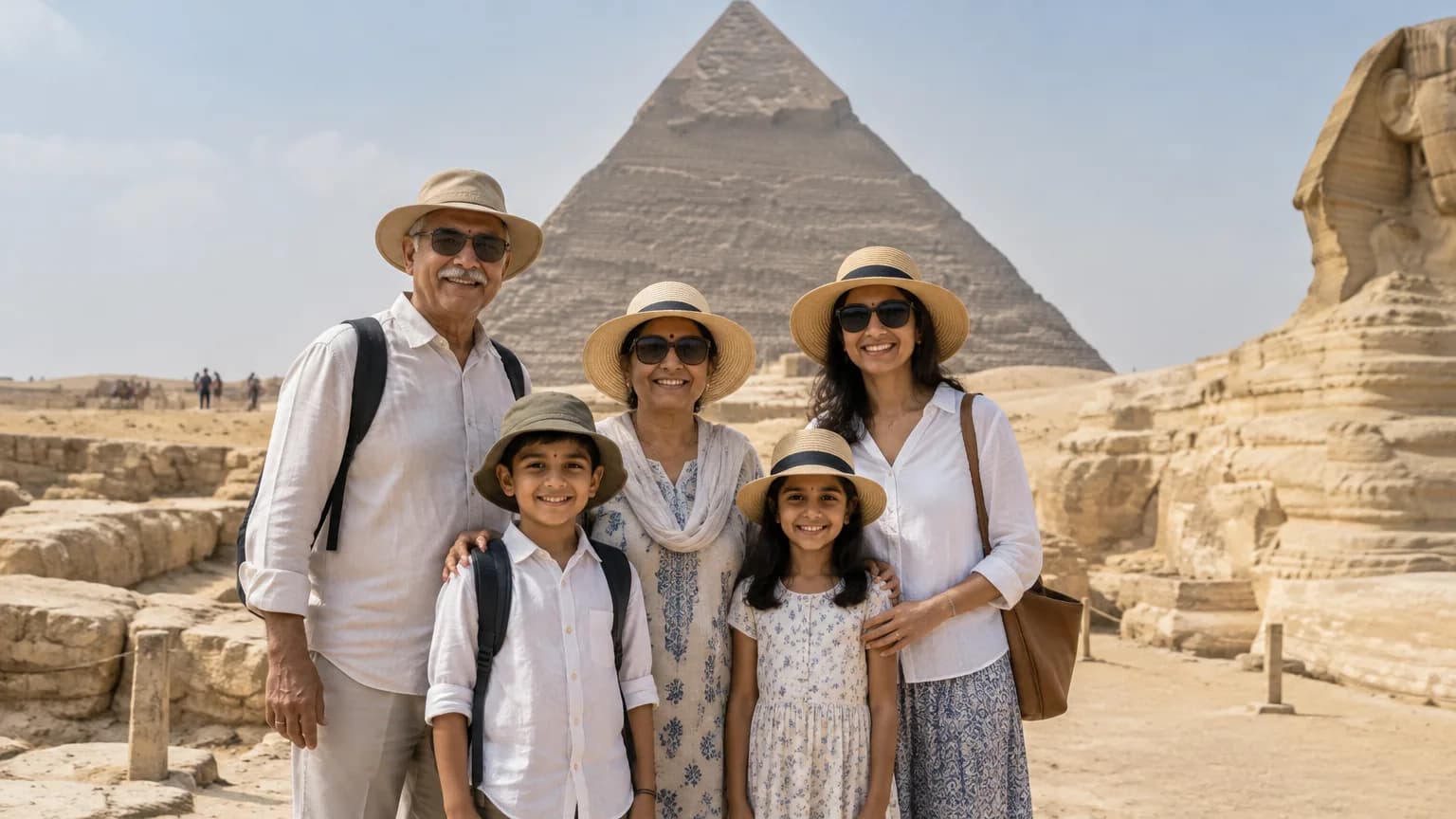
Why this Egypt trip works for families
This trip keeps the whole family in Cairo and Giza, with no Nile cruise, no Red Sea leg and no intercity train. That removes the long transfers and daily repacking that tire young children and grandparents on a longer Egypt route.
The two anchor sights are the Giza pyramids and the Egyptian Museum with kids. They are visited on separate mornings, with the Grand Egyptian Museum on a third. Afternoons are left for the hotel, a nap or the pool. Hotels are standard 3-4 star, and family or connecting rooms are requested wherever the property has them.
Kid and elder logistics
Every transfer is by private air-conditioned vehicle, so car seats, strollers and a folded wheelchair can travel with the family. Tell us at booking if you need a booster seat or a wheelchair-friendly vehicle, and we will confirm availability.
- Seating: The vehicle is booked for the family size, so grandparents can take the front or a window seat and children sit with a parent.
- Rooms: Family or connecting rooms are requested at every hotel, subject to availability.
- Access: The Egyptian Museum and Grand Egyptian Museum halls are mostly flat and stroller-friendly. The pyramid plateau is sandy, so a wheelchair needs a helper.
- Rest stops: Cairo drives are short, but traffic can stretch them. The driver carries chilled water, and we plan a snack or washroom stop before any drive longer than 45 minutes.
Egypt family tour package at a glance
The table below gives the facts most parents ask about first. Each row reads on its own.
Why Cairo and Giza suit three generations
A single-city base suits mixed ages because the walking is short and the driving is limited to one city. Grandparents get indoor museum halls and a rest block every afternoon. Children get the pyramids, the mummy galleries and a gentle Nile felucca ride. Teenagers get the Grand Egyptian Museum and a food walk in Zamalek.
Each day carries one main sight, one meal out and a break in between. That rhythm is why the free afternoons stay in the plan rather than being filled with extras.
Highlights by age group
Each age group has its own best moments, and the days are paced so everyone shares the main sights.
Younger children
- The Sphinx and the pyramids at Giza, in the cooler morning hours
- Mummy and Tutankhamun galleries at the Egyptian Museum
- A one-hour felucca ride on the Nile
- Pool time at the hotel on free afternoons
Teenagers
- The Grand Egyptian Museum, with unhurried time in the main galleries
- The Citadel of Saladin and the Muhammad Ali Mosque
- A Zamalek food walk with koshari, ta'meya and feteer
- Khan el-Khalili bazaar in the evening
Grandparents
- Indoor museum halls with seating breaks
- Short walks in Old Cairo around the Hanging Church
- The felucca ride, which needs no walking
- A rest block after lunch on every sightseeing day
Pace, rest and daily logistics
Each day starts after breakfast, with the main sight done before lunch and the afternoon kept for rest. Most drives are 20 to 45 minutes, though Cairo traffic can double that. Dinners are early, usually by 7 pm, so children are in bed on time.
Day 4 and Day 7 are largely free. Day 1 is light because of the flight, and Day 9 is a departure day. If a child or grandparent is tired, the plan allows skipping a half-day sight without affecting the rest.
Rooms, meals and comfort
Family or connecting rooms are requested at each hotel, and triple or extra-bed arrangements are confirmed at booking. Standard 4-star properties usually have a pool and an on-site restaurant, which helps when children need an early or simple meal.
Vegetarian food is easy to find across Cairo and Giza. Koshari, ful medames, ta'meya, molokhia and mahshi are common vegetarian dishes. Plain rice, bread, fruit and pasta are available for fussy eaters. Strict Jain meals without onion or garlic are harder to arrange, so request them at booking.
When to plan this trip from India
October to April is the comfortable window for a family. December to February is peak season, with daytime highs of 19-21 C, higher hotel rates and early queues at the pyramids. March to May and October to November are shoulder months, with 16-33 C and fewer crowds.
June to September is low season and very hot, with inland temperatures above 38 C. Families with small children and grandparents should avoid it. Khamsin winds and sandstorms can appear from March or April, so each day has an indoor fallback. The guide on the best time to visit Egypt gives the month-by-month picture for Indian travellers.
What does an Egypt family holiday cost?
The listed price is Rs.81,000 per person on twin sharing, land only, with flights excluded. On the ground, families usually spend extra on optional entry tickets, a camel or horse-cart ride near the pyramids, meals outside the plan and tips.
As of 2026, typical local costs are: a Cairo Metro ride under $0.50, a ride-hailing trip on Uber or Careem about $2-$8, and a private car for a full sightseeing day about $50-$120. General entry to the Giza Pyramid Complex is listed at $15-$20 and the Grand Egyptian Museum at $25-$35, with extra charges for entering the Great Pyramid. Confirm which tickets are covered at booking.
Indicative per-person tiers for this route are: budget 3-star around Rs.61,000, standard 4-star Rs.81,000, and premium 5-star around Rs.1,29,500. Hotel category, travel month and room type drive most of the difference. You can compare live prices across Egypt tour packages.
Travelling with kids and elders: five practical tips
These tips come from how this route usually runs for Indian families.
- Start early at the pyramids. Reach the Giza plateau soon after opening, before the heat builds. Carry hats, sunglasses and a refillable water bottle for everyone.
- Dress for sun and sand. Light cotton, closed shoes with grip and a light scarf for dust. Winter evenings in Cairo drop to 9-10 C, so pack a jacket from December to February.
- Carry ID for every traveller. Keep passports, a printed hotel voucher and the visa approval in a daypack. Children need their own passport copies for museum and hotel formalities.
- Drink bottled water only. Use sealed bottled water for drinking and brushing teeth. Pack oral rehydration sachets, motion-sickness tablets and any regular medicines in the original packs.
- Keep small cash handy. Small Egyptian pound notes help for tips, restrooms and snacks. Do not buy from unsolicited touts at the pyramids.
Staying in Giza and Zamalek: what the hotels are like
Hotels are standard 3-4 star properties in Giza or Zamalek, and the exact hotel is confirmed at booking. Giza puts the family close to the pyramids and the Grand Egyptian Museum, which cuts early-morning transfer time. Zamalek is a leafy island district with restaurants and easier evening walks.
- Budget 3-star (about Rs.61,000 per person): Clean, simple rooms, buffet breakfast, limited facilities and smaller family rooms. A good fit if the family wants to spend more on sightseeing.
- Standard 4-star (Rs.81,000 per person, the default): Larger rooms, a pool at most properties, an on-site restaurant and better chances of connecting rooms.
- Premium 5-star (about Rs.1,29,500 per person): Larger family suites, Nile or pyramid views at some properties, several restaurants and quieter service.
Entry, money and flights for Indian travellers
Indian passport holders need an Egyptian visa, and the official route is through the Egyptian government e-visa portal; check the official portal for the current fee and processing time. Our Egypt visa for Indians guide lists the documents. The local currency is the Egyptian pound, and the exchange rate changes daily, so check it before you travel. Direct flights from Delhi take about 6.5 hours and from Mumbai about 6 hours, as of October 2026. Bengaluru has no direct service in the sources, so expect around 13 hours with stops. Fares depend on the date, so confirm at booking. Cairo International Airport is the entry point.
Share how many adults and children are travelling and their ages, and we will adjust rooms, pace and activities.