Package overview
The thinking behind this journey.
A closer look at this 8-night journey through Tanzania— who it's built for, what you'll experience, and why the pace works.
Journey notes
Why this route works
What is a Tanzania family tour package?
A Tanzania family tour package is a fixed-route holiday where transfers, stays, meals and park drives are planned around mixed ages. On this route you spend two nights at Tarangire, two at the Ngorongoro highlands and the rest in Arusha.
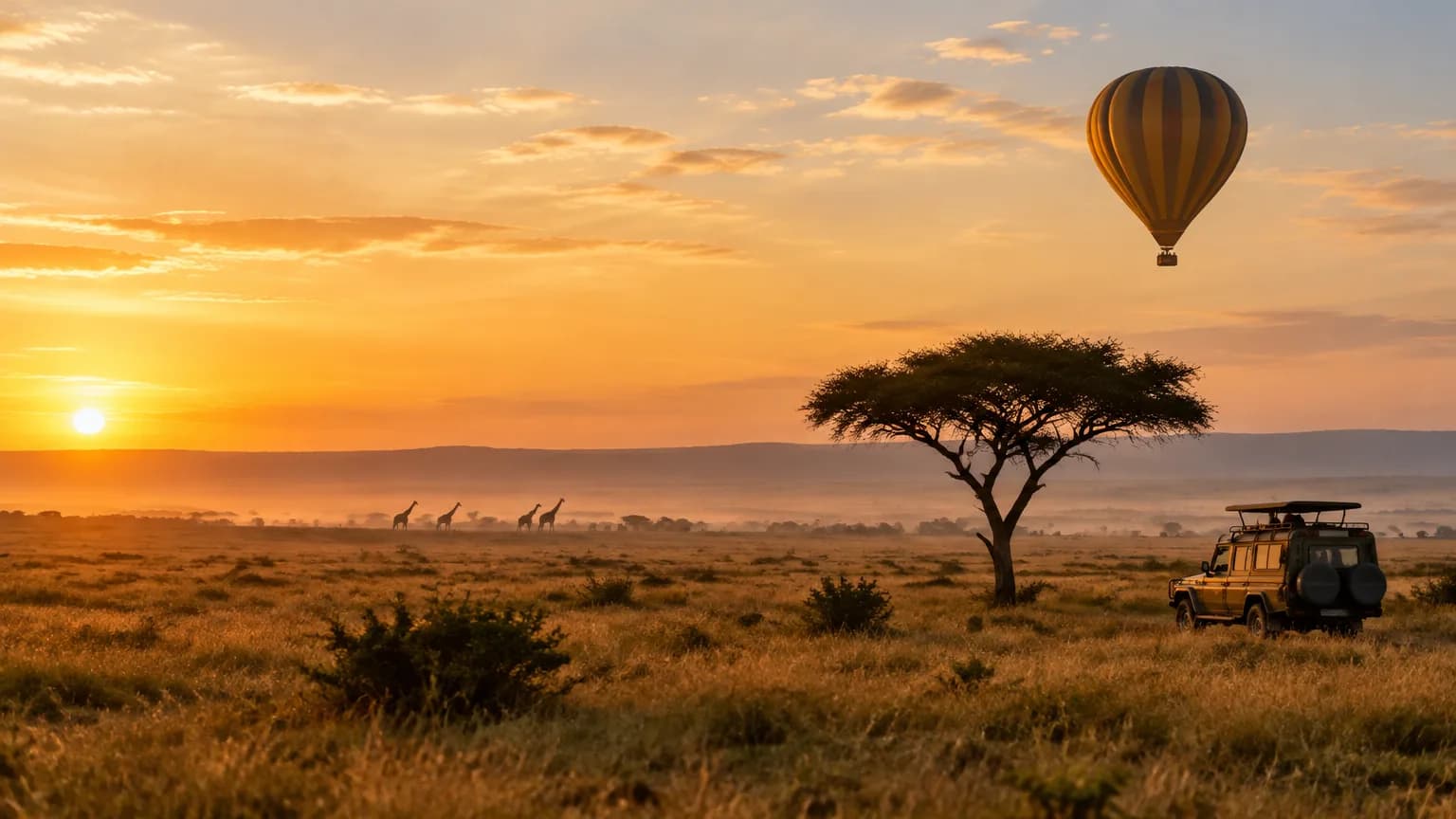
Game drives are done in open-top jeeps, which are listed as a family-friendly safari format in Tanzania. Stays are standard 3-4 star lodges and tented camps, with family or connecting rooms requested for each night. Details are in the day-by-day plan on this page.
Why does this route work for children and grandparents?
Drives between stops are short, roughly 1 to 4 hours, with a rest stop each time. The Ngorongoro Crater descent is a half-day outing, not a full-day marathon, and the day after it is a lighter drive back to Arusha.
- Early dinners: meals are planned for around 7pm so young children are not kept up late.
- Rest windows: the afternoons on Day 4 and Day 6, plus the whole of Day 7, are kept free.
- One base per area: you unpack once at Tarangire and once at Ngorongoro, instead of changing lodges every night.
How should families plan seats, rooms and rest stops?
Families travel in one private safari vehicle with a window seat for every guest, so nobody sits in the middle row for hours. Children's car seats are not usually available in safari vehicles, so ask for one at booking if you need it.
- Seating: grandparents are placed in the front or near the door for easier boarding, and kids sit by the pop-up roof for game viewing.
- Strollers: lodge paths and park tracks are uneven, so a baby carrier works better than a stroller.
- Wheelchairs: a folding wheelchair fits the vehicle boot, but crater tracks are rough. Tell us before booking so we can check each lodge's access.
- Rest stops: expect a toilet and snack halt roughly every 90 minutes on drive days.
Which highlights suit which age group?
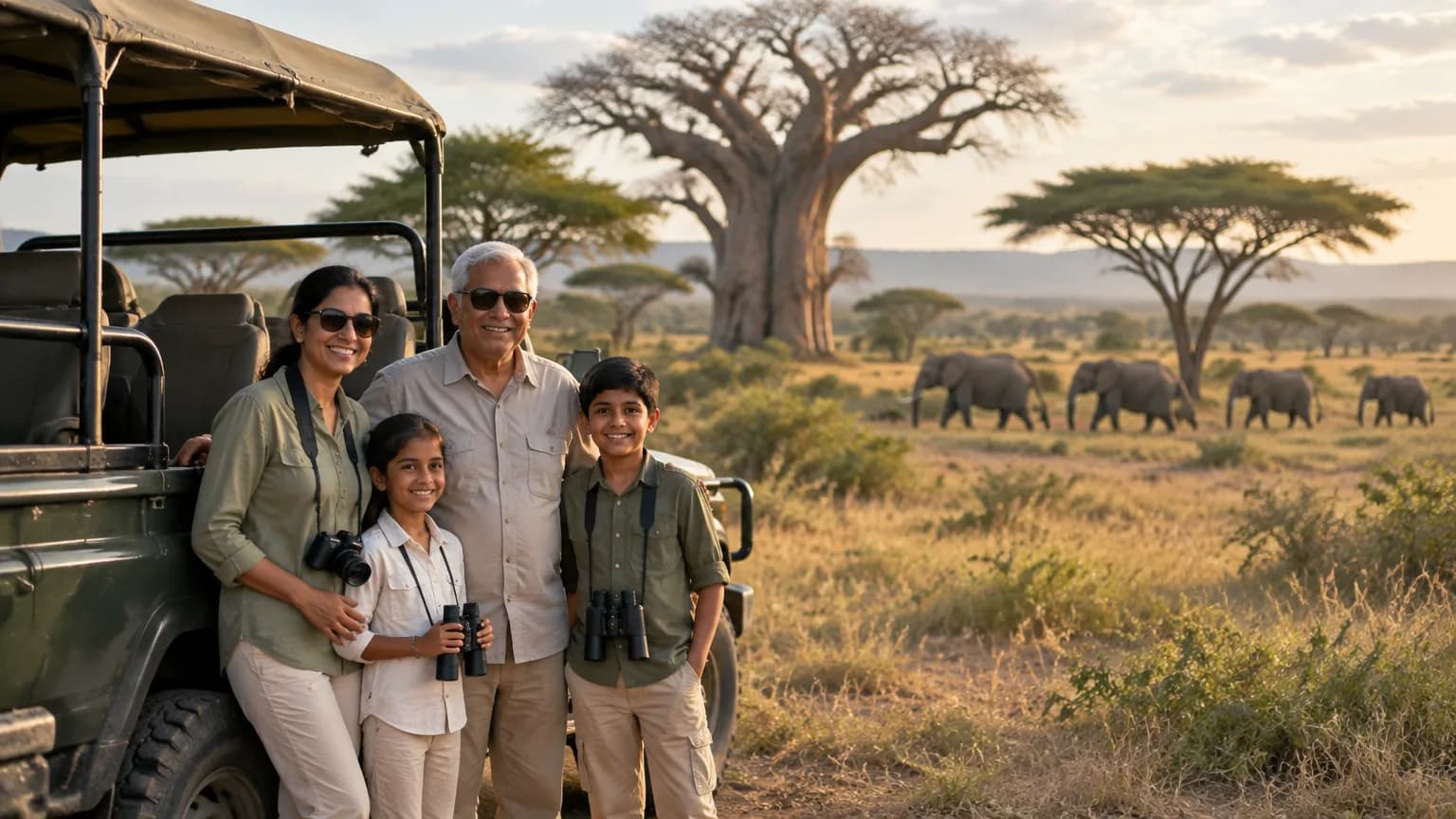
Younger children enjoy the elephant sightings and jeep rides, teenagers usually prefer the crater descent, and grandparents tend to value the unhurried rest days. The split below shows what each age group is likely to enjoy most.
Younger children (under 10)
- Elephant herds along the Tarangire River, seen from the open-top jeep.
- Spotting giraffes, zebras and warthogs from the pop-up roof.
- Pool time or a short guided walk at the lodge on the free afternoons.
Teenagers
- The Ngorongoro Crater descent, where rhinos and lions may be seen.
- Photography from the jeep, with the guide explaining animal behaviour.
- Optional Arusha National Park day trip on Day 7.
Grandparents
- Seated game viewing, with no hiking needed.
- Two free afternoons and a free day for rest.
- Short drives and early dinners that keep the daily rhythm gentle.
What is the daily pace and how long are the drives?
Mornings start between 6.30am and 7.30am for the best wildlife viewing, and afternoons are kept lighter. The longest single drive is about 4 hours, from the Ngorongoro highlands back to Arusha.
| Day | Drive | Approx. time |
|---|---|---|
| Day 1 | Kilimanjaro Airport to Arusha | About 1 hour |
| Day 2 | Arusha to Tarangire | About 2.5 hours |
| Day 4 | Tarangire to Ngorongoro highlands | About 3 hours |
| Day 6 | Ngorongoro to Arusha | About 4 hours |
| Day 8 | Arusha to Kilimanjaro Airport | About 1 hour |
Drive times are approximate and depend on road and weather conditions. Roads inside the parks are unpaved and can be bumpy, so nap time in the vehicle is usually short.
What are the room and meal options for families?
Family rooms or connecting rooms are requested at every stay, subject to availability at the lodge. Tented camps often offer family tents with extra beds, while hotels in Arusha usually have triple or quad rooms.
Vegetarian meals can be arranged at most lodges if the request is sent in advance. Jain meals without onion and garlic are harder to arrange in remote camps, so confirm at booking. Plain rice, bread, pasta, eggs and fruit are usually on offer for fussy eaters.
Five tips for travelling to Tanzania with kids and elders
- Carry warm layers. Mornings and evenings in the Ngorongoro highlands are cool, so pack a fleece or jacket for every traveller.
- Keep medicines in hand luggage. Pack prescriptions, fever and stomach medicines and a basic first-aid kit, since clinics are far from the parks.
- Check vaccination advice. Ask your doctor or the official Tanzanian health guidance whether a yellow fever certificate or malaria prevention is needed for your travel dates.
- Carry a working card or mobile money. Tanzania legally requires electronic payment for hotel, restaurant and tourism services under its 2026 payments order, so cash alone may not be accepted.
- Sun and insect protection. Pack sunscreen, hats, sunglasses and insect repellent, and keep passports with every traveller's ID handy, including for children.
Where do you stay on this Tanzania safari?
This trip uses standard 3-4 star lodges and tented camps in Arusha, near Tarangire and on or near the Ngorongoro rim. Hotel names are confirmed at booking, and the indicative tiers below are per person.
| Stay category | Indicative price per person | What to expect |
|---|---|---|
| Budget 3-star | Approx. Rs.77,500 | Simple lodges and basic tented camps, smaller rooms, limited facilities. |
| Standard 3-4 star (this package) | Rs.1,03,000 | Comfortable lodges and tented camps with private bathrooms and family rooms where available. |
| Premium 5-star | Approx. Rs.1,65,000 | Larger rooms, better views and more on-site facilities. |
Prices are land-only and indicative, with flights excluded. Final rates depend on travel dates and room type, so confirm at booking.
What is the best time and cost for a Tanzania holiday from India?
The best time to visit Tanzania from India is June to October, the dry season, with little rain and generally clear days. July to September is peak season, so lodges fill early and prices are highest.
- January to February: a short drier window with medium crowds and prices.
- March to May: heavy rain, lower prices, and some camps close seasonally.
- November to December: short rains that are usually brief but unpredictable.
As of 2026, this package starts at Rs.1,03,000 per person on twin sharing, land only. Park fees and the crater descent charge are set by Tanzanian authorities and can change, so confirm at booking. More route options are listed under Tanzania tour packages.
Visa, money and flights for Indian travellers to Tanzania
Indian passport holders need a visa to enter Tanzania. Apply through the official Tanzanian immigration portal and check it for the current fee, because we do not quote it here. Our Tanzania visa for Indians guide lists the documents to keep ready.
The local currency is the Tanzanian shilling. Card access can be unreliable in remote safari areas, so carry a working card and a mobile money option as backup. Flights from major Indian cities to Kilimanjaro International Airport usually involve a connection, so check the total journey time when you search for tickets. Fares and airlines are confirmed at booking.