
Field notes
Peru Getting Around Guide for Indians 2026
The Peru getting around guide for Indians starts with one rule: fly the long legs, take the train to Machu Picchu, use vans in the Sacred Valley, take boats on the Amazon and Lake Titicaca, and use app cabs or pre-booked transfers in cities. Fares vary, so confirm at booking.
Local transport options compared
Peru has no single transport mode that works everywhere. App cabs and pre-booked taxis suit cities, trains and vans suit the Machu Picchu region, and boats suit the Amazon and Lake Titicaca. Pick the mode by the terrain, not only by price.
- App cabs and hotel-arranged taxis: best for airport runs, late evenings and door-to-door city rides. Moderate cost. An app shows the fare before you ride, which removes most haggling.
- Street taxis: fine for short daytime hops if you agree the fare first. Moderate cost, but the highest risk of a disputed price.
- Local buses and colectivos: best for short hops between nearby towns if you are comfortable with fixed routes. Cheap.
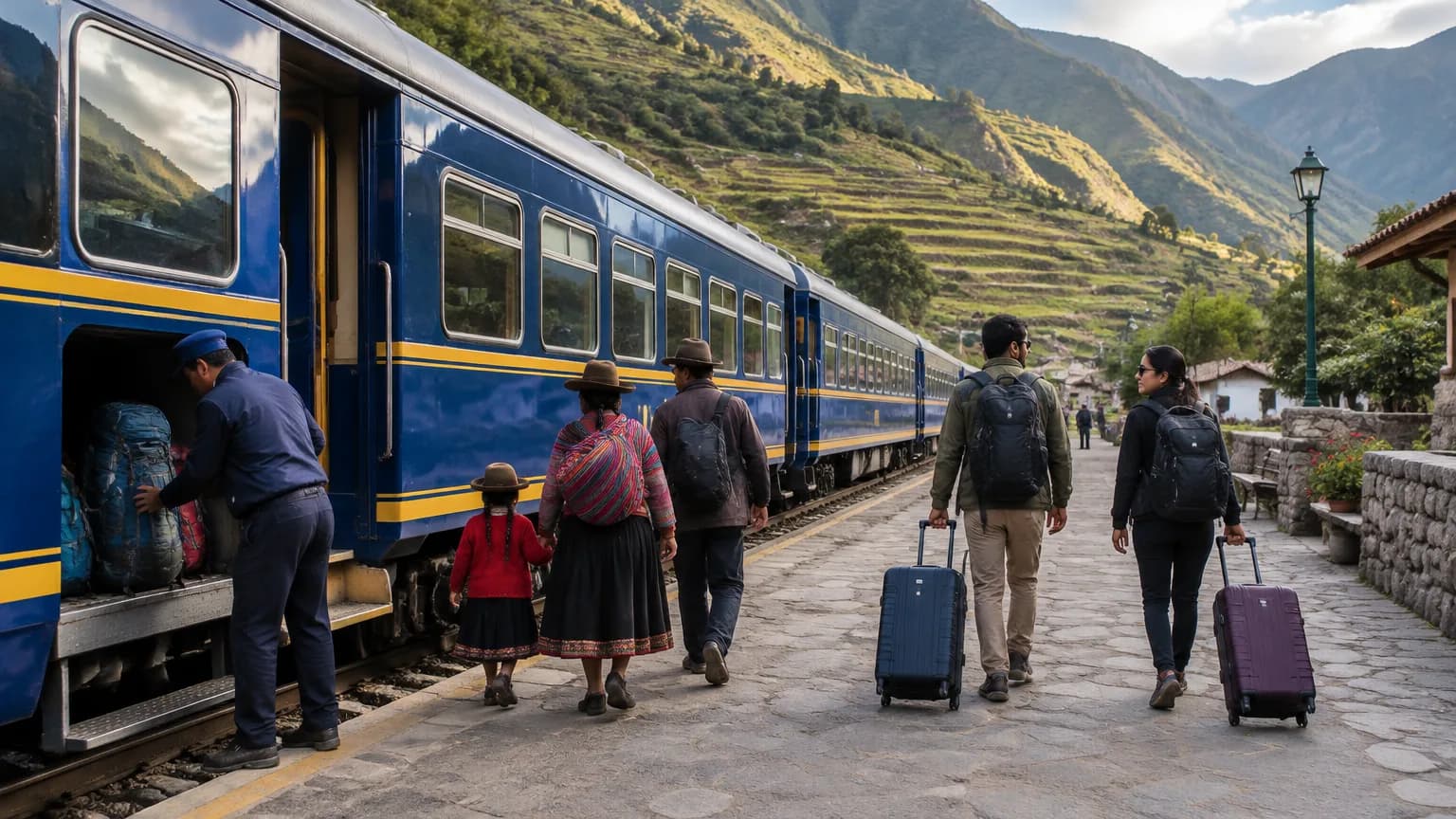
- Trains: the standard way to reach Machu Picchu through Andean mountain scenery. Pricey, and seats tighten in peak months.
- Vans: best for the Sacred Valley, where a van links nearby attractions with minimal walking. Moderate when shared, pricey when private.
- Boats: best for Amazon waterways, Lake Sandoval and Lake Titicaca cruises. Moderate to pricey depending on the operator.
- Car rental: rarely worth it on a first trip. Mountain roads, unfamiliar driving habits and parking in Cusco add stress without saving much time.
Most Peru taxis do not run on meters. Agree the total fare before you sit down, or book through an app so the price is fixed.
By rail, road or sea between regions
Between regions, Peru works in three patterns: domestic flights for long distances, rail for Machu Picchu, and boats where roads end. Road travel by van covers shorter links such as the Sacred Valley.
Flights
Lima to Cusco is a flight of about 1.33 hours, and it is the leg most trips start with. Cusco or Lima also connects to Puerto Maldonado by a 90-minute flight, after which boat transport takes over for Amazon lodges and Lake Sandoval. Cusco is reached through Lima with a domestic connection while Chinchero International Airport remains under construction, so plan for that connection rather than assuming a direct arrival.
Rail
PeruRail trains arrive at Machu Picchu Station in Machu Picchu town, and visitors then take a bus to the citadel. The road stretch from Aguas Calientes to Machu Picchu takes about 0.42 hours. Book the train seat and the citadel entry slot together, because the two timings have to match.
Road and van
The Sacred Valley is linked to nearby attractions by van, which suits families and older travellers who want less walking between sites. Long-distance buses exist between major cities, but on a short holiday a flight usually saves a full day.
Boat
Cruises operate on Lake Titicaca, and boat excursions run on Amazon waterways, including routes that reach Lake Sandoval. Manu's Río Manu route operates through ten authorised tourism operators that provide accommodation, guiding, transport and food. Book through an authorised operator and keep the inclusions in writing.
Getting from the airport or station to your stay
Pre-book your first transfer in every city. After a long flight from India, negotiating a fare at the arrivals gate with luggage in hand is the easiest way to get overcharged.
Lima's Jorge Chávez International Airport (LIM) is the main entry point for Indian travellers, who usually connect through a third country. From there, official airport taxi counters, app cabs and hotel pickups are the usual options. Expect the ride into the main tourist districts to be longer than the distance suggests, since Lima traffic is heavy at peak hours.
Cusco's Alejandro Velasco Astete International Airport (CUZ) is closer to the city centre, so the transfer to the historic centre is short. Altitude can make the first hour feel harder than the drive itself, so keep the first afternoon light.
Other airports on the network include Alfredo Rodríguez Ballón in Arequipa (AQP), Coronel FAP Francisco Secada Vignetta in Iquitos (IQT) and Capitán FAP Guillermo Concha Ibérico in Piura (PIU). All are best handled with a pre-booked pickup, especially on late arrivals.
If you arrive by train at Machu Picchu town, the bus to the citadel is the standard last-mile option. Buy the bus ticket from the official counter, not from touts near the station.
Entry paperwork is a separate task from transport. The Peru visa for Indians page covers what Indian passport holders need before flying.
Apps, passes and road safety
Ride-hailing apps are the simplest way to avoid fare disputes in Peru's larger cities. Check which apps are active in each city before you land, and keep a screenshot of the booking in case signal drops.
Navigation apps work well for walking routes in city centres, though signal can drop in mountain and Amazon areas. Download offline maps for Cusco, the Sacred Valley and Lima before you leave India.
Passes and cards
Peru has no national transport pass that suits a short visitor trip. City transit cards exist in places such as Lima, but on a typical week-long holiday they save little compared with app cabs and pre-booked transfers. Skip them unless you are staying in one city for several days and using public transport daily.
Night travel and scams
After dark, avoid unbooked street taxis and stick to app cabs or hotel-arranged cars. Common overcharging tricks include:
- Quoting a price per person instead of per vehicle.
- Claiming a meter or card machine is broken after the ride has started.
- Unofficial helpers at train stations offering to buy your bus ticket at a markup.
- Changing the agreed fare at the destination, citing luggage or waiting time.
Fix the price, the vehicle count and the drop-off point in the app or in writing before you move.
Solo and women travellers
App cabs and pre-booked transfers are generally the comfortable choice. Share your live location with someone at home, sit in the back seat, and avoid isolated bus stops late at night. Your hotel desk can arrange a trusted driver if you ask in advance.
Booking and cost tips
Book flights, Machu Picchu train seats, citadel entry and your first night's transfer in advance. Arrange city cabs, local buses and day vans on the spot, because those are easy to find and rarely sell out.
| Item | Book in advance or on the spot | Why |
|---|---|---|
| Lima to Cusco flight | In advance | Seats tighten in peak months and weather delays can disrupt Andean routes |
| Train to Machu Picchu | In advance | Pricey, limited seats, and the timing must match your citadel slot |
| Machu Picchu citadel entry | In advance | Entry is timed, so book it alongside the train |
| Airport transfer on arrival | In advance | Avoids negotiating after a long flight |
| Puerto Maldonado flight and boat | In advance | The flight is followed by boat transport to the lodge |
| City app cabs | On the spot | Fare is shown upfront in the app |
| Local buses and colectivos | On the spot | Cheap and frequent on short routes |
- Reserve the train and citadel slot together so the timings line up.
- Confirm whether a quoted price is per person or per vehicle, one way or return.
- Ask what waiting time, luggage and extra stops cost before you agree.
- Carry small notes for small operators, and check current prices before paying.
Families travelling with children usually do better with fewer, longer transfers than back-to-back flights. The Peru Lake Sandoval Family Holiday shows how a six-night Amazon-and-Andes plan can be paced around vans and boats.
Mistakes to avoid
Most transport problems in Peru come from tight connections, wrong assumptions about timing and unbooked peak-season seats. Each has a simple fix.
- Tight connections: do not stack a Cusco flight and a Machu Picchu train on the same morning. Keep a buffer day, since Andean weather can delay flights.
- Wrong airport or city: Lima and Cusco are different cities with different airport codes. Check LIM and CUZ on every ticket before you pay.
- Citadel slot booked after the train: entry is timed, so book both together.
- Altitude on arrival: a packed first day in Cusco makes everything harder. Use a van rather than long walking tours, and keep day one light.
- Unauthorised boat operators: not every seller at a dock is licensed. Book through an authorised operator and get inclusions in writing.
- Agreeing a fare after boarding: settle the price before the wheels move, and confirm it covers the whole vehicle.
- Buying train or bus tickets from touts: use official counters or the operator's own channel.
The Peru package page lists the trips available now, if you would like to see them side by side.