
Field notes
Myanmar Offbeat Experiences for Indians 2026
Myanmar offbeat experiences for Indians centre on places most first-timers skip: the caves and karst hills around Hpa-An, the Yangon circular train, the Pindaya to Inle Lake trail and quieter boat routes on Inle Lake. These stops suit travellers who can spare 3-4 extra nights, accept basic transport and want a slower, less packaged side of the country than the main Yangon, Bagan, Mandalay and Inle Lake circuit.
At a Glance
Offbeat Myanmar suits repeat visitors, slow travellers and anyone willing to trade polish for quieter roads. Plan 3-4 extra nights on top of the usual circuit, which itself runs about 10-14 nights. The detours are worth it if you value local texture over a checklist of famous sites.
Yangon is the practical base for the circular train and for onward buses. Hpa-An is reached by road from Yangon, while Pindaya and Inle Lake pair well on a trek. November to February gives the most reliable conditions for road travel and hiking, though you should confirm local details at booking. Shoulder months can be workable, but rain makes trails and secondary roads harder.
Transport connectivity and tourism gateway operations remain reduced compared with historical levels. That means schedules on smaller routes can change at short notice, so build slack into any plan that links smaller towns, and avoid stacking a long road transfer on the morning of an international flight. Indian travellers should also keep a printed copy of every booking, since mobile networks and online confirmations can be unreliable outside the main cities.
Offbeat Places Worth the Detour
Five places reward the extra effort, each for a different reason. The effort levels below assume you are already in Myanmar on the main circuit and are adding a stop rather than travelling to the country just for these places.
Hpa-An
Hpa-An is a smaller, less-visited regional town with its own local attractions and food, and it is described as less expensive than the major destinations. It differs from the main circuit because there is no landmark checklist here, just caves, karst hills and a working town going about its business. Days here tend to be unhurried, with time for local meals and walks around town. Effort is moderate, mostly a road transfer plus local transport once you arrive. Most visitors stay two nights, which gives one full day for the caves and hills and a half day for the town itself.
Yangon Circular Train
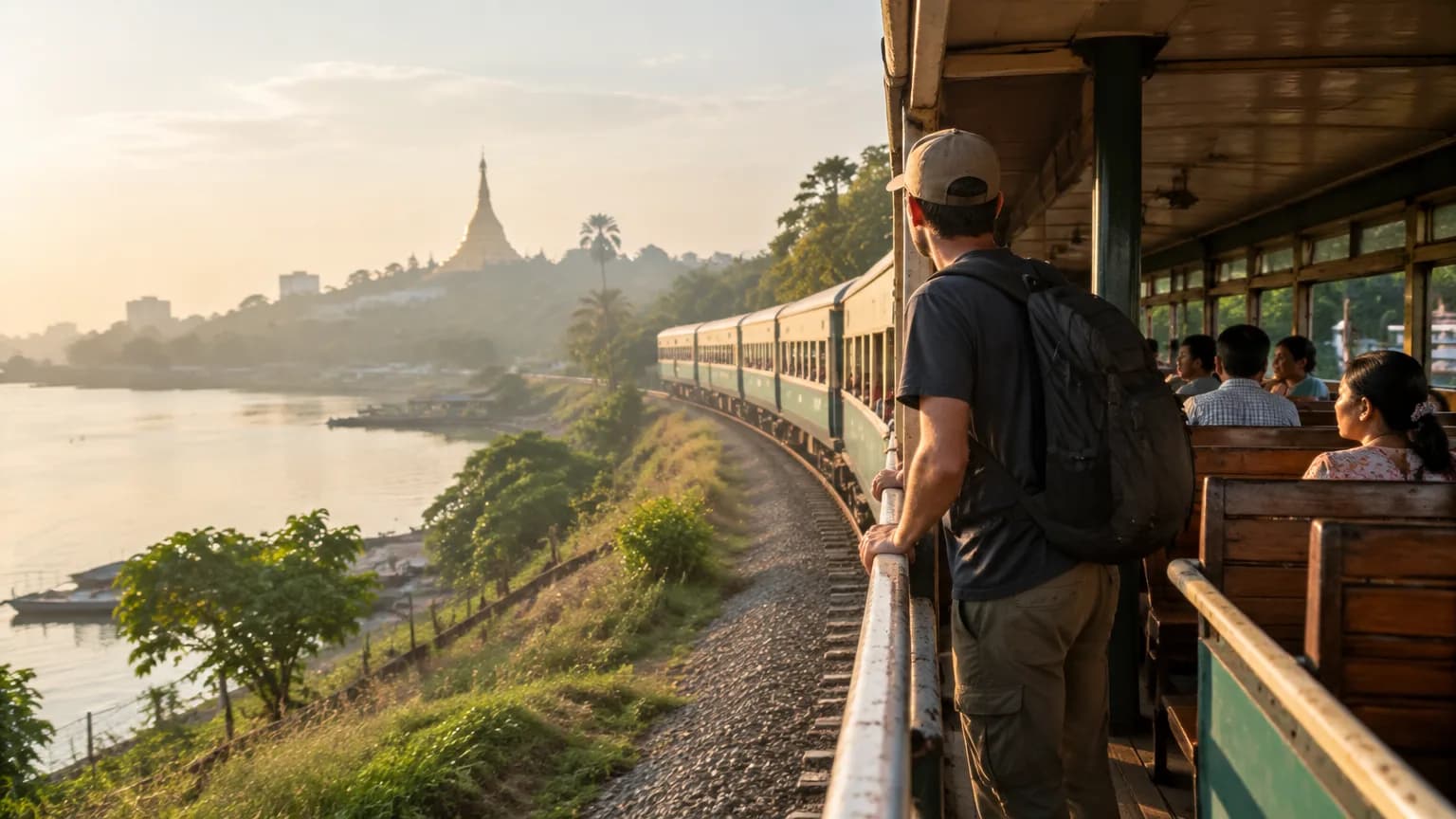
The circular train runs around Yangon and offers a local city experience rather than a standard landmark visit. You move through everyday neighbourhoods, markets and commuter life instead of a heritage site. Most visitors ride a section rather than the full loop, and you can hop off at stops that look interesting. Effort is low, since you start and finish in Yangon, but expect crowding at peak hours and bring water. Carry small notes for fares, because change is not always available on board.
Pindaya to Inle Lake Hike
This is an alternative trekking approach to the more commonly cited Kalaw route. You cover the ground on foot over one or more days instead of by bus, passing hill villages and farmland on the way. Effort is high, a guide is strongly advisable, and a reasonable fitness level is needed. Trails can be slippery after rain, so pack light and keep footwear with good grip. Ask your accommodation to arrange the guide and a transfer at the far end, so you are not left searching for a vehicle at the trail's finish.
Inle Lake by Boat
Boat tours are used for both travel and sightseeing on Inle Lake, so you can reach lakeside villages that road traffic does not serve well. The lake itself is the transport network here, and most villages are only reachable by water. Early starts give calmer water and softer light. Effort is low to moderate, depending on how far you go and how many stops you add. Agree the route and the price with the boatman before you set off, and confirm whether lunch and the entry fee to any monastery are included.
Bagan and Mandalay by E-Bike
E-bikes can be rented for exploring Bagan and Mandalay, letting you set your own pace between the well-known sites. You are not tied to a car or a group, and you can stop at smaller temples that tour groups tend to skip. Effort is low, though basic riding confidence helps, and the dusty roads reward careful riding and a helmet. Pick up the bike in the morning while temperatures are still manageable, and return it before dark, since lighting on rural roads is limited.
Getting to the Offbeat Places in Myanmar
Most offbeat stops are reached from Yangon, Mandalay or Inle Lake by bus, private car or on foot, with durations that vary by route and season. Confirm local details at booking, because schedules on smaller routes change and some connections run only once a day.
| Place | Nearest hub | Mode | Rough duration | Best months |
|---|---|---|---|---|
| Hpa-An | Yangon | Road transfer or bus | Varies by route | November to February |
| Yangon Circular Train | Yangon | Train | Half day or more | November to February |
| Pindaya to Inle Lake | Pindaya or Inle Lake | Trek | One or more days | November to February |
| Inle Lake villages | Inle Lake | Boat | Half day or more | November to February |
| Bagan and Mandalay | Bagan or Mandalay | E-bike | Half day or more | November to February |
On the main circuit, buses connect Yangon, Bagan, Mandalay and Inle Lake, with journey times that vary by route. Yangon to Bagan takes about 9-10 hours, Yangon to Mandalay about 8-10 hours, Mandalay to Bagan about 5-6 hours and Mandalay to Inle Lake about 8 hours. Domestic flights connect Yangon, Mandalay, Bagan and Heho when time is short, and they are the sensible choice if you are fitting an offbeat stop into a tight schedule.
Typical costs as of October 2026, for planning only: a Yangon to Bagan VIP bus runs about US$18-25, Yangon to Inle Lake about US$20-28, and Mandalay to Bagan about US$10-15. A Grab ride in Yangon is about US$2-8, an e-bike in Bagan about US$5-10 per day, and an Inle Lake boat tour about US$15-25. Check current prices before you book, because operators set their own fares.
Practical Steps for Booking a Detour
- Fix your entry and exit cities first, then slot the offbeat stop between them.
- Choose the mode for each leg: bus for fixed routes, private car for flexibility, boat or trek where the place requires it.
- Book the Pindaya to Inle Lake trek and any guide in advance, since availability is limited outside peak months.
- Leave a buffer of at least one day before your international flight home.
- Keep your passport, visa and booking confirmations together in one place, and carry photocopies for the places where you stay.
Places by Traveller Type
Match the detour to how you travel, because effort levels differ sharply between these places and some suit families far better than others.
- Families: best for the Yangon circular train and Inle Lake boat trips. Pros are short travel days, no trekking and easy stopping points for children. Cons are that Hpa-An and the Pindaya hike need long road or trail hours that younger children may find hard. If you want a beach add-on, the Myanmar Ngapali Beach Family Holiday shows how a coastal stay can fit around the same trip.
- Couples: best for Inle Lake by boat and Bagan by e-bike. Pros are a flexible pace, quiet mornings and easy pairing with the main circuit. Cons are that remote stops have limited stay options, so book early and check room standards before committing.
- Adventure travellers: best for the Pindaya to Inle Lake hike. Pros are a genuine trail alternative to the Kalaw route with varied landscape. Cons are that it needs a guide, a reasonable fitness level and weather that cooperates.
- Culture travellers: best for Hpa-An and the Yangon circular train. Pros are everyday local life rather than staged sights, and time to talk with people. Cons are less English signage and fewer visitor facilities, so a local guide helps.
Visiting Tips for Offbeat Myanmar
Carry cash, expect patchy mobile signal away from main towns and keep plans flexible. These habits solve most problems on a lesser-known Myanmar route, and they cost very little to prepare.
- Cash and ATMs: ATMs are reliable in Yangon, Mandalay and Bagan but thin in smaller stops. Carry enough local currency for several days and keep a backup card. Confirm withdrawal limits at booking, since they vary by bank.
- Mobile signal: coverage is reasonable in cities and along main highways, and drops in rural areas and on trekking routes. Download offline maps and save your hotel and driver contacts before leaving the hub.
- Opening times: religious sites and local markets often keep fixed morning or evening hours. Ask your driver or guide the day before, since timings shift by season and by holiday.
- Etiquette: remove footwear before entering pagodas and monasteries, dress modestly at religious sites and ask before photographing people. Avoid touching monks or pointing your feet at Buddha images.
- Permits and local rules: some areas need advance permission or a registered guide. Check the official source and confirm at booking before committing to a route.
- Entry rules: Indian travellers need a visa for Myanmar. See the Myanmar visa for Indians guide for the current process and documents to carry.
Common Mistakes to Avoid
Most problems on offbeat routes come from underestimating distance, skipping the cash check and leaving no slack before a flight. Build one flexible day into the plan, carry a copy of your passport and visa, and keep your driver's number handy. Booking the last bus of the day without a backup is the most frequent trip-breaker. Another common error is assuming a village stop will have a hotel room; check before you arrive and have a fallback town within reach.
The Myanmar package page lists the trips available now, if you would like to see them side by side.