

Myanmar at a Glance
Myanmar is a mainland Southeast Asian country bordered by India, Bangladesh, China, Laos and Thailand, with a coastline on the Andaman Sea and Bay of Bengal. For Indian travellers, this is a heritage-and-culture trip built around Buddhist sites, historic cities and lake country — not a beach-resort break.
The cool, dry season from November to February is the best window, with clear skies, low rainfall and daytime temperatures roughly between 15°C and 32°C. Budget 10 to 14 nights to cover the classic circuit properly. Yangon International Airport is the main gateway for arrivals from India, with domestic flights stitching together the onward legs to Bagan, Mandalay and Inle Lake.
Why Travellers Choose Myanmar
Three things pull people here: the ancient temple plains of Bagan, the Buddhist and royal heritage of Mandalay, and the lake and hill country around Inle Lake in Shan State. Each area is distinct enough to justify the domestic flights between them.
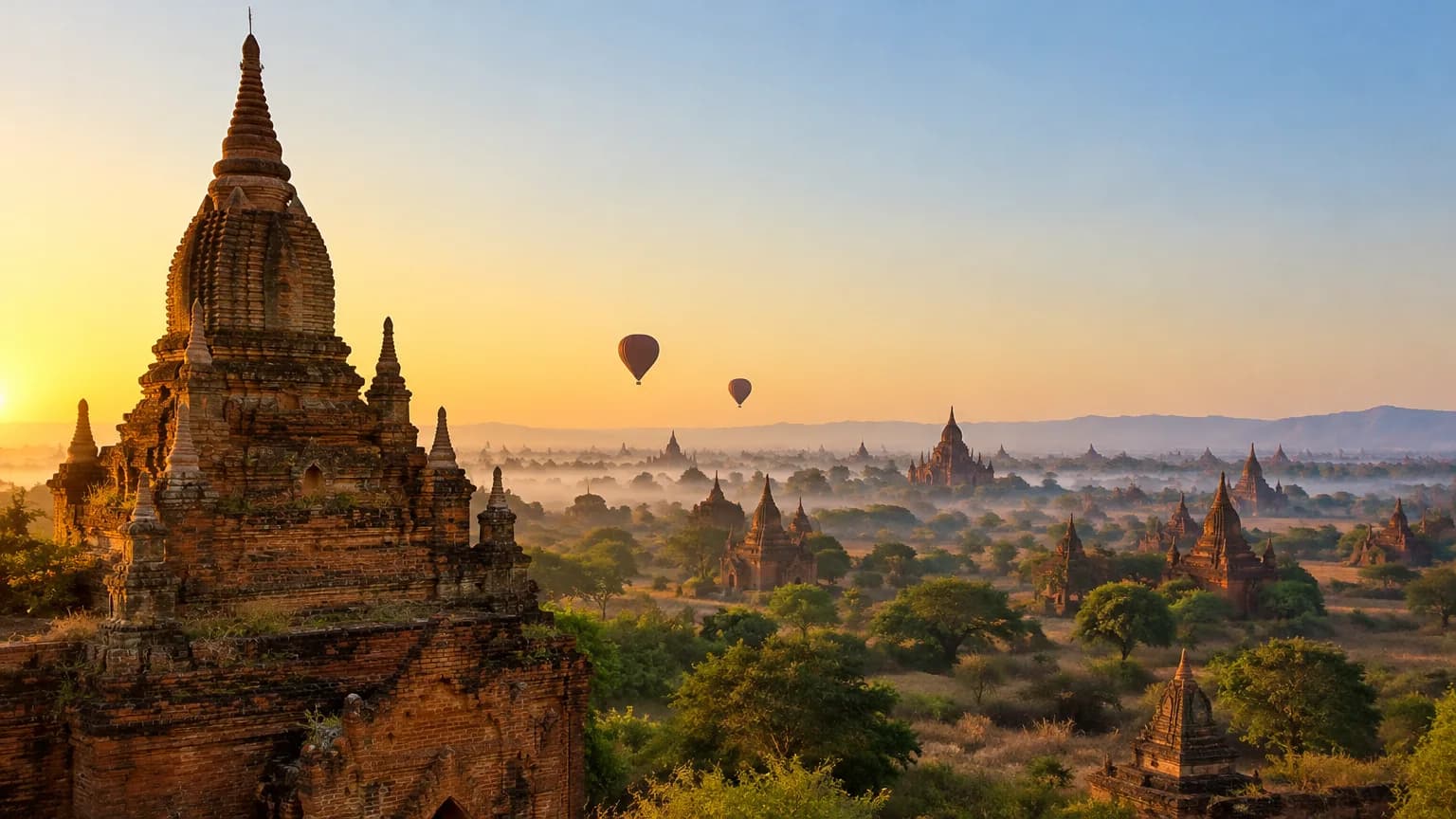
- Scale of the temple landscape. The Bagan Archaeological Zone is a wide plain of ancient Buddhist temples and pagodas that you cover by bus, private car or e-bike. Nothing else in Southeast Asia quite matches the sheer number of structures across open ground.
- Living Buddhist culture. Shwedagon Pagoda in Yangon is the country's principal spiritual sight. The Golden Rock at Mount Kyaiktiyo draws pilgrims who hike to the summit. Etiquette around monks and pagodas is woven into daily travel here in a way that feels different from more tourist-heavy destinations.
- Shorter haul from India. Flights from Delhi and Kolkata connect through Yangon International Airport, making this a shorter journey than Europe or the Americas for most Indian travellers. The cultural overlap — shared Buddhist traditions, familiar vegetarian food options — also eases the transition.
One trade-off to name clearly: transport connectivity and tourism gateway operations remain reduced compared with earlier years, and passenger traffic is still far below pre-pandemic levels. Build the trip around confirmed domestic flights, not overland routes.
Top Places and Areas in Myanmar
The destinations below form the core of any Myanmar holiday. Each entry notes why it appeals and one practical tip to help you plan.
- Yangon. The former capital is known for Shwedagon Pagoda and its colonial-era streets. The Yangon Circular Train — fare under US$1 as of 2026 — is a low-cost half-day introduction to the city without any walking strain.
- Bagan. The Archaeological Zone holds ancient Buddhist temples and pagodas across open plains. Nyaung-U Airport sits roughly 15 to 20 minutes by car from New Bagan, so the domestic flight saves a full road day.
- Mandalay. A central city on the Ayeyarwady River, associated with royal and Buddhist sites and a base for river travel. Pair it with Bagan rather than treating it as a single day stop — two nights is the practical minimum.
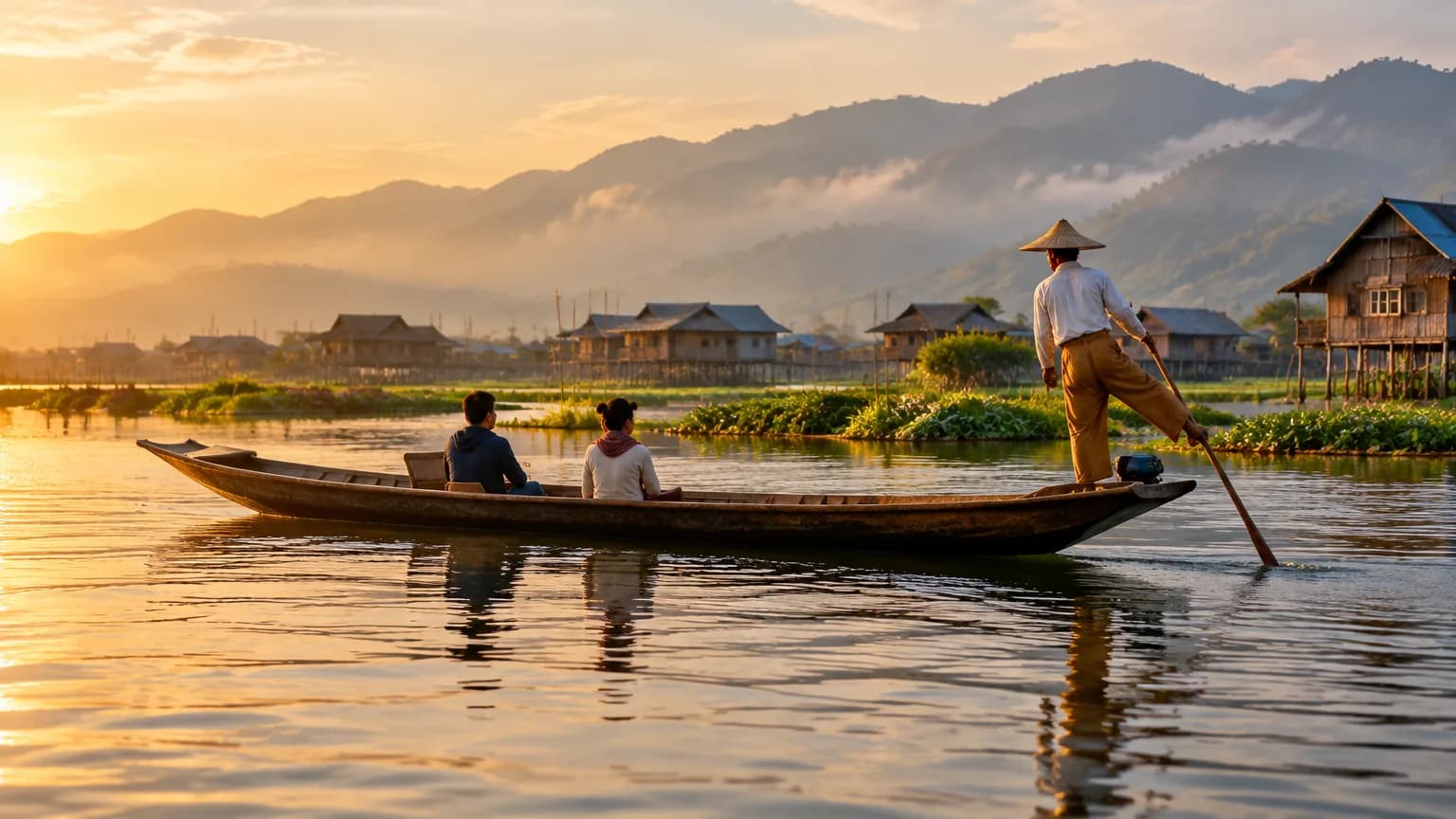
- Inle Lake and Nyaung Shwe. Lakeside villages, floating gardens and Shan hill country, served by Heho Airport. Boat tours are the standard way to see the lake and Intha daily life.
- Kalaw. A Shan State hill town and the usual starting point for the two-day trek to Inle Lake. Take it on only if you are fit for two full days of walking.
- Pindaya. Another Shan State starting point for hikes towards Inle Lake, with a calmer pace than Kalaw. Useful if you want the trek without the busiest trailhead.
- Golden Rock, Mount Kyaiktiyo. A pilgrimage site reached by hiking to the summit. Slot it early or late in the trip, since it is a half-day-plus detour from Yangon.
- Ngapali Beach. A coastal option near Thandwe for sea and boat activities. Keep it optional — it adds a domestic flight and two to three nights to the itinerary.
- Hpa-An. A Kayin State area with local food and lower regional prices than the main tourist centres. Good for travellers with spare days who want a different pace.
- Nyaung-U. The practical Bagan base with guesthouses, restaurants and market activity close to the temple plain. Stay here for easy access and mid-range choices.
Best Time to Go to Myanmar
November to February is the best time to visit Myanmar, with clear skies, low rainfall and comfortable daytime temperatures between 15°C and 32°C. January and December are particularly settled, with low crowds and lower prices.
March to mid-May is the hot season. Temperatures reach about 40°C in central Myanmar, especially around Bagan and Mandalay. April is the hottest month and also the peak-price period, but it brings Thingyan, the Myanmar New Year water festival — worth considering if the heat does not put you off. October and early November form a useful shoulder window: rainfall drops to moderate, crowds are low and prices stay low.
Avoid mid-May to October if possible. The southwest monsoon can seriously disrupt travel from mid-May, and July and August are usually the wettest months, particularly in Yangon and along the coast. September can be exceptionally wet and may affect road and flight conditions. If monsoon travel is your only option, keep the itinerary tight and rely on domestic flights rather than buses.