
Field notes
Austria Food & Cuisine Guide for Indians 2026
This Austria food & cuisine guide for Indians covers the dishes you will meet on most menus: Wiener schnitzel, Tafelspitz, goulash, dumplings and apple strudel. Vegetarians eat comfortably in the cities with a little checking. The one mistake to avoid is assuming a plain-sounding dish is meat-free, because broth, bacon and lard hide in many of them.
Dishes to try in Austria
Austrian cooking is built on breaded cutlets, boiled beef, paprika stews, dumplings and pastry. These local dishes in Austria appear across the country, though a few belong to particular regions, and the notes below say where to look.
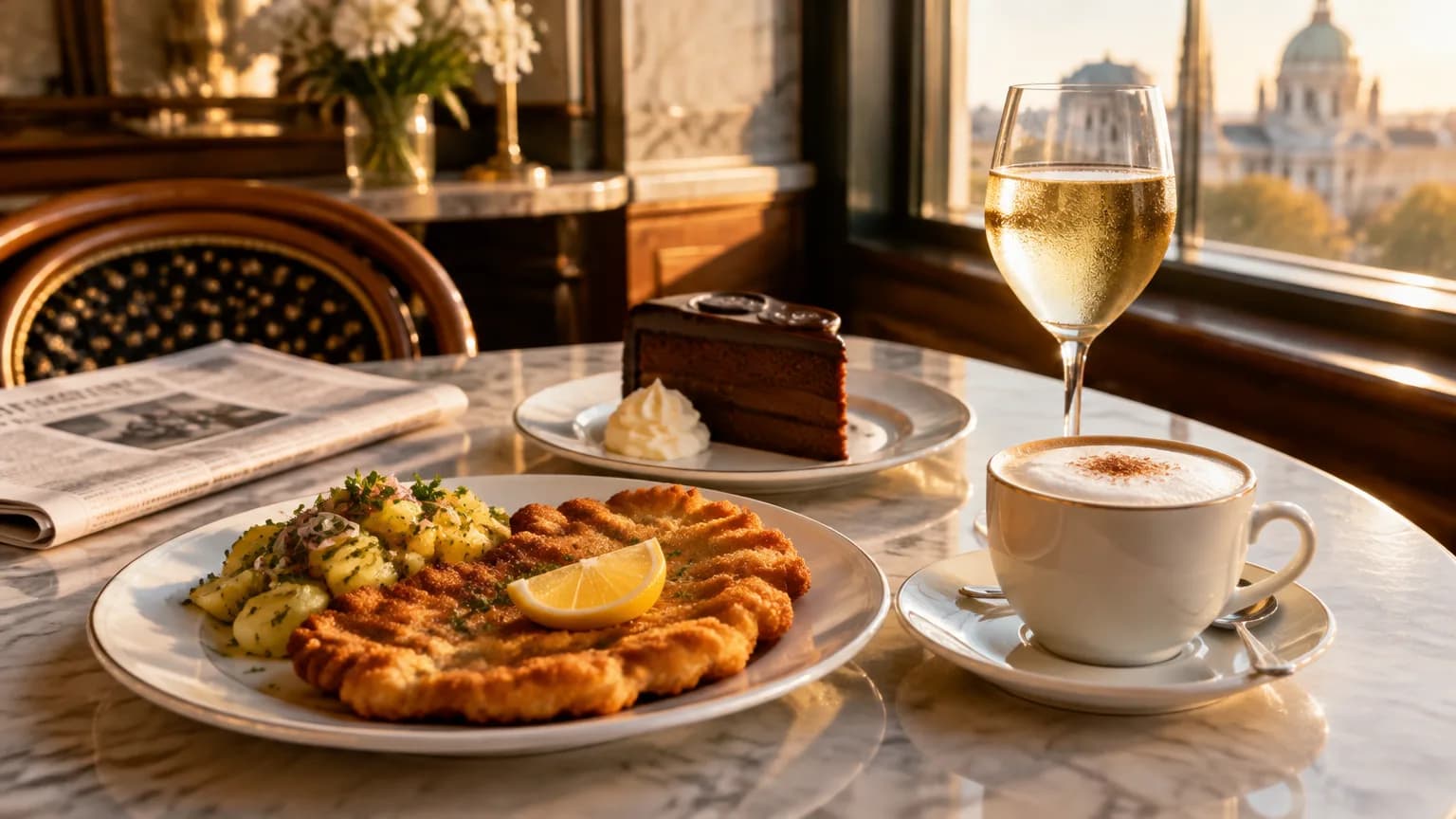
- Wiener schnitzel: a thin breaded cutlet fried until crisp, served with a lemon wedge and potato salad. Traditionally it is veal. Some casual places use pork, so ask which meat is on the plate. Vienna's Gasthäuser, the traditional taverns, are the natural place to order it.
- Tafelspitz: boiled beef served in its broth, usually with apple-horseradish and a chive sauce. It is a Vienna dish, found in old-style restaurants and coffee houses, and is a classic for a slow Sunday lunch.
- Goulash: a beef stew coloured with paprika, often eaten with bread or a dumpling. It is richer and gentler than an Indian curry, with warmth rather than chilli heat.
- Knödel: boiled dumplings made from bread, potato or semolina. They arrive as a side to meat dishes or floating in clear soup, and are common in mountain and lake regions.
- Kaiserschmarrn: a fluffy pancake torn into pieces, scattered with raisins, dusted with sugar and served with fruit compote. It is made with egg and butter and is meant for sharing. Vegetarians who eat egg will enjoy it; those who avoid egg should skip it.
- Apfelstrudel: thin pastry rolled around spiced apple and raisins, served warm with cream or ice cream. Coffee houses and most casual restaurants have it.
- Sachertorte: a dense chocolate cake with a layer of apricot jam. It sits at the centre of Vienna's coffee-house tradition and goes with a milky melange coffee.
- Fresh lake fish: a Salzkammergut meal, pan-fried and served with boiled potatoes. It is the dish to look for when you are in the lake district.
For drinks, Grüner Veltliner is the white wine linked with tastings in the Wachau. In Vienna, the melange, a coffee with steamed milk, is the usual order in a coffee house.
How to order a first Austrian meal
Austrian menus are usually split into soups, mains and desserts, with sides listed separately. A main such as schnitzel often comes with one side, while goulash may arrive alone, so check before you add extras. Portions are generous, and many travellers find that one main and a shared dessert is enough for a meal.
Menus in Vienna and other tourist areas are normally printed in English as well as German. In smaller towns, a photo on your phone of a dish you want, or simply pointing at the line on the menu, works well. Ask the server what the "Tagesteller" or "Tagesmenü" is, which means the dish or set menu of the day, since it is often the freshest and best-value choice.
Where to eat by area
Each part of Austria has its own eating habit: Vienna for coffee houses and sit-down meals, the Wachau for wine, the Salzkammergut for lake fish. Plan meals around the area you are in rather than looking for every dish everywhere.
Vienna
Vienna is the best-known food stop in Austria and is recommended for coffee-house visits. Spend an hour over a melange and a slice of cake, which is how locals use these rooms. Nobody will hurry you, and a single coffee can hold a table for a long afternoon.
Naschmarkt is the main market for produce, cheese, spices and casual lunches. Walk through once before choosing, since stalls differ in what they sell and how busy they are. Sausage stands, known as würstelstands, sell a quick hot snack around the centre. For a proper meal, choose a Gasthaus over a hotel restaurant.
The Wachau
The Wachau is recommended for Grüner Veltliner tasting. It is a wine valley along the Danube, and seasonal wine taverns called Heurigen serve young wine with simple cold plates of cheese, ham and bread. Treat it as a tasting and light-lunch stop. If you do not drink, ask for the grape juice or a soft drink and enjoy the setting and the food.
Vegetarians can build a plate from cheese, bread, pickles and salad at a Heuriger, though the cold meat platter is the default order, so say what you want when you sit down. Opening days at these taverns vary through the year, so confirm timings locally before planning a stop around one.
The Salzkammergut
The lake district is recommended for meals featuring fresh lake fish. Towns around the lakes serve it pan-fried with potatoes. Menus lean on local dairy, so cheese and cream appear often. Vegetarian choice is narrower here than in Vienna, so look for cheese dumplings, egg dishes and salads, and confirm ingredients with the server.
Salzburg and Innsbruck
Salzburg has a walkable old town with market stalls and traditional taverns. Innsbruck, set among the Alps, leans on cheese-based dishes such as Käsespätzle and on filling soups. Both cities also have Indian restaurants, which are useful when you want a familiar meal after several days of Austrian food.
Quick guide to eating areas
| Area | Best for | Vegetarian ease |
|---|---|---|
| Vienna | Coffee houses, Naschmarkt, Gasthäuser, sausage stands | Easiest, with the widest choice |
| The Wachau | Grüner Veltliner tasting and light cold-plate lunches | Manageable, built around cheese and bread |
| The Salzkammergut | Fresh lake fish and dairy-led menus | Narrower, so ask about each dish |
| Salzburg and Innsbruck | Old-town taverns and cheese dishes | Good, with Indian restaurants as a fallback |
Vegetarian, Jain and other dietary needs
Vegetarian food is straightforward in Vienna, Salzburg and Innsbruck and manageable elsewhere with a few direct questions. Jain food is harder, because Austrian cooking uses onion, garlic and root vegetables freely and builds many soups and sauces on meat broth.
What is usually easy
- Käsespätzle: egg noodles baked with cheese and topped with fried onion. Ask for it without the onion topping if you avoid it.
- Potato salad: choose the oil-and-vinegar style and confirm there is no bacon.
- Breakfast: bread, butter, cheese, jam, yoghurt and fruit are standard at hotels and cafés.
- Vegetable soups and salads: good options once you confirm the base is not meat stock.
- Apple strudel and most cakes: generally vegetarian, though some cream fillings use gelatine.
Austria vegetarian food also includes baked mushroom dishes, spinach dumplings and fried cheese with a sauce on the side. Names change by region, so describe what you want rather than relying on one dish name.
Hidden non-vegetarian ingredients
Bacon turns up in potato salad and some dumplings. Beef or chicken broth is the base of many soups, sauces and gravies. Lard is used in some pastry, and a few dressings contain anchovy. A plain-looking dish can still carry any of these.
The simplest question to ask is: "Is there meat, fish, egg or bacon in this, including the stock?" Staff in cities usually speak English and will check with the kitchen. Saying "vegetarisch" helps, but it does not always mean the stock is meat-free, so ask about the base as well.
A few phrases worth saving on your phone
- "Ohne Fleisch": without meat.
- "Ohne Speck": without bacon.
- "Ohne Ei": without egg.
- "Ohne Zwiebel und Knoblauch": without onion and garlic.
- "Ist die Suppe mit Fleischbrühe?": is the soup made with meat broth?
Show the phrase on your screen and let the server read it. That avoids pronunciation trouble and gives the kitchen a clear instruction.
Jain, halal and egg-free eating
For Jain travellers, the practical approach is to stay where breakfast is flexible, carry dry snacks from India, and rely on Indian restaurants for main meals. Austrian menus do not label dishes as Jain, so a direct conversation works better than hunting for a symbol. If you travel with a group, tell your tour manager about dietary needs before the trip so meals can be planned ahead.
Halal meat is available in Vienna and other larger cities through dedicated shops and restaurants. Egg-free eating needs care, because dumplings, pancakes, noodles and many desserts contain egg.
Common mistakes vegetarians make
- Ordering vegetable soup without asking about the stock.
- Assuming a side of dumplings or potatoes is free of bacon or lard.
- Taking "vegetarisch" on a menu to mean vegan, or egg-free.
- Leaving dietary needs until the table, instead of mentioning them when you sit down.
- Eating at a Heuriger or tavern without checking what the shared platter contains.
Street food safety and eating etiquette
Austria street food is mostly sausage stands, market snacks and bakery items, and it is generally safe. The usual advice applies: choose busy stalls, eat hot food hot, and avoid anything that has been sitting uncovered.
Practical rules for stalls and water
- Pick stalls with a queue and fast turnover, since fresh food moves quickly.
- Eat cooked items while they are hot rather than carrying them for later.
- Tap water is widely drinkable in Austria, so a refillable bottle works well. Confirm at your hotel if you are unsure.
- Carry hand sanitiser for market stalls where there is nowhere to wash.
- Be cautious with anything that looks reheated or has stood out in the sun.
If you have a sensitive stomach, start with bakery items and cooked dishes for the first day or two, then widen your choices. Travellers from India sometimes find rich cream and cheese heavy at first, so spacing heavier meals through the trip helps.
Etiquette at the table
Etiquette is relaxed but has a few habits worth knowing. Waiters do not bring the bill unprompted, so ask for it by saying "Zahlen, bitte" when you are ready. Tipping is not compulsory but is expected in sit-down places: round up the bill or add a small percentage, and tell the server the total you want to pay rather than leaving money on the table.
Table water is usually charged, and bread brought to the table may be charged as well. At Christmas markets, mugs often carry a deposit that you get back when you return the mug, so keep the token or receipt.
Wait to be seated in sit-down restaurants, and keep a hand free when sharing a table in a busy tavern, since strangers may be seated beside you. Keep voices low in coffee houses, and do not expect the table to be turned over for the next guest.
What meals cost
Meal costs in Austria depend on the kind of place more than on the city. A sausage stand or market snack is the cheapest way to eat, a café or bakery lunch sits in the middle, and a sit-down Gasthaus or restaurant dinner with a drink costs the most. Check current prices at the venue, as menus change with season and location.
| Type of place | What you get | How the cost compares |
|---|---|---|
| Sausage stand or market stall | A hot snack, a sandwich or a pastry | Lowest of the three |
| Café or bakery | Coffee, cake, a light lunch or breakfast | Mid-range |
| Gasthaus or sit-down restaurant | A full meal with a main, a side and a drink | Highest of the three |
Several things push a bill up: charged table water, bread, and drinks, especially wine and coffee. Lunch menus are usually better value than the same dishes at dinner. Bakery breakfasts and supermarket food keep daily spending down, and many travellers mix a restaurant dinner with simpler meals earlier in the day.
Ways to keep food spending sensible
- Share a large dessert such as Kaiserschmarrn between two people.
- Choose the dish or menu of the day at lunch.
- Pick up fruit, bread and cheese from a market or supermarket for a picnic.
- Check whether your hotel breakfast is included, since a full breakfast can carry you to a late lunch.
- Look at the drinks section first, because wine and coffee can add noticeably to a bill.
Card payment is common in Austria, but small stalls and some taverns prefer cash, so carry a little euro cash. Check with your bank before you travel about foreign card charges and exchange rates.
Planning your meals in Austria
A sensible approach is to eat the heavier, traditional meal at lunch, when menus cost less, and keep dinner lighter. Build one coffee-house stop into a Vienna day and one wine stop into a Wachau day. Use Indian restaurants in the larger cities as a break rather than a default.
Pack a small stock of dry snacks, such as roasted chana, thepla or packaged namkeen, for long road days and for any day when menu choice is limited. Cities, coach stops and supermarkets all sell bread, fruit and yoghurt, so a simple meal is rarely hard to assemble. Tell your hotel about dietary needs at check-in so breakfast is easier to arrange.
When you have settled on dates, the Austria package page is a good place to see what a full trip includes.