
Field notes
Austria Packing List for Indians 2026
An Austria packing list for Indians is decided by two things: the month of travel and the activities booked. Winter needs insulated layers and grip boots, summer needs light clothes plus a rain shell, and spring and autumn need both. The three items most often forgotten are a Type C or Type F plug adapter, a compact rain jacket and a copy of prescriptions.
What the weather in Austria demands
Austria has four distinct seasons, and temperature plus rain, not the calendar alone, decide what goes in the bag. Cold months need stacked warm layers, warm months need breathable clothes, and every month needs rain protection.
| Season | Temperature range | Rainy days per month | Crowds and prices |
|---|---|---|---|
| Winter (December to February) | -1 to 5 C | 8 to 9 | High crowds, peak prices |
| Spring (March to May) | 4 to 21 C | 9 to 10 | Medium crowds, medium prices |
| Summer (June to August) | 18 to 27 C | 10 to 11 | High crowds, peak prices |
| Autumn (September to November) | 4 to 21 C | 8 to 9 | Medium crowds, low prices by November |
Winter is cold, with reliable mountain snow and peak ski conditions. Summer is warm to hot in the lower valleys, and thunderstorms can occur in Alpine valleys in July and August. Spring is a milder transition, with Alpine trails and resorts reopening progressively. Autumn starts mild, then turns colder.
What this means for layers
For December to February, plan a thermal base layer, a fleece or down mid-layer and a windproof, waterproof outer shell. For June to August, plan a breathable base, one light layer for evenings and a packable rain jacket that stays in your daypack. March, April, May, September and October can swing by 10 C within a week, so pack layers that stack rather than one heavy coat.
Weather risks that affect your bag
- Snow and ice: winter conditions can close mountain roads and raise avalanche risk, so boots with a deep tread matter more than style.
- Thunderstorms: July and August valley storms make a rain shell non-negotiable even on sunny mornings.
- Autumn fog: fog and high-pass closures become more common, so keep a phone torch and a downloaded offline map handy.
- Road closure: the Silvretta High Alpine Road is closed until 2030 because of rockfalls and reconstruction, so do not build a self-drive route around it.
Essentials checklist
The fixed items for any Austria packing checklist are documents, power, medicines and daily-use basics, and none of them change with the season. Keep them in one pouch in your cabin bag so nothing important sits in checked luggage.
Documents
- Passport with comfortable validity beyond your return date, plus a photocopy and a phone photo of the data page
- Visa and entry paperwork, printed and saved offline; the Austria visa for Indians guide lists the current document set
- Travel insurance policy copy with the emergency assistance number
- Printed hotel and transfer bookings for immigration or airport questions
- Emergency contacts written on paper, in case your phone dies
Power and connectivity
- Type C or Type F plug adapter, since Austria uses 230 V and 50 Hz (according to the official Austria tourism planning pages)
- Power bank, multi-port USB charger and a spare cable
- Offline maps for the cities and trails you plan to use
- Data plan: compare your Indian roaming pack with a local or eSIM option before you fly
Health and daily items
- Regular prescription medicines in original strips, with the doctor's prescription, in cabin baggage
- Small kit: paracetamol, ORS, antacid, band-aids, blister plasters and motion-sickness tablets
- Reusable water bottle, hand sanitiser and tissues
- Foldable daypack for day trips
- Debit or credit card with international use enabled, plus a little euro cash for small purchases
Carry a few extra days of regular medicine in case your return is delayed. Indian brand names are hard to match on a pharmacy shelf abroad, so the prescription slip saves time if you need a substitute.
Clothing and footwear by season
Match your Austria clothes to the season you have booked, then add one activity-specific layer. Footwear matters more than any single garment, because most Austria days involve walking on cobbles, trails or icy pavements.
Winter, December to February
- 2 to 3 thermal base layers (tops and bottoms)
- Fleece or down mid-layer
- Insulated waterproof coat with a hood
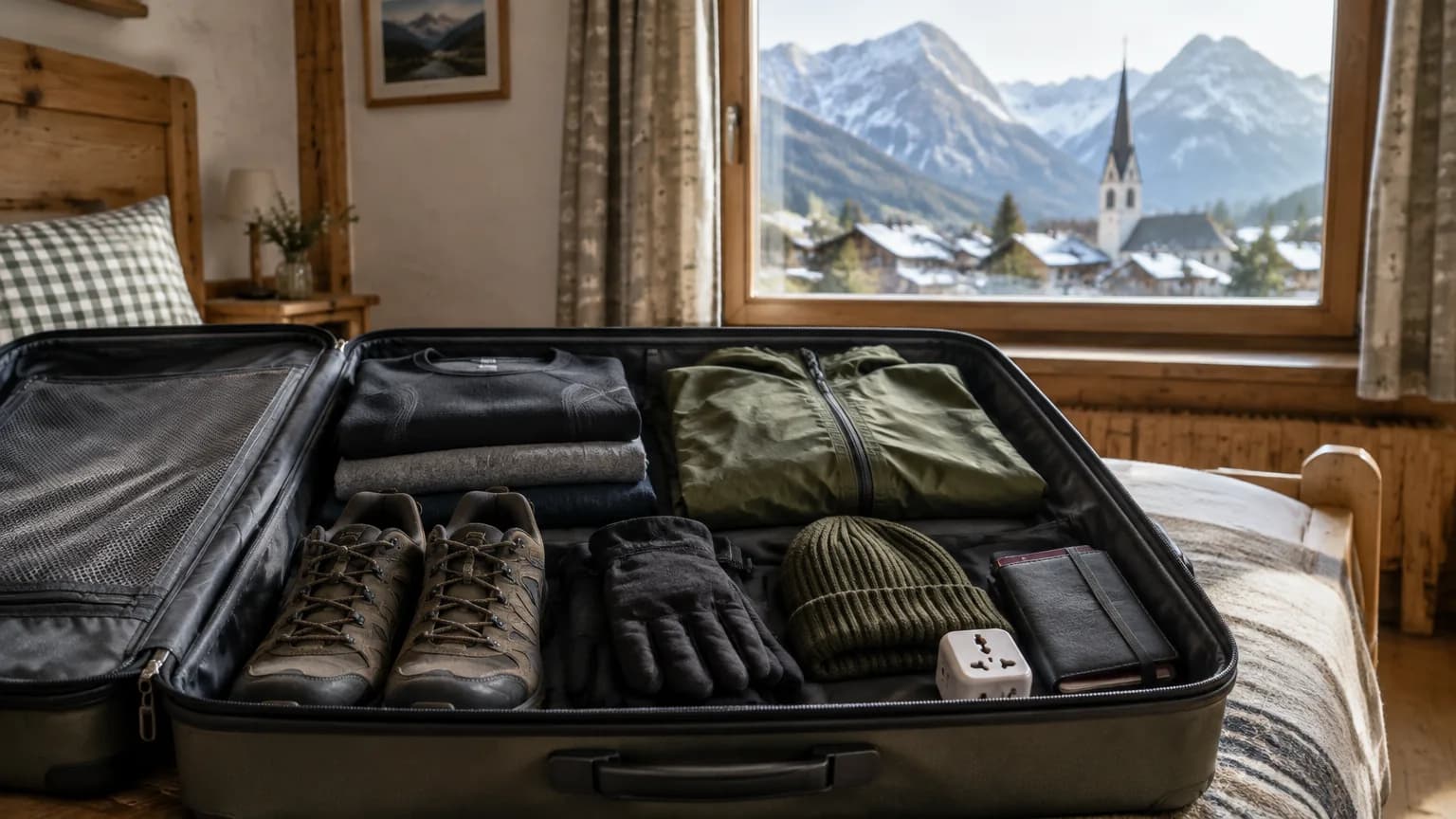
- Gloves, beanie, scarf and 4 to 5 pairs of warm socks
- Waterproof boots with deep tread for ice on pavements and station platforms
- Lip balm and moisturiser, since cold air dries skin quickly
Spring, March to May
- T-shirts and one light sweater
- Packable rain shell
- Jeans or travel trousers
- Comfortable walking shoes
- One warm layer and light gloves for early March, when mornings sit near 4 C
Summer, June to August
- Cotton or quick-dry shirts and shorts
- One light jacket for cool Alpine evenings
- Packable rain shell for afternoon thunderstorms
- Sun hat, sunglasses and sunscreen
- Broken-in walking shoes; add trekking shoes if you plan mountain trails
Autumn, September to November
- Stackable layers that work from 21 C in September down to 4 C in November
- Medium jacket and rain shell
- Closed shoes with grip
- Scarf and light gloves from late October
City days in Vienna and Salzburg
Smart-casual covers almost every city day. The Vienna museum and imperial route, with the Kunsthistorisches Museum, Belvedere, Vienna State Opera and Hofburg imperial apartments, involves long indoor walks, so wear your most comfortable shoes. A collared shirt or a simple dress is enough for an evening at the opera. Salzburg's old town and Mozart's Birthplace are compact and walking-heavy, so plan layers you can remove indoors.
Gear for activities
Pack gear only for activities you have actually booked, because rentals are common at Austrian resorts and trail hubs. Anything personal-fit, such as socks, gloves and base layers, is worth carrying from home.
Hiking and snowshoeing
Alpine hiking in Austria runs from relaxed walks to challenging mountain routes. A 20 to 30 litre daypack, ankle-support trekking shoes, a rain shell, a hat, sunscreen and a refillable bottle cover most days. Snowshoeing is listed among the activities in Hohe Tauern National Park, so winter visitors should add waterproof gaiters, warm gloves and a spare pair of socks.
Mountain biking
Mountain biking is also listed among the Hohe Tauern National Park activities. Bring padded cycling shorts, fingerless or full-finger gloves and eye protection if you ride often, and confirm helmet and bike rental with the local operator at booking.
Skiing in the Tyrolean Alps
The Tyrolean Alps are recommended for skiing and hiking. First-time skiers can travel light and rent jackets, pants, helmets and goggles at the resort, then carry only thermal base layers, ski socks, high-altitude sunscreen and lip balm from India. Confirm rental sizes and availability at booking, especially in peak weeks.
Family days in national parks
Austrian national parks offer workshops, children's exhibitions, ranger tours and adventure trails, and family hiking paths use interactive stations to keep children engaged. Pack a small backpack per adult, snacks, wet wipes, a refillable bottle and a rain cover for any pram or carrier. The 1.8 km circular trail in Thayatal National Park is described as suitable for families and needs only sturdy walking shoes.
Churches, monasteries and village stays
Churches and monasteries across Austria expect covered shoulders and knees, and some ask for silence during services. A light scarf or stole in your daypack covers shoulders and doubles as sun protection. Village restaurants and guesthouses are relaxed, so normal daywear is enough.
What to leave at home or buy there
Heavy coats, umbrellas, full-size toiletries and bulk snacks are the items most worth leaving behind. Austrian supermarkets, pharmacies and outdoor stores are well stocked, and buying locally saves baggage weight and avoids leaks in transit.
- Leave the bulky coat if you are skiing: rent a ski jacket at the resort instead of carrying one from India.
- Leave the umbrella: a hooded rain shell handles wind and rain better in the mountains.
- Buy toiletries there: shampoo, toothpaste, sunscreen and sanitary items are easy to replace.
- Limit packaged snacks: carry a few for the flight and the first day, then use local supermarkets.
- Skip formal shoes: one pair of smart-casual shoes covers dinners and museum days unless you have a confirmed event.
- Skip the travel iron or kettle: most hotels provide them on request.
The one category worth carrying from home is regular prescription medicine, packed with the prescription. Everything else in daily use can be replaced on arrival.
When you have settled on dates, the Austria package page is a good place to see what a full trip includes.