
Field notes
Austria Main Travel Guide for Indians 2026
Austria main travel guide for Indians: Austria is a landlocked Central European country of Habsburg cities and Alpine valleys, entered mostly through Vienna. Schönbrunn Palace and Salzburg's old town are the signature sights, May, June, September and October are the easiest months, and couples, families and first-time Europe visitors get cities and mountains in one trip.
Austria at a Glance
Austria is a landlocked Central European country where Habsburg-era cities sit beside Alpine valleys, lakes and national parks. Vienna is the main gateway, and a first trip usually runs seven to nine nights.
| Detail | What to know |
|---|---|
| Region | Central Europe, with the Alps covering much of the country |
| Main areas | Vienna and the east, Salzburg and the Salzkammergut, Tyrol and Innsbruck, Styria and Graz |
| Best months | May, June, September and October for mild weather and medium crowds; December to February for skiing |
| Ideal first-trip length | Three nights in Vienna, two to three in Salzburg, the rest around Hallstatt or Innsbruck (five to nine nights in package examples) |
| Main gateway | Vienna International Airport (VIE); Salzburg (SZG) and Innsbruck (INN) are regional alternatives |
| Entry for Indian passport holders | A Schengen short-stay visa for tourism; confirm the current checklist with the official Austrian mission or an authorised application centre |
| Currency and power | Euro; 230 V, 50 Hz, Type C and Type F plugs |
There is no coastline, so this is a trip of palaces, museums, old towns, lakes and mountains rather than beaches. The sections below take each piece in turn without going deep on any one, so you can decide what to plan first.
Austria breaks down into four areas that matter to a first-time visitor. Vienna and the east carry the imperial museums and palaces. Salzburg and the Salzkammergut combine a compact old town with lakeside scenery. Tyrol and Innsbruck open the western Alps for skiing and hiking. Styria and Graz are quieter and suit a longer trip. Most first itineraries link the first two or three of these and leave the rest for later.
Because Austria is small and well connected by rail, you do not need to choose between cities and mountains. The practical choice is how many bases to use. Two or three bases are comfortable in a week. Four or more start to eat into sightseeing time with packing, check-outs and station transfers.
Why Travellers Choose Austria
Indian travellers choose Austria for three reasons: compact historic cities, real Alpine terrain close to them, and a rail network that works without a rental car.
Culture in walkable cities. Vienna holds the Kunsthistorisches Museum, Belvedere, the Hofburg imperial apartments, the Vienna State Opera and St. Stephen's Cathedral. Salzburg's old town, Hohensalzburg Fortress and Mirabell Palace sit in a centre small enough for a two or three night break.
Mountains without expedition planning. Hiking routes range from relaxed walks to demanding mountain trails, the Tyrolean Alps are recommended for skiing and hiking, and Austrian national parks run ranger tours, boat tours, children's exhibitions and family trails.
Ease of moving around. Intercity rail links Vienna, Salzburg, Innsbruck and Graz, airport-to-centre links in Vienna, Salzburg and Innsbruck take 15 to 25 minutes, and emergency numbers are standard across the country (112 for general emergencies). For a first-time Europe trip, that predictability matters as much as the scenery.
There is also a practical reason for families and older travellers. Distances between the main stops are manageable, hotel check-ins are central, and the national parks publish family programmes with adventure stations and interactive paths, so children are not just dragged between museums. Honeymooners get a different kind of ease: coffee-house mornings in Vienna, a Grüner Veltliner tasting in the Wachau and a long fish lunch on a Salzkammergut lake all fit into one route without long drives.
Compared with a multi-country Europe circuit, Austria lets you stay in one country, use one currency and one set of rules, and still see a palace city, an old town and a mountain lake. That is why it works well as a first or second Europe trip.
Top Places to Visit
Start with Vienna and Salzburg, then add one Alpine base. These ten places cover a well-rounded first visit.
- Vienna is the capital, the main intercontinental gateway and the cultural base. Tip: a standing ticket at the Vienna State Opera is the budget way to see a performance, and a coffee-house visit is a recommended Vienna experience.
- Schönbrunn Palace, the Habsburg summer residence in Vienna, is recommended for every first visit. Tip: go early in the day and allow several hours for the palace and grounds.
- Kunsthistorisches Museum and Belvedere are Vienna's major museum stops for culture and history. Tip: pick one per day rather than rushing both.
- Hofburg imperial apartments and St. Stephen's Cathedral make a central Vienna history walk. Tip: combine them with a coffee break nearby.
- Salzburg old town is a compact historic centre linked to Mozart heritage, including Mozart's Birthplace. Tip: two or three nights is enough.
- Hohensalzburg Fortress and Mirabell Palace are Salzburg's preserved fortress above the city and its palace attraction. Tip: do the fortress first for the view over the old town.
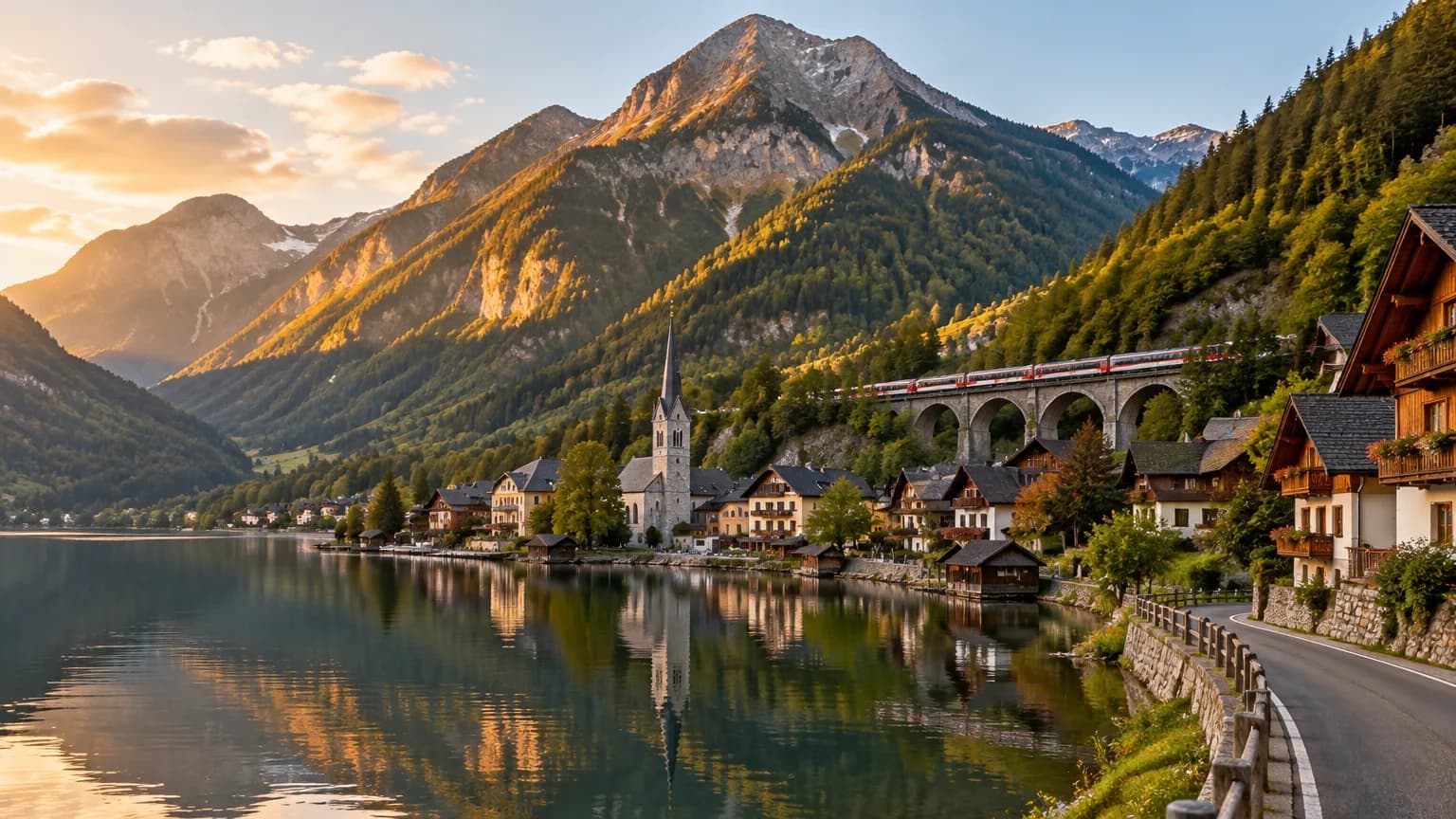
- Hallstatt and the Salzkammergut form the lakeside Alpine area, popular enough that visitor-management measures apply in peak periods. Tip: plan around those controls and consider staying outside the village.
- Innsbruck and the Nordkette is the western Alpine city, with cable cars to the mountain area above it. Tip: it works as a ski or hiking base and as a stop in a multi-city route.
- Melk Abbey is recommended on culture and history itineraries and suits travellers with a spiritual or architectural interest.
- Graz and Styria make up Austria's Alpine state of Styria, centred on Graz. Tip: it is a quieter add-on for a longer trip.
A classic first route links Vienna, Salzburg and Hallstatt. For a mountain drive, the Grossglockner High Alpine Road is a recommended option for cars. The Silvretta High Alpine Road is closed until 2030 because of rockfalls and reconstruction, so do not plan around it.
Grouping places so you do not backtrack
Keep Vienna's sights together in one stay: Schönbrunn Palace, the Hofburg imperial apartments, St. Stephen's Cathedral, Belvedere and the Kunsthistorisches Museum are all Vienna attractions, so they do not need extra transfers. Melk Abbey and the Wachau wine area sit along the same western corridor and pair naturally with a day out of Vienna. Salzburg's fortress, Mirabell Palace and Mozart sites share one old-town stay, with Hallstatt and the lakes as the next step east or south.
What each stop is best for
- History and palaces: Vienna, Salzburg and Melk Abbey.
- Wine and food experiences: the Wachau for Grüner Veltliner tasting and the Salzkammergut for lake fish.
- Mountains and lakes: Hallstatt, the Salzkammergut and Innsbruck's Nordkette.
- Family nature days: national parks such as Thayatal, with its 1.8 km circular trail, and Hohe Tauern, where hiking, mountain biking and snowshoeing are listed.
Wildlife interest can be met at national park houses, where wildcats can be observed through large windows. Check opening arrangements with the park before travelling.
Best Time to Visit from India
May, June, September and October are the most comfortable months for most Indian travellers, with mild temperatures and manageable crowds. Winter suits skiers, and November is the quietest and cheapest month.
- Best months: May (14 to 21 C) and September (15 to 21 C) have medium crowds and medium prices. June is warmer at 18 to 24 C but crowds and prices are high.
- Shoulder months: March, April and October bring medium crowds and medium prices, with temperatures of 4 to 11 C in March and 10 to 15 C in October.
- Peak summer: July and August reach 20 to 27 C with high crowds, peak prices and possible thunderstorms in Alpine valleys.
- Winter: December to February is cold, with reliable mountain snow and peak ski conditions, high crowds and peak prices. Snow and ice can cause mountain road closures.
- Months to avoid for lower stress: November is cold, foggy at times and sees high-pass closures, though it is cheapest. Early autumn fog can also affect travel.
For a month-by-month view, read the best time to visit Austria guide.
How the seasons feel in practice
Winter runs from December to February at roughly -1 to 5 C, with rain or snow on eight to nine days a month. Spring (March to May) is a milder transition when Alpine trails and resorts reopen progressively, so high trails may still be closed early in the season. Summer is warm to hot in lower valleys, with the busiest tourism. Autumn starts mild, then turns colder, and fog and high-pass closures become more common as it progresses.
Indian travellers often plan around school holidays in May and June, which coincide with good weather but also with higher prices than April or September. If your dates are flexible, early September gives similar temperatures with lighter crowds. If you want snow, aim for January or February, when conditions are most reliable, and book early because winter prices peak.
Pack by month rather than by country. Even in summer, evenings in Alpine areas cool down, and a light waterproof layer is useful given 10 to 11 rainy days a month in June, July and August.
Trip Cost from India
What a trip costs depends on season, stay category, how many regions you cover and how you move between them. This guide gives no fixed amounts, so check current prices at booking.
| Tier | Stay | Meals | Transfers |
|---|---|---|---|
| Budget | Mid-priced bases such as Salzburg Neustadt, Obertraun or Bad Goisern rather than the historic core | Breakfast included; simple lunches and dinners, often self-selected | Public transport, regional trains and buses |
| Mid-range | Mid-priced hotels in Innsbruck and similar centres | Breakfast plus selected meals | Airport transfers and some intercity rail |
| Luxury | Upscale stays on the Vienna Ringstrasse, in central Salzburg or by the lakes | Most meals included, often with wine or tasting experiences | Private car and driver for transfers and day trips |
What moves the price most:
- Peak versus shoulder season; Hallstatt-area stays rise in price in season.
- City-centre versus nearby bases such as Salzburg Neustadt.
- Winter ski weeks and December holiday dates.
- Shared versus private transfers.
- Local charges: a mobility tax of €0.50 per person per night for guests aged 15 and over was reported for 2026, with a scheduled rise to €1.10 from May 2027.
- Vienna transport: from January 2026 the annual pass changed and 48-hour and 72-hour tourist tickets were reported discontinued, so check which ticket suits your stay.
For a fuller breakdown, see the Austria trip cost guide.
Where budgets usually leak
Three habits push costs up without adding much to the trip. The first is staying in the historic core of Salzburg or by Hallstatt's lake in peak weeks when a nearby base would do. The second is booking private transfers for every leg when intercity rail links the main cities. The third is adding too many one-night stops, which multiplies luggage handling and the per-night mobility tax. Group stays into longer blocks, and the same budget buys a calmer trip.
Budget for items that package quotes often leave out: entry tickets to palaces and museums unless listed, travel insurance, visa fees and service charges, lunches and dinners on non-inclusive days, cable car rides in Innsbruck and any optional tasting or boat excursions. Ask your planner for an inclusions list so you can compare quotes line by line.
Currency is the euro, so what you pay shifts with the rupee-euro rate on the day you book and the day you travel. Check current exchange rates and card charges with your bank before you finalise.
How to Reach from India
Vienna International Airport (VIE) is the main intercontinental Austria, and most travellers from Delhi, Mumbai, Bengaluru and other Indian cities reach it by a one-stop connection through a Gulf or European hub, depending on the schedule.
Expect roughly nine to twelve hours of flying plus the layover, so treat the first day as a travel day. Check current routes and timings with your booking partner, as they change by season.
- Vienna airport to central Vienna: the City Airport Train reaches Wien Mitte in 16 minutes, and the S7 regional line takes 25 minutes.
- Salzburg Airport (SZG) to Salzburg Hauptbahnhof: bus 2 takes 20 minutes.
- Innsbruck Airport (INN) to Innsbruck Hauptbahnhof: bus F takes 15 minutes.
If you land in Vienna and leave from Salzburg or Innsbruck, you save backtracking. Rail between the main cities makes an open-jaw routing practical.
Planning the arrival day
Most flights from India reach Vienna in the morning or early afternoon after an overnight connection, so hotel check-in may not be ready. Ask for early check-in or luggage storage at booking. Keep your passport, visa, insurance papers and hotel confirmation in hand luggage, since immigration officers can ask for them.
Before you leave India, make sure your passport has enough validity for the Schengen visa rules and the length of your stay, and that the name on tickets matches the passport exactly. Small mismatches are a common cause of problems at check-in and are easy to avoid.
On the return leg, note that mountain and lake areas can be a few hours from the airport by train or road. Allow a comfortable buffer in the last two days so a delayed train or weather disruption does not put your flight at risk.
Where to Stay
Base in Vienna and Salzburg for the cities, then choose one Alpine base. Central areas put sights within walking distance, while nearby districts and villages lower the price.
- Vienna Ringstrasse and neighbouring districts: upscale, central, walkable to major sights; good for couples and families.
- Salzburg city centre: compact, historic and upscale; suits a two or three night break.
- Salzburg Neustadt: right-bank area a few minutes' walk from the main sights, more reasonably priced and good for budget travellers and couples.
- Hallstatt and the Salzkammergut: scenic lakeside and Alpine stays, upscale, with rates rising in season.
- Obertraun and Bad Goisern: mid-priced alternatives about 10 and 15 minutes by car from Hallstatt, useful for budget travellers and families.
- Innsbruck: mid-priced city base for mountain access and multi-city routes.
Budget tier suits guesthouse-style stays in the outer areas, mid-range suits standard hotels in Innsbruck and Salzburg Neustadt, and luxury suits Ringstrasse, central Salzburg or lakeside properties.
Choosing between a central and an outer base
A central base saves time and taxi costs, which matters on short stays and with older family members or young children. An outer base saves money and often gives quieter evenings, but you need to check the last bus or train times and the distance to the nearest grocery or restaurant. In Hallstatt, staying in Obertraun or Bad Goisern also helps avoid the village at its busiest, given the visitor-management measures that apply in peak periods.
For families, ask about room layouts: triple and family rooms are less common in older European buildings, and two connecting rooms may cost more than one large room. For couples, confirm lift access and whether the room faces a street or courtyard, since old-town buildings can be noisy. For all travellers, check the cancellation terms and whether the local mobility tax is included or charged at the property.
Local Food and Cuisine
Austrian cooking leans on meat, dairy and pastry, but a vegetarian traveller can eat well in the cities with a little planning. Here are five dishes and where to find them.
- Fresh lake fish: recommended as a long lunch in the Salzkammergut, at lakeside restaurants.
- Grüner Veltliner: a white wine tasted in the Wachau; it pairs with lighter meals.
- Wiener schnitzel: a breaded cutlet found in Vienna's traditional restaurants and taverns.
- Apple strudel: a pastry served in Vienna's coffee houses, which are themselves a recommended experience.
- Kaiserschmarrn: a shredded pancake dessert common in cafes and on mountain-hut menus.
For vegetarians, Vienna and Salzburg offer the widest choice, and hotel breakfasts usually include bread, cheese, eggs, fruit and cereal. In smaller Alpine towns the menus narrow, so look for cheese dishes, soups and salads, and ask whether meat stock is used. Carry a few familiar snacks for long travel days.
Eating well on a budget
Coffee houses in Vienna are as much a meal stop as a drink stop, and a pastry with coffee can stand in for a light lunch. Bakeries and supermarkets in every town sell bread, cheese, fruit and packaged snacks that help on rail days or hikes. Larger cities also have restaurants serving Indian and other vegetarian-friendly cuisines, which are worth searching for before you arrive, especially if you are travelling with children or older parents.
For strict vegetarians, Jain travellers or anyone avoiding eggs, say so clearly when ordering and ask about hidden animal products such as stock, gelatin or lard. Menus in English are common in tourist areas, but ingredient details can be thin, so a few written German phrases on your phone help. If you have a package with half-board, tell the planner your dietary needs at booking rather than at the hotel.
Travel Tips for Indians
Indian passport holders need a Schengen short-stay visa for tourism, and the earlier you apply, the more room you have for appointment and document issues. Check the official Austrian mission or an authorised visa application centre for the current checklist, and see the Austria visa for Indians page for the process.
- Entry documents: keep your passport, accommodation proof, travel insurance and return tickets together for the visa file and arrival.
- Currency: Austria uses the euro. Cards are widely accepted, but carry some cash for small towns, mountain huts and tips. Check current exchange rates before you buy.
- Connectivity: an eSIM or a local SIM is the simplest option. Download offline maps for Alpine areas where signal drops.
- Power: 230 V, 50 Hz, with Type C and Type F plugs, so pack an adapter.
- Emergencies: 112 is the European emergency number; 122 fire brigade, 133 police, 144 ambulance, 140 mountain rescue and 141 doctor on call.
- Mountain safety: winter snow and ice can close mountain roads and bring avalanche risk, and summer thunderstorms are possible in July and August. Check conditions before any hike or high-road drive.
- National park etiquette: stay on designated routes; cycling is allowed only on routes that pass through the park.
- Crowd rules: Hallstatt and other heavily visited Alpine spots apply visitor controls in peak periods, so book entry and parking ahead where required.
Visa preparation, step by step
- Decide your travel dates and the Schengen country where you will spend the most nights; for a trip focused on Austria, that is usually the country you apply through.
- Collect your passport, photographs, bank statements, income proof, leave letter or business documents, and an itinerary with accommodation bookings for the full stay.
- Buy travel insurance that meets Schengen requirements and keep the policy document in your file.
- Book your appointment at the application centre, fill in the form carefully and submit biometrics as required.
- Track the application and keep the passport available until it is returned.
Common mistakes include booking flights before the visa is approved, submitting hotel bookings that do not cover every night, and mismatched names across documents. Refundable bookings reduce the risk. Processing times and fees change, so confirm them on the official source at the time of applying.
Money, phone and day-to-day habits
Notify your bank before you travel so cards are not blocked, and carry a second card in a separate place. Contactless payment is common in cities, but some small guesthouses, huts and village shops still prefer cash. Tipping is a small round-up or a modest percentage in restaurants, and service staff expect it to be given directly at the table.
Austrian cities are quiet in the evening compared with Indian cities, and shops close earlier, particularly on Sundays, so plan groceries and pharmacy visits in advance. Respect quiet hours in apartments and hotels, and keep voices low on trains and in museums. In mountain areas, follow marked trails, carry water and a rain layer, and turn back if weather changes, because mountain rescue can be costly and slow to reach remote spots.
Women travellers and families generally report comfortable conditions in cities and towns, with well-lit centres and reliable public transport. Standard city precautions apply: keep bags closed in crowded places such as Vienna's main sights, and keep passport copies separate from originals.
Is Austria Right for You?
Austria suits travellers who want historic cities and mountain scenery in one trip and are comfortable with a mid-to-upscale cost level. It is a weaker fit for beach seekers and for anyone avoiding crowds in peak Alpine villages.
Short trip versus long trip. A three to five night trip works if you stay with the cities: Vienna alone, or Vienna with Salzburg. You cover palaces, museums and old towns with little transit time. Seven to nine nights lets you add Hallstatt, Innsbruck or a hiking or ski base without rushing, because intercity rail keeps transfers short.
- Suits: couples (coffee houses, wine tasting, lakeside dinners), families (national park programmes, family hiking paths, the Thayatal circular trail), culture-focused travellers, skiers and hikers.
- Suits less: travellers who want a beach holiday, who dislike cold weather, or who want a low-cost trip.
- Needs care: travellers who want to avoid peak-period visitor controls in heavily visited Alpine locations should pick shoulder months or bases such as Obertraun and Bad Goisern.
Matching the trip to the traveller
- First-time Europe visitors: a Vienna and Salzburg core with one lake or mountain stop gives variety without complex logistics.
- Honeymooners: favour Vienna's coffee houses and opera, a Wachau wine tasting and a lakeside stay in the Salzkammergut, ideally in May, June or September.
- Families with children: add a national park day with ranger tours or adventure trails, and keep stays to two or three bases.
- Older travellers: choose central hotels, use rail for intercity moves and avoid steep trails and high passes in changeable weather.
- Adventure travellers: choose Tyrol for skiing in winter, or Hohe Tauern for mountain biking and snowshoeing, and plan more nights in the mountains.
Be realistic about weather and crowds. Winter days are short, snow can disrupt mountain roads, and summer thunderstorms can interrupt hikes. Peak-season Hallstatt asks for patience. None of this rules Austria out; it simply means choosing the month, base and pace that match what you want from the trip.
Once the plan feels right, compare the current Austria tour packages and pick the one that fits.