
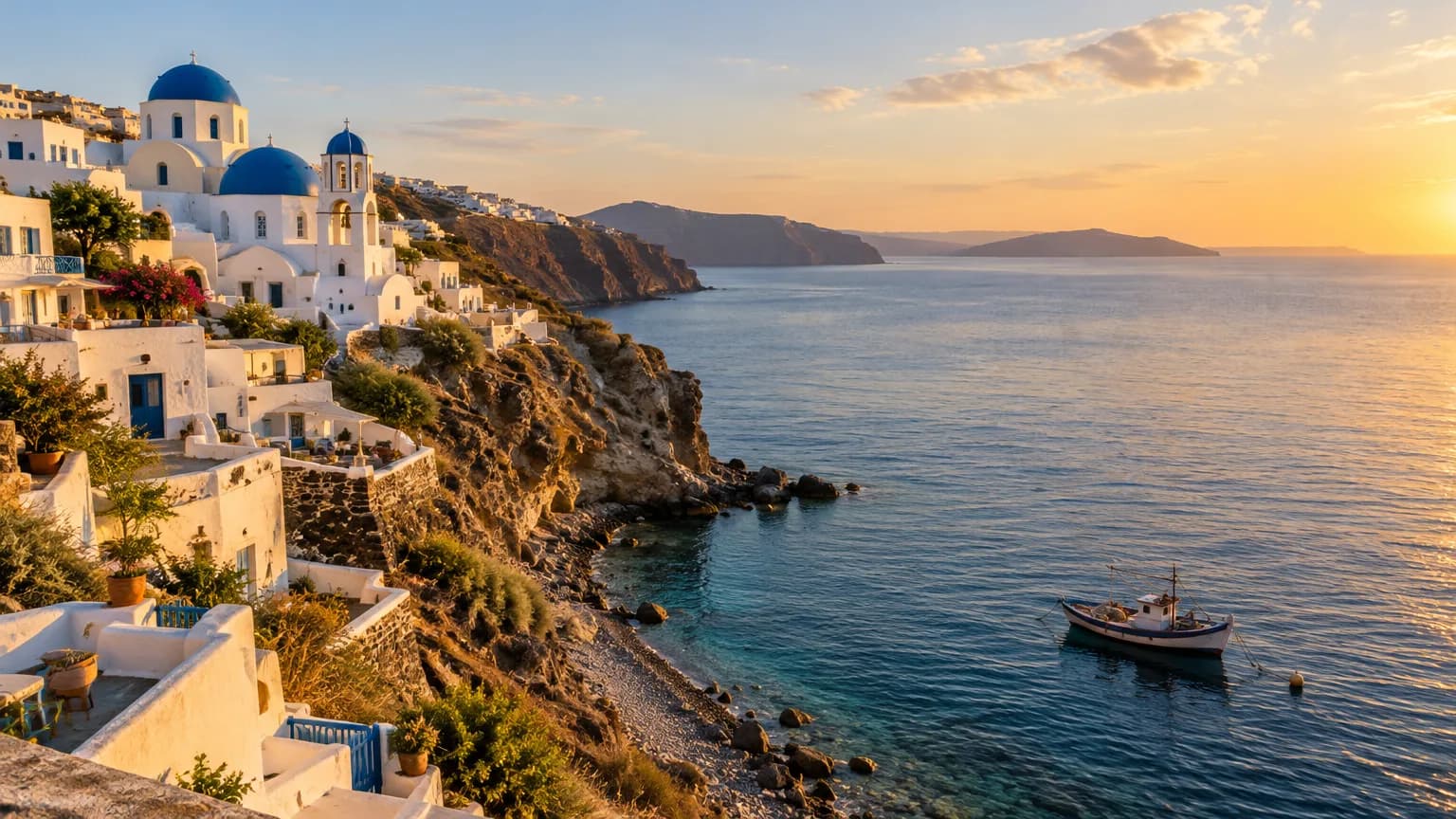
Curated starting points
Find a Greece journey that feels like yours.
Begin with a thoughtfully paced itinerary, then change the stays, experiences, route, and budget with a Tripstor specialist.
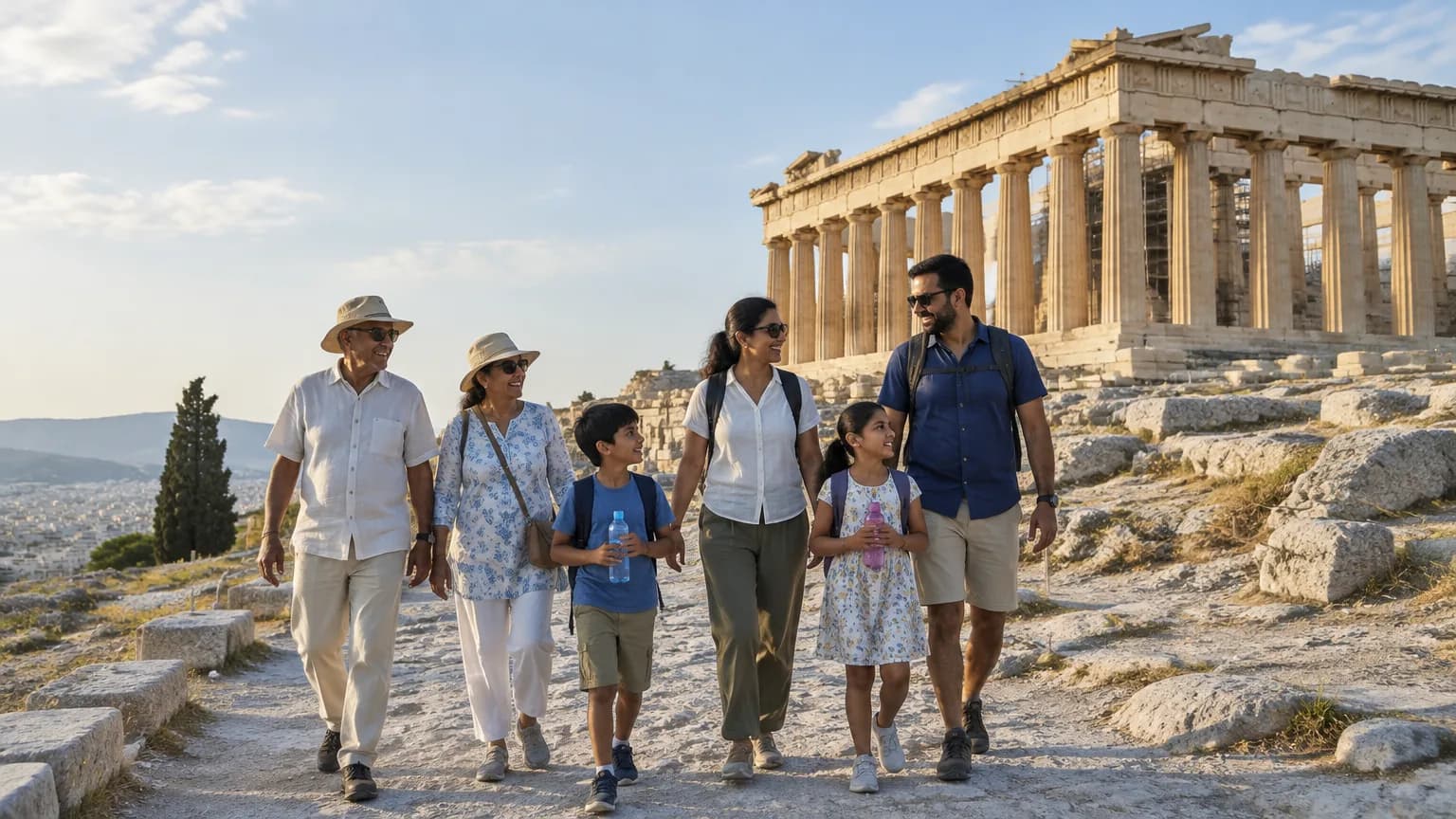
Greece · Flexible itinerary
Greece Athens & Crete Family Holiday 8N 9D
Starting from
₹73,500/ person
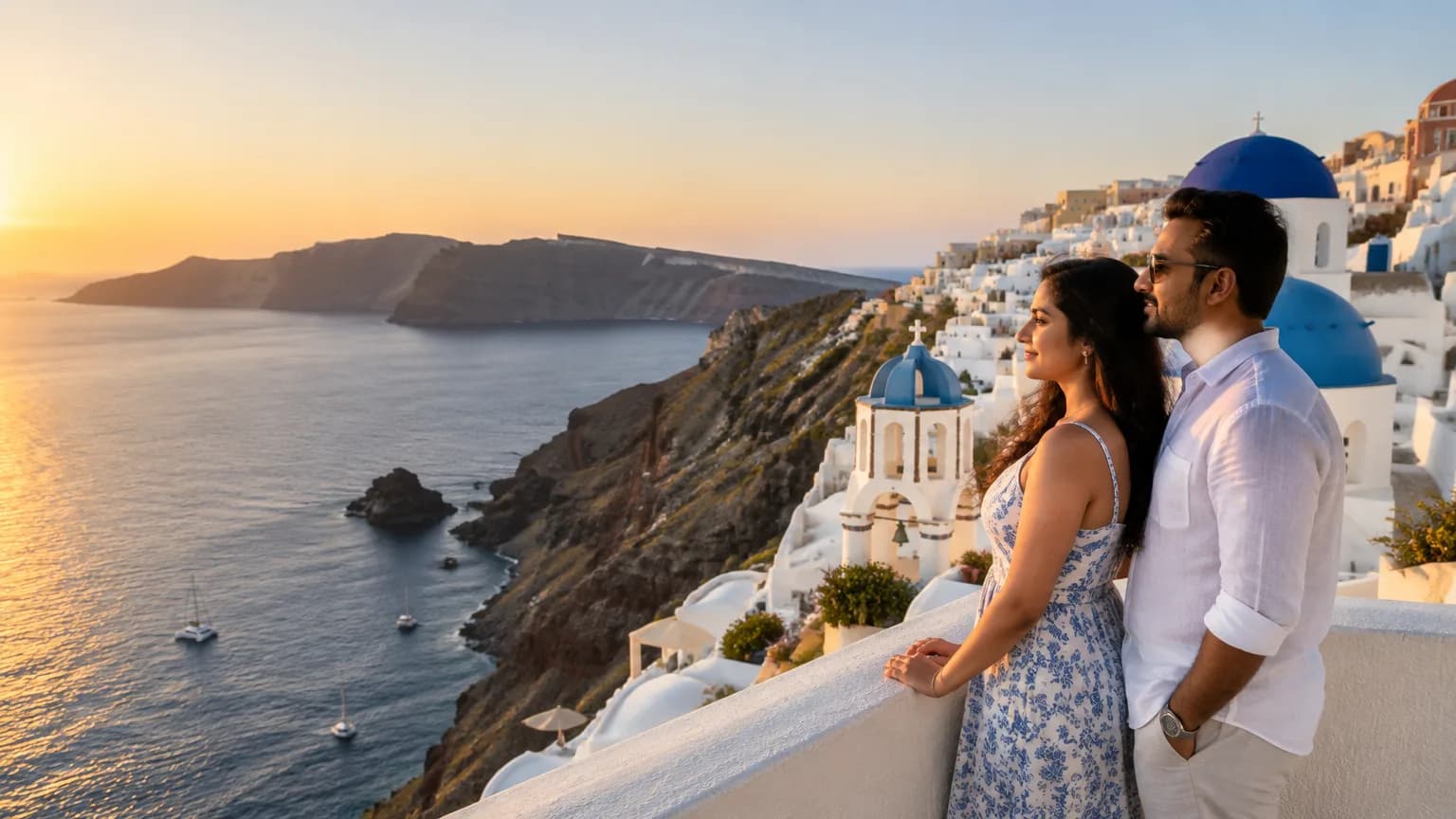
Greece · Flexible itinerary
Greece Santorini & Mykonos Honeymoon 7N 8D
Starting from
₹72,000/ person
Destination guide
Know Greece before you go.
Practical context, local highlights, and honest planning advice — written for travellers from India.
Field notes
A considered guide to Greece
Greece snapshot: coast, season and trip length
Greece is a southern European country made up of a mainland, the Peloponnese peninsula and many islands across the Aegean and Ionian seas. Athens is the main arrival point, with ferries and domestic flights to the islands and buses and trains across the mainland.
The coast is not one thing. The Cyclades offer whitewashed towns and open blue water. The Ionian side is greener and softer. Crete and Rhodes are large enough to hold beaches, mountains and old towns in the same week. Land borders touch Albania, Bulgaria, North Macedonia and Turkey, but most Indian travellers will fly into Athens or Thessaloniki.
| Detail | What to know |
|---|---|
| Region | Southern Europe: mainland, Peloponnese, Aegean and Ionian islands |
| Main gateway | Athens International Airport (ATH); Thessaloniki Airport (SKG) is the second option |
| Best beach season | Late May to September, with swimming safest from June to September |
| Short trip | 5 nights in one or two bases |
| Full trip | 6-7 nights, enough to add a second island |
| Starting price | From Rs.50,000 per person, land only, twin sharing |
The starting price covers land arrangements only, so flights, island choice, season and hotel category will move the final figure. Peak summer weeks cost the most, while May, early October and the quieter shoulder weeks are easier on both budget and crowds.
Beaches and stretches of coast: which suits whom
No single Greek beach fits everyone, so match the coast to your group instead of chasing a ranking. These six areas each have a different feel, crowd level and one habit worth adopting.
- Santorini caldera coast: dramatic cliffs and sunset views, best for couples. Crowds peak at sunset, so see the caldera villages in the morning and keep evenings flexible.
- Mykonos Town and nearby beaches: lively, with cafés and water sports, suited to friends and couples who want an active evening scene. Reserve sunbeds early in peak weeks.
- Elafonissi, Crete: shallow, calm water that works for families with young children. Arrive before mid-morning, as the beach fills up through the day.
- Navagio area, Zakynthos: reached by boat, with striking cliffs, and best for couples and photographers. Boat runs depend on sea conditions, so keep a spare day.
- Myrtos Beach, Kefalonia: a long curve of white pebbles under green hills, good for couples and quiet-seekers. The seabed drops off steeply, so keep children close to the shore.
- Vai, Crete: a palm-backed beach in the east that feels calmer than the big resort strips. It suits travellers with their own transport who want a slower day.
Sea conditions and water activities by season
Swimming is sensible from June to September, when the sea is warm and organised beaches use lifeguards and flag systems. Winter and spring water is cooler, and swimming is not advised in those months.
June to August is the main beach season. Warm water is reliable, but hazards remain: offshore winds, currents, sudden drop-offs, slippery rocks and boat traffic. Beaches without lifeguards carry more risk, so swim inside designated areas and follow the flags.
September keeps the warm sea and brings fewer people than August. Sea urchins, occasional late-summer jellyfish and strong currents can appear at some beaches, so ask locally before entering the water.
- Swimming: June to September, on organised beaches with lifeguards where possible.
- Water sports: mainly July and August, when beach operations are at full capacity.
- Sailing and boat trips: through the warm months, subject to wind and sea state on the day.
- Rafting, kayaking and canyoning: river and gorge activities on the mainland and Crete, running in the warmer months.
Greece has no monsoon, but the equivalent slowdown comes from late October. Island ferry schedules and hotels reduce operations, and many smaller Cycladic and Dodecanese islands see significant closures by mid-November. The Greek health ministry also publishes bathing-water quality and beach suitability decisions each summer, which is the official source to check for a specific beach.
Best months for the beach
Late May, June and September are the strongest months for a Greece beach holiday. They combine warm sea, manageable crowds and more reasonable prices than the midsummer peak.
| Month | Temperature | Crowds and prices | Beach verdict |
|---|---|---|---|
| April | 10-20 C | Medium | Pleasant for sightseeing, sea still cool |
| May | 15-25 C | Medium | Good late in the month, low rain |
| June | 20-30 C | High, peak prices | Warm sea, long days, busy |
| July | 23-33 C | High, peak prices | Hottest and driest month |
| August | 23-33 C | High, peak prices | Very busy, 15 August spikes travel |
| September | 19-29 C | High, peak prices | Warm sea, easing crowds |
| October | 15-23 C | Medium | Rain returns, island services thin out |
July and August suit travellers who want guaranteed sun and accept heat and crowds. Assumption Day on 15 August is a major holiday and causes a travel spike, so book ferries and stays well ahead.
November to March is the period to avoid for a beach-led trip. Rainfall is higher, island operations shrink and swimming is not advised. A winter visit works better as a city and mainland trip.
Where to base yourself on the coast
Your base decides how much time goes on moving and how much on resting. Central Athens is a practical first stop for buses and ferries, with Plaka and Monastiraki close by, and it suits couples and families.
- Fira, Santorini: transport-friendly with caldera views and easy access to island sightseeing. Suits couples.
- Oia, Santorini: known for sunset viewing and caldera-edge stays. Suits couples who prioritise the view over convenience.
- Mykonos Town: walkable, with Little Venice, windmills and cafés and quick access to beaches. Suits couples and friends.
- Chania and Heraklion, Crete: practical hubs for buses and ferries. Suit families.
- Rhodes Town and Corfu Town: island hubs with services close at hand. Suit families.
By budget, simple trips use guesthouses and studios in the main towns. Mid-range trips usually mean resorts or boutique stays near the beach. Luxury trips lean towards villas and high-end resorts with private pools, especially on Santorini and Mykonos. Confirm availability and rates at booking, because island supply tightens quickly in peak weeks.
Getting there and getting around the coast
Indian travellers usually fly into Athens International Airport (ATH), with Thessaloniki (SKG) as a second gateway. Routes from India typically connect through another hub, so plan for a long travel day and a quiet first evening.
Between islands, ferries are the main link. Conventional services are slower and cheaper, while high-speed vessels shorten longer routes such as Athens to Santorini. Short hops between Cycladic islands such as Paros and Naxos are straightforward. According to a 2026 travel-cost source, a short Cycladic hop typically costs about €20-40, while longer or high-speed routes run roughly €80-120 per person one way (as of July 2026). Confirm current fares at booking.
- Athens: metro, tram and buses, plus shared airport shuttles and taxis. Buy a valid ticket, as fines for travelling without one on Athens and Thessaloniki public transport rose to €100 in May 2026.
- Islands: local buses, taxis and scooter rental. Before renting, check licence requirements, insurance cover and helmet provision.
- Mainland parks and mountains: reached by road, so a hired car or a guided transfer helps.
Road conditions and signage vary between islands and the mainland, so allow extra time. Check current entry rules for Indian passport holders on the official government source before you book.
A coast route that works
A simple route is Athens for two nights, Santorini for three and Mykonos for two. It gives you a city arrival, a caldera stay and a livelier island without constant repacking.
- Athens, 2 nights: recover from the flight and see the main sights before moving on. This is also the easiest place to sort ferry tickets.
- Santorini, 3 nights: the transfer by ferry or domestic flight takes a few hours, so keep arrival day light. Spend the rest on village walks and a boat trip.
- Mykonos, 2 nights: a short onward hop, with beaches and a walkable town. It connects back to Athens for the flight home.
For fewer transfers, replace Mykonos with four nights on Crete, based in Chania or Heraklion. You get beaches, an old town and bus links, with a short flight back to Athens. Transfer effort is the real cost of island hopping, so every extra island should earn its place.
Is Greece the right beach trip for you?
Greece suits honeymooners, families and groups of friends who want coast, culture and good food in one trip. It is less suited to travellers who want everything within walking distance of a single resort or who dislike ferries.
- Honeymooners: sunset villages, sailing and quieter coves.
- Families: shallow beaches, marine parks on Zakynthos and Alonissos, and Cretaquarium on Crete.
- Water-sports fans: Mykonos and the larger islands in July and August.
- Quiet-seekers: May, early June and October, or less crowded islands such as Kefalonia.
Travellers who expect card payment everywhere will find smaller villages and less visited islands harder, so carry some cash. If you want a single-base holiday with no transfers, choose one island and stay put.
Ways to travel to Greece
Tripstor offers several trip styles for this destination, so you can match the pace and budget to your group.
- Beach: for travellers who want sun and sea with minimal sightseeing.
- Beach & Culture: for those who want ruins and old towns alongside the coast.
- Beach & Leisure: for a slower pace with plenty of free time.
- Best of: for first-timers who want the highlights in one trip.
- Cultural & Heritage: for history-focused travellers.
- : for deeper time in traditional towns and villages.
- Extended / Grand Tour: for longer trips that cover more islands and the mainland.
- Family: for parents travelling with children.
- Honeymoon: for couples who want privacy and sunset settings.
- Luxury: for villa stays, high-speed ferry travel and sailing.
- Wellness & Relaxation: for quiet coastal stays and unhurried days.
Beach-trip tips that save the day
- Sun and sea safety: use high-SPF sunscreen, avoid midday sun and swim only inside flagged areas. Watch for sea urchins, late-summer jellyfish and strong currents.
- Dress and etiquette: cover shoulders and knees at religious sites and carry a light scarf. Keep beachwear for the beach.
- What to carry: a refillable water bottle, a hat, reef-safe sunscreen, a power bank and some cash for smaller villages.
- Book early for peak weeks: June to September fills fast on Santorini and Mykonos, so reserve ferries and stays well ahead. Island ferry schedules also thin from October.
- Entry rules and money: check current entry requirements on the official government source. Cards work in cities, larger towns and established tourist businesses, but smaller villages may be cash only.
Browse the Greece holiday packages to see how these choices turn into a bookable trip.
Personalise your trip
Shape Greece around the way you travel.
Choose a travel style as your starting point. We'll refine the pace, stays, experiences, and budget until the journey feels entirely yours.
Not sure which fits? Use our trip builder — it takes under two minutes.
Got questions?
The questions travellers ask about Greece.
Straight answers on visas, pricing, best time to visit, and how our packages work for Indian travellers.
8 answered below
Social proof
What Tripstor travellers say
Feedback from Indian holidaymakers who travelled with Tripstor.
4.8
from 432+ reviews
CoupleNorway is expensive but the experience is worth planning for. We did the Flam Railway and the Sognefjord on Day 5. Tripstor gave us a realistic budget breakdown before we booked, which I appreciated. No surprises on the ground.
HoneymoonHoneymooned in Kashmir for 7 nights in May. Gulmarg had light snow still and we got a gondola ride on Day 4. The tulip garden in Srinagar was in full bloom. Tripstor arranged a candlelit dinner on the houseboat which was a nice touch.
FriendsThree friends and I did a 9-night Australia package with stops in Melbourne and Sydney. We spent an afternoon at the Melbourne Cricket Ground and caught a local match. Tripstor sorted our group visa applications together which saved a lot of back and forth. Good experience overall.