Package overview
The thinking behind this journey.
A closer look at this 10-night journey through Greece— who it's built for, what you'll experience, and why the pace works.
Journey notes
Why this route works
What is a Greece grand tour package?
A Greece grand tour package is a multi-city holiday that covers mainland heritage sites and more than one island group under one booking. Hotels, internal flights, ferries and transfers are arranged in a fixed order.
This version runs 10 nights across six bases: Athens, Delphi's mountain country, the Peloponnese, Crete, Santorini and Mykonos. Mainland days are by road, and the islands are linked by one short flight and two ferries.
Which Greece grand tour package from India covers the main sights?
This Greece grand tour package covers the Athens Acropolis and its museum, the Delphi sanctuary, Mycenae, Epidaurus, the Cretan coast, Santorini's caldera villages and Mykonos Town. It is built for couples flying out of India who want more than a two-island break.
Land-only cost is Rs.1,28,000 per person on twin sharing, in standard 3-4 star hotels. Peak summer is hot and crowded, so the shoulder months give a more comfortable pace. Compare other routes on our Greece tour packages page before fixing dates.
How does the route link Athens, the mainland and the islands?
The route moves in one direction: Athens first, then the mainland loop, then south to Crete, Santorini and Mykonos, and a short flight back to Athens for departure. No leg returns to a port you have already used.
| Leg | Mode | Approximate time |
|---|---|---|
| Athens to Delphi and back | Private vehicle | About 2.5 hours each way |
| Athens to Mycenae, Epidaurus and Nafplio and back | Private vehicle | Full day, with stops |
| Athens to Heraklion, Crete | Domestic flight | About 1 hour |
| Heraklion to Chania | Private vehicle | About 2.5 hours |
| Crete to Santorini | Ferry | About 2 to 3 hours |
| Santorini to Mykonos | Ferry | About 2 to 3 hours |
| Mykonos to Athens | Domestic flight | About 45 minutes |
Time is lost on the two ferry days and the Crete flight morning, so those days carry no major sightseeing. Time is saved by basing in Athens for the first four nights and using day trips instead of changing hotels.
What ties the stops together?
The common thread is classical Greece: sanctuaries, theatres and palaces on the mainland, then Minoan and Venetian layers on Crete, and Cycladic villages on the other islands.
Delphi was the seat of the Apollo oracle. Epidaurus is known for its ancient theatre, and Knossos is the Minoan palace on Crete. Each stop adds a different period, so the trip reads as a sequence rather than a list of unrelated sights.
Places on this route and what to know
Each stop has one practical detail worth planning around before you arrive.
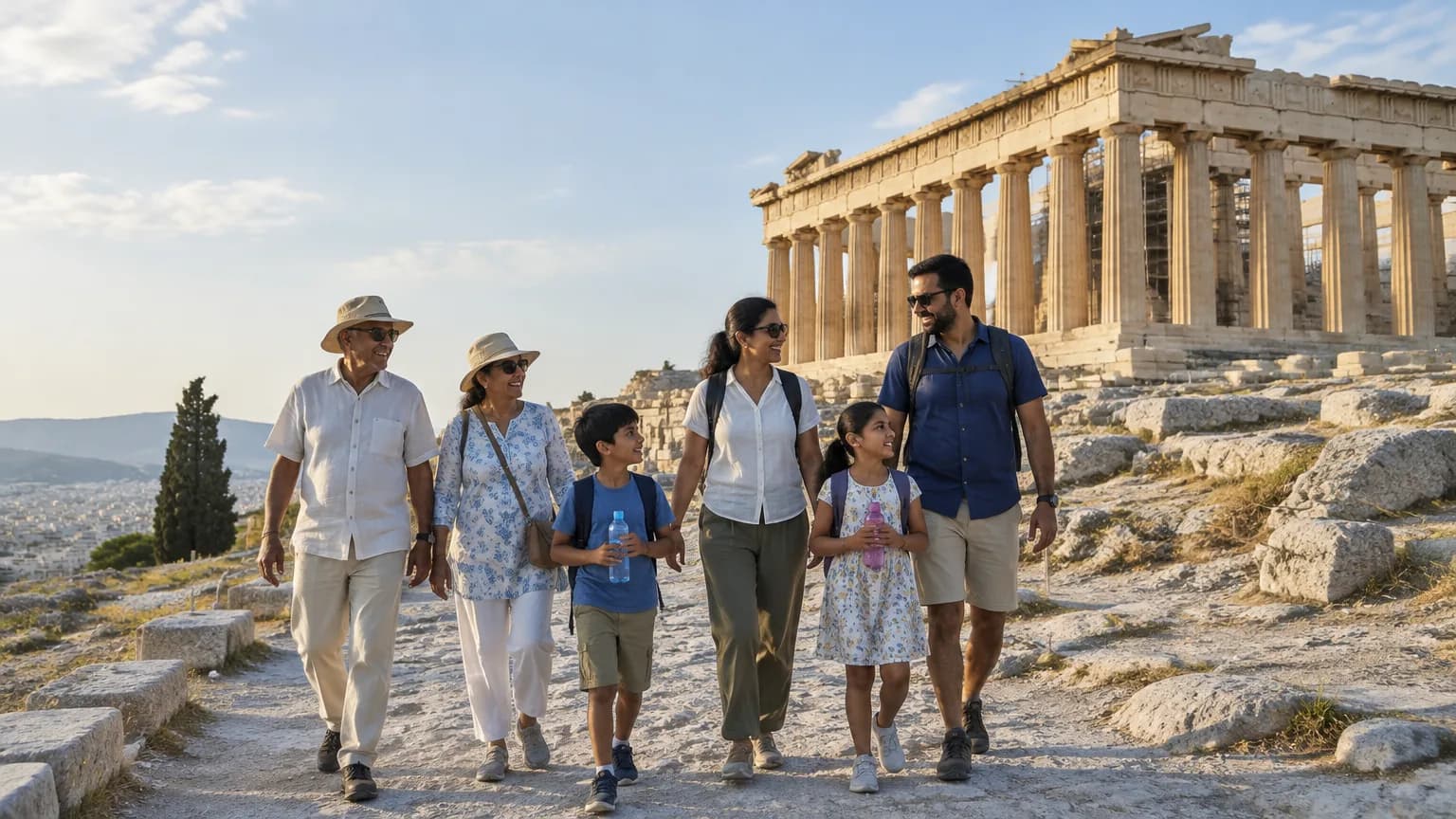
- Acropolis, Athens: the Parthenon hill is the city's main sight. Go early or late in the day to avoid midday heat, and wear closed shoes because the marble is worn and slippery.
- Delphi: the sanctuary of Apollo on Mount Parnassus. Allow two to three hours on site, including the museum, and expect uphill walking.
- Mycenae and Epidaurus: two heritage sites in the Peloponnese. Mycenae has the Lion Gate and royal tombs, and Epidaurus is visited for its theatre. Carry water, as shade is limited.
- Knossos, Heraklion: the Minoan palace site. A guide helps because the ruins are partly reconstructed and signage is limited.
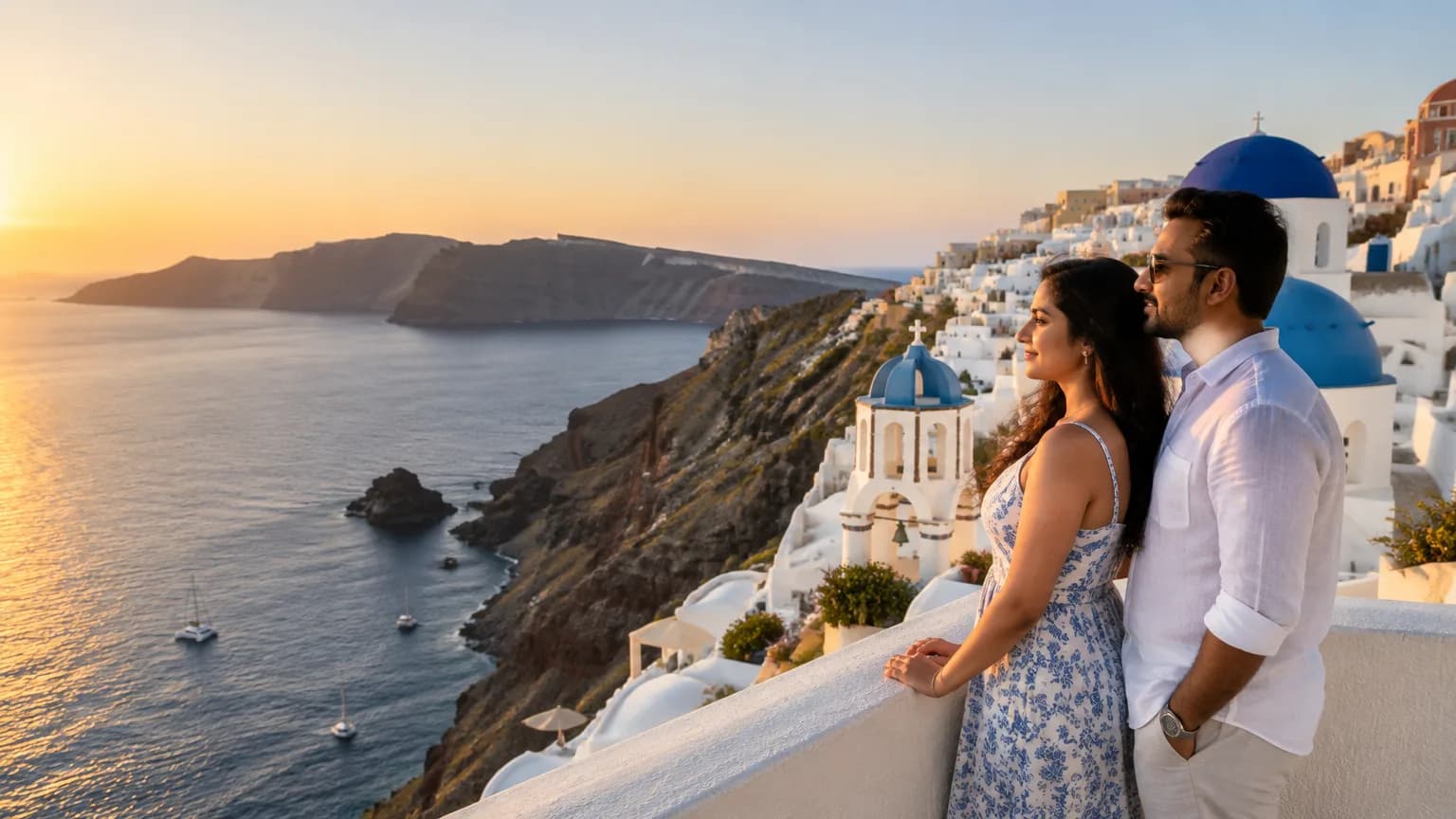
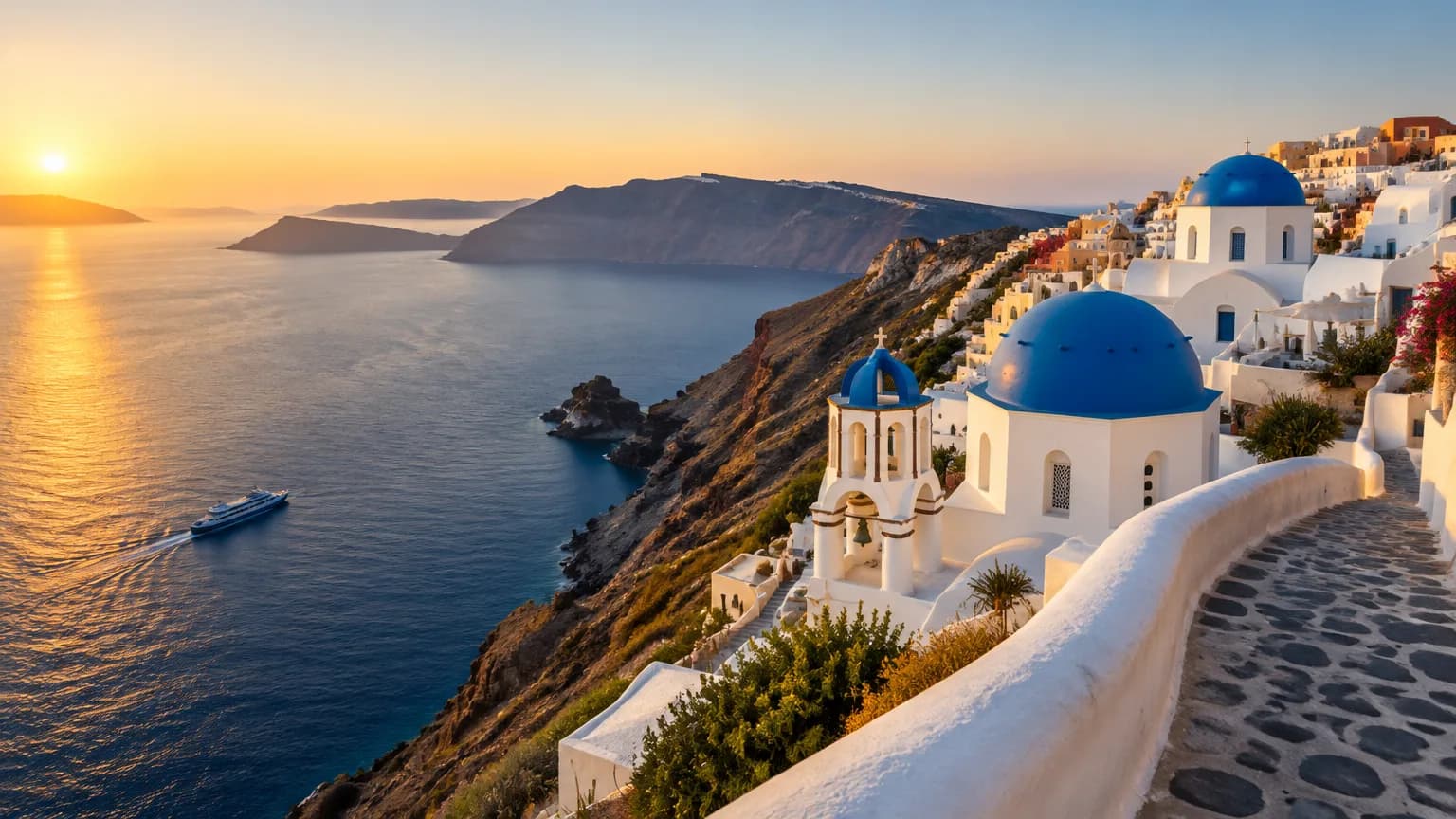
- Oia and Fira, Santorini: caldera villages known for sunset viewing. Paths are stepped and paved with stone, so allow extra time and avoid thin-soled footwear.
- Mykonos Town: Little Venice and the windmills are walkable from the old port. Lanes are narrow, and the main browsing hours are late afternoon into evening.
Etiquette, timings and access
Dress modestly at churches and monasteries, with shoulders and knees covered. Archaeological sites have no dress code, but opening hours and ticket rules can change by season, so confirm at booking.
- Photography is generally allowed outdoors at sites; some museum galleries restrict flash or tripods.
- Step-free access is limited at the Acropolis, Delphi and the Santorini villages because of slopes and stone steps.
- Athens public transport fines for travelling without a valid ticket rose to about €100 in May 2026, so validate every ticket.
- Ferry timetables shift between seasons, and island services reduce from late October.
Pace, walking and comfort
The pace is moderate. Most mornings start around 8.30 am, with one main sight in the afternoon and evenings left free. Expect about 3 to 5 km of walking on sightseeing days, often on uneven stone.
The longest drive is the Heraklion to Chania stretch of around 2.5 hours. Ferry days are restful but involve boarding queues and luggage handling. Senior travellers should flag mobility needs at booking so rooms near lifts and gentler schedules can be arranged.
Local food and shopping on the trip
Expect taverna meals built around grilled meat, salads and dips, plus street food such as souvlaki and gyro. As of July 2026, a casual taverna meal runs about €15-25 per person and souvlaki or gyro about €3-5, according to a travel-cost source.
Vegetarians do well with Greek salad, dips, grilled vegetables, spinach pies and bean dishes; say so at ordering, as many dishes use meat stock. Shopping is mainly local products at Mykonos markets and a final shopping stop in Athens before departure.
Where you will stay: Athens, Crete, Santorini and Mykonos hotels
Hotels are standard 3-4 star on twin sharing, and no hotel brand is promised here. The indicative tiers below show how the price shifts by hotel class, per person, and are for context only.
| Stay tier | Indicative price per person | What to expect |
|---|---|---|
| Budget 3-star | Approx Rs.96,000 | Simple, clean rooms in central areas, fewer extras, limited caldera views |
| Standard 4-star (this package) | Rs.1,28,000 | Comfortable hotels in Athens, Chania or Heraklion, Santorini and Mykonos Town |
| Premium 5-star | Approx Rs.2,05,000 | Larger rooms, better locations, more chance of caldera or sea views |
Athens hotels sit near Plaka and Monastiraki. Santorini stays are in Fira or Oia, and Mykonos stays are in or close to Mykonos Town. Caldera-view rooms cost extra and sell out first in peak months.
Entry, money and flights for Indian travellers going to Greece
Indian passport holders need a Schengen visa for Greece, applied through the official route listed on our Greece visa for Indians page; check the official portal for the current fee. The currency is the euro, and cards work in cities and established tourist businesses. Carry some cash for smaller villages, island taxis and less visited islands. Flights from Delhi, Mumbai and other major Indian cities usually need one connection and take roughly 9 to 12 hours in total; confirm routing and fares when you book. Day-to-day local transport typically costs about €5-10 per day.
Best time to visit Greece from India
The best months are May to early June and September to mid-October. May runs about 15-25 C and September about 19-29 C, with medium to high crowds and manageable ferry schedules.
June to August is hot, with July and August reaching 23-33 C and peak prices. From late October, island hotels and ferries reduce operations, and rain rises to about 48 mm in October and 65 mm in November. A couple's trip is smoother in the shoulder months.