
Field notes
Nepal Visa for Indians 2026 — Complete Guide
Quick Answer: Do Indians Need a Visa for Nepal?
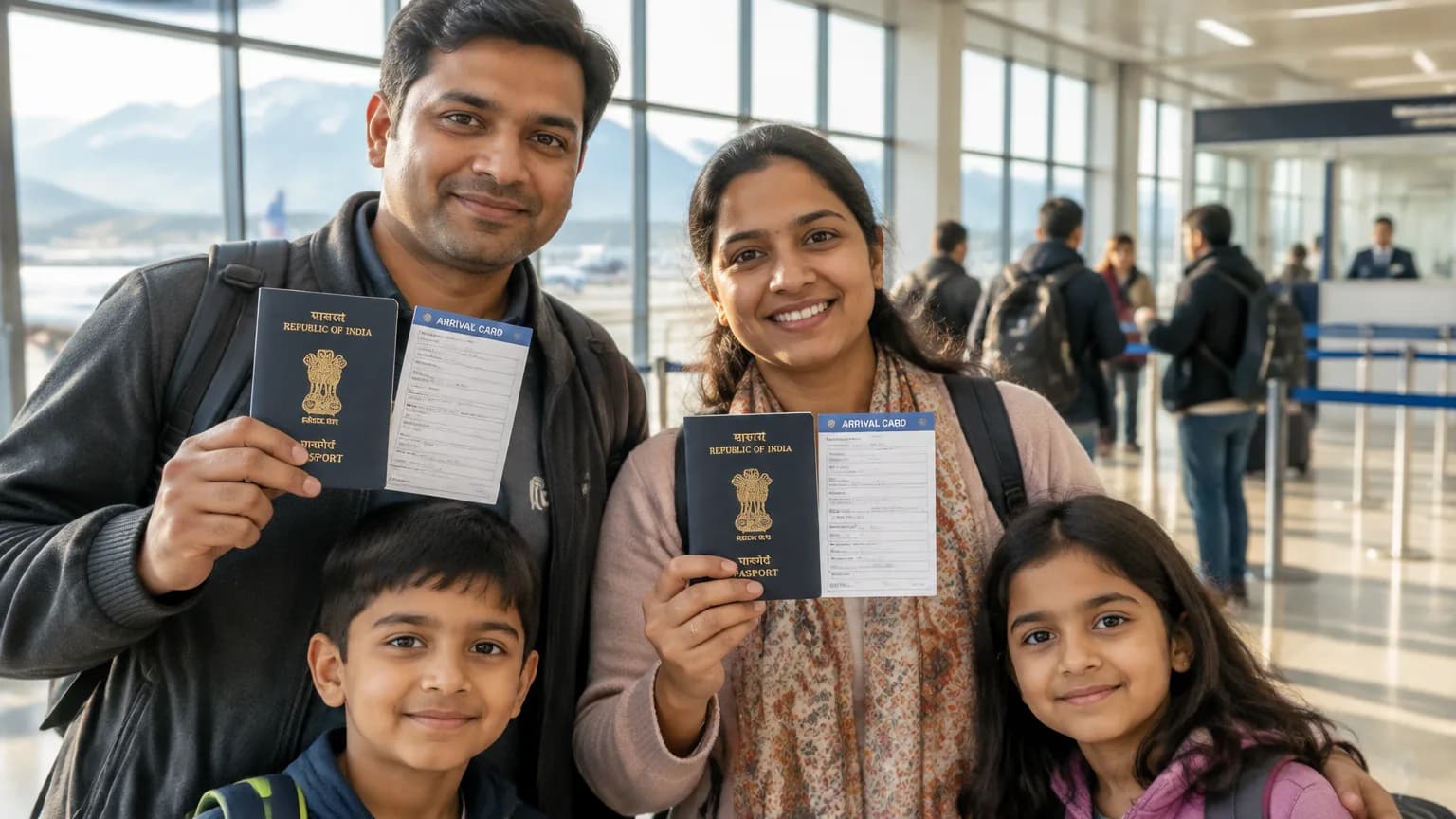
Nepal visa for Indians is not required. Indian passport holders enter Nepal as tourists without applying for any visa, paying any fee, or waiting for processing. Present a valid Indian passport or an Election Commission of India voter ID at immigration, and submit a completed arrival card. That covers the full entry requirement for most leisure trips.
Nepal Entry Rules for Indian Passport Holders at a Glance
Indian nationals qualify for visa-free tourist entry to Nepal, meaning no application, no fee and no prior approval is needed. The table below summarises what applies at the immigration counter, based on official sources verified as of October 2026.
| Entry rule | What applies to Indian passport holders |
|---|---|
| Visa category | Visa-free entry for tourists |
| Visa type | None required |
| Fee | Free — no visa charge, no stamp fee |
| Maximum stay | Not specified in official sources — check the official portal |
| Where entry is recorded | Arrival card submitted at immigration counter |
No visa sticker is issued. No online application needs to be completed before you fly. The immigration officer records your entry when you hand over the arrival card along with your travel document, according to Nepal's Department of Immigration.
When Visa-Free Entry Applies to You
Visa-free entry is available to Indian nationals travelling to Nepal as tourists. The rule applies whether you enter by air through Tribhuvan International Airport in Kathmandu or by a land crossing. The entry condition does not change based on the route you use, though alternative crossing points beyond the main airports and standard land borders are not all named in official sources — verify your specific crossing on the official portal before you travel.
To qualify, you must be able to prove Indian nationality at the immigration counter. A valid Indian passport satisfies this. An Election Commission of India voter ID is also accepted as proof of Indian nationality, according to official immigration sources. No other identity document is listed as acceptable in the official sources available, so do not rely on a driving licence, Aadhaar card or PAN card as your primary entry document.
Travelling with children under 18 means each child needs either a birth certificate or a school identity card. The document should establish the child's identity and their relationship to the accompanying parent. This is separate from the adult's own travel document requirement. For a minor who is not your biological child — a niece, nephew or ward, for example — carry any relevant guardianship or authorisation documents. Immigration officers may ask questions, and it is far easier to resolve this before you leave India than at the counter in Kathmandu.
No prior registration, no appointment, no interview and no biometric enrolment is part of this route. There is no VFS or BLS centre involved. You do not need to visit any embassy or consulate before you travel. Simply arrive at the border with the correct documents and a completed arrival card.
Pre-arrival clearance is not required. The arrival card is the only form you need to fill in, and you can do this on the plane or at the airport before reaching the immigration counter. Most airlines flying from Indian cities to Kathmandu distribute arrival cards during the flight. Cards are also available at the airport before the immigration queue. Fill in every field clearly — incomplete cards can slow down your processing at a busy counter.
One practical point on timing: flights from Delhi to Tribhuvan International Airport average about 1 hour 45 minutes. Factor in immigration queuing time when planning onward connections from Kathmandu. The airport handles a significant volume of Indian travellers, and peak holiday periods — Diwali, Christmas, New Year and the spring trekking season — can mean longer queues at the immigration hall. Arriving on an early morning flight generally means a shorter wait.
What to Carry at the Nepal Border
Carry every document in your hand luggage, not in checked baggage. At land borders, the same set of documents is checked as at the airport. The table below lists exactly what official sources say you need — no more, no less.
| Document to carry | Why it may be asked for |
|---|---|
| Valid Indian passport | Primary proof of Indian nationality for visa-free entry |
| Election Commission of India voter ID | Accepted alternative to a passport as proof of Indian nationality |
| Birth certificate or school identity card (for minors under 18 travelling with parents) | Required to establish a child's identity and link to the accompanying parent |
| Properly filled arrival card | Submitted at immigration to record your entry into Nepal |
Your passport should ideally have several months of validity remaining beyond your planned return date, even though no minimum validity period is stated in official sources for this visa-free route. Carry photocopies of your key documents separately from the originals — keep one set in your hand luggage and leave a set at home with a family member. A lost or damaged passport in Nepal is far easier to replace when you have a photocopy to show at the nearest Indian Embassy or Consulate.
Travelling with a voter ID rather than a passport means you should confirm in advance that it is still accepted on the official immigration portal, as document rules can be updated. The voter ID must be the laminated card issued by the Election Commission of India — a printed acknowledgement slip or a digital copy on your phone is unlikely to be accepted at the counter. When in doubt, carry your passport as the primary document and keep the voter ID as a backup.
For groups travelling together — family holidays, school trips, corporate retreats — each individual needs their own qualifying document. A single passport cannot cover multiple travellers. Any member of your group without a valid passport or voter ID should sort this out well before departure. Passport offices in major Indian cities have Tatkal processing for urgent cases, but that takes time and money that is better avoided with early planning.
At land border crossings, the queues and procedures can differ from the airport experience. Some land crossings are busier than others, and facilities vary. The Sunauli–Bhairahawa crossing, for example, is commonly used by travellers heading to Lumbini. Bhairahawa airport (BWA) is about one hour from Lumbini, so some travellers fly into Bhairahawa rather than Kathmandu when Lumbini is the primary destination. Whichever entry point you use, the document requirements remain the same.
Extending Your Stay in Nepal
Extension rules for visa-free Indian entry are not clearly stated in official sources. No maximum stay period is specified for this route, which means there is no fixed duration from which an extension would be calculated. This is different from a standard tourist visa issued to other nationalities, where the stay limit and extension process are both defined and managed through Nepal's Department of Immigration offices.
Planning a longer stay in Nepal — whether for trekking, volunteering, study or any other purpose — means checking the official Nepal Department of Immigration portal before you travel. Do not assume that an extension is automatically available or that it follows the same process as for other nationalities. The official portal is the correct place to get a current answer on this point. When the portal does not give a clear answer, contact the Nepal Embassy in India before you book your flights.
Long-stay travellers should also be aware that the purpose of your visit matters. Visa-free entry is confirmed for tourists. Trips involving paid work, a business arrangement, or an extended study programme may not fall under the tourist entry category. Clarify this with official sources before you travel, not after you arrive.
Transit and Layover Rules for Nepal
Transit rules for Indian passport holders passing through Nepal to a third country are not separately specified in official sources. An itinerary involving a layover or transit stop in Kathmandu should be confirmed with your airline and with Nepal immigration before you book. A general assumption that the visa-free tourist entry covers transit is not supported by any official statement in the sources available.
Pre-arrival clearance is not part of the standard tourist entry process. An arrival card is required, but there is no online pre-approval step to complete. Processing delays at immigration are not documented for this category, though Tribhuvan International Airport can be busy on peak travel days. With a connecting flight out of Kathmandu, allow adequate time between your arrival and your onward departure — the airport is not large, but immigration queues during peak season can add meaningful time to your transit.
Alternative entry routes beyond standard air and land crossings are not listed in official sources for Indian nationals. A planned crossing point that is unusual or remote should be verified as a recognised immigration checkpoint before you travel. The visa-free rule is confirmed, but the specific crossing points it applies to are not all named in the sources available — check the official portal for this detail.
No levy or tax on entry is mentioned for Indian nationals in the official sources. Should a border official ask for any payment, request an official receipt and verify the requirement on the official immigration portal before paying. Unofficial payments at border crossings are not sanctioned by Nepal's immigration authorities.
Travel Insurance for Nepal
Travel insurance is not listed as a requirement for visa-free Indian entry to Nepal. Official sources do not include it among the documents you must carry at immigration. The entry process does not involve any insurance check at the border.
Nepal's terrain and activities carry real practical risk worth thinking through before you leave India. Trekking routes in the Annapurna region or around Everest Base Camp involve significant altitude gain, remote trails and limited road access. Medical evacuation from high-altitude areas by helicopter is expensive, and standard health cover from Indian insurers may not include helicopter rescue or high-altitude treatment. Many travellers from India buy a travel policy that specifically covers trekking and high-altitude activities for the duration of the trip.
Even for travellers who are not trekking, Kathmandu and Pokhara carry the usual risks of international travel — lost baggage, trip cancellation, medical treatment for illness or injury. A basic international travel policy is straightforward to buy in India before departure. Check the official source to confirm the current official position on insurance before you travel, as requirements can change.
Indian rupees are widely accepted in Nepal at a fixed rate of INR 1 = NPR 1.60, and Indian travellers have been able to pay with UPI applications since March 2024. Small shops, taxis, local buses and trekking-route teahouses generally take cash only. Carry some Nepalese rupees for day-to-day expenses, particularly when heading out of the main cities for a trek.
Where to Confirm Nepal's Entry Rules Before You Travel
Nepal's Department of Immigration publishes arrival and departure information for Indian citizens on its official portal. The Nepal Embassy in India also maintains a FAQ section that addresses common questions from Indian travellers, including document requirements. Tribhuvan International Airport's immigration page specifically addresses what documents Indian citizens need to cross immigration. These are the sources to check for the most current rules — the official portals are listed in the sources section of this page.
The visa facts on this page were verified on 15 October 2026. Entry rules, accepted documents and any associated conditions can change without much notice, so re-check the official portal close to your departure date. This is especially important when travelling with a minor, using a voter ID instead of a passport, or entering through a land border rather than Kathmandu airport.
Unsure whether a specific document will be accepted — for example, a passport due to expire soon, or a child travelling on a different surname — contact the Nepal Embassy in India directly before you book flights. Getting clarity before you travel is far easier than resolving a document issue at the immigration counter, where options are limited and the queue behind you is long.
For group bookings, school trips or corporate travel, it is worth having one person in the group verify the current rules and circulate the document checklist to all travellers well in advance. A single traveller in the group without the right documents can delay the entire party at the border.
Tripstor can help you plan your Nepal itinerary once your documents are confirmed — share your travel dates, group size and preferred destinations and we will put together a route that fits.