What you actually do on this trip
Most of the plan sits inside the old city and along the riverfront, so you spend your hours at the ghats and not on the highway. Sarnath is the only trip outside the city.
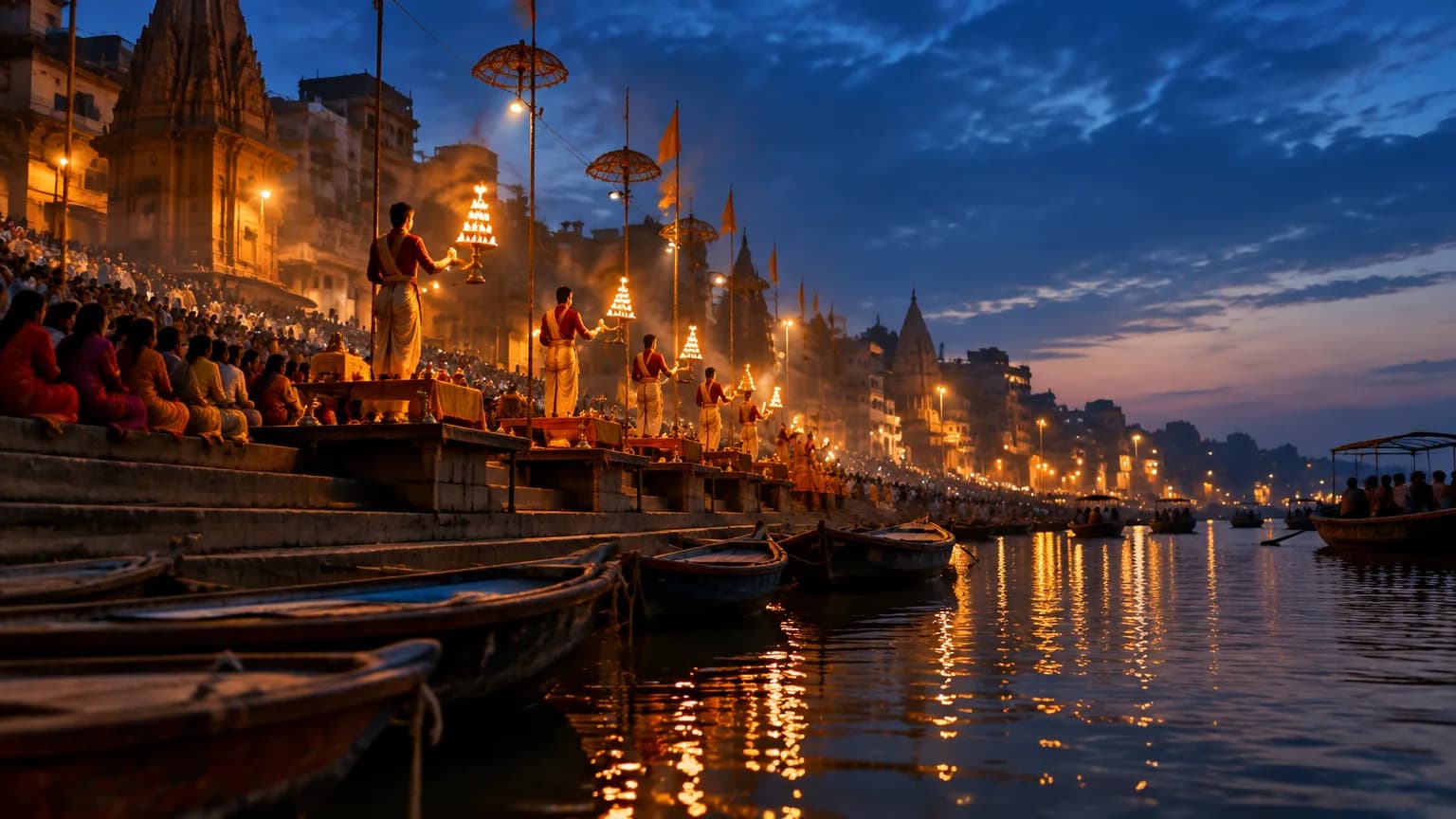
- Ganga Aarti at Dashashwamedh Ghat: the evening ritual is held every day near Kashi Vishwanath Temple, and arriving early gets you a better viewing spot.
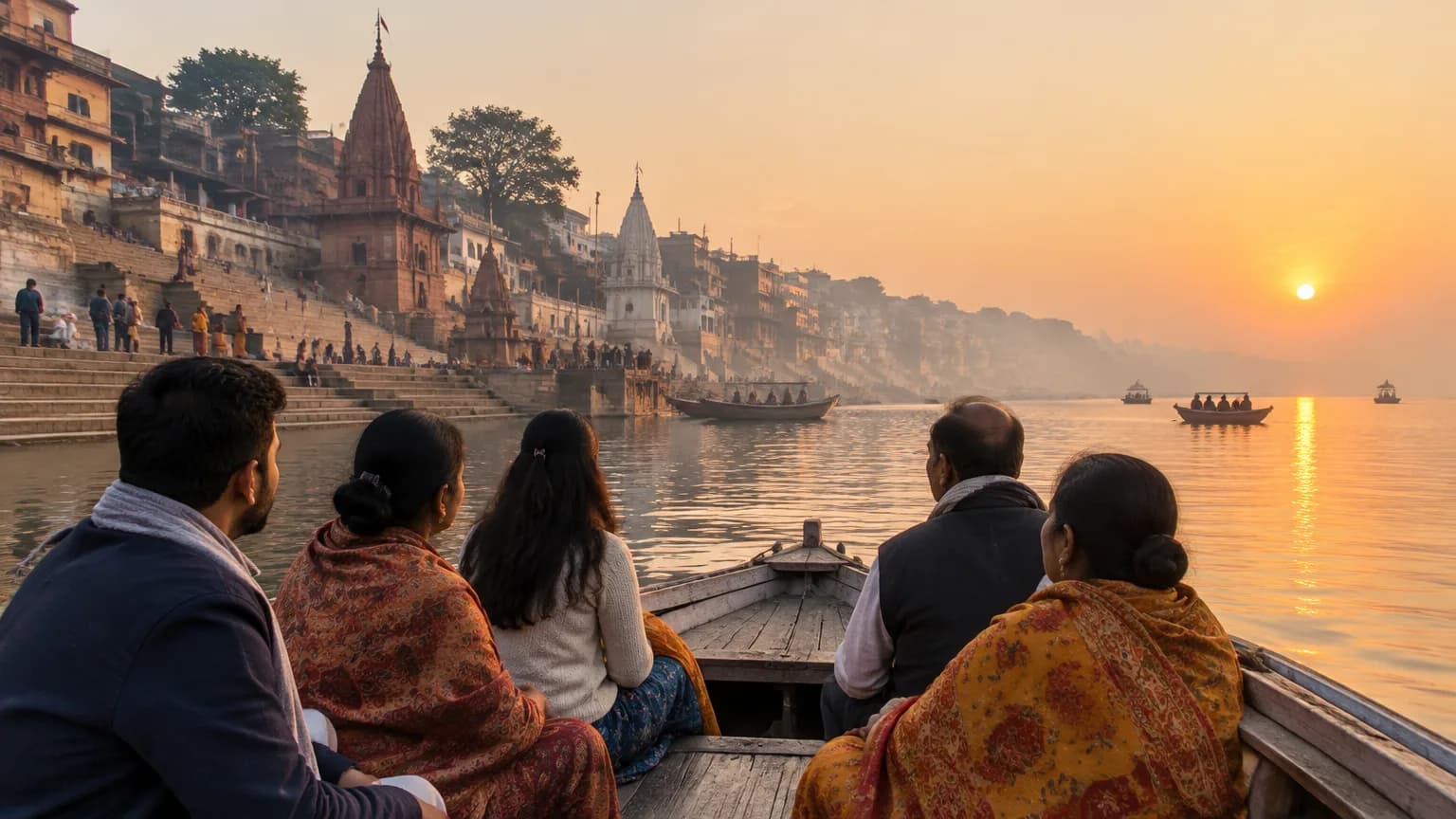
- Sunrise boat ride on the Ganga: shared boats run about Rs.80–150 per person, while a private rowboat for one to four people costs Rs.1,800–2,400 for roughly an hour (as of September 2026).
- Kashi Vishwanath Temple: dedicated to Lord Shiva and counted among the twelve Jyotirlingas, best visited before the day's queue builds.
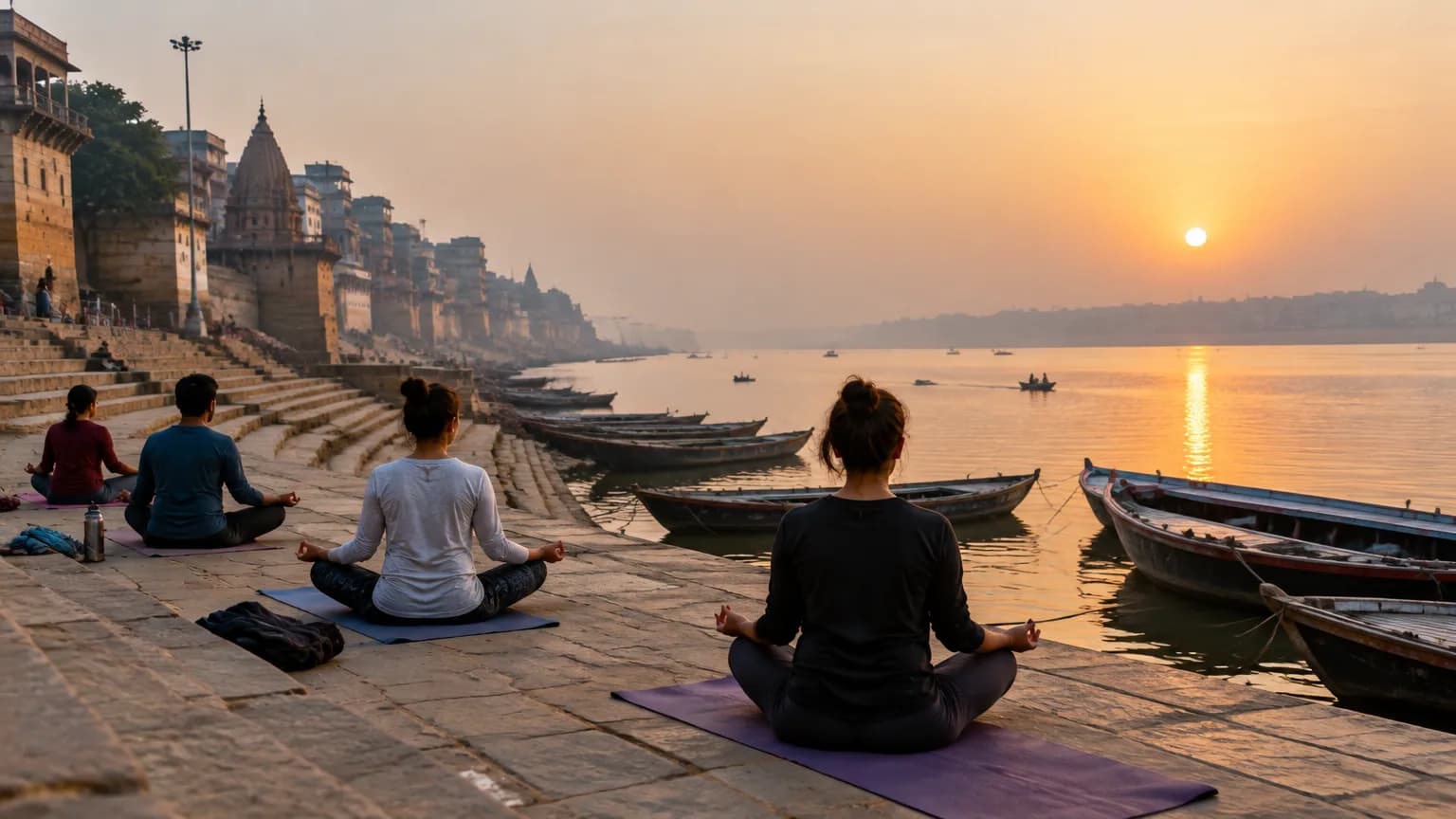
- Assi Ghat at dawn: Subah-e-Banaras brings sunrise yoga, music and devotional activity to the southern end of the riverfront.
- Sarnath: Dhamek Stupa, Mulagandha Kuti Vihara and the Archaeological Museum, which houses the Ashoka Lion Capital.
- Manikarnika Ghat and Banaras Hindu University: a walk past the cremation ghat for context, and the Indo-Gothic campus with Bharat Kala Bhavan Museum.
Is a long weekend enough for Varanasi?
Yes, if the goal is the ghats, the aarti, a boat ride, Kashi Vishwanath and Sarnath. It is not enough if you also want Bodh Gaya, which needs its own overnight.
Three nights gives you two full mornings on the river and two evenings at the ghats. The itinerary below keeps Day 3 for Sarnath and the university, and leaves Day 4 for a calm checkout.
Varanasi trip cost: what Rs.11,000 covers
The Varanasi trip cost for this package is Rs.11,000 per person, land only, on twin sharing. That covers three nights in a standard 3-4 star hotel, daily breakfast, transfers and the listed sightseeing. Flights or train tickets are not part of it.
Browse the wider range of Varanasi tour packages if three nights does not fit your dates.
Best time to visit Varanasi
October to March is the most pleasant period for walking, boat rides and cultural events, according to the official Incredible India tourism source. Pick the month by what you want to avoid.
- October to February: cool and dry. January ranges roughly 8-22 C. Fog from December to February can delay transport and activities.
- November: very high crowds and peak prices, driven by Dev Deepawali.
- March to June: hot. May runs about 26-42 C, and April to June is the harshest stretch for ghat walking.
- July to September: monsoon rain makes the ghats slippery and can affect boat services.
For better value, April and September have lower hotel rates, with the weather trade-off above. Confirm current rates at booking.
Making a short trip count
The route is compact by design: no overnight transfers and no mandatory day on the road. Sarnath is the only outing outside the city.
The biggest time-saver is a morning arrival. The airport is about 25 km from the centre, and the road transfer to the riverfront takes 45–60 minutes, longer in old-city traffic. A midday landing eats most of your first afternoon. Walking between connected ghats costs nothing and saves hours compared with hopping between them by vehicle.
What this package covers and who it suits
It covers the essentials of a first Varanasi visit: a riverfront stay, the aarti, a boat ride, the main temple and Sarnath. It suits couples on a long weekend and first-time visitors who want the standard circuit without a long itinerary.
- Couples taking a Friday-to-Monday break
- First-timers who want the main circuit in one go
- Budget-conscious travellers comfortable with 3-4 star stays
- Solo travellers or small groups can ask for a quote on room setup
What is not included
Anything beyond the listed inclusions is paid locally or separately. Plan for these:
- Flights or train tickets to and from Varanasi
- Lunch and dinner
- Entry fees at monuments and museums where charged
- Reserved or priority seating for the aarti, if offered, to be confirmed at booking
- Private rowboat upgrade, which costs more than the included shared ride
- Tips, shopping and personal expenses
How the days are organised
Day 1 is arrival and the evening aarti. Day 2 is the sunrise boat ride and Kashi Vishwanath. Day 3 is Sarnath and the university. Day 4 is checkout and departure.
Mornings are kept for the river and the temple, when the light is softer and the lanes are quieter. Afternoons carry the longer sightseeing, and evenings are left for the ghats. The ghats are connected and walkable, so there is little dead time between stops.
Ways to save or stretch the budget
- Take the shared boat for the sunrise ride. A private rowboat is a separate Rs.1,800–2,400 spend, so splitting between two people still costs far more than two shared seats.
- Eat near Assi Ghat, where restaurants and cafes are concentrated and many serve vegetarian food, including no-onion, no-garlic preparations.
- Use the Varanasi ropeway where it suits your route. Fares were set at Rs.10–50 between Cantt, Vidyapeeth, Rathyatra and Godowlia Chowk stations (June 2026).
- Travel in April or September for lower hotel rates, accepting heat or rain.
- Book rail tickets early if you are coming by train. Varanasi has direct rail links with major cities across India.
Who should pick something else
This is a quick plan, so it has limits. Choose a longer package if any of these apply:
- You want Bodh Gaya as a proper stop and not a rushed add-on
- You need a slow pace, senior-friendly scheduling or limited walking
- You plan a yoga-focused or multi-day spiritual stay
- You are travelling in peak heat or monsoon and want a more flexible plan
Where you stay: old city and Assi Ghat
Stays are in the standard 3-4 star category, chosen for access to the riverfront, not for resort facilities. The indicative tiers below are per person and derived from the listed price.
Hotel names are confirmed at booking.
Reaching Varanasi and getting around
Varanasi is reachable by air, rail and road. Direct flights run from Delhi (about 1.5 hours), Mumbai (about 2 hours) and Bengaluru (about 2.5 hours). Rail stations include Varanasi Junction, Banaras, Pt. Deen Dayal Upadhyaya Junction and Kashi.
The airport is about 25 km from the centre, and the transfer takes 45–60 minutes. The Varuna Elevated Corridor, approved in September 2026, is meant to cut Varanasi Junction to airport travel from nearly an hour to around 20 minutes once built. No permits are needed for Indian nationals, and mobile connectivity inside the city is generally workable. Confirm exact transfer times and timings at booking.