Curated starting points
Find a Philippines journey that feels like yours.
Begin with a thoughtfully paced itinerary, then change the stays, experiences, route, and budget with a Tripstor specialist.
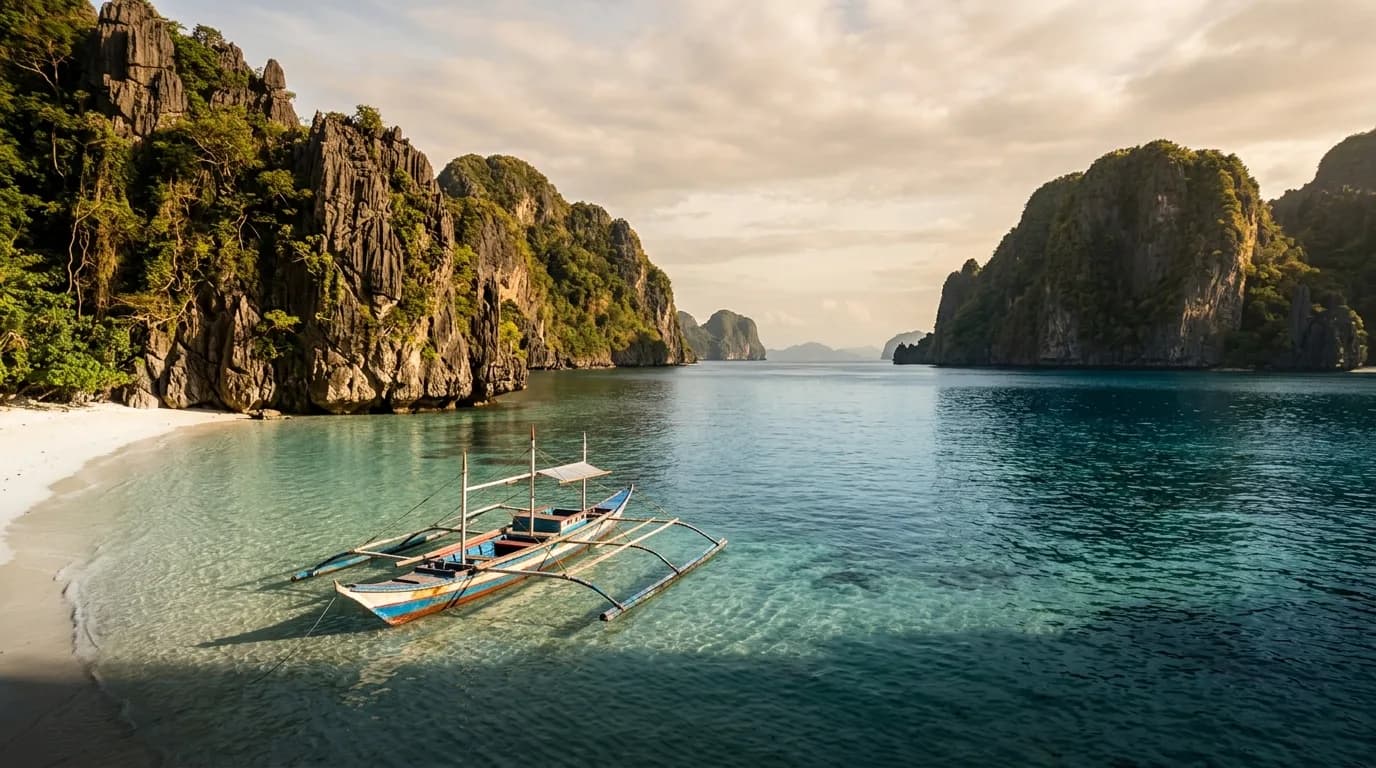
Philippines tour packages from India 2026 suit travellers who want island-hopping, calm-water swimming and a mix of city and coast. The archipelago has more than 7,600 islands across three main groups: Luzon, Visayas and Mindanao. Most Indian visitors plan four to six nights, flying into Manila or Cebu. December to February is the easiest window for beach time, though March to May works well too.
Curated starting points
Begin with a thoughtfully paced itinerary, then change the stays, experiences, route, and budget with a Tripstor specialist.
Starting from
₹54,500/ person
Destination guide
Practical context, local highlights, and honest planning advice — written for travellers from India.
Field notes
A considered guide to Philippines
The Philippines is a South East Asian archipelago with three main island groups — Luzon, Visayas and Mindanao — and a coastline that ranges from long white-sand beaches to limestone cliffs and sheltered coves. The best season for most beach trips runs from December to February, when the northeast monsoon brings cooler, drier weather and calm seas. A four to six night trip is the standard length. Manila (Ninoy Aquino International Airport) and Cebu are the main gateways, with frequent domestic flights connecting the islands.
Rainfall varies substantially by location, so monthly figures for Manila do not represent every island or province. The rainy season runs from June to November, with tropical cyclones peaking from July through October. If your dates fall in those months, plan land-based alternatives and check sea conditions before booking boat trips.
Each coastal area has a distinct character, so the right choice depends on the kind of trip you want rather than the name alone. Below are the main options for Indian travellers.
The sea is calmest from December to May, and this is when swimming, snorkelling and island-hopping operate most reliably across the Philippines. Snorkelling is available at almost every beach or resort in the country, according to the national tourism archive. Island-hopping boats run year-round in sheltered areas, but operators cancel trips when the coast guard issues weather warnings.
From June to November, the southwest monsoon brings rain and rougher seas, particularly on western coasts including parts of Palawan. Diving and snorkelling can still be good in some areas during this period, but visibility drops and boat schedules become unpredictable. Surfing picks up in specific eastern-facing spots during the rainy months, though this is a niche activity for most travellers from India. If your trip falls in the monsoon window, keep water activities flexible and plan land-based options such as the Masungi Georeserve trail, city sightseeing in Manila or cultural tours in Cebu.
December to February is the strongest window for a Philippines beach holiday: rainfall is low, temperatures sit between roughly 24°C and 31°C, and the sea is generally calm for swimming and island-hopping. This is also peak season, so flights and beachfront rooms fill up early — book at least two to three months ahead for the Christmas and New Year period.
March to May is the hot dry season. Temperatures climb, midday heat is intense, but rain is rare and swimming conditions are good. Crowds thin after the New Year rush, which can mean better room availability and slightly lower demand. The trade-off is the heat, especially in April and May.
June to November is the rainy season. July, August and September are the wettest months, and typhoon activity peaks from July through October. Boat services slow down or stop on many routes. November is a transition month with improving conditions, but rain can still disrupt beach days. Travelling in this window is possible but requires flexible plans and a willingness to adapt.
| Season | Months | Conditions | Best for |
|---|---|---|---|
| Cool dry season | December – February | Low rain, calm seas, 24–31°C | Beach, island-hopping, honeymoon |
| Hot dry season | March – May | Hot, dry, good swimming | Beach, fewer crowds post-January |
| Rainy season | June – November | Heavy rain, typhoon risk Jul–Oct | Budget travel with flexible plans |
The right base depends on your travel style and budget tier. Boracay covers all three levels: Station 1 for upscale couples who want a quieter beach, Station 2 for mid-range travellers who want evening activity nearby, and Station 3 for budget travellers who want to stay close to the sand without spending heavily on accommodation.
In Palawan, both El Nido and Coron have mid-range resorts, boutique hotels and guesthouses. El Nido draws couples and island-hopping enthusiasts; Coron is quieter and suits travellers who want a more relaxed pace. Panglao in Bohol has mid-range beach resorts that work for couples and families alike. Cebu City is a practical mid-range urban base for sightseeing and day trips, while Mactan — a short drive from Cebu — is a resort area suited to families and beach holidays. At the luxury end, private-island resorts appear in 2026 honeymoon planning information for the Philippines; these need early booking and are priced well above the standard mid-range tier.
Indian travellers fly into Manila or Cebu, connecting via a hub city. Flights from Delhi, Mumbai, Bengaluru, Chennai, Hyderabad, Kolkata, Ahmedabad and Kochi all route via Manila or Cebu, with total travel times of roughly 8 to 10 hours depending on the departure city. Domestic flights within the Philippines are frequent, which makes multi-island trips practical even on a short trip.
On the ground, jeepneys, tricycles and motorbike taxis handle short local journeys. Shared vans connect Puerto Princesa and El Nido in five to six hours. Fastcraft services link Cebu with Bohol and other island destinations in one to three hours. Larger vessels connect Manila to Puerto Princesa in about 17 hours and Manila to Coron in about 13 hours. For airport-to-resort transfers in Palawan or around Bohol, a private van booked in advance is the most comfortable option. Before renting a scooter or motorbike, confirm you hold a valid licence, wear a helmet and check the insurance cover — requirements vary by island. Public-utility-vehicle fares, including jeepney and bus fares, increased in September 2026, so confirm current fares at booking rather than relying on older guides.
Entry rules for Indian passport holders can change. Check the current requirements on the official Philippine government source before confirming your booking.
A six-night route across two or three bases keeps transfers manageable and gives a real sense of the country. Start with two nights in Cebu City or Mactan to settle in after the flight and cover the city. A fastcraft to Bohol takes one to three hours, so two nights in Panglao is an easy next step — beach time plus a land tour. Finish with two nights in El Nido or Coron in Palawan, flying from Cebu. The shared van from Puerto Princesa to El Nido takes five to six hours, so treat that as a travel day rather than a beach day.
For a four-night trip, drop one base entirely and stay put. Trying to cover three islands in four nights leaves most of the time in transit. A focused two-base trip — say Cebu and Bohol, or Manila and Boracay — is more satisfying than a rushed three-island loop.
This destination works well for honeymooners who want island-hopping, quiet coves and private-island resort options. Families with children do well in Mactan or Panglao, where the water is calm and resort facilities are close. Water-sports fans who plan around the dry season will find snorkelling and island-hopping at almost every beach. Budget travellers can use buses, shared vans and guesthouses to keep costs down, with land packages starting from Rs.24,000 per person (land only, twin sharing).
It is a less obvious choice for travellers who want a single resort stay with no internal flights, or for anyone locked into July to October dates who cannot handle rain disruptions. The multi-island nature of the trip means at least one internal flight or a long ferry ride is usually part of the plan. If that does not appeal, a single-island destination may suit better.
Tripstor offers several trip styles for this destination, each suited to a different kind of traveller.
When your dates are settled, the Philippines package page is a good place to see what a full trip includes.
Personalise your trip
Choose a travel style as your starting point. We'll refine the pace, stays, experiences, and budget until the journey feels entirely yours.
Not sure which fits? Use our trip builder — it takes under two minutes.
Got questions?
Straight answers on visas, pricing, best time to visit, and how our packages work for Indian travellers.
8 answered below
Social proof
Feedback from Indian holidaymakers who travelled with Tripstor.
4.8
from 432+ reviews
FriendsThree friends and I did a 9-night Australia package with stops in Melbourne and Sydney. We spent an afternoon at the Melbourne Cricket Ground and caught a local match. Tripstor sorted our group visa applications together which saved a lot of back and forth. Good experience overall.
FamilyBooked a family package for 7 nights covering Port Blair, Havelock, and Neil. The Cellular Jail light and sound show on Day 1 set a good tone for the trip. Kids were engaged throughout and the itinerary was not too rushed.
CoupleNorway is expensive but the experience is worth planning for. We did the Flam Railway and the Sognefjord on Day 5. Tripstor gave us a realistic budget breakdown before we booked, which I appreciated. No surprises on the ground.