Curated starting points
Find a Jordan journey that feels like yours.
Begin with a thoughtfully paced itinerary, then change the stays, experiences, route, and budget with a Tripstor specialist.
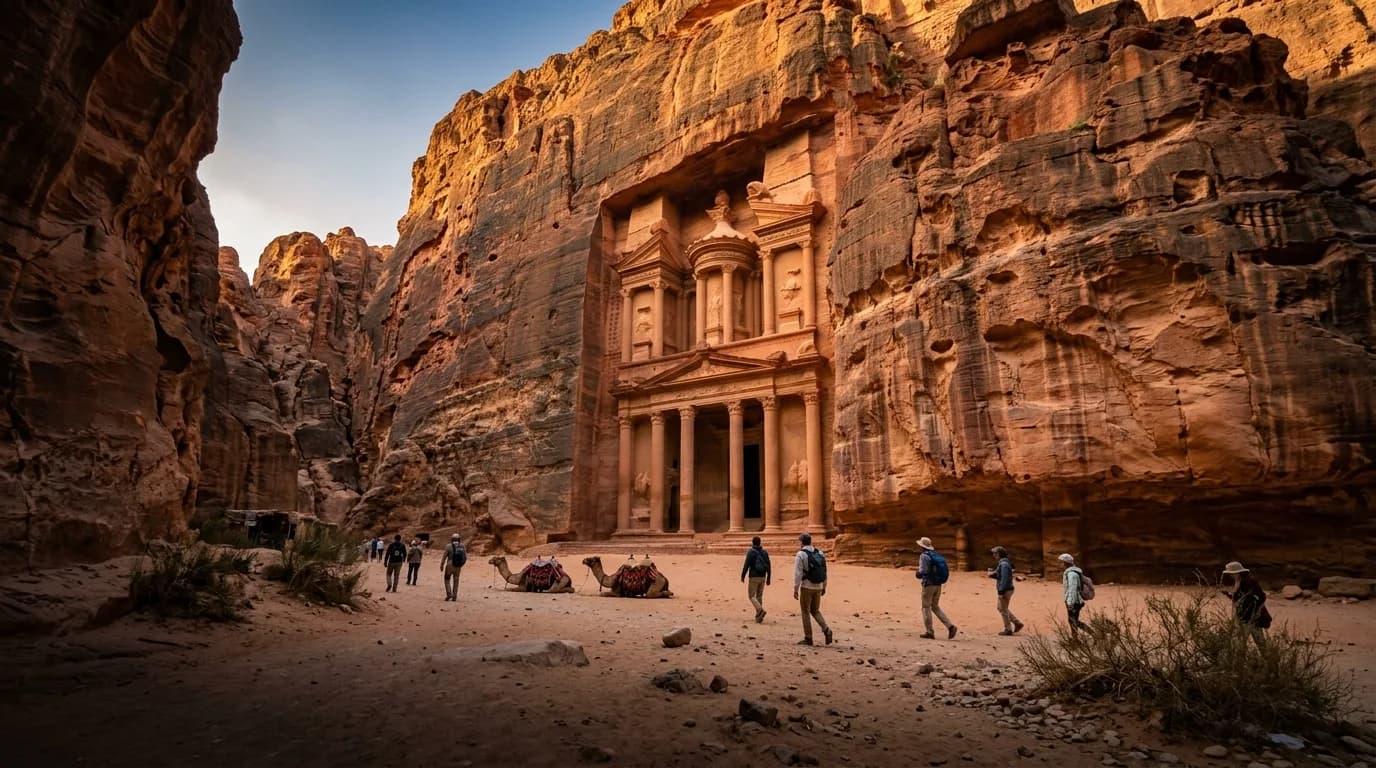
Jordan tour packages from India 2026 suit travellers who want Petra, Wadi Rum, the Dead Sea and Jerash in one unhurried circuit. The country is compact, the sites are genuine and 4–6 nights covers the main stops comfortably. Spring and autumn give the most comfortable weather for elders, families and first-timers alike.
Curated starting points
Begin with a thoughtfully paced itinerary, then change the stays, experiences, route, and budget with a Tripstor specialist.
Starting from
₹86,000/ person
Destination guide
Practical context, local highlights, and honest planning advice — written for travellers from India.
Field notes
A considered guide to Jordan
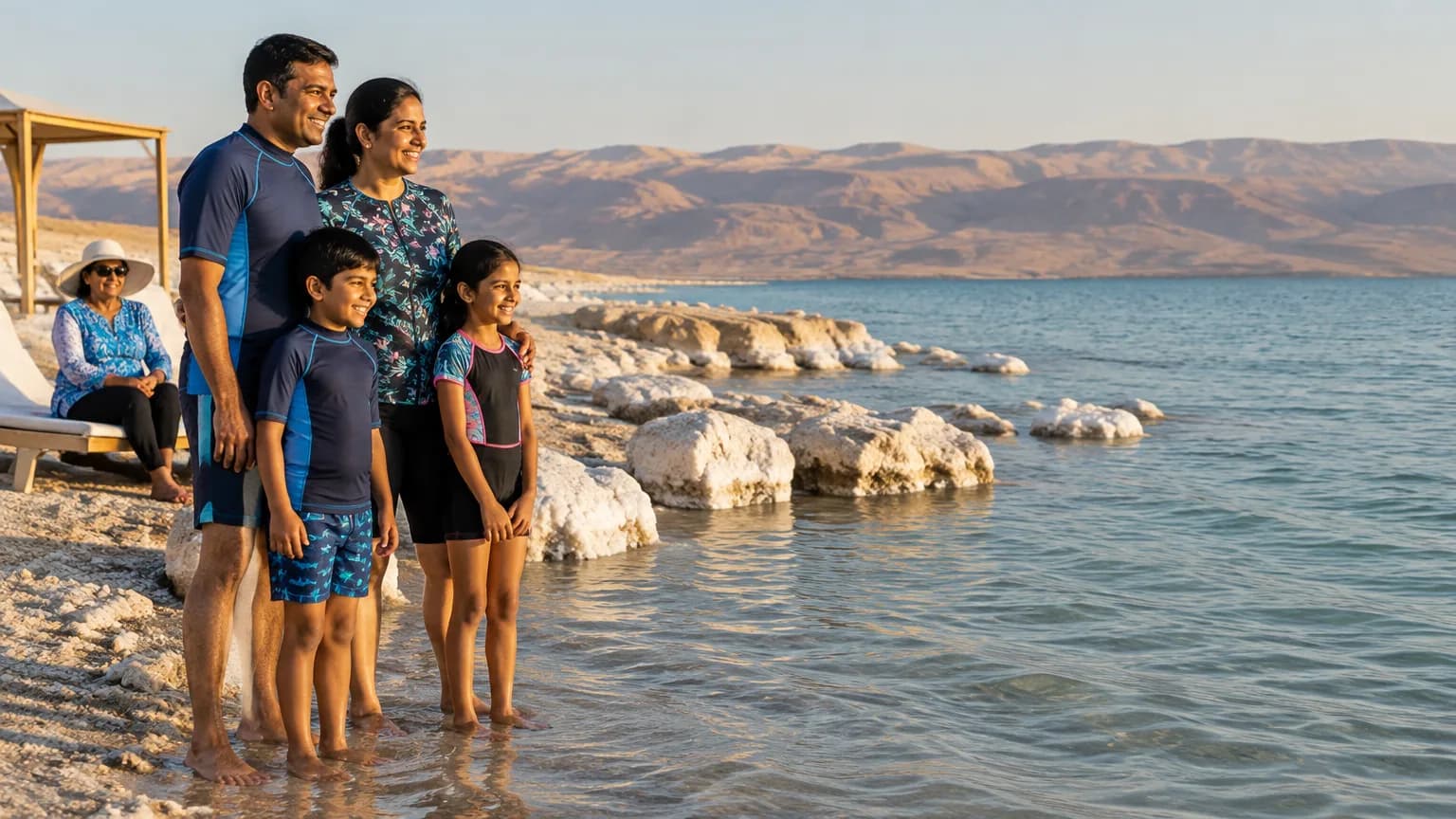
Jordan sits in the Middle East, east of the Jordan River, and its classic visitor circuit runs from Amman and the northern archaeological sites down through the central highlands to Petra, Wadi Rum and Aqaba in the south. The Dead Sea lies west of Amman along the Great Rift Valley.
The best seasons are spring (March to May) and autumn (September to November), when days are mild to warm and rainfall is low to moderate. Summer pushes past 35°C at many sites, and winter brings the highest rainfall in the northern and central highlands. An ideal trip length is 4–6 nights. The gateway is Queen Alia International Airport (AMM), approximately 35–55 minutes south of Amman by road depending on traffic.
| Area | Main Sites | Best For |
|---|---|---|
| Amman and North | Amman, Jerash, Ajlun | History, city stays, families |
| Central Jordan | Madaba, Mount Nebo, Dead Sea | Spiritual interest, wellness, elders |
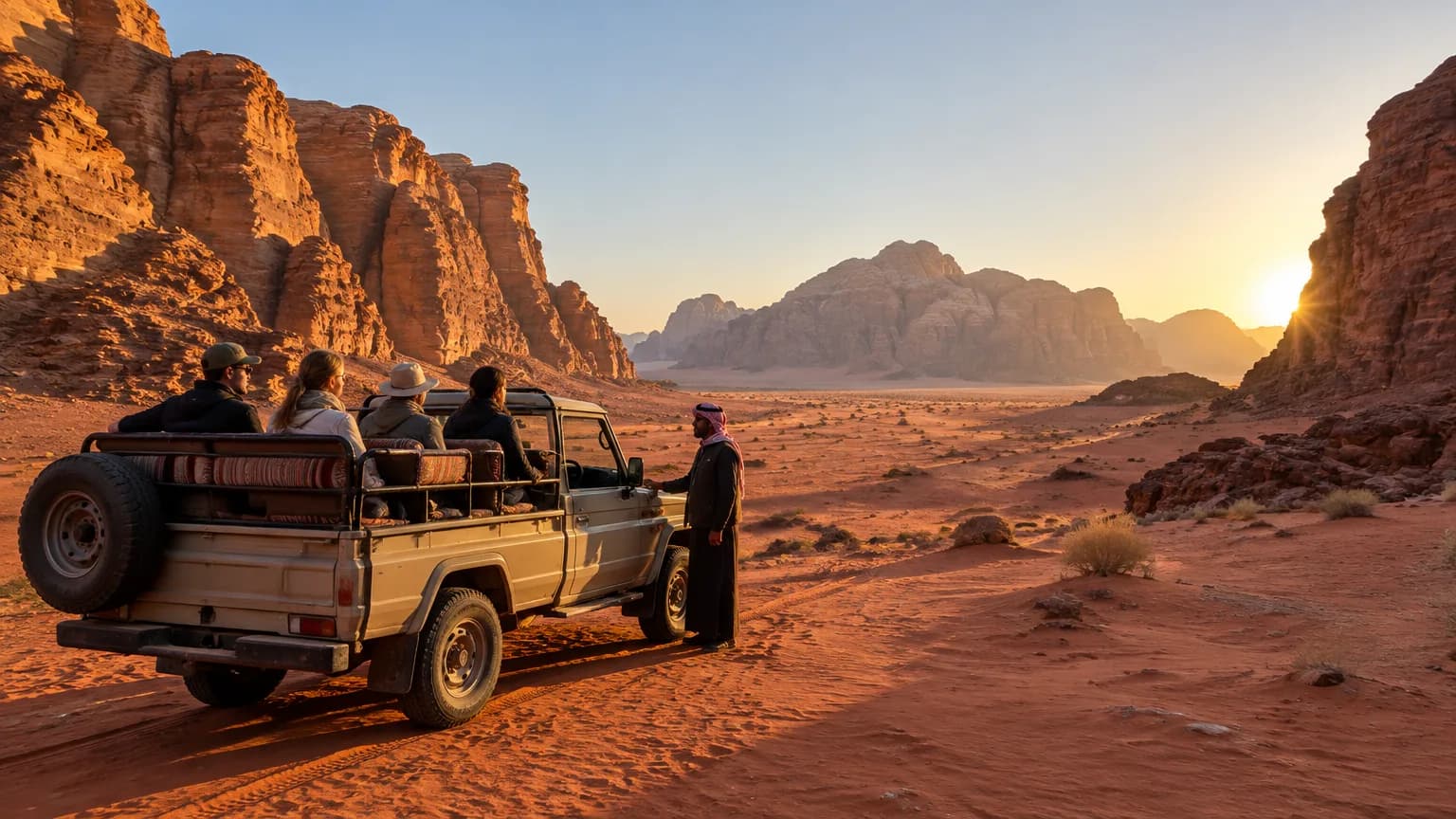
| Southern Jordan | Petra, Wadi Rum | Archaeology, desert, adventure |
| Aqaba | Red Sea coast | Beaches, diving, relaxed finish |
Jordan's heritage circuit covers ancient Nabataean cities, Roman colonnades, biblical viewpoints and protected desert landscapes, each one distinct in character and significance.
Crowds at Petra and Jerash build through the morning and peak around midday, so early starts give you clearer paths and better light for photographs. Weekends and public holidays in Jordan also bring more local visitors, and Friday mornings can be busier at some sites.
Dress modestly at all heritage and religious sites: covered shoulders and knees are the practical norm, and a light scarf is useful for sun, dust and entering any active religious space. Comfortable closed shoes with grip are essential, as Petra and Jerash involve uneven stone paths, steps and some sandy stretches. Sandals are not ideal for either site.
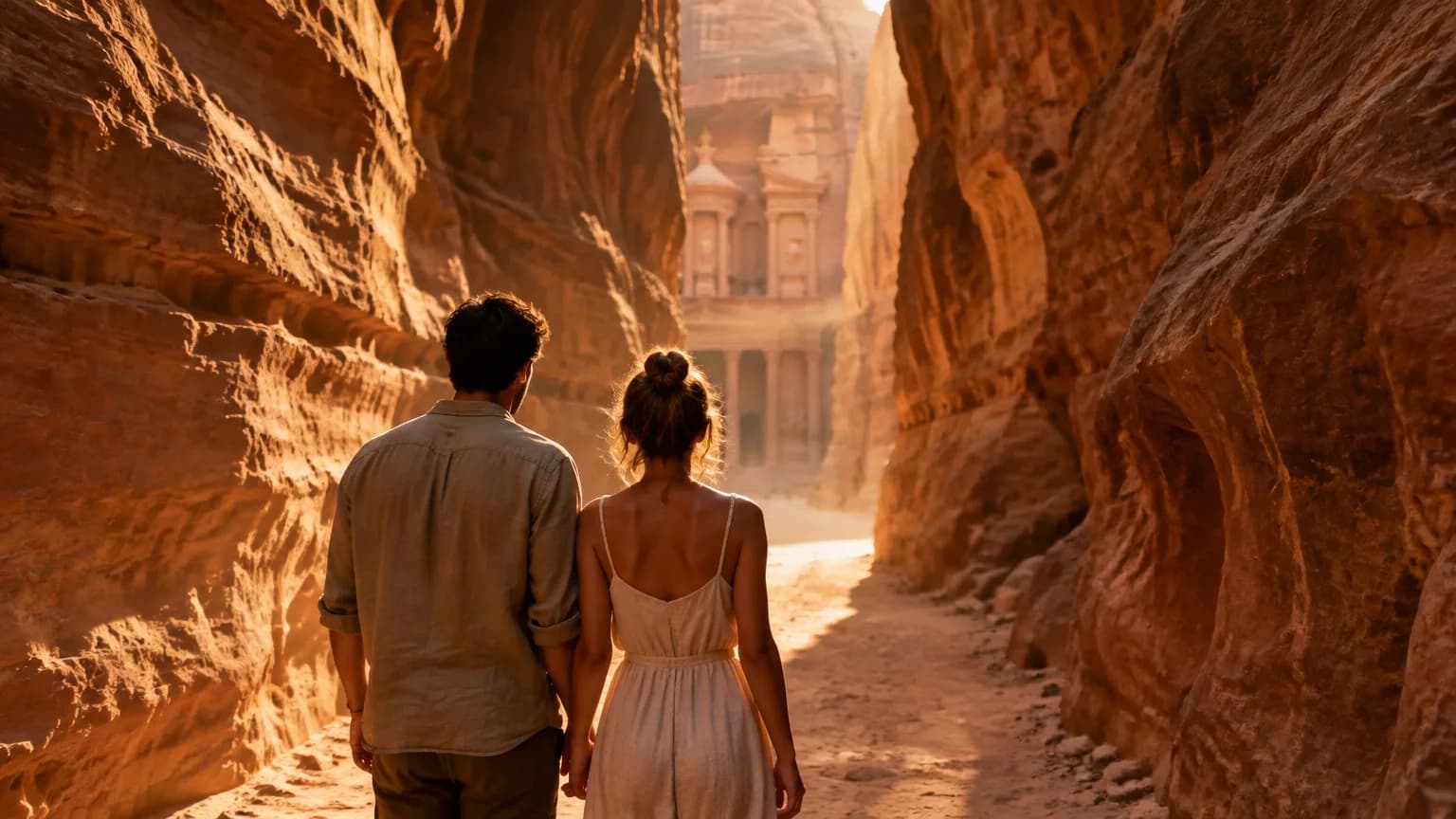
Petra may close during forecast heavy rain because of flash-flood risk in the Siq. If your visit falls in the wetter months, check with your guide or the site office on the day. Photography rules vary by location — follow posted signs and ask before photographing people or religious interiors. Confirm current opening arrangements and any special-entry options locally or through your booking contact before you travel, as rules can change by season.
March to May and September to November are the most comfortable months for visiting Jordan's heritage sites. April, May and October are peak crowd and peak price periods, while June to August is hot and dry with temperatures often above 30°C, and December to February is cool with the highest rainfall concentrated in the northern and central highlands.
Jordan's festival calendar includes Ramadan, Eid al-Fitr and Eid al-Adha, whose dates shift each year on the Gregorian calendar. Travelling during these periods can mean different opening hours at some sites, busier domestic travel and a more subdued daytime rhythm in towns. The atmosphere during Ramadan evenings is distinctive, but if comfort and full site access matter more, plan around these periods. Check the dates for your travel window before confirming flights.
Flash flooding is a real risk in Petra's Siq during heavy rain. If your trip falls between November and March, keep one flexible day in Wadi Musa so a site visit can shift if authorities announce a closure.
Queen Alia International Airport (AMM) is the standard gateway for Indian travellers. Most connections from India involve one stop through a Gulf hub or another major regional airport. Flight durations and layover times vary by route, so check current options at the time of booking rather than relying on a fixed figure.
Stay choices change with budget and which sites you are prioritising. In Amman, mid-range hotels in central areas like Jabal Amman keep sightseeing, shopping and onward transport close. Near Petra, Wadi Musa has guesthouses and budget-to-mid hotels within easy reach of the site entrance. Wadi Rum uses Bedouin-style desert camps where facilities are simpler but the setting is the point — most camps include dinner and breakfast. The Dead Sea area around Sweimeh has upscale spa resorts suited to wellness travellers and elders. Aqaba has Red Sea hotels across a range of price levels, suited to a relaxed final night or two.
Entry rules, customs allowances and any health requirements can change. Check the current rules on the official government source before booking flights or transfers. Visa details, fees and processing times are covered in a separate guide.
Start in Amman, since the airport is close and the city is the main transport hub. Two nights here work well, with one full day for Jerash and Ajlun and another for Madaba and Mount Nebo. Both day trips are manageable by private transfer or taxi from Amman.
From Amman, move south to Wadi Musa for two nights so Petra gets a full day and a possible second morning for the parts most visitors miss. Then continue to Wadi Rum for one night in a desert camp. The Wadi Musa to Wadi Rum village journey takes around 1 hour 45 minutes by taxi (confirm current fares at booking). From Wadi Rum, Aqaba is roughly 1–1.5 hours by JETT bus or taxi, and one or two nights there rounds off the trip before the return to Amman.
For elders and those with limited mobility, keep one full rest afternoon after Petra and avoid pairing two major walking sites on the same day. A 6-night trip covering Amman, Petra, Wadi Rum and Aqaba is a comfortable pace. A 4-night trip usually means Amman, Petra and the Dead Sea, which is still a satisfying circuit. The Dead Sea stop works well as either a first-night ease-in or a final rest before flying.
Pure vegetarian food is available across Jordan but needs some planning, particularly outside the main cities. Jordanian kitchens use lamb, chicken and yoghurt widely, so the reliable vegetarian staples are mezze dishes: falafel, hummus, mutabbal, tabbouleh, fattoush, stuffed vine leaves, lentil soup and fresh flatbread. These appear on menus in most local restaurants and hotel buffets throughout the country.
Jain-friendly eating is harder to find outside Amman and Aqaba. In the cities, Indian and Middle Eastern restaurants can often prepare dishes without onion and garlic on request, and hotel kitchens will usually adjust if you ask a day ahead. In Wadi Rum and smaller towns, the kitchen options are limited, so carry dry snacks, fruit and ready-to-eat items as backup. Bedouin camp dinners typically include bread, rice, salads and cooked vegetables alongside meat dishes — ask the camp in advance about a vegetarian plate.
When ordering, specify no meat, no fish and no egg clearly, and confirm whether the kitchen uses separate utensils. Bottled water is the safe default throughout the trip.
Tripstor structures Jordan trips across several themes, so the pace and focus can match what you are actually looking for rather than a generic itinerary.
Land-only arrangements start from Rs.35,000 per person on twin sharing; confirm at booking what each package includes and excludes.
Jordan is generally respectful and unhurried for older travellers, but the main heritage sites involve real walking and uneven ground, so a little preparation makes a significant difference.
Check the current entry rules on the official government source before you travel, as requirements for Indian passport holders can change with little notice.
To see this turned into a complete trip, have a look at the Jordan holiday packages.
Personalise your trip
Choose a travel style as your starting point. We'll refine the pace, stays, experiences, and budget until the journey feels entirely yours.
Not sure which fits? Use our trip builder — it takes under two minutes.
Got questions?
Straight answers on visas, pricing, best time to visit, and how our packages work for Indian travellers.
8 answered below
Social proof
Feedback from Indian holidaymakers who travelled with Tripstor.
4.8
from 432+ reviews
FamilyTravelled with my parents who are in their late 50s. Tripstor recommended two full acclimatization days in Leh before any high-altitude drives and that made a real difference. Tso Moriri was quieter than Pangong and honestly more worth the drive.
HoneymoonHoneymooned in Kashmir for 7 nights in May. Gulmarg had light snow still and we got a gondola ride on Day 4. The tulip garden in Srinagar was in full bloom. Tripstor arranged a candlelit dinner on the houseboat which was a nice touch.
FamilyBooked a family package for 7 nights covering Port Blair, Havelock, and Neil. The Cellular Jail light and sound show on Day 1 set a good tone for the trip. Kids were engaged throughout and the itinerary was not too rushed.