
Curated starting points
Find a Darjeeling journey that feels like yours.
Begin with a thoughtfully paced itinerary, then change the stays, experiences, route, and budget with a Tripstor specialist.
Darjeeling · Flexible itinerary
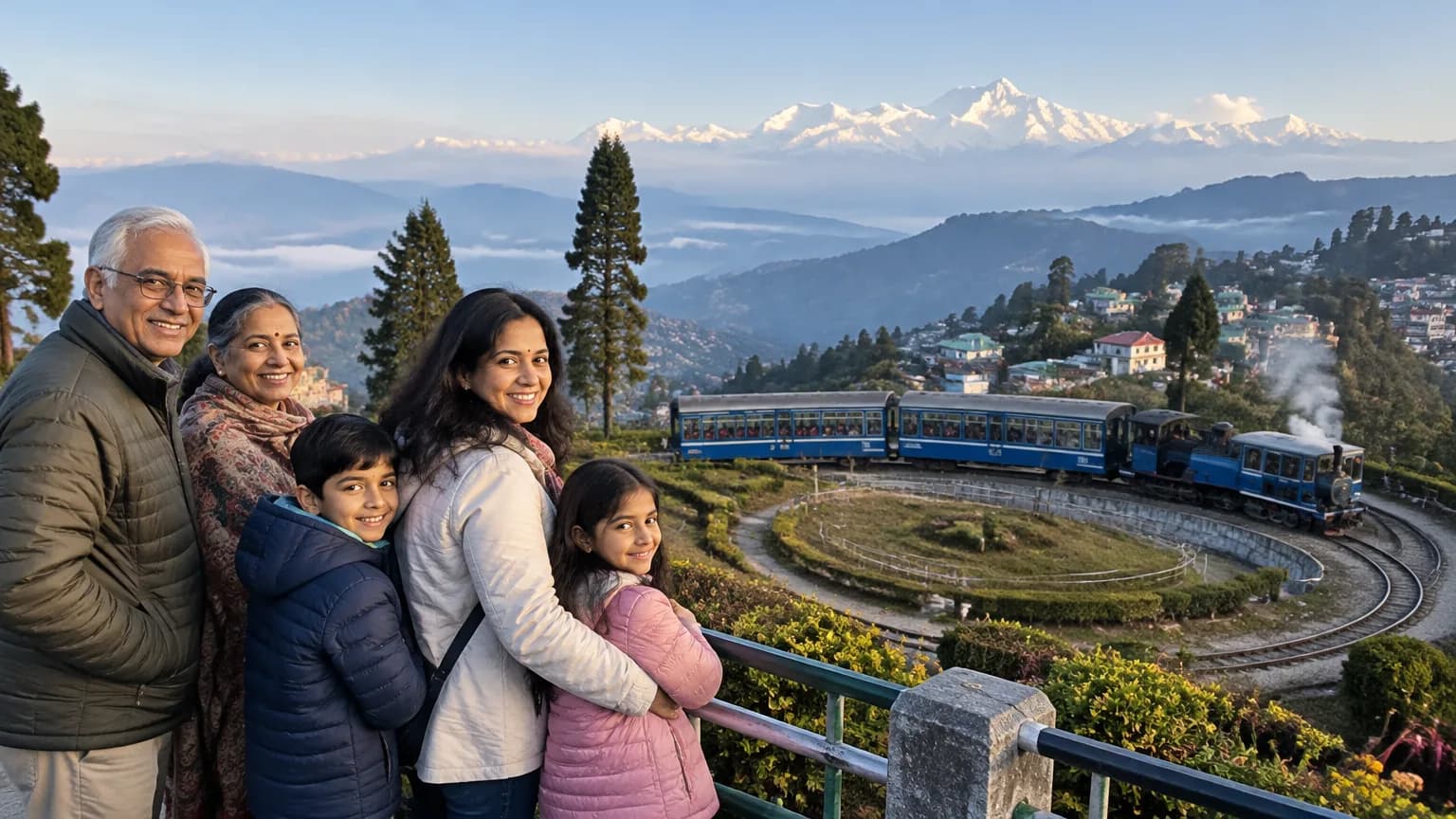
Darjeeling Toy Train & Zoo Family Holiday 6N 7D
Starting from
₹17,500/ person
Darjeeling · Flexible itinerary
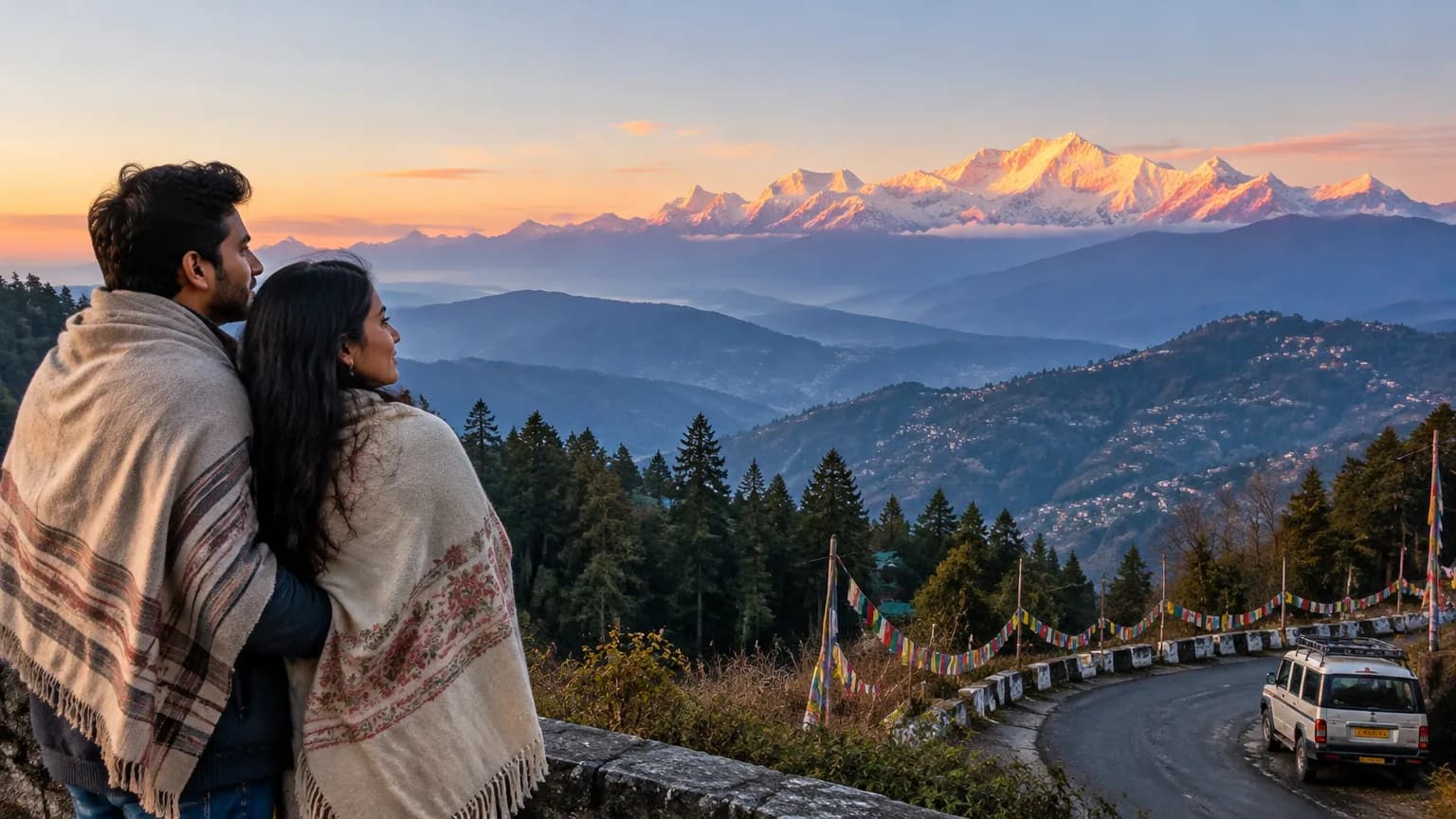
Darjeeling Tiger Hill Honeymoon 5N 6D
Starting from
₹17,000/ person
Destination guide
Know Darjeeling before you go.
Practical context, local highlights, and honest planning advice — written for travellers from India.
Field notes
A considered guide to Darjeeling
Altitude, access and season at a glance
Darjeeling is a Himalayan hill town in East India at roughly 2,000 metres, which is mid-altitude: cool all year, cold in winter and manageable for most healthy travellers. The nearest airport is Bagdogra (IXB) and the main railhead is New Jalpaiguri (NJP). Six to eight nights suits a broader North Bengal trip.
The town spreads over ridges and slopes, so even a short walk from the mall to a viewpoint involves real climbs. Siliguri is the lowland access point for road and rail journeys, and every route into the hills ends with a winding climb.
| Detail | What to know |
|---|---|
| Region | East India, northern West Bengal |
| Altitude | Mid-altitude, about 2,000 metres |
| Gateway airport | Bagdogra Airport (IXB), about 70 km and 3 to 3.5 hours by road |
| Gateway railhead | New Jalpaiguri (NJP), about 3 hours by taxi or shared jeep |
| Clearest months | October to December and March to April |
| Cold, dry months | December to February, with possible snow on higher ridges |
| Wet months | June to September, with mist and landslide risk |
| Ideal trip length | Six to eight nights for a broader North Bengal trip; three to four nights for town and Ghum only |
Packages for Darjeeling start from Rs.8,500 per person, land only and twin sharing. Confirm at booking what each itinerary includes, since transfers, meals and sightseeing vary.
Valleys, viewpoints and places worth the climb
The sights cluster around Darjeeling town, Ghum and the Singalila Ridge. Planning by area keeps you from crossing the same hill roads twice in a day.
Darjeeling town and nearby
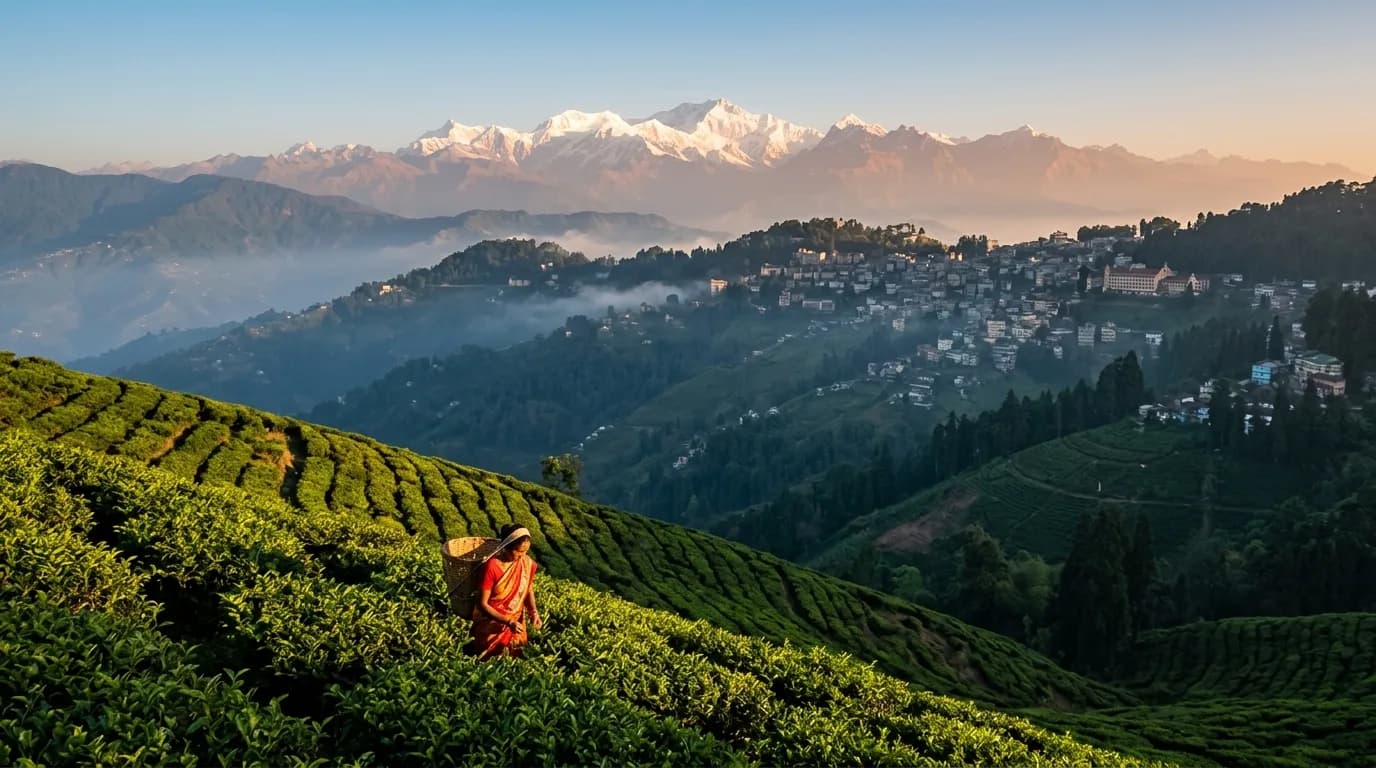
- Tiger Hill: a sunrise viewpoint for Kanchenjunga and, on clear days, Mount Everest. It is also used for hiking and birdwatching. Leave early, because cloud tends to build by mid-morning.
- Darjeeling Himalayan Railway toy train: the Darjeeling to Ghum return joyride takes about two hours through hill scenery and tea country. Book through the railway system, since services can be cancelled.
- Padmaja Naidu Himalayan Zoological Park: works to preserve Himalayan species such as red pandas, snow leopards and Tibetan wolves.
- Himalayan Mountaineering Institute: a museum commonly visited together with the zoo.
- Darjeeling Rangeet Valley Passenger Ropeway: a cable-car ride over the landscape, handy if you want to avoid another uphill walk.
- Tea plantations: walk through the gardens and sample Darjeeling tea, including the four flushes at Happy Valley.
Ghum and the ridge
- Batasia Loop: a railway loop with a war memorial honouring Gorkha soldiers of the Indian Army.
- Ghoom Monastery: included in most sightseeing routes along with Tiger Hill, the zoo and the tea gardens.
- Singalila National Park: the trekking and wildlife zone along the ridge towards Tonglu, Sandakphu and Phalut. It supports trekking, camping, climbing and paragliding.
- Tenzing and Gombu Rocks: climbing rocks named after mountaineers, good for a short technical session.
Snow, monsoon and clear-sky months
Snow is possible but never guaranteed. It falls mainly on the higher ridges, most often in January and February, when town temperatures run about 2 to 11 C. Clear mountain views come mainly in October to December and again in March to April.
Here is how the year breaks down for planning, based on typical monthly conditions:
- December to February: cold and generally dry, with chilly mornings and evenings. Crowds and prices are low.
- March to April: cool to pleasant, about 8 to 19 C, with rainfall increasing. April crowds and prices rise.
- May: mild to warm, 13 to 21 C, with showers building before the monsoon.
- June to September: cool, wet and cloudy. Heavy or near-continuous rain, mist and rain-related landslides can disrupt hill travel.
- October to November: pleasant, 9 to 19 C, with declining rainfall. October is busy; November is quieter and cheaper.
Match the window to the traveller. Families and first-timers do best in October to December or March to April. Trekkers should look at October to November or April. Anyone chasing snow should choose January or early February and be ready for it to appear on the ridge rather than on the mall road. Budget travellers will find November and the winter months cheapest.
Roads, rail and altitude: reaching Darjeeling
Darjeeling has no airport or broad-gauge railway station of its own. Travellers fly into Bagdogra or take a train to New Jalpaiguri or Siliguri, then continue by road. According to the Incredible India tourism portal, Bagdogra is the nearest airport. The last stretch is always a winding hill road.
| Travelling from | Usual route | Rough journey time |
|---|---|---|
| Delhi | Flight to Bagdogra, then road | About 2.5 hours in the air |
| Mumbai | Direct or connected flight to Bagdogra, then road | About 4 hours in the air |
| Pune | Flight to Bagdogra, then road | About 2.8 hours in the air |
| Bengaluru, Chennai, Hyderabad | Flight to Bagdogra, then road | Confirm at booking |
| Kolkata | Train to New Jalpaiguri, then road | About 12 hours by train |
From Bagdogra, the road to Darjeeling is about 70 km and takes roughly 3 to 3.5 hours. From New Jalpaiguri it is about 3 hours by taxi or shared jeep. Prepaid taxis operate from both the station and the airport. The Darjeeling Himalayan Railway also links New Jalpaiguri with Darjeeling via Siliguri and Kurseong, though most travellers use it for the short joyride.
Weather decides how smooth the last stretch is. Heavy monsoon rain, mist and landslides can slow or block the hill road, and winter fog can delay early departures. Keep a buffer day at the start or end of the trip, especially if you have an onward flight to catch. Avoid scheduling a tight same-day connection out of Bagdogra after a hill drive.
On altitude, most people are comfortable at about 2,000 metres. Take the first afternoon easy, drink water and skip alcohol on arrival. If you plan to trek on the Singalila Ridge, gain height gradually and do not push on through a headache or breathlessness.
Base towns and where to stay
Most travellers base in Darjeeling town and add one quieter stop. Choose the base by what you want within walking distance.
- Chowrasta and The Mall: central, with shops, bars and restaurants. Best for couples and first-timers. Mostly mid-range hotels and lodges.
- Ghoom: associated with culture and heritage, near the monastery, Batasia Loop and the toy train route. Suits couples and rail enthusiasts. Mid-range stays.
- Lepchajagat: a quiet natural setting with retreats. Suits travellers who want silence and forest. Mid-range resorts and homestays.
- Jorethang: a cosy area with mountain views. Mid-range options.
By budget, expect homestays and simple guesthouses at the lower end, family lodges and mid-range hotels in the middle, and resorts with better views and heating at the top. In winter, ask about room heating before you confirm, and check whether breakfast and transfers are part of the tariff.
Pacing the route
The best pacing uses two or three bases with a rest day, not a new hotel every night. A relaxed outline for packages for Darjeeling looks like this:
- Arrival and Darjeeling town (3 nights): transfer from Bagdogra or New Jalpaiguri, then Tiger Hill, the toy train, the zoo, the ropeway and a tea estate. Keep the first afternoon light.
- Ghoom or Lepchajagat (1 to 2 nights): slower walks, monastery and railway loop, or a forest retreat.
- Optional Singalila Ridge trek (3 to 4 nights): towards Tonglu and Sandakphu, with a rest day before you start.
- Departure buffer: one spare day before any flight out of Bagdogra.
Weather reshapes this. In the monsoon, drop the ridge trek, stay at lower bases and keep a spare day in hand. In winter, wait for morning fog to lift before sightseeing and save sunrise outings for the clearest forecast. In spring, book the toy train and popular viewpoints early, since crowds and prices rise.
Who Darjeeling suits, and who may prefer another hill trip
Darjeeling suits travellers who enjoy mountain scenery, tea gardens, viewpoints, photography, trekking and heritage rail travel. It is less suited to anyone who expects a destination with its own airport or broad-gauge railway station.
- Families with elders or children: workable with a slow pace and private taxis on steep stretches. The toy train, Batasia Loop and the zoo are short and easy.
- Couples: sunrise at Tiger Hill, tea estate walks and a compact town for evenings.
- Adventure seekers: Singalila Ridge treks, climbing rocks and paragliding options.
- First-timers to the Himalayas: a good mix of rail heritage, tea and mountain views that is easy to plan.
Be honest about the limits. The road up from Bagdogra or New Jalpaiguri is long and winding, winter is properly cold, and medical access in the hills is more limited than in a plains city. Anyone with heart or lung conditions should speak to a doctor before travelling. If long hill drives or cold are a deal-breaker, a lower, warmer hill stay may suit better.
Ways to travel to Darjeeling
Tripstor offers several trip styles for this destination. Pick by time available and how much walking you want.
- Short Getaway: a compact break around Darjeeling town and Ghoom, for those with limited leave.
- Best of: covers the main sights in one trip, for first-time visitors.
- Family: slower pace and private transfers, suited to children and elders.
- Honeymoon: sunrise points, tea estates and quieter stays for couples.
- Budget: shared transport, walking sightseeing and simpler stays.
- Cultural & Heritage and: toy train, monasteries and tea gardens for travellers who want context as well as views.
- Adventure and Trekking & Camping: Singalila Ridge routes and camping for active travellers.
- Offbeat Explorer: quieter villages and slower routes away from the main circuit.
- Summer: a cooler escape from the plains, best planned with the monsoon in mind.
Once the plan feels right, compare the current Darjeeling packages and pick the one that fits.
Cold, health and gear tips
Five things to sort out before you leave the plains.
- Layers, not one heavy coat. A thermal base, fleece and windproof shell handle cold mornings better than a single jacket. Add gloves, a cap and warm socks for sunrise outings.
- Altitude basics. Take day one slowly, drink water and avoid alcohol. Tell your guide if a headache or breathlessness does not settle, and do not climb higher while symptomatic.
- Medicines. Carry regular prescriptions, a basic first-aid kit and motion-sickness tablets for the hill road. Medical access is limited, so travel insurance is sensible.
- Road-travel timing. Start the Bagdogra or New Jalpaiguri transfer in the morning. Afternoon mist, monsoon rain and winter fog slow the climb, and landslide clearance can add hours.
- Phone signal and cash. Signal is patchy on the ridge and in villages. Carry enough cash for shared jeeps, small cafes and tips, since card machines can be unreliable outside town. Download offline maps before you leave.
Personalise your trip
Shape Darjeeling around the way you travel.
Choose a travel style as your starting point. We'll refine the pace, stays, experiences, and budget until the journey feels entirely yours.
Not sure which fits? Use our trip builder — it takes under two minutes.
Got questions?
The questions travellers ask about Darjeeling.
Straight answers on visas, pricing, best time to visit, and how our packages work for Indian travellers.
8 answered below
Social proof
What Tripstor travellers say
Feedback from Indian holidaymakers who travelled with Tripstor.
4.8
from 432+ reviews
FamilyBooked a family package for 7 nights covering Port Blair, Havelock, and Neil. The Cellular Jail light and sound show on Day 1 set a good tone for the trip. Kids were engaged throughout and the itinerary was not too rushed.
CoupleNorway is expensive but the experience is worth planning for. We did the Flam Railway and the Sognefjord on Day 5. Tripstor gave us a realistic budget breakdown before we booked, which I appreciated. No surprises on the ground.
HoneymoonHoneymooned in Kashmir for 7 nights in May. Gulmarg had light snow still and we got a gondola ride on Day 4. The tulip garden in Srinagar was in full bloom. Tripstor arranged a candlelit dinner on the houseboat which was a nice touch.