

Curated starting points
Find a Brazil journey that feels like yours.
Begin with a thoughtfully paced itinerary, then change the stays, experiences, route, and budget with a Tripstor specialist.

Brazil · Flexible itinerary
Brazil Copacabana Beach Family Holiday 7N 8D
Starting from
₹1,60,000/ person
Brazil · Flexible itinerary
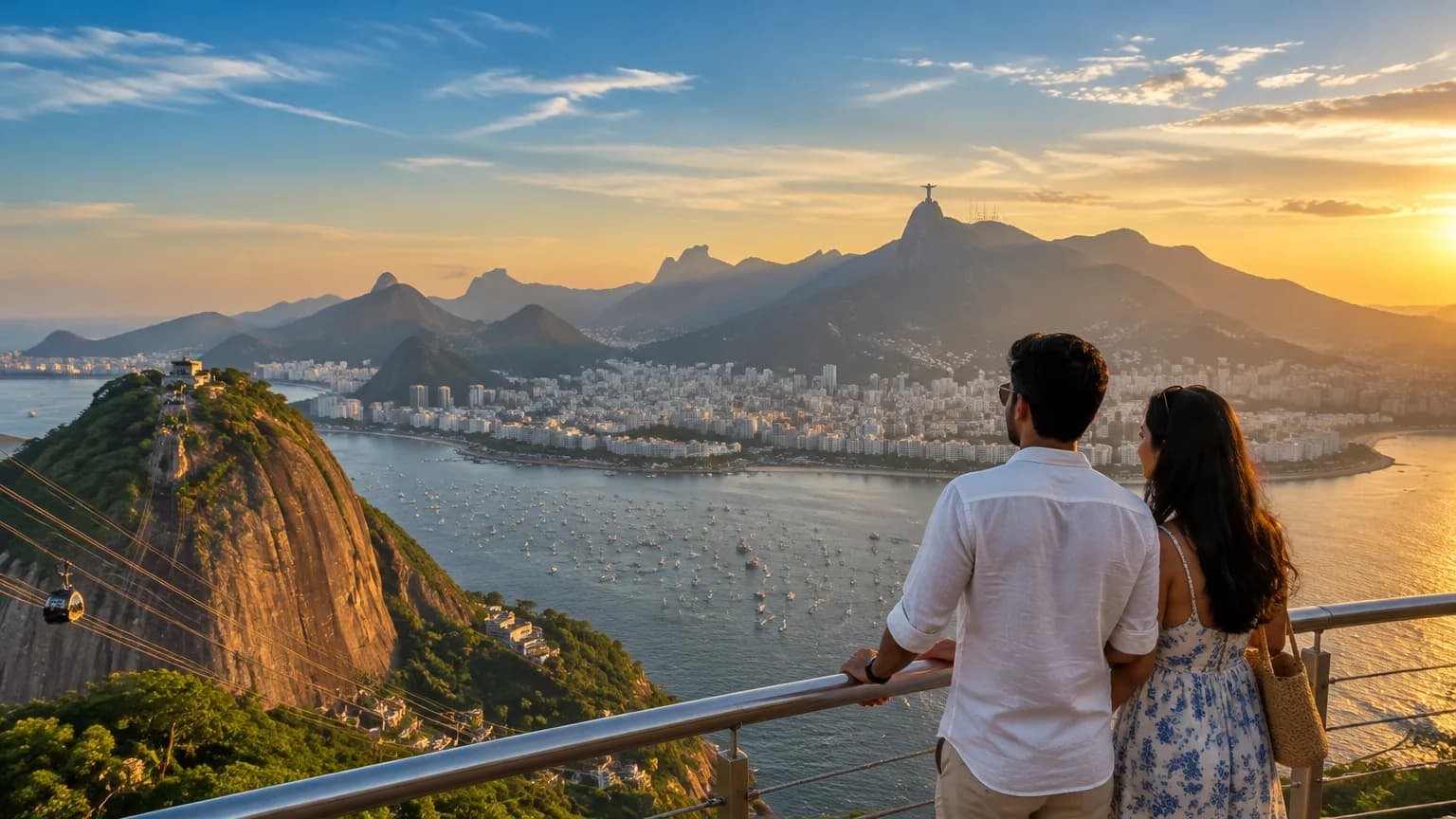
Brazil Sugarloaf Mountain Honeymoon 8N 9D
Starting from
₹1,89,000/ person
Destination guide
Know Brazil before you go.
Practical context, local highlights, and honest planning advice — written for travellers from India.
Field notes
A considered guide to Brazil
Brazil at a Glance
Brazil is a South American country spanning five geographic regions — North, Northeast, Central-West, Southeast and South — with a coastline of 7,491 km and landscapes ranging from Amazon river basins to open Pantanal wetlands. Most trips combine two or three bases linked by domestic flights, because distances between regions are very large.
| Detail | What to Know |
|---|---|
| Region | South America |
| Trip type | Multi-city, multi-region |
| Best season | June to September |
| Ideal trip length | 6 nights (express), 8 nights (Rio–São Paulo–Iguaçu), 9 nights (premium) |
| Main international gateways | São Paulo–Guarulhos (GRU), Rio de Janeiro–Galeão (GIG) |
| Regional gateways | Manaus (MAO), Salvador (SSA), Recife (REC), Fortaleza (FOR), Foz do Iguaçu (IGU), Belém (BEL) |
| Starting price (land only) | From Rs. 50,000 per person, twin sharing |
Why Travellers Choose Brazil
Three things consistently pull Indian travellers to this destination: the scale and variety of its landscapes, the depth of its living culture, and a domestic aviation network that makes multi-region travel practical once you plan ahead.
- Landscape variety within one border. The Amazon rainforest and river system, the Pantanal wetlands, Iguaçu Falls and 7,491 km of coastline all sit within the same country. A single trip can pair a jungle lodge near Manaus with beach time in Rio or Salvador — no second destination needed.
- Culture you can step into directly. Rio's samba scene, the Pelourinho historic district in Salvador with its Afro-Brazilian music, and food traditions such as feijoada, acarajé and moqueca give the trip a strong local texture that goes well beyond sightseeing.
- A workable route for Indian travellers. Domestic aviation is well developed — 33.7 million domestic passengers flew in Brazil in the first four months of 2026 alone, up 6.5 percent on the same period in 2025. One or two stops from India land you at GRU or GIG, and internal flights connect the regions efficiently. English is limited outside hotels, so pre-booked transfers and offline maps help.
Top Places and Areas in Brazil
Most first-time visitors build their route around the places below. Each one has a distinct character, and knowing what each offers helps you decide which two or three to combine.
- Rio de Janeiro. Christ the Redeemer on Corcovado, Sugarloaf Mountain reached by cable car, and the beaches of Copacabana and Ipanema. The Museum of Tomorrow and Tijuca National Park fill a spare morning. Book Christ the Redeemer and Sugarloaf slots in advance — walk-up queues are long.
- Iguaçu Falls, Foz do Iguaçu. A waterfall system with boardwalk access, boat tours that take you into the spray, and the Sendero Macuco jungle trail nearby. Carry a dry bag on the boat tour. Two nights in Foz do Iguaçu is enough to cover both the Brazilian and Argentine sides.
- Manaus and the Amazon. Riverboat expeditions and the Meeting of the Waters tour operate from Manaus. Anavilhanas National Park on the Rio Negro and the Central Amazon offer boat trips, animal observation and community visits. Allow two to three nights minimum; less than that and you spend most of your time in transit.
- Salvador, Bahia. The Pelourinho historic district combines colonial streets with live Afro-Brazilian music. Bahian food — particularly acarajé and moqueca — is among the most distinctive regional cuisines in the country. The Barra neighbourhood adds beach time to the stay.
- São Paulo. Brazil's largest city and a major international gateway. Jardins and Pinheiros are the neighbourhoods most visitors use for food, evening activity and a comfortable overnight before an international departure. Treat it as a base rather than a sightseeing destination on a first trip.
- Pantanal wetlands. Open terrain where jaguars, caimans and capybaras are more visible than in dense forest. May to September is the best window for wildlife viewing. Access is via Cuiabá or Campo Grande, and a guided stay is necessary — this is not a self-drive destination.
- Lençóis Maranhenses National Park, Maranhão. A Northeast destination of white dunes and seasonal freshwater lagoons. The lagoons depend on rainfall patterns, so time your visit in the wet-to-dry transition period for the best water levels.
- Chapada Diamantina, Bahia. Multi-day trekking, waterfall swimming and cave exploration in the interior. Moderate trails run three to four days; Vale do Pati is a harder multi-day option for experienced walkers. Combine it with a Salvador stay to avoid a separate long-haul internal flight.
- Florianópolis and the South. Southern coastal destinations with a different pace from Rio. Reachable by a short domestic flight from São Paulo or a 20-hour bus journey — the flight is the practical choice on a limited itinerary.
- Brasília. The planned capital in the Central-West, useful as a stopover between the Southeast and the Pantanal or Amazon regions. One full day covers the main civic architecture.
Best Time to Visit Brazil
June to September is the strongest window for most first-time visitors: rain is low, crowds are thin and prices are lower, with temperatures around 21–29°C across major destinations. This period also coincides with the best Pantanal wildlife viewing, when jaguars, caimans and capybaras are most visible in the open wetland terrain.
April, May, October and November are the shoulder months. Conditions are warm with moderate rain, and prices sit in the middle range. October and April are described as warm but less wet than the core summer period — a reasonable trade-off if the June–September window does not fit your calendar.
December to March is peak summer and the period most worth avoiding if heavy rain and high prices are a concern. Temperatures reach 24–31°C across many regions, with afternoon showers and occasional heat up to 35°C. New Year drives demand in coastal destinations, and Carnival — which in 2026 runs February 13–17 in Rio and Salvador — pushes accommodation prices and crowds to their highest point of the year.
One regional note: the Amazon stays humid and rainy for much of the year regardless of season. Some coastal resorts may close hotels, restaurants and bars during the lower season, so confirm what is open before you finalise dates.
How to Reach Brazil from India
Indian travellers fly into São Paulo–Guarulhos (GRU) or Rio de Janeiro–Galeão (GIG), both of which serve as the main international gateways. There is no non-stop service from India; expect one or two stops, typically via the Gulf, Europe or another South American hub. Confirm the current routing and total travel time with your booking consultant, as schedules change seasonally.
From the gateway city, onward travel within Brazil is by domestic flight or long-distance bus. A bus from Rio de Janeiro to São Paulo takes about 6.5 hours; Rio to Florianópolis is a 20-hour bus journey. For a multi-region itinerary covering the Amazon or the Pantanal, domestic flights are the practical choice — bus times across regions run into days, not hours.
Entry requirements for Indian passport holders can change. Check the current rules on the official government source before you book, and again closer to your departure date. Keep your passport validity, onward ticket and proof of funds ready as part of that check.
Where to Base Yourself
Your base depends on budget, travel style and which regions you plan to cover. Rio de Janeiro and São Paulo handle most first trips, with Salvador and Foz do Iguaçu as strong secondary bases.
- Budget stays: Copacabana in Rio gives beachfront access and proximity to the main attractions. The Salvador Historic Center has a range of budget and mid-range options in a walkable setting. Foz do Iguaçu city centre is the practical town base for falls visits.
- Mid-range stays: Ipanema in Rio suits couples who want a beach-district base with a quieter feel than Copacabana. Pinheiros in São Paulo is a bohemian neighbourhood with a strong restaurant scene. Foz do Iguaçu city centre also works well at this level.
- Upscale and luxury stays: Jardins in São Paulo, near Avenida Paulista, is the upscale neighbourhood of choice. Barra in Salvador has luxury hotels and boutique properties. The Iguaçu Falls resort corridor, close to the national park entrance, suits couples and families who want to be near the falls.
Couples tend to prefer Ipanema, Jardins or the falls corridor. Families do well in Copacabana, Barra or Foz do Iguaçu city centre. Solo travellers and budget-conscious planners get the best value in Copacabana, Pinheiros and the Salvador Historic Center.
A Route Worth Following
A sensible first route uses three bases — Rio de Janeiro, Foz do Iguaçu and São Paulo — in that order, keeping domestic flights short and avoiding backtracking across the country.
- Rio de Janeiro — 4 nights. Start here to adjust to the time difference, cover Christ the Redeemer, Sugarloaf and the beaches, and add Tijuca National Park or the Museum of Tomorrow on a spare morning.
- Foz do Iguaçu — 2 nights. Fly in for a full day on the boardwalks, with an optional boat tour or Macuco trail on the second morning before flying out.
- São Paulo — 2 nights. Finish in the gateway city for neighbourhood dining in Pinheiros or Jardins and an easy international departure from GRU.
With 9 nights, add Manaus and the Amazon for two to three nights at the start of the trip — placing it at the beginning means a delay there does not affect your international departure flight. Alternatively, swap São Paulo for Salvador to bring in Bahian culture and food. Keep the Amazon at the start or middle of any itinerary, never at the end.
Is Brazil Right for You?
Brazil suits travellers who want rainforest, wetlands, waterfalls, beaches and culturally layered cities in one trip, and who are comfortable taking domestic flights between distant regions. It works well for couples, families with older children, wildlife enthusiasts and solo travellers who plan their transfers in advance.
It is less suited to anyone wanting a compact, single-base holiday with minimal internal travel. Distances between regions are very large — the country spans five geographic zones — and trying to cover several of them without domestic flights is not realistic in under two weeks. For a first South American trip from India, this destination is a strong choice when you accept that two or three focused regions will give you more than a rushed attempt at all five.
Senior travellers can manage well on a selective itinerary: Sugarloaf is reachable by cable car, the Iguaçu Falls boardwalks are accessible, and Rio's main attractions are close together. Long bus journeys are best replaced with short domestic flights for this group.
Practical Tips Before You Go
- Health and repellent: Dengue, chikungunya and Zika risks are reported as high, particularly during the rainy season. Carry mosquito repellent and light, skin-covering clothing — this applies especially in the Amazon and in any destination you visit between November and April.
- Local language: Portuguese is the national language and English is limited outside hotels and tourist sites. Keep key addresses, hotel names and emergency numbers saved offline or written down before you leave your accommodation.
- Beach safety: Ocean currents and waves can be unpredictable at popular tourist beaches, including well-known ones. Swim near lifeguard posts and follow local warning flags. Emergency numbers: police 190, ambulance 192.
- Money and connectivity: Carry a mix of card and local cash for street food, small vendors and markets. A local SIM or eSIM bought on arrival gives you maps and ride-hailing access, both of which are useful in cities where English signage is limited.
- Entry rules: Check the current entry requirements for Indian passport holders on the official government source before you book flights, and check again closer to your departure date. Rules can change with little notice.
To see this turned into a complete trip, have a look at the Brazil holiday packages.
Personalise your trip
Shape Brazil around the way you travel.
Choose a travel style as your starting point. We'll refine the pace, stays, experiences, and budget until the journey feels entirely yours.
Not sure which fits? Use our trip builder — it takes under two minutes.
Got questions?
The questions travellers ask about Brazil.
Straight answers on visas, pricing, best time to visit, and how our packages work for Indian travellers.
8 answered below
Social proof
What Tripstor travellers say
Feedback from Indian holidaymakers who travelled with Tripstor.
4.8
from 432+ reviews
FamilyBooked a family package for 7 nights covering Port Blair, Havelock, and Neil. The Cellular Jail light and sound show on Day 1 set a good tone for the trip. Kids were engaged throughout and the itinerary was not too rushed.
HoneymoonHoneymooned in Kashmir for 7 nights in May. Gulmarg had light snow still and we got a gondola ride on Day 4. The tulip garden in Srinagar was in full bloom. Tripstor arranged a candlelit dinner on the houseboat which was a nice touch.
FriendsThree friends and I did a 9-night Australia package with stops in Melbourne and Sydney. We spent an afternoon at the Melbourne Cricket Ground and caught a local match. Tripstor sorted our group visa applications together which saved a lot of back and forth. Good experience overall.