
Field notes
Brazil Main Travel Guide for Indians 2026
This Brazil main travel guide for Indians covers a South American country of Amazon rainforest, Atlantic beaches, Pantanal wetlands and Iguaçu Falls, best visited from June to September. A first trip from India usually pairs Rio's beaches, waterfall walkways and a rainforest or wildlife stop, and suits families, couples and nature-focused travellers.
Brazil at a glance
Brazil is South America's largest country, split into five regions: North, Northeast, Central-West, Southeast and South. Most first trips from India centre on the Southeast for Rio de Janeiro and São Paulo, add Iguazu for the falls, and then add one wildlife or rainforest region if time allows.
| Detail | What to know |
|---|---|
| Region | South America, with a coastline of 7,491 km and the Amazon river basin inland |
| Best season | June to September, when rain is low in several regions and crowds are thinner |
| Ideal trip length | 6 nights for an express trip, 8 nights for Rio, São Paulo and Iguazu, 9 nights for premium itineraries |
| Main gateways | São Paulo–Guarulhos (GRU) and Rio de Janeiro–Galeão (GIG) |
| Regional airports | Manaus (MAO), Belém (BEL), Foz do Iguaçu (IGU), Salvador (SSA), Recife (REC), Fortaleza (FOR) |
| Entry basics | Indian passport holders should check the current visa rules on the official Brazilian government source before booking |
Distances between regions are very large, so domestic flights are the normal way to link them. That single fact shapes how every Brazil holiday is planned, from the number of cities to the season you choose.
The five regions feel like five different countries. The North is rainforest and river, the Northeast is tropical coast with historic cities, the Central-West is wetland and savannah, the Southeast is the big-city and beach heartland, and the South is a quieter coastal belt. A good first trip picks two or three of these rather than trying to touch all five.
Common planning mistake: looking at the map and assuming Rio, Iguazu and Manaus are a short hop apart. They are separate flights, and each sector eats half a day once airport time and transfers are counted. Build the route around the flights first, then fill in the sightseeing.
Why travellers choose Brazil
Three reasons come up again and again, and each is rooted in the place rather than in packaging.
- Landscape range inside one border. The Amazon rainforest, the Pantanal wetlands, Iguaçu Falls and the dune-and-lagoon country of Lençóis Maranhenses all sit in one country. Few places offer rainforest, wetland, waterfall and coast on a single trip.
- Culture you can step into. Rio de Janeiro runs on samba, with street performances and parties part of the visitor scene. In Salvador, the Pelourinho district pairs colonial streets with Afro-Brazilian music, and Bahia has a food culture of its own.
- A growing domestic flight network. According to a June 2026 report, domestic air travel reached 33.7 million passengers in the first four months of 2026, up 6.5% on the same period in 2025. More connections between Rio, São Paulo, Iguazu, Manaus and the Northeast shorten what would otherwise be very long overland legs.
For Indian travellers, the trade-off is honest: the flights from India are long, but once you land, one well-planned route can cover beach, city, waterfall and wildlife.
There is also a practical comfort factor. Brazil's big gateway cities have developed tourism infrastructure, with hotels in every tier, airport connections to the main sights and a well-worn visitor circuit in Rio and Iguazu. That makes a first trip easier to organise than the size of the country suggests, as long as you keep the route tight.
Top places to visit in Brazil
These are the places a first-time visitor can build a trip around. Each entry gives the area, why it appeals and a practical tip.
Rio de Janeiro
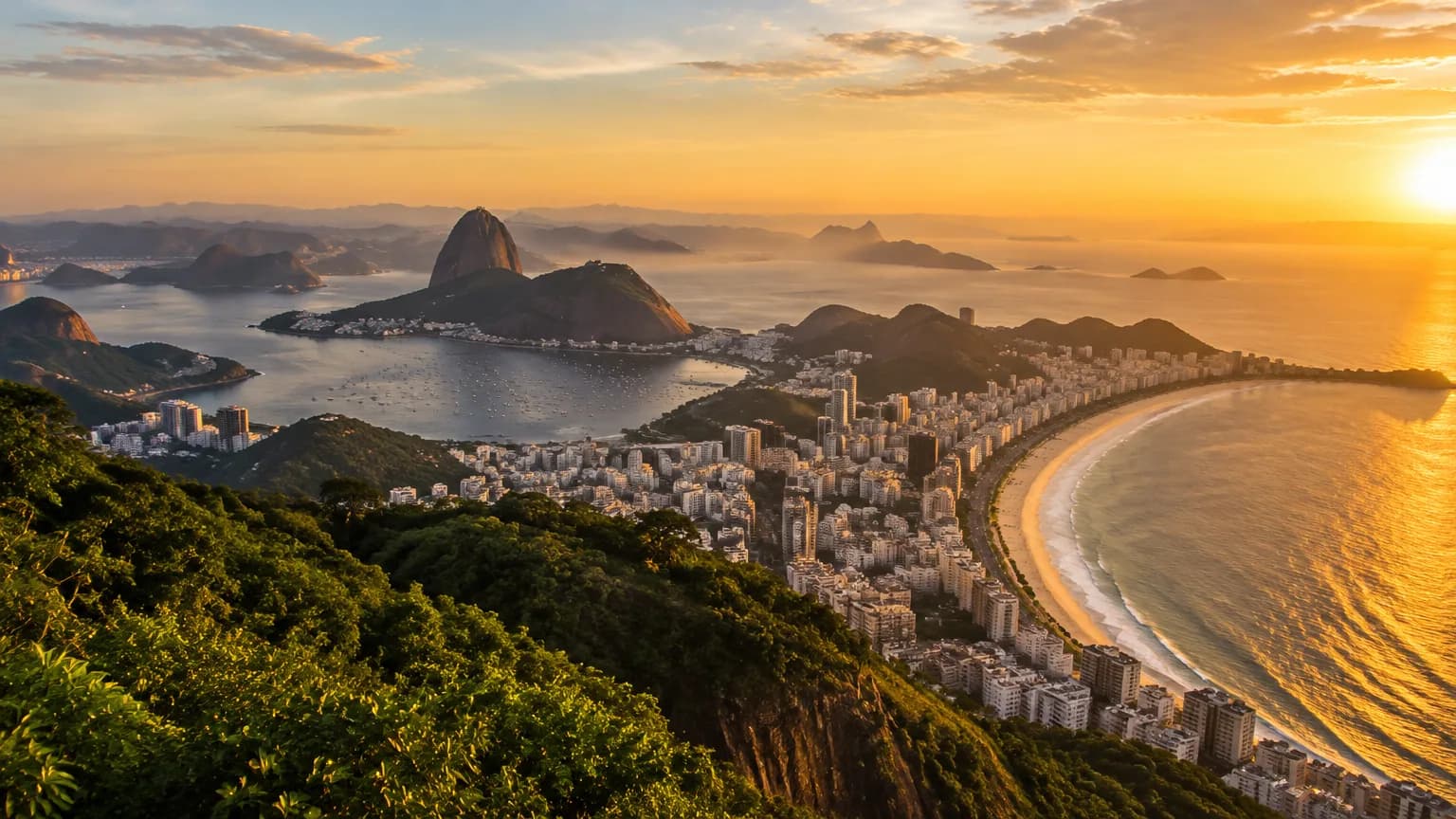
Christ the Redeemer overlooks the city from Corcovado, and Sugarloaf Mountain is reached by cable car for views over the bay. Copacabana and Ipanema are the two beach districts most visitors use for coastal time. Tip: give one day to a viewpoint, one to the beach and keep an evening for samba, rather than packing everything into a single day. Visit the viewpoints early in the day, since haze and cloud tend to build later and can hide the view.
Iguaçu Falls, Foz do Iguaçu
This waterfall system has walkways, boat tours and the Sendero Macuco trail through the surrounding jungle. It works well for families because the boardwalks give close access to the viewpoints. Tip: keep one full day for the walkways and a second for the trail or a boat tour if you want both. Boat tours approach the falls and their spray, so carry a light rain jacket and keep phones and cameras in waterproof pouches.
Amazon rainforest from Manaus
Manaus is the main the Central Amazon, which the Brazilian tourism ministry notes is a UNESCO World Heritage area protecting more than six million hectares of forest. Riverboat expeditions and Meeting of the Waters tours run from Manaus, and guided jungle treks, canoeing and birdwatching are available in Amazonia National Park. Tip: pick a lodge or boat trip that matches your comfort level, since rainforest stays range from simple to fully serviced. Novo Airão is reachable by road from Manaus for those who prefer a land route.
Salvador, Bahia
The Pelourinho historic district is the cultural anchor, with colonial streets and Afro-Brazilian music. Bahia is also where acarajé and regional Afro-Brazilian cooking are strongest. Tip: stay in the Historic Center for atmosphere, or in Barra for hotels and easier evenings. Walk the old town in the morning and keep the evening for music, ideally with a local guide or in a group.
São Paulo
São Paulo is a major international gateway in the Southeast. Neighbourhoods such as Jardins and Pinheiros are good bases for food, restaurants and city life. Tip: use it as a soft landing after the long flight before flying onward to Rio or Iguazu. It is a working city rather than a beach or nature stop, so one or two nights is usually enough on a leisure trip.
Pantanal wetlands
In the Central-West, the Pantanal is open wetland where jaguars, caimans and capybaras are reported as more visible than in dense forest. Access is through Cuiabá or Campo Grande. Tip: line this stop up with the drier months from June to September, when wildlife viewing is generally easier. Choose a guided stay, as independent movement in the wetlands is limited.
Lençóis Maranhenses National Park, Maranhão
This park in the Northeast is known for dunes and seasonal lagoons. It is a very different landscape from the Amazon or the coast. Tip: the lagoons depend on rainfall timing, so check the season before committing to the detour, and treat it as an add-on for longer trips rather than a first-trip essential.
Chapada Diamantina, Bahia
The national park offers multi-day trekking, off-road expeditions, waterfall swimming and cave exploration. It suits travellers who want active days rather than city time. Tip: allow at least two to three nights, since the park is spread out, and go with a guide for the longer treks.
Florianópolis and the South coast
The South region around Florianópolis is a coastal stop with a slower pace than Rio. It fits a longer trip that already covers the Southeast. Tip: reach it by domestic flight, as the bus from Rio takes about 20 hours.
Brasília
The capital in the Central-West is usually a short stop rather than a base. Tip: combine it with the Pantanal if you are already flying into the Central-West.
Best time to visit Brazil from India
June to September is the best window for most first trips from India. Rain is low in several regions, crowds are thinner and prices are lower than in the December to March peak.
- Best months: June, July, August and September. August and September are the driest in many areas, with temperatures of roughly 21 to 29°C.
- Shoulder months: April, May, October and November. Conditions are warm with regional variation; April and October are described as less wet than the core summer.
- Months to avoid on a first trip: December to March. These are peak months with heavy rain in many regions, high crowds and peak prices, although Carnival and New Year draw people who want that specific atmosphere.
Rainfall varies a lot by region, and the Amazon stays humid and rainy for much of the year. Summer heat can reach about 35°C in some regions, with afternoon or evening showers. If your trip centres on the Amazon, pack for rain whatever the month.
| Months | Temperature range | Rain | Crowds and prices |
|---|---|---|---|
| December to March | 24 to 31°C | Heavy | High crowds, peak prices |
| April and May | 23 to 30°C | Moderate | Medium |
| June and July | 21 to 29°C | Moderate | Low |
| August and September | 21 to 29°C | Low | Low |
| October and November | 23 to 30°C | Moderate in October, heavy in November | Medium |
Indian travellers should also remember that June to September is Brazil's cooler season, so evenings can feel fresh in the south and in cities. A light layer is enough, but it is worth packing even if you expect tropical weather throughout.
Trip cost from India
Brazil trip cost depends mainly on how many domestic flights you take, the season and how many regions you cover. Check current prices at the time of planning, since fares and hotel rates change through the year.
| Tier | Stay category | Meals | Transfers |
|---|---|---|---|
| Budget | Beachfront or city hotels in areas like Copacabana, private-room hostels, guesthouses | Breakfast plus street food and local eateries | City buses, metro, occasional long-distance bus |
| Mid-range | Mid-tier hotels in Ipanema, Pinheiros or Foz do Iguaçu town centre | Breakfast and some included meals, a mix of local and hotel dining | Private airport transfers and domestic flights between regions |
| Luxury | Upscale city hotels, the resort corridor near Iguaçu Falls, boutique stays in Barra, Salvador | Most meals included, plus selected dining | Private transfers throughout and domestic flights between regions |
What moves the price most: the number of domestic sectors, travel in December to March, adding a guided Amazon or Pantanal lodge, and the number of cities. On the ground, street food typically costs 10 to 20 BRL, and a one-way ticket on urban public transport about 3 to 5 BRL, as of September 2026.
For intercity travel by road, a regular bus from Rio de Janeiro to São Paulo costs about 180 BRL and a sleeper bus about 420 BRL, as of September 2026. Rio to Florianópolis is about 520 BRL for a regular seat or 1,050 BRL for a bed. Compare these with a domestic flight before deciding, because the bus saves money on short legs but costs a lot of time on long ones.
Common cost mistakes
- Adding a third or fourth region to a short trip, which multiplies flights without adding days to enjoy them.
- Booking domestic sectors late for December to March, when seats are scarcer and prices peak.
- Choosing a remote lodge without checking what is included, such as guiding, boat transfers and meals.
- Assuming a bus is always cheaper once you count the extra night or lost day on long routes.
How to reach Brazil from India
Travellers from Delhi, Mumbai, Bengaluru and other Indian cities usually fly with one connection and land at São Paulo–Guarulhos (GRU) or Rio de Janeiro–Galeão (GIG), the two main international gateways. Expect a long journey of a full day or more including the connection, and plan a light first day.
From GRU or GIG, domestic flights link Rio, São Paulo, Foz do Iguaçu, Manaus, Salvador, Recife and Fortaleza. Regional flights and long-distance buses connect other destinations, but buses are slow: Rio to São Paulo takes about 6.5 hours, and Rio to Florianópolis about 20 hours. For the Amazon, Manaus is the main gateway, and for the Northeast, Salvador, Recife and Fortaleza are the usual arrival points. Book domestic sectors early for December to March.
Planning the arrival
- Land at the gateway closest to your first stop: Rio for a beach-led trip, São Paulo if you plan to fly onward to Iguazu or the Northeast.
- Keep at least a few hours of buffer between your international arrival and any domestic connection, since immigration and baggage can take time after a long flight.
- Carry your hotel address and onward flight details in printed or saved form for immigration and for taxi drivers.
- Use airport-registered taxis or a pre-arranged transfer for the first ride rather than accepting offers in the arrivals hall.
Where to stay in Brazil
Base yourself in the area that matches your main activity, then add one or two secondary bases rather than moving every night.
- Rio de Janeiro: Copacabana is a beachfront area with hotels and easy access to Rio attractions, suited to families and budget travellers. Ipanema is a beach district with private-room hostels and mid-range hotels, popular with couples.
- São Paulo: Jardins is a leafy upscale neighbourhood near Avenida Paulista, good for couples and business travellers. Pinheiros is a bohemian area with restaurants and mid-range stays.
- Salvador: the Historic Center has budget, mid-range and luxury options in the old town. Barra has luxury hotels and boutique accommodation, suited to couples and families.
- Foz do Iguaçu: the town centre is a mid-range base for families, while the resort corridor near the national park is the luxury option for couples and families.
- Amazon and Pantanal: lodges and riverboats, from simple to fully serviced. Choose by comfort level and guiding quality rather than by city-hotel standards.
For a family trip built around Rio's beach districts, the Brazil Copacabana Beach Family Holiday shows how a beach-based week can be structured.
Choosing by budget tier
Budget travellers do well in Copacabana, Salvador's Historic Center and Foz do Iguaçu town, where guesthouses, hostels with private rooms and simple hotels are common. Mid-range stays cluster in Ipanema, Pinheiros and Foz do Iguaçu town. Luxury travellers look at Jardins in São Paulo, Barra in Salvador and the resort corridor near Iguaçu Falls. In every tier, ask whether breakfast is included and how far the property is from the main sight you are visiting.
Local food and cuisine in Brazil
Brazilian food is regional, and five dishes cover most of what a first-time visitor meets.
- Feijoada: a black-bean and meat stew, widely served across the country.
- Acarajé: a fried black-eyed-pea delicacy associated with Bahia, found at street stalls in Salvador.
- Moqueca: a seafood stew, common in coastal cities.
- Churrasco: Brazilian barbecue, served at grill restaurants.
- Regional staples: fish, rice, cassava and tropical fruit appear across the Amazon and Northeast.
For vegetarian travellers, rice, beans, cassava and tropical fruit are easy to find in cities and tourist areas. Feijoada and moqueca are built on meat or fish, so ask clearly about stock and ingredients before ordering. Self-service buffet restaurants let you pick vegetarian items directly. Rio also has food markets and wine-tasting venues if you want to try local produce.
Eating well as an Indian traveller
- Learn a few Portuguese phrases for ordering without meat, and show them written on your phone if the staff do not speak English.
- Tropical fruit and fresh juices are widely available and make easy breakfasts and snacks.
- Street food, such as acarajé stalls in Bahia, usually costs 10 to 20 BRL as of September 2026. Choose busy stalls with fresh turnover.
- If you need Indian-style meals every day, tell your tour planner in advance, as options vary by region and are harder to find in the Amazon and Pantanal.
Travel tips for Indians visiting Brazil
Sort entry, money, connectivity and safety before you fly, and keep the practical side simple.
- Visa and entry: check the current rules for Indian passport holders on the official Brazilian government source before booking. Our Brazil visa for Indians guide covers the document side. For health requirements, the US CDC Yellow Book lists Brazil-specific advice, so review it with your doctor.
- Currency: the local currency is the Brazilian real (BRL). Cards work widely in cities, but carry some cash for street food, buses and small vendors.
- SIM and eSIM: set up an eSIM before departure or buy a local SIM on arrival at GRU or GIG. Coverage is weaker in remote Amazon and Pantanal areas, so download offline maps.
- Safety: ocean currents and waves can be unpredictable, including at popular tourist beaches, according to the US State Department. Use registered taxis at night and keep valuables out of sight. Police is 190 and ambulance is 192.
- Health: dengue, chikungunya and Zika risks are reported as high, particularly in the rainy season. Use repellent and skin-covering clothing, especially in the Amazon and Pantanal.
- Etiquette: Brazilians are informal and friendly. A greeting and a few Portuguese phrases help outside tourist areas.
Before you fly
- Confirm your passport validity and the current entry requirements on the official source.
- Speak to a doctor about health advice well ahead of departure, including mosquito protection.
- Buy travel insurance that covers medical care and cancelled domestic flights.
- Download offline maps and translation tools, and save your hotel addresses.
- Carry copies of your passport and bookings separately from the originals.
On the ground
- Keep phones and cameras out of sight in crowded areas and on beaches.
- Do not swim on beaches with strong currents or where lifeguards advise against it.
- Use the cable car and organised tours for the main viewpoints rather than informal offers on the street.
- Carry insect repellent and a light rain jacket, as showers are common in summer and the Amazon stays humid throughout the year.
Is Brazil right for you?
Brazil rewards travellers who accept long internal distances and plan around flights. It is not a compact destination, and that decides who it suits.
Short trip or long trip
A 6-night express trip works if you stay in one region, usually Rio with Iguazu as an add-on. An 8-night route through Rio, São Paulo and Iguazu gives you city, coast and waterfalls without rushing. A 9-night premium itinerary leaves room for a wildlife or rainforest stop, which is where the trip feels complete rather than sampled.
Who it suits
- Travellers interested in rainforest, wetlands, waterfalls, beaches and cultural cities.
- Families who want boardwalk access at Iguazu and beach time in Rio.
- Couples combining city stays with a lodge or resort.
- Anyone comfortable taking domestic flights between regions.
Who it does not suit
- Travellers who want to cover several regions in one short trip without domestic flights, because distances are very large.
- Anyone who prefers one base with easy day trips and no internal flying.
- Travellers who dislike humid heat and rain, particularly in December to March.
Browse the Brazil holiday packages to see how these choices turn into a bookable trip.