Package overview
The thinking behind this journey.
A closer look at this 5-night journey through Rann of Kutch— who it's built for, what you'll experience, and why the pace works.
Journey notes
Why this route works
What a Rann of Kutch cultural and heritage package covers
The route starts in Bhuj, moves through the craft villages of Nirona and Hodka, goes west to Dholavira, and ends with two evenings on the White Rann at Dhordo. Six days leave room for artisan workshops, palace and museum visits, and slow mornings.
Most Rann Utsav packages run two to four days. This one adds the craft belt and the archaeological site that shorter trips skip. Bhuj to Dhordo is about 80-85 km by road, roughly 1 hour 20 minutes to two hours. Dholavira is further out, so that day starts early. One private car and driver stay with you throughout, which keeps village stops independent of shared-cab timings.
Rann of Kutch cultural tour for couples: the route at a glance
| Stop | What you do there | Day |
|---|---|---|
| Bhuj | Aina Mahal, Prag Mahal, Kutch Museum, Hamirsar Lake, craft market | Day 1 |
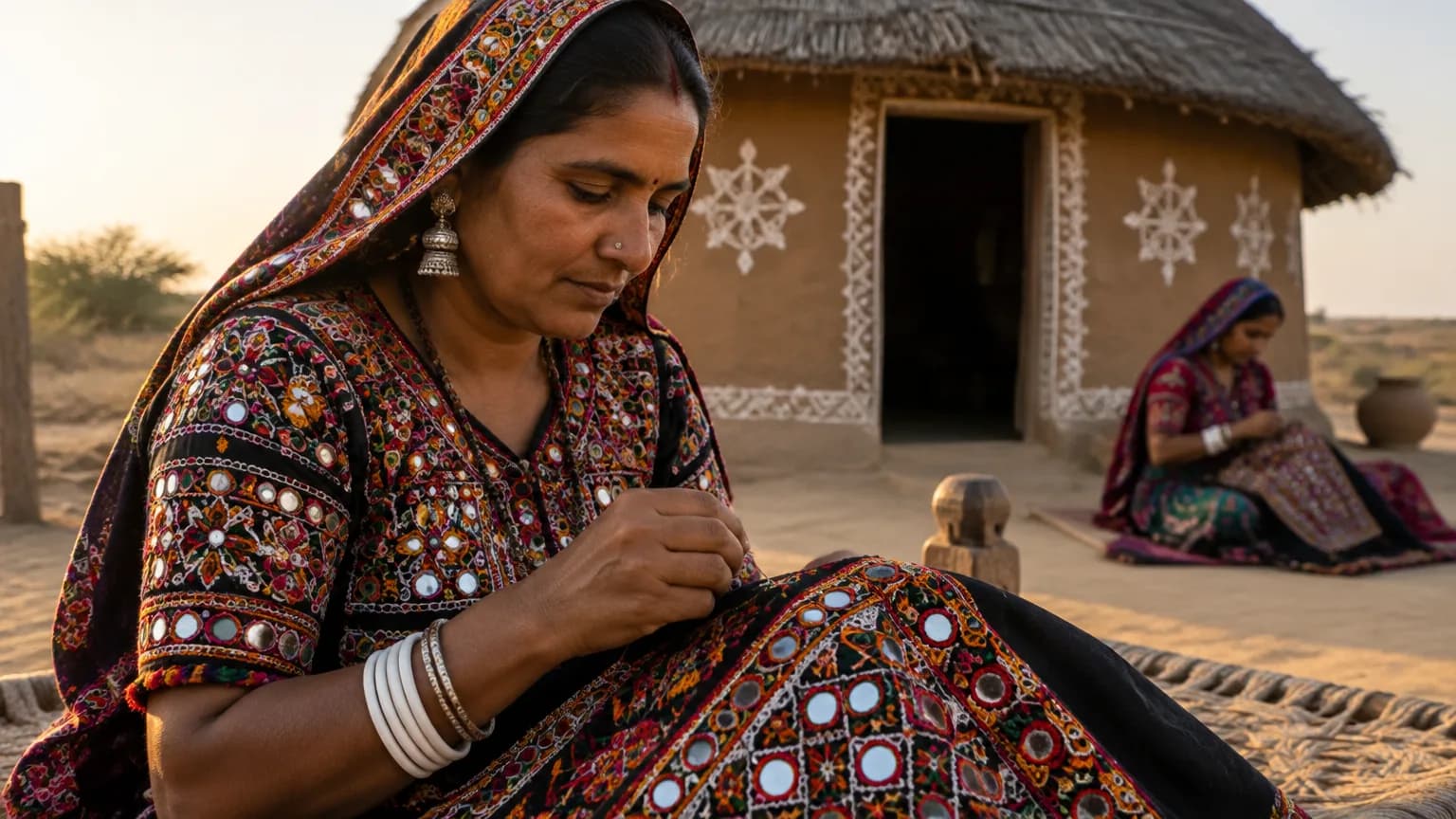
| Nirona and Hodka | Artisan demonstrations, embroidery cooperative, village stay | Day 2 |
| Dholavira | Guided walk through the Harappan excavation, site museum | Days 3-4 |
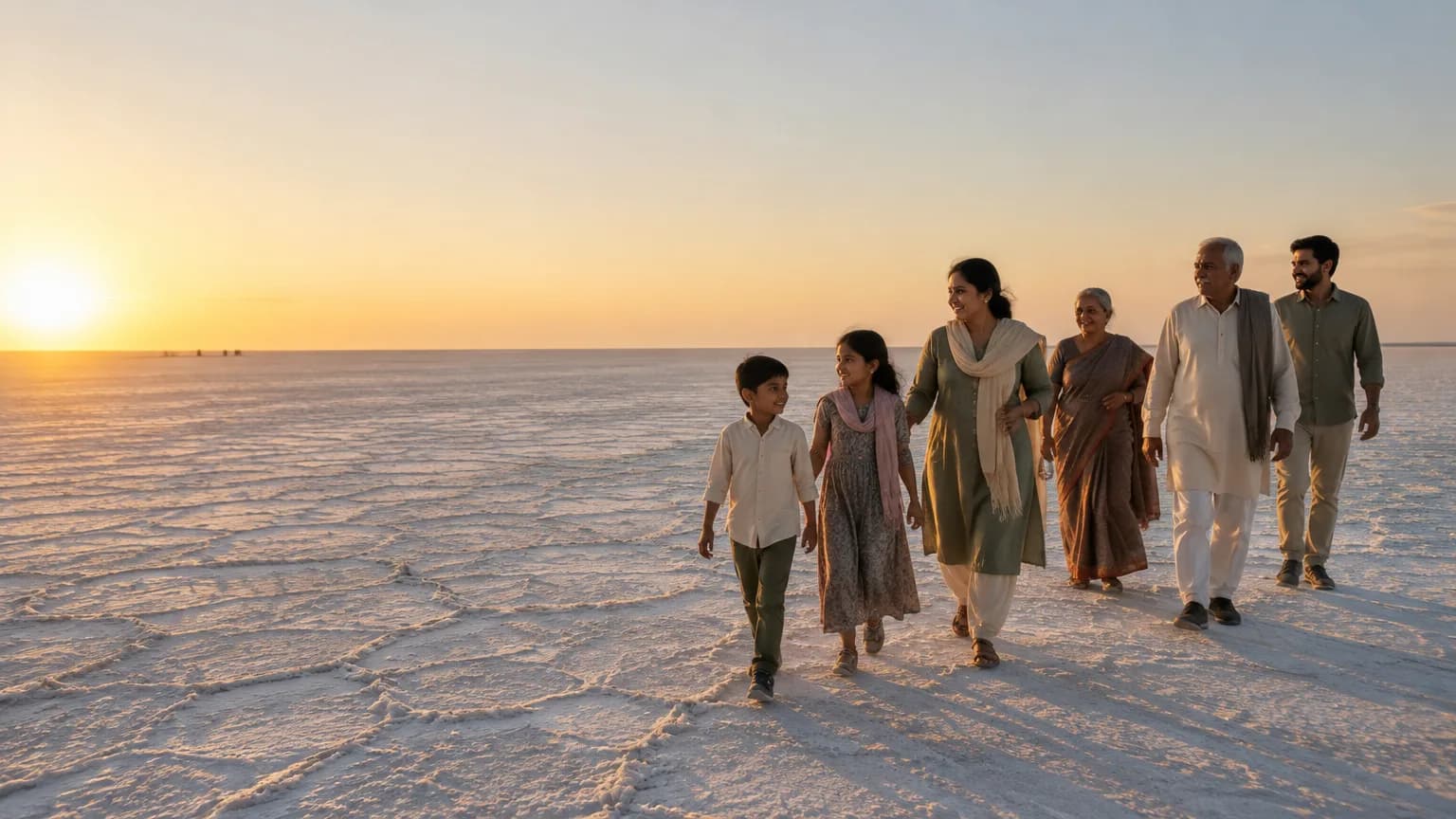
| Dhordo and the White Rann | Sunset, moonlit views, evening performances when the festival runs | Days 4-5 |
| Kala Dungar | Highest point in Kutch, desert views | Day 5 |
Stories behind the places
Nirona is known for traditional handicrafts and artisan communities, and the workshops here let you watch moulded crafts and block printing being made before you decide what to buy. Ask artisans how long one piece takes; the answer explains the price.
Hodka sits in the Banni village area and is associated with an embroidery cooperative. Kutchi embroidery is stitched by hand, and the cooperative model lets you meet the women who made the work rather than buy from a middleman.
Dholavira is the Harappan site at the end of the western road. The excavated city is the reason for the long drive, and a local guide helps you read the layout of the ruins, which is hard to follow alone.
What makes this journey distinctive
The thread running through the stops is living craft and old settlement. You see embroidery and printing being done today, then stand in a city that was planned thousands of years ago, then end on the salt flats at sunset.
Shorter Rann packages cover the tent city and the White Rann. This plan treats the White Rann as the closing note of the trip and spends most of its time in villages, workshops and at the excavation.
Places and what to know
- Aina Mahal and Prag Mahal, Bhuj: Palace pair in the old town; confirm opening days before you travel, as timings change.
- Kutch Museum, Bhuj: Local history and craft displays; entry is paid on site.
- Nirona village: Handicraft workshops; carry cash for purchases.
- Hodka: Embroidery cooperative and Banni village area; ask before photographing artisans or their work.
- Dholavira excavation: Harappan site with a site museum; go in the morning and carry water, a hat and sun protection.
- White Rann, Dhordo: Salt flats explored on foot; sunset and evening performances are the recommended timing.
Etiquette, timings and access
Modest clothing is respectful in village homes and workshops. Closed shoes work better than sandals on salt crust and excavation ground. Always ask before photographing people or their work.
Monuments, museums and the Dholavira site follow fixed daytime hours and usually close by late afternoon, with a weekly off day at some sites. Check the official source or confirm at booking. Step-free access is limited at the excavation and on the salt flats; tell us your needs when you book.
Pace and comfort
Most days involve one longer drive and two or three short walks. Day 3 is the longest transfer, heading west to Dholavira. Bhuj to Dhordo is about 80-85 km, and the Dholavira road is longer.
Expect a rest break after lunch on travel days. Walking at the excavation and on the Rann is on uneven ground, so go slowly and carry water. Seniors who manage short walks and two to three hours in a car can do this route.
Local food and shopping
Kutchi thali is the meal to try: bajra rotla, kadhi, vegetables and local specialties. Sev tameta, Kutchi dabeli, fafda and khichdi are also common, and most of these are vegetarian.
For shopping, buy Kutchi embroidery at the Hodka cooperative and local crafts at Bhuj craft markets and in Nirona. Carry cash, as card machines are unreliable outside Bhuj.
Where you stay in Bhuj, the Banni belt and Dhordo
Stays move with the route: a hotel in Bhuj, a community-run village stay with bhunga-style rooms near Hodka, a resort near Dholavira, and a tent or resort near Dhordo. Final property list is to be confirmed at booking.
- Budget 3-star, approx Rs.11,500 per person (indicative): Simple rooms, basic meals, shared facilities in village stays.
- Standard 3-4 star, Rs.15,000 per person (this package): Clean twin-sharing rooms, breakfast and dinner included.
- Premium 5-star, approx Rs.24,000 per person (indicative): Larger rooms and better-located properties; Dhordo stays in festival months cost more.
Reaching Rann of Kutch: road, rail and air
Bhuj Airport and Bhuj railway station are the entry points for this route, with trains from Mumbai, Ahmedabad, Pune, Kolkata and Delhi. Ahmedabad to Bhuj is about 335 km by road and takes around seven hours.
From Bhuj, road travel continues through Bhirandiyara to Dhordo. The monsoon months of June to September can bring floodwater that affects access to the salt flats, and by October access improves. Mobile connectivity can be patchy in the Banni belt and at Dholavira; keep offline maps handy. Permit or entry details for the Rann and Dholavira: confirm at booking. More options are listed on the Rann of Kutch tour packages page.
Best time to visit Rann of Kutch
November to February is the coolest and busiest stretch, with peak prices and high demand for Dhordo stays. The 2026-27 Rann Utsav at Dhordo is scheduled from November 1, 2026 to March 7, 2027. October and March see medium crowds and medium prices.
April to June is hot, and scorching heat makes the Rann hard to explore in the daytime. July to September brings monsoon rain and possible floodwater on the flats.
What drives the Rann of Kutch trip cost
Season, hotel category and vehicle type move the price most. Peak festival weeks in December and January cost more than October or March departures. This itinerary starts at Rs.15,000 per person, land only, twin sharing, with a private car for the whole loop.
Monument and museum tickets, lunches and craft purchases are separate. Ask for a written inclusions list before paying a deposit.
Rann of Kutch travel tips
- Carry cash for village purchases.
- Book Dhordo and Hodka stays early for December and January dates.
- Pack a warm layer, since desert evenings cool down sharply.
- Keep the last day free of fixed plans if you are flying out of Bhuj.
- Confirm opening days for museums and monuments before you travel.
- Carry water, snacks and sun protection on the Dholavira day, where shade is limited.