What Makes This Japan Honeymoon Itinerary Different
This Japan honeymoon tour package concentrates five nights across two bases — Kyoto and the Mount Fuji area — instead of spreading thin across four or five cities. Each base gets enough time to settle in, eat well and move at your own pace.
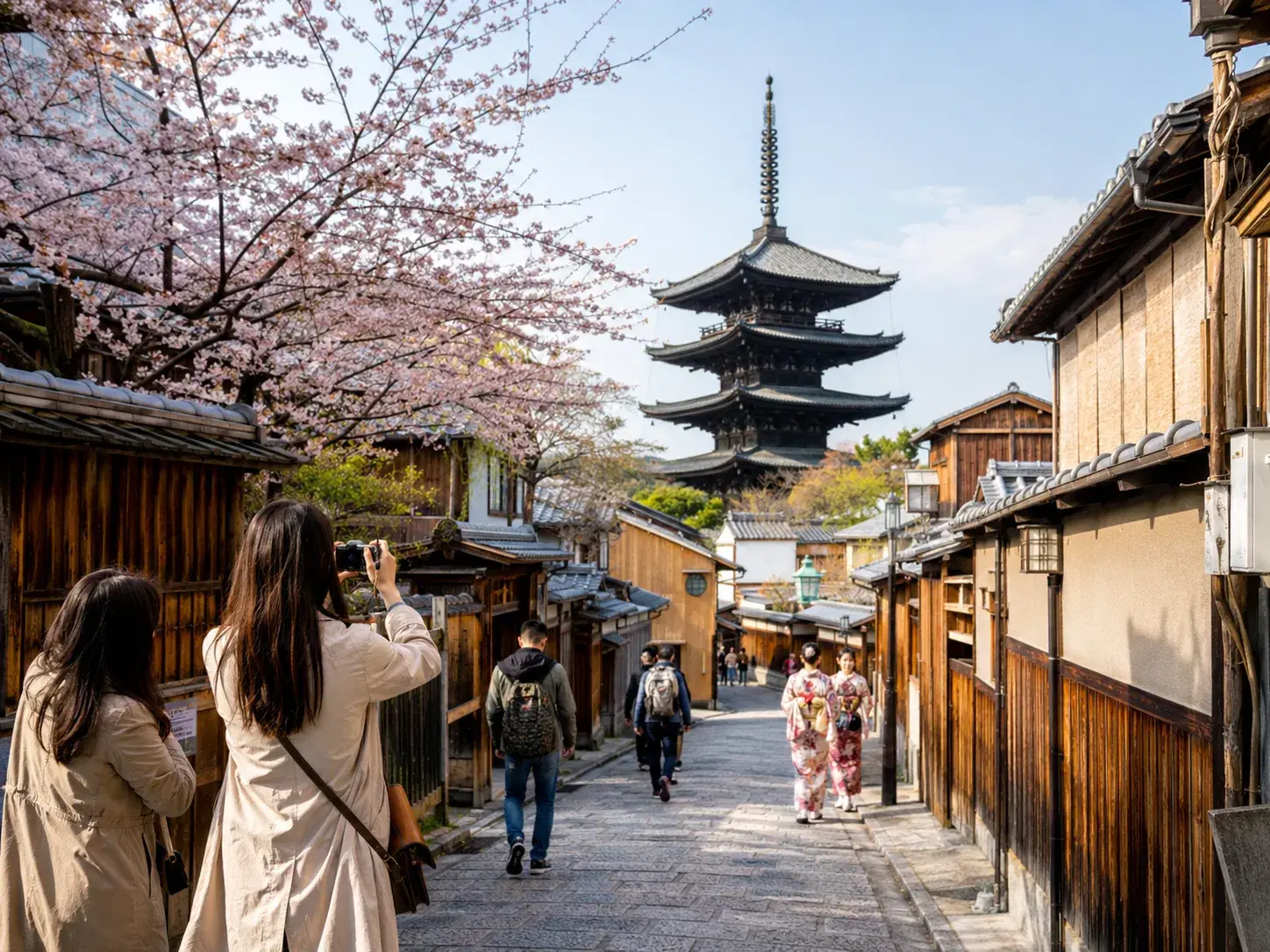
Kyoto's Gion district is the cultural anchor. You walk its stone lanes in the late afternoon, when teahouses open and foot traffic thins. The Mount Fuji leg is quieter: lake views, an onsen soak and one full flexible day around the mountain. Internal travel is by shinkansen, which keeps transit time short and comfortable.
Where the Five Nights Go
Three nights in Kyoto and two nights near Mount Fuji form the backbone of this route. Kyoto gives you temples, the Gion and Higashiyama areas, and a food scene that works well for couples eating at their own pace. The Fuji leg trades city energy for open skies and hot-spring bathing.
Moments to Plan Around
Four specific moments on this route reward a little advance planning.
- Gion at dusk, Day 2: The guided walk through Kyoto's geisha district is best timed for late afternoon into early evening, when lanterns light up and the lanes are quieter than midday.
- First morning in Kyoto, Day 2: Kiyomizu-dera is significantly less crowded before 8 am. An early start on Day 2 means you have the stone terrace largely to yourselves.
- Mount Fuji viewpoint, Day 5: Cloud cover on Fuji is common. Keep the morning flexible and check conditions the night before. A clear morning view from the Fuji Five Lakes area is worth the early start.
- Onsen evening, Day 5: After the Fuji day trip, an onsen soak at the hotel is the natural end to the day. Book the private bath slot in advance if the hotel offers one.
Why This Route Suits Couples
The itinerary is built around privacy, setting and a pace that does not feel like a group tour. Three reasons it works for two people specifically:
- Two quiet bases: Staying in one place for two or three nights means you unpack once, learn the neighbourhood and spend evenings without a transfer the next morning.
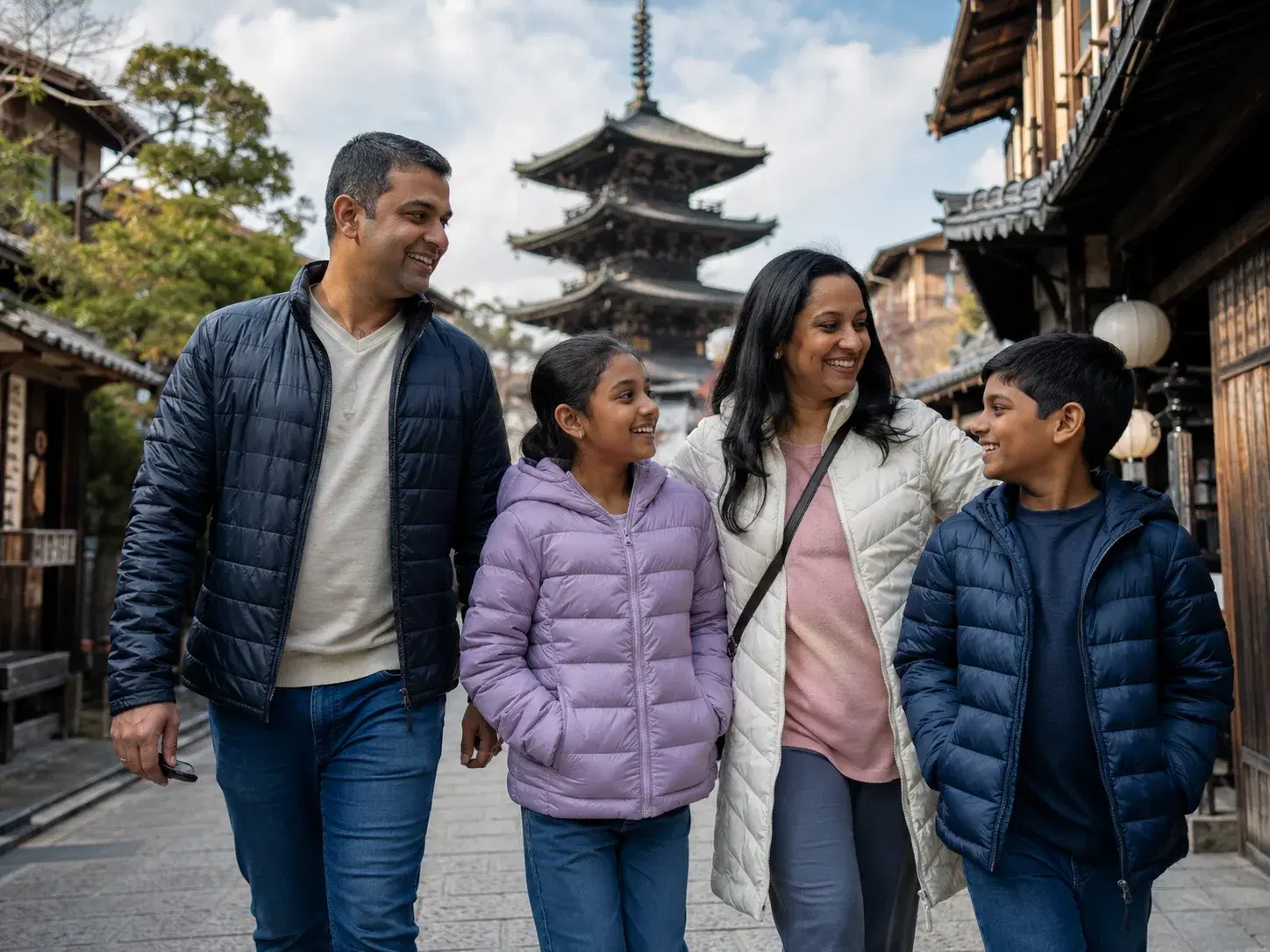
- Gion and Higashiyama on foot: These Kyoto areas are best explored slowly. The guided walk on Day 2 covers the main lanes; Days 3 and 4 leave time to return on your own terms.
- Onsen access near Fuji: The hot-spring culture in the Mount Fuji region is well suited to couples. Many hotels in the area have private or semi-private bath options, which adds a layer of quiet that a city hotel cannot replicate.
Romantic Highlights
- Guided evening walk, Gion district: A half-day guided walk through Kyoto's geisha district, timed for late afternoon when the light is low and the lanes are calm.
- Kiyomizu-dera at sunrise: The wooden stage of this hillside temple faces east. An early visit on Day 2 gives you the view without the crowds.
- Arashiyama bamboo grove, Day 3: A short walk through the grove, followed by time at the Togetsukyo bridge area and a riverside cafe stop.
- Shinkansen journey, Day 4: The bullet train between Kyoto and the Fuji region is a travel experience in itself — smooth, fast and scenic on a clear day.
- Mount Fuji viewpoint, Day 5: A private car for the day means you stop where you want and stay as long as the view holds.
- Onsen soak, Day 5 evening: A private or in-room hot-spring bath at a Fuji-area hotel, after a full day outdoors.
How the Days Flow
The pace is deliberately unhurried. Day 1 is arrival only — no sightseeing scheduled. Days 2 and 3 each have one main morning activity and a free afternoon. Day 4 is a travel day, with the afternoon free after check-in. Day 5 is the most active, with a full day around Mount Fuji, but it uses a private car so you set the tempo. Day 6 is checkout and departure.
Evenings are kept open on most days. Two dinners are included in the package; the rest you choose on the day. This works well in Kyoto, where small restaurants are easy to find and walk-ins are common outside peak season.
Choosing the Right Stay Style for a Couple
Room type and setting matter more on a honeymoon than on a group trip. In Kyoto, a hotel in the Gion or Higashiyama area puts you within walking distance of the evening lanes and means you do not need a taxi after dinner. A room with a garden or courtyard view adds something a standard city-view room does not.
Near Mount Fuji, the priority shifts to the view and bath access. A room facing the lake or the mountain, even on a mid-range budget, is worth requesting at booking. Some hotels in this area offer in-room or private onsen baths — confirm availability when you book, as these sell out early in peak season.
Best Months for a Couple's Trip to Japan
March to May and October to November are the two windows that suit this itinerary best. Each has a different character.
Golden Week (late April to early May), Obon (mid-August) and New Year bring crowded transport and limited hotel availability across Japan. Book well in advance if your dates fall in these windows, or shift by a week if possible.
Add-Ons Worth Considering
A few extras fit naturally into this itinerary and are worth discussing at booking.
- Private photographer, Day 2 or Day 5: A two-hour session in Gion at dusk or at a Fuji viewpoint in the morning. Confirm availability and cost at booking.
- Private dinner, Day 3 or Day 5: A set-menu dinner at a small Kyoto restaurant or at the Fuji-area hotel. Some properties offer in-room or garden dining for couples — ask at booking.
- Onsen upgrade, Day 4 or 5: Moving from a shared to a private in-room onsen bath at the Fuji hotel. Availability is limited; book early.
- Tea ceremony, Day 2 or 3: A short private tea ceremony in Kyoto, usually 45–60 minutes. Fits well on a free afternoon in Kyoto.
Stay Options: Kyoto and Mount Fuji Region
The default package is built around 4-star category hotels at both bases, which is the standard tier for this price. Three indicative tiers are listed below as a guide — all figures are per person, land only, twin sharing, and are approximate.
A ryokan-style property near Mount Fuji — with tatami rooms, in-room onsen and kaiseki-style meals — is a popular upgrade for couples. These properties book out quickly in April and November, so confirm early if this is the direction you want to go.
Japan Entry, Currency and Flights for Indian Travellers
Indian passport holders require a visa to enter Japan. Applications go through the official Japanese visa application process — check the official portal for the current fee, required documents and processing time, as these details are updated periodically. A marriage certificate is useful if your surnames differ on your passports.
Japan's currency is the Japanese Yen (JPY). Do not rely solely on cards — smaller restaurants, temple shops and local transport often accept cash only. Carry some Yen from the time you land.
Flight time from major Indian cities to Tokyo (via a connecting hub) is approximately 11.6 to 12.8 hours, depending on your departure city. Kansai International Airport (KIX) near Osaka is the most convenient arrival point for a Kyoto-first itinerary. Confirm current fares at booking.
Send us your dates and a few preferences and we will turn this outline into a quote built around you.