Package overview
The thinking behind this journey.
A closer look at this 8-night journey through Australia— who it's built for, what you'll experience, and why the pace works.
Journey notes
Why this route works
What does this Australia family holiday cover?
Nine days split between the Gold Coast and Melbourne, with one internal flight connecting the two cities and no long road days except the Phillip Island evening drive. Theme parks take two full days, the penguin parade takes one evening, and the remaining time is city sightseeing and free afternoons.
The Gold Coast section focuses on two separate theme parks, so children are not repeating the same experience. Melbourne adds Federation Square, the Yarra River precinct and the free City Circle Tram before the Phillip Island trip on Day 7. One free day in Melbourne gives grandparents time to rest and teenagers time to shop or revisit a favourite spot.
Why this route works for Indian families
Most transfers on this route stay under two hours, which means children are not sitting in a coach for long stretches. Hotels in both cities are close to restaurants, which matters when grandparents prefer an early dinner. Indian restaurants are available in South Brisbane and in Dandenong, Melbourne, and vegetarian food is widely served across both cities. The internal flight between the Gold Coast and Melbourne takes roughly two hours, far easier than a long drive with children.
The itinerary builds in one free afternoon every two to three days. This is not padding — it gives children time to recover before the next full-day outing and gives elders a genuine rest window rather than a rushed lunch stop.
When is the best time to visit Australia from India?
May to October is the most practical window for this route. Southern Australia is in its cooler, drier months, and the tropical north — which this itinerary does not visit — is in its dry season. July is peak season with higher prices; May, June, August and September sit in the medium price band and are generally quieter. December to February is summer in southern Australia and wet season in the north, with higher crowds and peak pricing across the country.
What does this Australia trip cost for a family?
The land-only price is Rs.1,85,000 per person as of 2026, on twin sharing. International flights from Mumbai are excluded and should be budgeted separately. Child pricing depends on age and whether a child shares a bed with adults, so confirm the exact rate at booking. Visa fees, travel insurance and theme-park add-ons sit outside the land cost.
| Stay Category | Indicative Price Per Person | What to Expect |
|---|---|---|
| Budget 3-star | Approx Rs.1,39,000 | Standard rooms, shared or adjoining; basic breakfast included |
| Standard 4-star (default) | Rs.1,85,000 | Family or connecting rooms where available; daily breakfast; central locations |
| Premium 5-star | Approx Rs.2,96,000 | Larger family suites, concierge support, upgraded meals |
These figures are indicative and derived from the listed package price. Confirm the exact breakdown at booking.
Kid and elder logistics on this route
Strollers and wheelchairs are accommodated on most Australian buses, trains and trams. The Gold Coast hotel area is flat and walkable for elders. The Phillip Island drive is roughly two hours each way from Melbourne — plan a snack stop midway and carry a light blanket for the evening, as temperatures drop after sunset.
Theme-park entry is pre-booked to avoid queuing at the gate. Reserved seating at the penguin parade means the group does not need to arrive very early to secure a good spot. Connecting or adjoining rooms can be requested at booking, though availability depends on the property.
Why this works for families: the short version
- Two theme-park days are on separate days with a rest day between them.
- The Phillip Island penguin parade has reserved seating, so no long waits standing.
- Indian vegetarian food is available in both cities without a long search.
- The internal Gold Coast–Melbourne flight keeps travel time short for children.
- Free afternoons are built into the schedule, not squeezed out by activities.
- Public transport in both cities accommodates prams and mobility aids.
Highlights by age group
Younger children (under 10)
- Theme-park rides scaled for smaller children, including gentler family coasters
- Wildlife enclosures at the second theme park — kangaroos and koalas up close
- Beach morning on Day 3 with supervised play near the shoreline
- Penguin parade — small penguins walking past at eye level in the evening
Teenagers
- Full-day theme parks with larger rides and afternoon shows
- Free afternoon in Melbourne for shopping or exploring independently
- City Circle Tram loop around Melbourne CBD
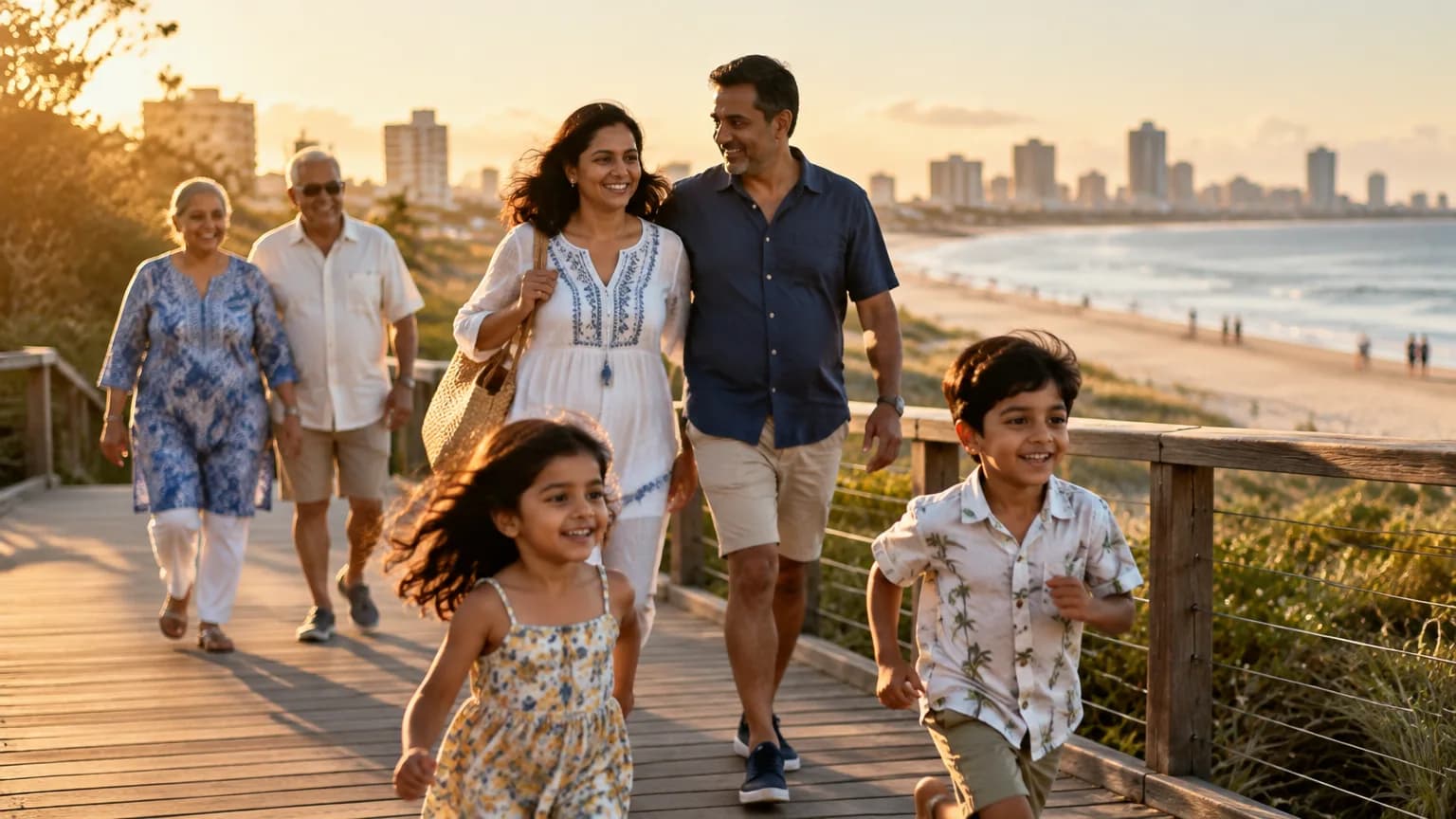
- Gold Coast beach walk and optional water activities (confirm availability at booking)
Grandparents
- Federation Square and the Yarra River precinct — flat, easy walking
- Free mornings built into Days 3, 6 and 8 for rest
- Accessible transport throughout both cities
- Early dinners near the hotel on most evenings
Daily pace, rest windows and driving times
The itinerary runs at a moderate pace — one major activity per half-day on most days, not back-to-back outings. Theme-park days are the longest, typically eight to nine hours on-site. The Phillip Island evening is the latest finish, returning to Melbourne around 11 pm depending on the season's parade time.
Children under five may find the penguin parade wait tiring; carry snacks and a small blanket. The Gold Coast beach morning on Day 3 is intentionally unstructured — no coach, no schedule, just time near the water. Melbourne's City Circle Tram is free and runs a loop, so grandparents can board and alight at any stop without committing to a long walk.
Rooms, meals and comfort in Australia
Family rooms and connecting rooms are available at 4-star properties in both cities, subject to availability at the time of booking. Request them early. Daily breakfast is included; other meals follow the day-wise plan. Vegetarian options are widely available in Australian restaurants, and Indian restaurants in South Brisbane and Dandenong serve familiar food. Strict Jain diners should communicate requirements clearly and check for egg, fish sauce and gelatine in dishes — these are common in Australian cooking and not always flagged on menus.
Travelling with children and elders: five practical tips
- Carry a doctor's letter for any regular medication — Australian customs may ask about prescription drugs, and a letter speeds up the process at the airport.
- Pack layers for Melbourne — a single day can move from cool mornings to warm afternoons and cold evenings, especially in May to September.
- Book theme-park tickets before you travel — online prices are often lower than gate prices, and pre-booking means no queuing with tired children.
- Carry proof of age for children — some theme-park rides have height and age restrictions; a passport works as ID.
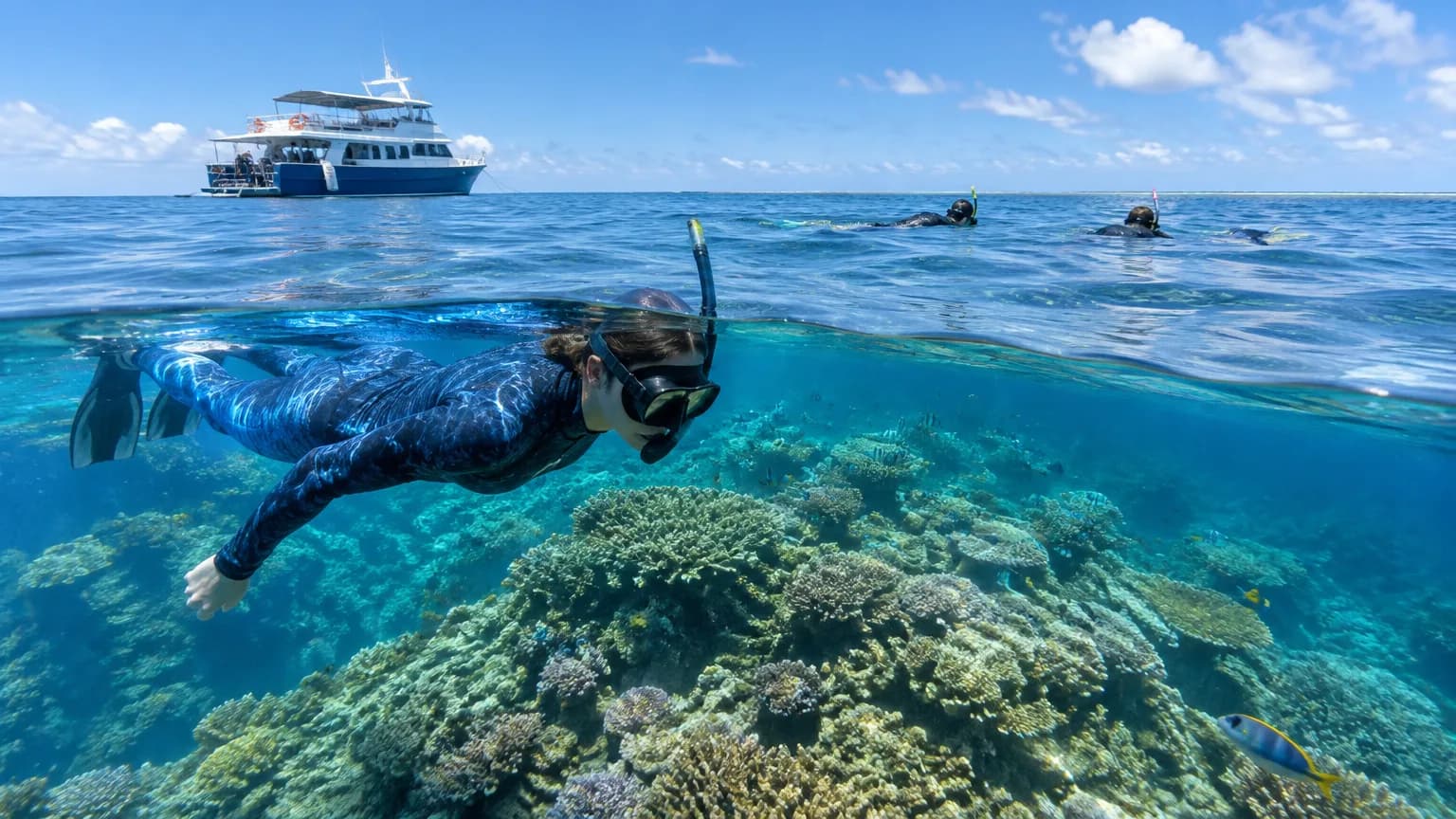
- Check the stinger season if you plan any reef or beach swimming — the Gold Coast beaches are generally safe in the dry season, but confirm local conditions on arrival.
Australia entry, money and flights for Indian travellers
Indian passport holders need a visa to enter Australia. The standard option for tourists is an Electronic Travel Authority (ETA) or a Visitor visa (subclass 600), applied for through the official Australian Government immigration portal. Check the official portal for the current fee and processing time, as these change. Australia's currency is the Australian Dollar (AUD); do not carry large amounts of Indian Rupees as exchange options at smaller outlets may be limited — use a forex card or withdraw AUD on arrival. Flights from Mumbai to the Gold Coast or Melbourne take approximately 13 hours, with most routings via a connecting hub; confirm current flight options and fares at booking, as these are not included in the land price.