
Field notes
Jordan Packing List for Indians 2026
The Jordan packing list for Indians depends on two things: the season you travel in and the activities you plan. Temperatures run from about 3–12°C in January to 20–32°C in August, so layers matter more than one heavy jacket. Petra walks, Wadi Rum desert nights and Dead Sea stops shape the rest. Travellers most often forget a refillable water bottle, a scarf for dress-code sites and a multi-pin power adapter.
What the weather in Jordan demands
Packing for Jordan comes down to season and altitude. Winter (December–February) is cool at 3–14°C, with the heaviest rain concentrated in the northern and central highlands. Spring (March–May) warms to 7–27°C with moderate-to-low rain and rising crowds. Summer (June–August) is hot and dry, often above 30°C, with heat reaching 35–45°C at many sites. Autumn (September–November) cools from about 29°C down to 18°C, with low-to-moderate rain.
Rain matters most in Petra. Heavy rain can cause flash flooding in the Siq, and authorities may announce closures when heavy rain is forecast. If you travel between November and March, pack a compact rain shell rather than an umbrella, so both hands stay free on the trail. Check the local news or your hotel desk on the morning of a Petra visit if the forecast looks wet.
Layers beat bulk. A full-sleeve tee, a fleece or light jacket and a windproof outer layer cover most days from October to April. From May to September, breathable cotton and linen work better. Desert nights in Wadi Rum drop sharply even in summer, so keep one warm layer in your day bag. Indian travellers used to humid heat at home often underpack for these cold desert evenings, so do not skip it.
Altitude and sun also count. Amman and the highlands sit well above sea level, so mornings and evenings feel cooler than the midday figure suggests. At open sites the sun is strong from April to October, and a hat and sunglasses are not optional. Build your daily packing around the coolest and hottest hours, not the average.
Essentials checklist
Documents first, then daily items. Keep these in your cabin bag, not the checked suitcase, so they stay with you if a bag is delayed.
- Passport with at least six months validity, plus a photocopy and a phone photo
- Jordan visa or entry permission: check whether your route qualifies for the Jordan Pass or needs a visa on arrival; confirm at booking
- Travel insurance covering medical care, trekking and desert activities
- Printed hotel bookings and return ticket
- Debit or credit card plus some US dollars or Jordanian dinars for small vendors; check current exchange rates before you fly
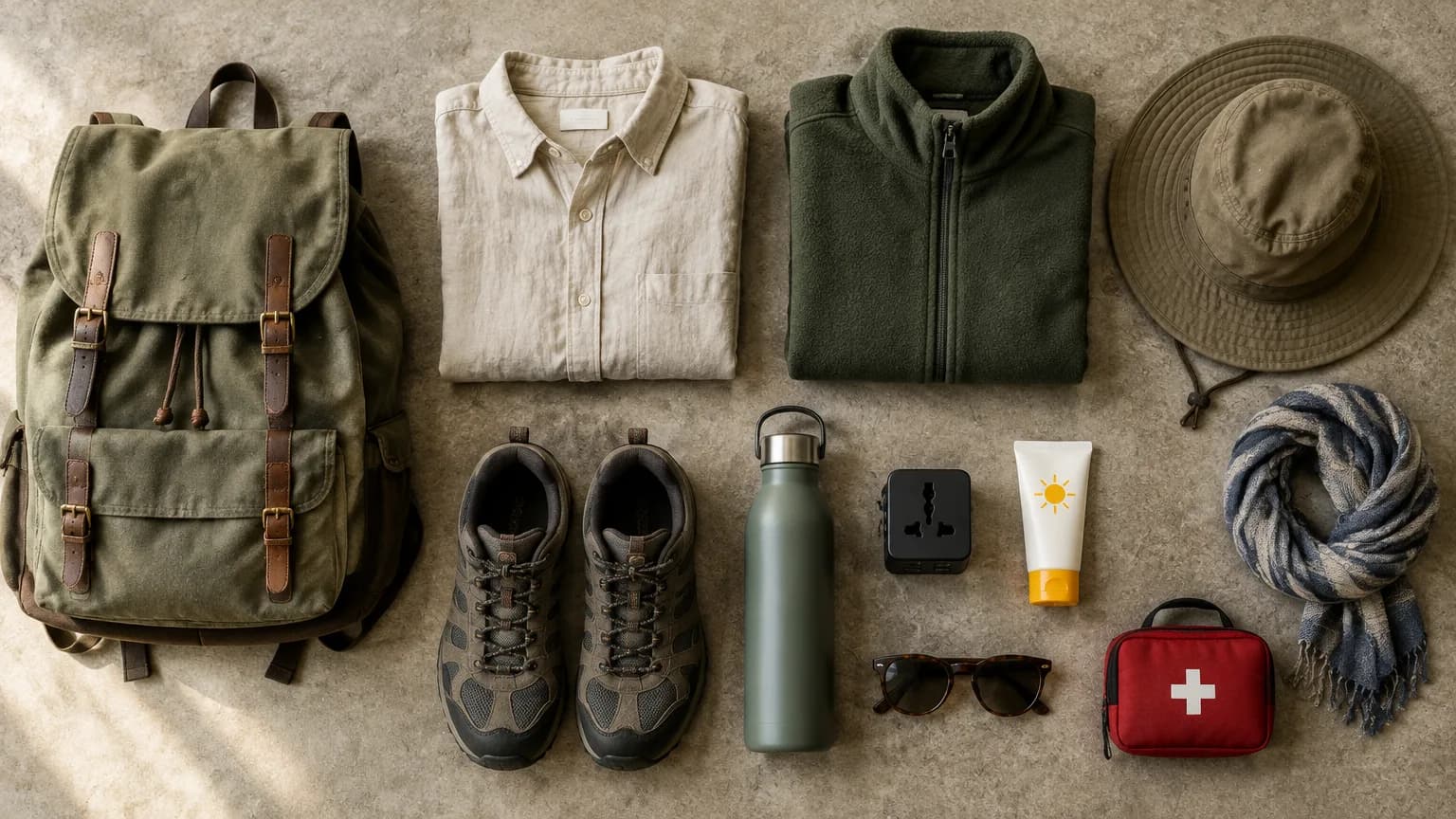
- Universal power adapter; Jordan uses Type B, C, D, F and G plugs, so a multi-pin adapter is safer than a single-pin one
- Power bank, charging cables and a spare phone cable
- Prescription medicines in original packaging, with the prescription
- Basic kit: paracetamol, ORS sachets, antacid, motion-sickness tablets, plasters, antiseptic cream
- Sunscreen SPF 50, lip balm with SPF, sunglasses and a wide-brim hat
- Refillable water bottle and electrolyte sachets
- Hand sanitiser, wet wipes and tissue packs, since many site toilets are basic
- Small daypack for site visits
Keep a digital copy of every document in your email and a shared cloud folder. If your passport is lost, the copies speed up replacement at the Indian mission and help hotels and guides verify your details quickly.
If you are still sorting entry paperwork, the Jordan visa for Indians guide covers the current rules.
Clothing and footwear by season
Pack for the season you are actually travelling in. The table gives the working range for each season and what it means for your bag.
| Season | Temperature and rain | What to pack |
|---|---|---|
| Winter (Dec–Feb) | 3–14°C, heaviest rain, 40–65 mm in the wetter months | Thermal base layer, fleece, windproof and water-resistant jacket, warm socks, closed waterproof shoes, beanie and gloves for Petra and Wadi Rum nights |
| Spring (Mar–May) | 7–27°C, moderate-to-low rain | Light layers, full-sleeve cotton shirts, a light jacket for evenings, comfortable walking shoes, one rain shell for March |
| Summer (Jun–Aug) | 19–32°C, very little rain, site heat up to 35–45°C | Loose linen or cotton, full-sleeve light shirts for sun cover, shorts for resorts, sandals plus closed shoes, a light scarf, a warm layer for desert nights |
| Autumn (Sep–Nov) | 9–29°C, low-to-moderate rain | T-shirts with a mid-layer, a light jacket from late October, long trousers for evenings, closed walking shoes |
Footwear is the biggest comfort factor. Petra involves long walks over uneven stone and steps; Wadi Rum involves sand that gets into every seam. Broken-in closed shoes with grip handle both. Sandals are for the Dead Sea and hotel time, not site days. Women should carry a light scarf or shawl, which doubles as sun cover and works at dress-code sites.
Modest clothing helps across Jordan. Covering shoulders and knees is the practical norm in villages, at religious sites and in smaller towns. Swimwear is fine at Dead Sea beaches and hotel pools. A simple rule for Indian travellers: if you would cover your shoulders at a temple at home, bring the same options here.
Plan for laundry. Hotels in Amman and Petra can do same-day washing at a cost, and many guesthouses have machines. Packing five to six underwear sets and three to four tops for a seven-day trip is usually enough. Quick-dry fabric helps if you wash in the sink.
Gear for activities
Only pack gear for what you will actually do. Most Jordan trips combine walking, a desert night and a Dead Sea stop, and each needs a different set of items.
Petra and archaeological sites
- Closed walking shoes with grip
- Daypack with water, sunscreen and a hat
- Head torch or phone torch for early starts
- Light rain shell in winter and spring
- Small cash for entry extras and drinks, since some sites have limited card payment
Wadi Rum and desert nights
- Warm layer even in summer, since desert nights cool quickly
- Buff or scarf for sand and dust
- Torch or headlamp for camp paths
- Power bank, since charging points in camps can be limited
- Ziplock bags for phones and documents, because fine sand gets into everything
Dead Sea and water stops
- Old swimwear, because the salt water fades fabric
- Flip-flops for the shoreline, which can be rocky and hot
- Freshwater bottle for rinsing eyes and skin after floating
- A plastic bag for wet swimwear on the way back
Dress-code sites and villages
- Scarf or shawl for women
- Long trousers or a long skirt
- A full-sleeve top as an option
If your trip includes the Jordan Trail or Dana Biosphere Reserve, add a proper daypack, blister plasters and a second pair of socks. Trekking poles help but are bulky; decide based on how much walking you have planned. Carry at least two litres of water on any hike, and more in summer.
Before buying or renting any specialist gear, ask your operator what they provide. Basic items like sleeping bags or warm blankets at desert camps are usually supplied, but personal footwear and clothing sizes are not guaranteed, so bring what fits you.
What to leave at home or buy there
Jordan is well supplied for everyday items, so you can travel lighter than you think. Leaving bulky things at home also helps on internal transfers, where luggage space in minibuses and shared vans is limited.
- Heavy winter coats: a layered fleece plus shell works better and packs smaller
- Large bottles of toiletries: buy shampoo, soap and sunscreen locally if needed
- Excess shoes: two pairs plus sandals is enough
- Hairdryer and travel iron: most hotels provide them
- Formal wear: there is rarely an occasion for it on a typical Jordan trip
- Bulk snacks: supermarkets in Amman stock familiar brands
Easy to buy locally: bottled water, sunscreen, hats, scarves, basic medicines, SIM cards and adapter plugs. Amman has pharmacies and supermarkets in most areas, and hotel reception can point you to the nearest one. Buy your adapter before flying if you want to avoid hunting for one on arrival.
For money, carry a mix of card and cash. Cards work at hotels and larger restaurants; cash is useful for small vendors, tips, guides and site purchases. Check current exchange rates and tell your bank your travel dates so your card is not blocked abroad. Keep small notes for tipping drivers and camp staff.
A common mistake is over-buying souvenirs and carrying them home. Pack a small empty foldable bag, which you can use for shopping in Amman's markets and for carrying water bottles on day trips.
When you have settled on dates, the Jordan tour packages page is a good place to see what a full trip includes.