
Field notes
Iceland Food & Cuisine Guide for Indians 2026
Iceland food & cuisine guide for Indians covers the dishes worth trying there: lamb soup, plokkfiskur, fresh seafood, skyr and rye bread. Vegetarian eating is easy in Reykjavík and workable elsewhere with planning, while Jain meals need more care. The one mistake to avoid is assuming every soup or sauce is vegetarian, since many are built on fish stock or meat broth.
Dishes to try in Iceland
Start with the dishes that appear on most menus, then work outward. Icelandic cooking leans on lamb, seafood, dairy and root vegetables, so a plate is usually simple and filling rather than spiced. Most of these dishes are mild, which makes them a comfortable entry point for travellers used to Indian food.
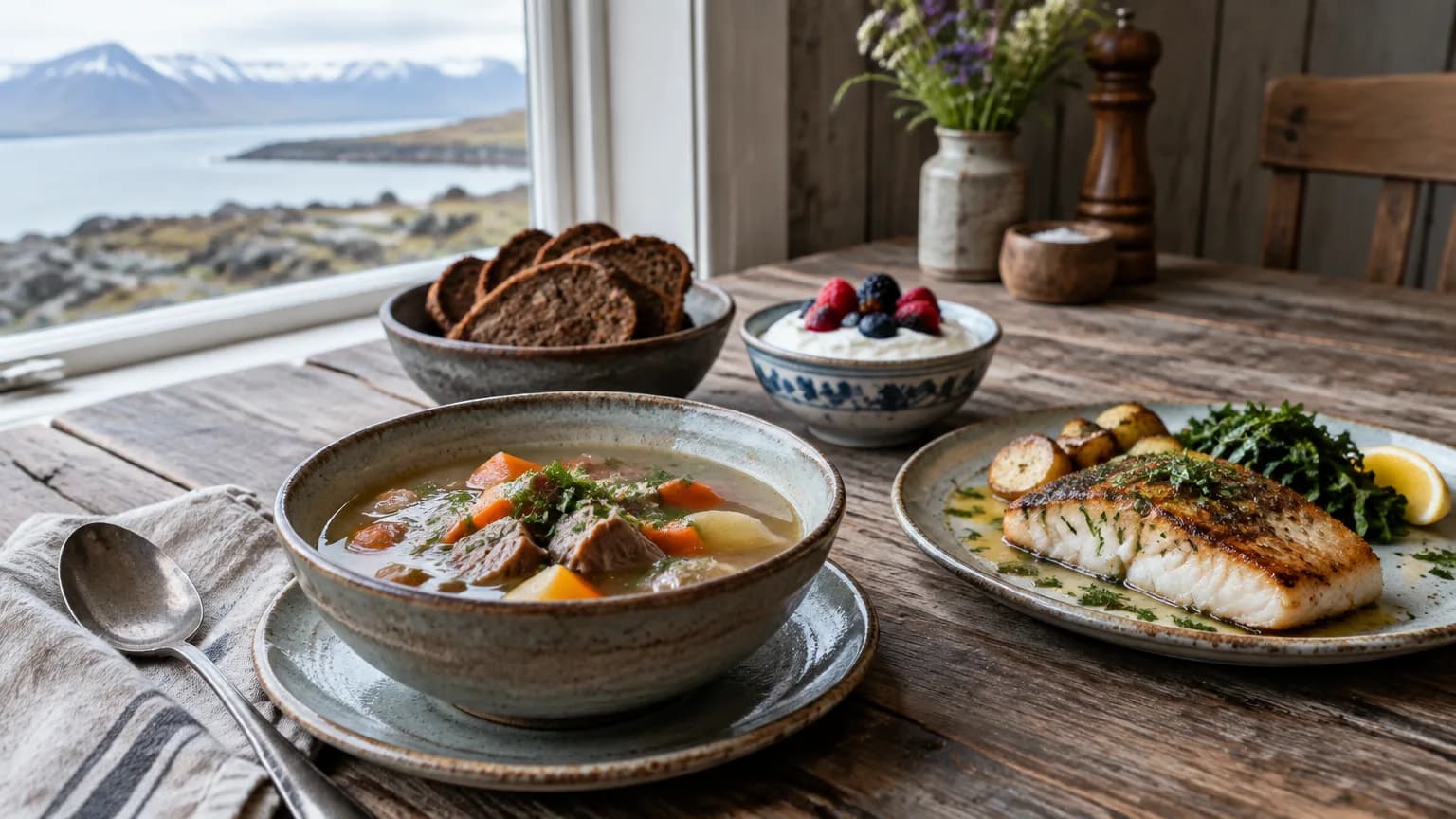
- Kjötsúpa (lamb soup): a clear broth with lamb, carrots, potatoes and herbs, common in cafés along the south coast. It is the most reliable hot meal after a cold day of sightseeing, and most versions are made with lamb stock, so check if you are vegetarian.
- Plokkfiskur: mashed fish with potato, onion and milk, usually served with rye bread and butter. It is mild and suits Indian palates well, and it is one of the few traditional dishes that feels like a home-cooked meal.
- Fresh seafood: cod, haddock, langoustine and Arctic char appear grilled, pan-fried or in soups. Reykjavík and the Westfjords offer the widest choice, and the fish is often landed the same day.
- Skyr: a thick cultured dairy product, closer to hung curd than to yogurt. Eaten with berries or sugar and sold in every supermarket, it works as breakfast, a dessert or a light snack on the road.
- Rúgbrauð: dark, dense rye bread, sometimes baked underground near hot springs. Good with butter or smoked fish, and it keeps well, so it is useful to carry on day trips.
- Hangikjöt: smoked lamb, sliced thin and served on bread or with potatoes. A traditional Christmas food now available year round in restaurants and supermarkets.
- Pylsur: the Icelandic hot dog, usually lamb-based, with fried and raw onion and a sweet mustard-style sauce. Sold from street carts and petrol stations, it is the cheapest hot meal in the country.
- Harðfiskur: dried fish eaten with butter as a snack. Chewy and salty, and worth trying once, though it is an acquired taste and best eaten in small pieces.
Fermented shark, sheep's head and cured ram dishes are the ones travellers ask about most. They are strong in flavour and rarely part of an ordinary meal, so try them only if you are curious. Most restaurants serve them as a special or tasting plate rather than on the everyday menu, which means you can skip them without missing the core experience.
Where to eat by area
Reykjavík holds most of the country's restaurant choice, while the countryside runs on cafés, petrol stations and farm kitchens. Plan heavier meals in the capital and keep rural days flexible, since a single closed café can leave a long drive without lunch.
Reykjavík
The streets around Laugavegur and Skólavörðustígur have the densest cluster of cafés and restaurants, from bakeries at breakfast to sit-down dinner places. Harbour-side streets near the old port are where seafood kitchens concentrate, so one walk covers most of what you came to eat. Evening meals fill up quickly in summer, so a reservation on popular nights is sensible.
Westfjords
Farm-based dining venues in the Westfjords overlook the fjords and serve what the farm produces, often lamb, dairy and fish. Menus are short and opening times are fixed, so book ahead in summer and confirm hours before driving out. Because options are few, tell the kitchen about any dietary needs when you reserve.
South coast and Golden Circle
Villages such as Vík and Hvolsvöllur have cafés and petrol-station kitchens that act as the local restaurant. Expect soup, sandwiches, burgers and cake rather than a full menu. A packed lunch saves time on long driving days, and most petrol-station shops sell fruit, bread and snacks for the road.
Markets and food halls
Reykjavík has indoor food halls where you can sample several small dishes in one stop. They suit mixed groups, since each person orders separately and the seating is shared. Kolaportið flea market in the capital is the place to look for local food products at weekends, including dried fish, smoked goods and baked rye.
Supermarkets are part of the eating plan, not a fallback. Bónus, Krónan and Netto stock bread, cheese, skyr, fruit, instant noodles and ready salads, which keeps costs down on road trips. A typical self-catered day might include skyr and bread at breakfast, a supermarket lunch and one sit-down dinner, which balances the budget well. If you want the whole trip arranged around these stops, compare the Iceland tour packages before fixing dates.
Vegetarian, Jain and other dietary needs
Vegetarian food is straightforward in Reykjavík and workable elsewhere with planning. Jain food is harder because onion, garlic and root vegetables are standard in Icelandic cooking, and many dishes depend on fish or meat stock. Carry your own staples, explain your rules clearly at each meal, and check the ingredient list whenever you are unsure.
What is easy:
- Skyr, cheese, bread, butter, oats, fruit and nuts from any supermarket, all of which can be assembled into a full meal without cooking.
- Margherita pizza, tomato pasta, falafel wraps and vegetable soups in the capital.
- Indian restaurants in Reykjavík, which are used to no-onion and no-garlic requests and can usually adjust a dal, paneer or vegetable curry.
- Breakfast buffets at larger hotels, where you can build a plate from eggs, bread, cheese and fruit, and skip any meat items.
What to ask for:
- Ask whether the soup base is vegetable, fish or meat stock. Lamb soup and fish soup look alike on a menu board.
- Ask for sauces and dressings on the side, since many contain anchovy or meat reduction.
- Ask for dishes without bacon or smoked lamb, which is often a topping rather than a core ingredient, and so can be removed easily.
- Ask whether fries share oil with fish or meat if that matters to you. Many kitchens fry in shared oil, so the answer is often yes.
Hidden non-vegetarian ingredients include fish stock in vegetable soups, animal rennet in some cheeses, gelatin in desserts and meat-based sauces in burgers. Oat milk and plant-based patties appear in most cafés, but rural stops may offer only one option, so carry a small supply of any item you depend on. Halal meat is limited to a few outlets in Reykjavík, so vegetarian and pescatarian choices are the practical route for most travellers. Egg-free eating is manageable because bread, potatoes, rice and salads are common, though baked goods often contain egg, so check pastries carefully.
For Jain travellers, the common practical approach is to pack a stock of dry snacks, nuts, instant meals and tea, then use restaurants for one hot meal a day. Indian restaurants and hotel kitchens that have served Indian guests before are the easiest places to explain the rules in detail. A short written note listing excluded ingredients, which you can show to staff, avoids misunderstandings during busy service.
Street food safety and eating etiquette
Icelandic tap water is safe and free to drink, and street food from busy stalls is generally safe because hygiene standards are high. The bigger considerations are cost and opening hours rather than stomach trouble. Most travellers from India find the food gentle on the stomach, though the cold climate can make a heavy meal feel very filling.
On water and ice: tap water is drinkable everywhere, including rural guesthouses, and ice in drinks comes from the same supply. Bottled water is unnecessary. Bring a refillable bottle and top up at your hotel or any tap, which also reduces plastic waste.
On street stalls: choose carts with a queue and a visible cooking area, and eat hot food while it is hot. Hot dog stands, bakeries and harbour food trucks are the usual options. Stalls keep shorter hours outside summer, so treat them as a lunch stop rather than a late dinner plan. If you are unsure about an ingredient, ask the vendor directly, since most will tell you what is in the sauce.
On etiquette:
- Tipping is not expected because service is included in the bill. Rounding up is enough if you are happy with the meal.
- Card payment works almost everywhere, including small rural cafés. Carry a card rather than large amounts of cash, though a small amount of local currency helps at some markets.
- Table service is relaxed, so you may need to catch the server's eye rather than wait to be approached. Paying at the counter is common in casual cafés.
- Alcohol is sold only in licensed bars, restaurants and state liquor stores, not in supermarkets. Check opening hours if you plan to buy a bottle for dinner.
Before you plan meals, check entry paperwork in the Iceland visa for Indians guide, which covers the documents Indian passport holders need.
What meals cost
Meal costs in Iceland rise sharply by category, and the gap between a supermarket lunch and a sit-down dinner is the biggest lever on your food budget. Plan one proper restaurant meal a day and fill the rest from cheaper sources. Prices change with the season, so confirm them at booking rather than relying on older figures.
| Kind of place | What you get | Cost pattern |
|---|---|---|
| Supermarket or bakery | Bread, cheese, skyr, fruit, ready salad | Lowest per meal, good for breakfast and road lunches |
| Street stall or food truck | Hot dog, wrap, soup, pastry | Moderate and quick, with limited hours outside summer |
| Casual café | Soup, sandwich, burger, coffee | Mid-range, the everyday option in towns |
| Sit-down restaurant | Seafood, lamb, tasting plates | Highest, especially with drinks |
| Hotel breakfast buffet | Eggs, bread, cheese, fruit, coffee | Often included in the room rate, so check your booking |
Alcohol is the item that pushes a dinner bill up fastest, since it is taxed heavily and sold only through licensed outlets. Vegetarian mains usually cost less than seafood or lamb plates. Buffet breakfasts and self-catering let you bring the daily average down more than any single discount. Confirm current prices at booking, as menus change with the season.
A practical way to budget is to decide in advance which two or three meals matter most to you, such as a seafood dinner in Reykjavík or a farm lunch in the Westfjords, and keep the rest simple. Travellers who try to eat out for every meal usually find the bill is far higher than expected, while a mix of supermarket food and planned restaurant visits feels both affordable and satisfying.
To see this turned into a complete trip, have a look at the Iceland holiday packages.