
Field notes
Czech Republic Packing List for Indians 2026
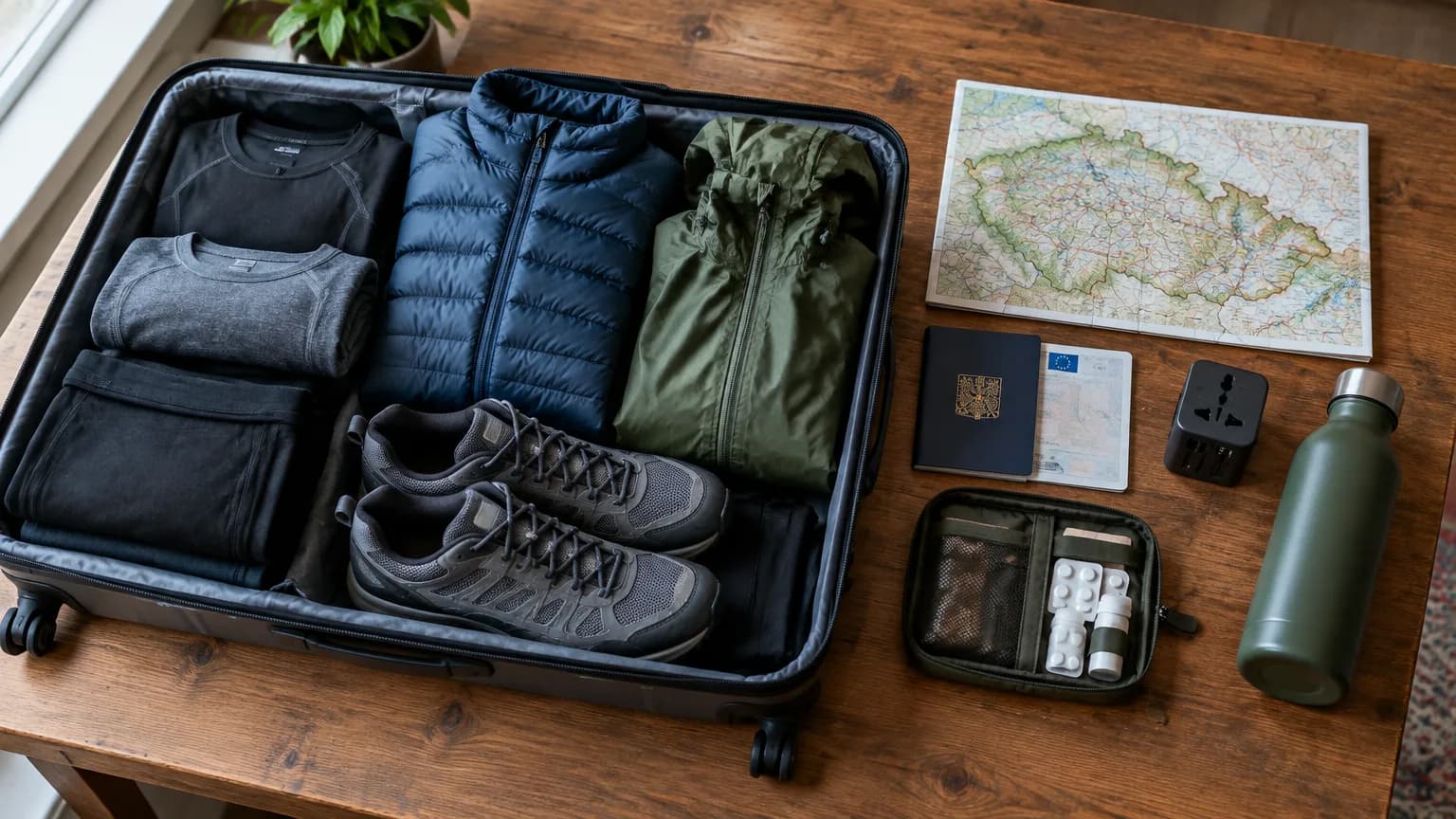
A Czech Republic packing list for Indians starts with layers for a continental climate, shoes that handle cobblestones, and three items travellers often forget: a Type C and Type E power adapter, a compact rain shell, and prescription medicines in their original packaging. Summer days reach about 25 C, winter drops below freezing, and rain falls in every month of the year.
What the weather in the Czech Republic demands
The Czech Republic has a continental climate, so a single day can move from a warm afternoon to a cold evening. Pack for the season you are travelling in rather than for one forecast. Rain is spread across the year, so a light waterproof layer belongs in every bag. Indian travellers used to tropical heat often underpack for the cold, so check the monthly figures before you close your suitcase.
- Winter (December to February): about -3 to 3 C, rain around 21-25 mm, and low crowds except late December. Expect cloudy days and possible snow. Thermal base layers, a padded jacket, gloves, a beanie and warm socks are the standard kit. Evenings in cities feel colder than the daytime readings suggest, so one extra layer is worth the space.
- Spring (March to May): about 1 to 20 C, with rain rising from roughly 27-31 mm in March and April to 50 mm in May. Mornings stay cold in March and April. A fleece mid-layer and a packable rain jacket cover most days. May is the month to expect showers in the afternoon, so keep the umbrella in your day bag.
- Summer (June to August): about 12 to 25 C, with rain between 61 and 66 mm and crowds and prices at their peak. Bring short sleeves for daytime, one warm layer for evenings, and a compact umbrella for summer thunderstorms. Book accommodation early, because peak season fills quickly.
- Autumn (September to November): about 1 to 19 C, with rain between 26 and 41 mm. September is mild and November turns cold, so a light jacket in September may need to become a proper winter coat by late November. Crowds thin after summer, which makes autumn a comfortable time to walk through old town squares.
If your dates are still open, read the best time to visit Czech Republic guide first. The month you choose changes your clothing list more than anything else on this page. A late-March trip and a late-September trip can look similar on paper but need very different jackets.
Essentials checklist
Documents, chargers, medicines and daily items are the non-negotiables. Keep them together in a pouch inside your cabin bag so nothing gets buried in checked luggage. Before you leave home, photograph every document and email the photos to yourself so you can retrieve copies from any device.
- Passport with at least six months of validity, plus a photocopy and a phone photo of the data page.
- Schengen visa or residence permit, printed and kept with the passport. Indian passport holders need a Schengen visa for the Czech Republic. Confirm current rules on the Czech Republic visa for Indians page before you apply.
- Travel insurance printout, flight tickets and hotel confirmations. Insurers often ask for the policy number at check-in or at a clinic, so keep it on paper as well as on your phone.
- Universal power adapter. The Czech Republic uses Type C and Type E sockets at 230 V, so an Indian plug needs an adapter, not a converter. Check that your devices accept 230 V, which most modern phone and laptop chargers do.
- Phone charger, a power bank within airline limits, and a short charging cable. Power banks usually go in cabin baggage only, so check the airline rule before you pack.
- Prescription medicines in original packaging with the prescription, plus a basic kit of paracetamol, oral rehydration salts, antacid, cold tablets, band-aids and blister plasters. Carry a few days extra in case of delays.
- Toiletries in 100 ml containers for cabin use, a toothbrush, and a small hand sanitiser.
- A reusable water bottle, a foldable tote for day trips, and a small padlock for luggage.
- Some cash in Czech koruna for small shops, plus a forex card or international debit card for larger payments. Cards are widely accepted in cities. Confirm the current exchange rate with your card provider before you travel, and tell your bank about your travel dates so the card is not blocked abroad.
Clothing and footwear by season
Build your wardrobe around layers and one pair of walking shoes you have already broken in. Czech towns are best seen on foot, and cobblestones are hard on thin soles and new footwear. Plan for roughly 8 to 12 km of walking on a typical sightseeing day in Prague or Český Krumlov, so comfort matters more than fashion.
Winter clothing
- Two sets of thermal tops and bottoms.
- A wind-resistant down or padded jacket.
- A fleece or woollen mid-layer.
- Waterproof gloves, a beanie, a scarf and warm socks.
- Waterproof walking shoes or boots with grip for snow and ice.
Spring and autumn clothing
- Long-sleeve tops and a light fleece.
- A packable rain jacket with a hood.
- Jeans or travel trousers, plus one smarter outfit for a nice dinner.
- Comfortable closed walking shoes, already worn in.
- A light scarf for windy castle courtyards.
Summer clothing
- Three or four cotton or quick-dry T-shirts.
- Shorts or light trousers for daytime.
- One warm layer and a light jacket for cool evenings.
- A sun hat, sunglasses and sunscreen. Summer sun is strong at altitude in the mountains.
- Sandals for evenings, but keep walking shoes for sightseeing days.
If your trip includes hiking in the Krkonoše or Šumava national parks, add a second pair of shoes and moisture-wicking socks. Wet feet cause most trail problems, so a spare pair of socks in your daypack is cheap insurance. The Czech Republic Krkonose Family Holiday itinerary gives a sense of how much walking a family trip here involves.
Gear for activities
Pack gear only for the activities you have actually booked. Most of what you need for Czech outdoor activities is light or available on rent. Carrying heavy equipment from India adds weight to your baggage and rarely saves money once you add airline excess fees.
- Hiking in Krkonoše or Šumava: a daypack, refillable water bottle, trail snacks, blister plasters, a light rain shell and an offline map app. Marked trails in Krkonoše include Rychory, Červenohorské rašeliniště and Čertův důl. Mountain weather can change quickly, so carry layers even on a sunny morning.
- Cycling: padded cycling shorts, gloves, a small repair kit and a helmet if you plan long rides. Bikes and helmets can be rented locally, and rental shops in mountain towns are the usual pickup points.
- Cross-country skiing in Šumava: warm base layers, waterproof over-trousers, gloves and goggles. Skis, poles and boots are rented at trail centres, so there is no need to carry them from India. Ask the rental shop about sizing before the trail day.
- Castles, chateaux and UNESCO monuments: there is no strict dress code, but some churches and interiors ask for covered shoulders and knees. Carry a light scarf or shawl. Several castle tours are timed, so arrive with a little slack in your schedule.
- Prague museums and galleries: a small day bag, a power bank and a foldable umbrella for the walk between venues. Lockers are common at larger museums, so you can leave bulky bags behind.
- Family days: a light stroller if you have young children, since main tram and bus routes in Prague are largely stroller-accessible. Pack snacks and a spare set of clothes for children. Playgrounds and parks in Prague are a good way to reset a busy day.
What to leave at home or buy there
Leave heavy, cheap or easily replaced items behind. Czech supermarkets, pharmacies and outdoor shops stock daily essentials, and carrying less keeps you mobile on trains and trams. Hotels and apartments in cities usually provide the basics, so check your booking before you pack an extra set of toiletries.
- Full-size toiletries, shampoo and shower gel. Buy them at any supermarket after you arrive.
- Towels and bed linen, which hotels and apartments normally provide.
- Heavy winter boots if you are visiting in summer, and beachwear at any time of year, since the country has no seaside.
- Large umbrellas. A compact travel umbrella is easier on crowded streets.
- Bulk stocks of minor-ailment medicines. Basic painkillers and cold remedies are easy to buy locally, though you should still carry your own prescription medicines.
- Formal wear beyond one smart outfit. Czech restaurants and sights are relaxed.
- Extra shoes beyond two pairs. One walking pair and one casual pair is enough.
- Hairdryers and irons. Most hotels provide them, and voltage differences make personal ones risky.
A simple rule helps here: if you can buy it for less than the cost of checking a bag for it, buy it on arrival. For a fuller view of what your trip will cost, the Czech Republic trip cost guide explains what drives your spend. More planning help is in the Czech Republic travel guides hub.
If you are ready to plan it, the Czech Republic packages page shows current options you can compare.