
Field notes
Brazil Packing List for Indians 2026
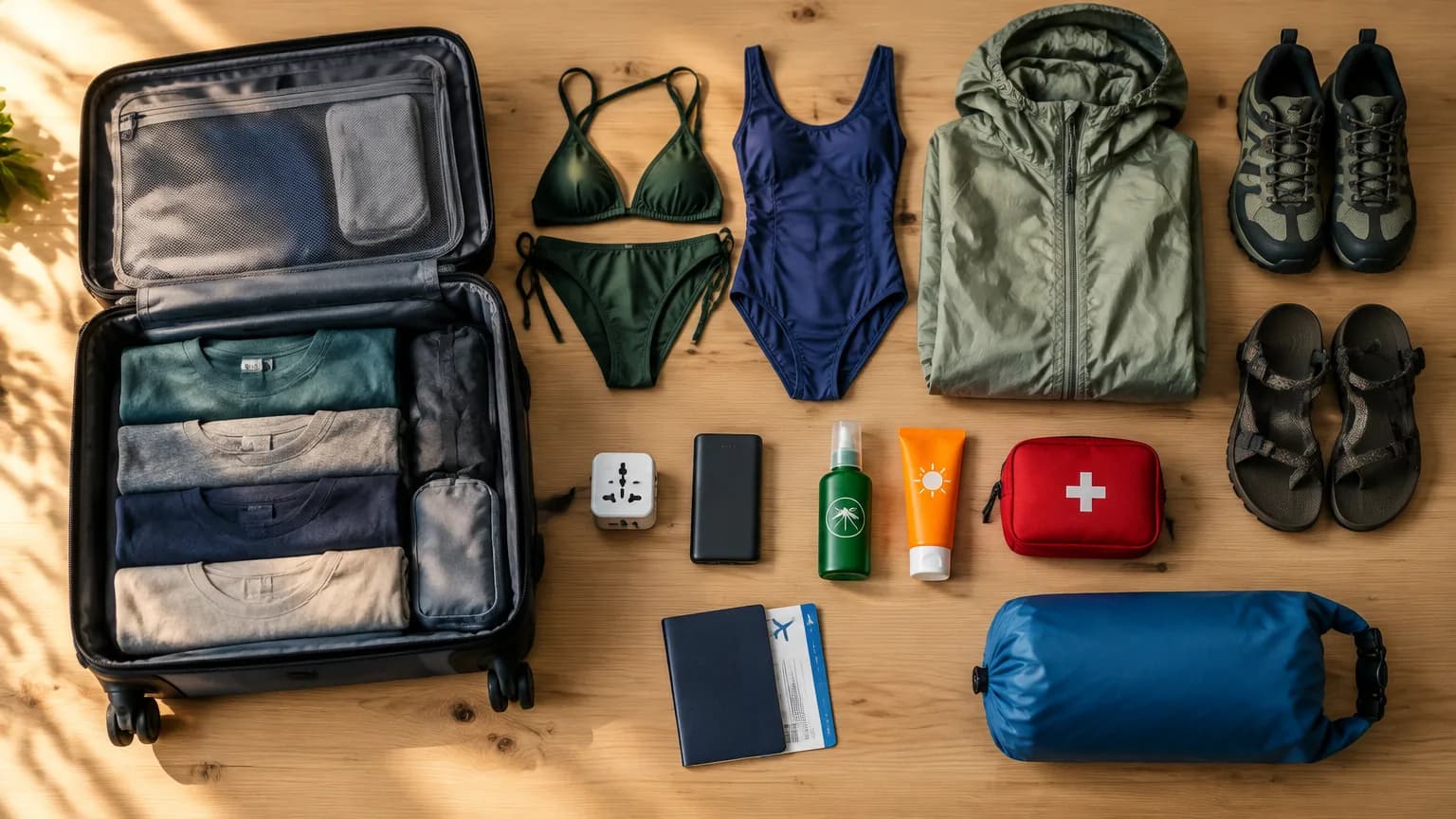
This Brazil packing list for Indians is built around hot, humid weather and sudden rain, with temperatures of about 21 to 31 C across the year. Pack quick-dry clothes, covered shoes and a rain layer, and add a warm layer only for June to September. The items travellers forget most are mosquito repellent, a universal power adapter and a compact rain shell.
What the weather in Brazil demands
Brazil is warm in every month, so packing is about rain, humidity and sun rather than cold. Daytime temperatures run from about 21 C to 31 C, and rainfall decides how many quick-dry layers and rain items you need.
| Season and months | Daytime temperature | Rain | Crowds and prices |
|---|---|---|---|
| Summer and peak season, December to March | About 24 to 31 C | Heavy | High crowds, peak prices |
| Shoulder season, April and May | About 23 to 30 C | Moderate | Medium crowds, medium prices |
| Winter and lower season, June to September | About 21 to 29 C | Moderate in June and July, low in August and September | Low crowds, low prices |
| Shoulder season, October and November | About 23 to 30 C | Moderate in October, heavy in November | Medium crowds, medium prices |
Summer heat can reach roughly 35 C in some regions, usually with afternoon or evening showers. Rainy-season conditions commonly affect many regions from November through April. June to August is among the least rainy periods in some regions, and evenings turn cooler then.
What this means for your layers:
- Carry two or three light, quick-dry tops for every bottom, since humidity keeps clothes damp.
- Add one warm layer or light jacket for June to September, when evenings cool down.
- Keep a compact rain shell or poncho for November to April, when heavy showers are common.
- Take a cap, sunglasses and sunscreen for strong sun, and a light scarf for air-conditioned buses and flights.
Rainfall varies a lot by region, and the Amazon stays humid and rainy for much of the year. Jungle trips need rain cover in any month, so check the forecast for each stop before you leave. The best time to visit Brazil guide helps you decide which season you are packing for.
Essentials checklist
Keep documents, medicines, chargers and money in your cabin bag, not in checked luggage. A delayed suitcase then cannot derail your first two days.
| Category | What to carry | Why it matters |
|---|---|---|
| Documents | Passport, visa, travel insurance, printed and digital copies, flight and hotel confirmations | Copies speed up replacement if the originals are lost; the Brazil visa for Indians guide covers entry paperwork |
| Money | Some Brazilian reais in cash, two cards, a forex card as backup | Cards work in cities, but small towns and markets often prefer cash |
| Power and tech | Universal adapter, power bank, charging cables, a spare phone cable | Brazil uses its own plug and socket types, so Indian plugs may not fit |
| Medicines | Regular prescriptions with a doctor's note, basic fever, stomach, pain and allergy tablets, oral rehydration salts | Brand names differ locally, so carry the ones you already know |
| Daily items | Mosquito repellent, sunscreen, lip balm, wet wipes, hand sanitiser, refillable water bottle, small daypack | Dengue, chikungunya and Zika risks are reported as high, especially in the rainy season, and the cited safety source advises repellent and skin-covering clothing |
| Small extras | Pocket first-aid kit, padlock, foldable shopping bag, plastic pouches | Small items are easier to carry than to hunt for on arrival |
Check your passport validity and visa rules at the official source before you pack anything else. Fees, validity and processing times change, so confirm them at booking.
Clothing and footwear by season
Quick-dry fabrics suit every season, and one warm layer covers the cooler months. Footwear changes more than clothing does, so plan shoes around the weather and your activities.
December to March
This is the hot, wet, crowded stretch, with about 24 to 31 C and heavy rain. Choose fabrics that dry fast and do not hold sweat.
- Loose cotton or synthetic t-shirts, plus two or three pairs of shorts or light trousers.
- One smarter outfit for restaurants and city evenings.
- A light rain shell, a small umbrella and a dry bag for your phone.
- Sandals or floaters for beach days, and one pair of closed shoes that can get wet.
April, May, October and November
These months are warm and less wet than the core summer, though November can bring heavy rain. They suit city sightseeing and short treks, and a compact poncho is usually enough.
- The same light clothing as summer, with one long-sleeved shirt for evenings and mosquito cover.
- Walking shoes that are already broken in for long city days.
- A swimsuit and a quick-dry towel for beach stops.
June to September
These are the cooler, quieter months, with about 21 to 29 C and low to moderate rain. Evenings can feel cool, especially away from the coast.
- A fleece or light jacket, one pair of jeans or warm trousers, and a few pairs of socks.
- Closed walking or trail shoes for treks and long walks.
- A light scarf, which doubles as cover in air-conditioned spaces.
If your plan is a beach base with children, the Brazil Copacabana Beach Family Holiday runs seven nights, so two swimsuits and plenty of light cotton work well. The Brazil travel guide explains how the regions differ if you are mixing beach, city and nature stops.
Gear for activities
Pack only for activities you have actually booked, since Brazil trips usually mix city, beach and at least one nature day. Each activity below has a short kit that has worked well for Indian travellers.
Beach and water
- Two swimsuits, so one dries while you wear the other.
- A quick-dry towel, sunscreen and flip-flops.
- A dry bag for phones, cards and keys on boats and beaches.
- Skin-covering lightweight clothing for evenings, since repellent and covered skin are advised in mosquito season.
Trekking and jungle
Chapada Diamantina offers multi-day trekking, off-road expeditions, waterfall swimming and cave exploration. Guided jungle treks and canoeing are available in Amazonia National Park, and the Macuco trail gives jungle immersion near Iguaçu Falls.
- Broken-in trail shoes or hiking sandals with good grip.
- Repellent, long-sleeved light shirts and full-length trousers for evenings.
- A headlamp or torch, and a rain cover for your daypack.
- A refillable bottle, and purification tablets for remote stays.
Waterfalls, boats and wildlife
Walkways give access to the waterfall viewpoints at Iguaçu Falls, so comfortable walking shoes matter more than trail boots there. Boat tours and animal observation in the Central Amazon call for neutral-coloured clothing and a rain layer.
- Binoculars if you own compact ones, or rent them locally.
- A spare memory card or phone storage for waterfall and wildlife days.
- A waterproof phone pouch for spray and sudden showers.
Cultural visits and dress codes
Colonial districts, music venues and religious sites call for modest, comfortable clothing. Pelourinho combines colonial sightseeing with Afro-Brazilian music, and Rio's samba parties and street performances run late into the evening.
- Covered shoulders and knees for churches and religious sites, with a hat removed if asked.
- A light scarf or sarong in your daypack for quick cover-ups.
- Comfortable closed shoes for cobbled streets and long evenings.
- A small crossbody bag with a zip for crowded streets and events.
The Brazil travel guides hub groups these activities by region if you are still building a route.
What to leave at home or buy there
Travel light on the way in, and buy cheap, bulky items after you land. Brazilian cities and coastal towns stock everyday items easily, so extra weight from home rarely pays off.
Leave at home
- Heavy woollens and thick jackets, unless your trip includes cool or high areas.
- Full-size toiletries, which add weight and can leak in transit.
- More than two pairs of shoes.
- Formal wear beyond one smart outfit.
- Hairdryers and irons, since most hotels provide them.
- A large bath towel, as hotels and most rentals supply one.
Buy there if needed
- Sunscreen, repellent and basic toiletries, if baggage limits are tight.
- Beachwear, hats and flip-flops from coastal shops and street markets.
- A prepaid SIM or data pack, if your phone supports local networks.
- Snacks, water and small souvenirs, rather than carrying similar items from India.
Keep the cabin bag for documents, medicines, one change of clothes, chargers and valuables. Check your airline's cabin and checked baggage weight limits before you pack, and confirm current allowances at booking, since they vary by carrier and fare type.
If you are ready to plan it, the Brazil packages page shows current options you can compare.